Cart
0
Table of Contents
- Why First Aid Kit Alternatives Matter
- Portable Bags vs. Clamshell Cases: Storage Trade-offs
- Professional Grade First Aid Supplies for Specialized Use
- Waterproof and Rugged Options for Outdoor Activities
- DIY First Aid Kit Checklist: Build vs. Buy
- Trauma Kit vs. First Aid Kit: When Each One Matters
- Choosing Your Best Alternative
- Frequently Asked Questions
Last Updated: September 19, 2026
When you're building a first aid kit, you're not locked into buying pre-assembled boxes. The best first aid kit alternatives give you flexibility to customize for your specific needs, whether that's wilderness hiking, backyard poultry care, or keeping supplies in your car. At RestockYourKit.com, we help people move beyond one-size-fits-all kits by choosing storage solutions and supply combinations that match their actual use cases.

The key is understanding the trade-offs between different approaches. A soft clamshell case offers portability and organization. A hard case protects contents in extreme conditions. A dry bag keeps supplies waterproof for water activities. A DIY checklist lets you source exactly what you need at lower cost. Each alternative solves a different problem.
Below, we'll show you exactly how to evaluate storage options, compare professional-grade supplies against standard kits, and decide whether to build or buy. The strategies we cover have helped outdoor groups, Scout units, families, and specialized animal care providers stay prepared without overpaying.
Why First Aid Kit Alternatives Matter
Standard pre-assembled kits often include items you'll never use and skip the ones you actually need. A generic kit might have three types of bandages but no triangular bandage for sling support. It might include antihistamine but not the specific medications your crew uses most. You end up paying for bulk and settling for incomplete coverage.
First aid kit alternatives solve this by letting you control what goes inside. You pick the container that fits your lifestyle. You stock it with supplies matched to your specific risks. You maintain it on your own schedule instead of replacing an entire kit when one item expires.

This approach also saves money. Buying individual medical supplies at near-wholesale prices through specialized retailers beats paying retail markup on pre-packaged kits. For Scout troops, wilderness medicine enthusiasts, and outdoor group leaders, customization is non-negotiable, your crew's needs are too specific for generic solutions.
Pro Tip
The best alternative isn't always the cheapest upfront. It's the one that gets restocked consistently. A kit you find easy to maintain stays current. A kit that's awkward to refill gets neglected.
Portable Bags vs. Clamshell Cases: Storage Trade-offs
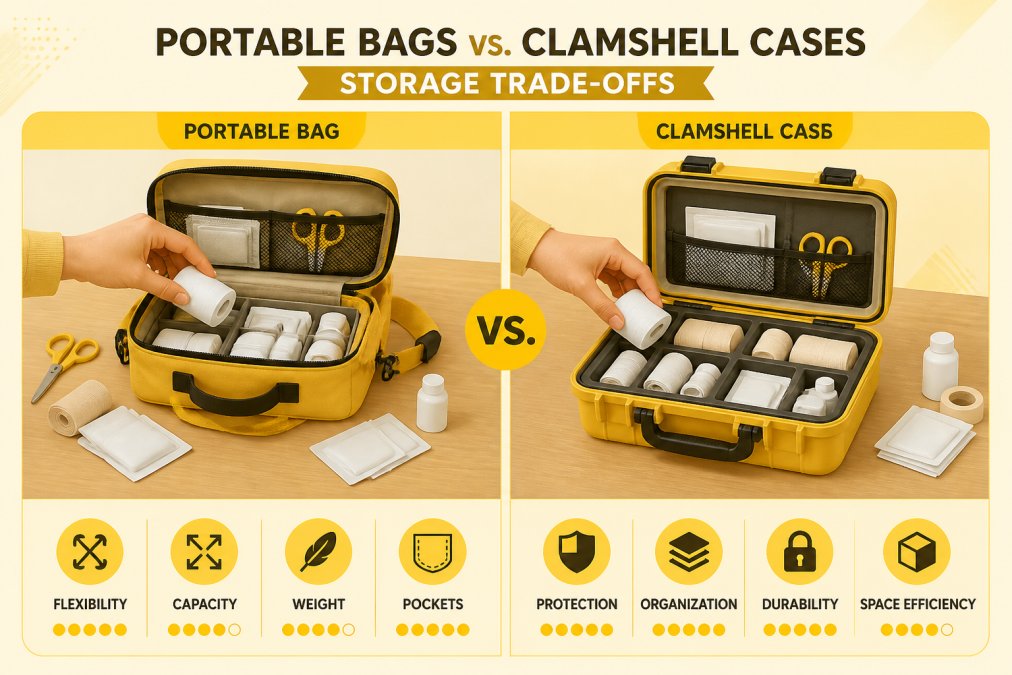
Your choice of container determines how easy your kit is to carry, organize, and maintain. The two main categories have opposite strengths.
Soft bags (nylon or canvas) prioritize portability and organization. They weigh less, pack smaller, and fit into backpacks or car door pockets without taking up much space. They typically have multiple compartments and clear pockets so you can see what's inside at a glance. The trade-off: soft materials compress under pressure, and contents can shift around. For weekend trips, car kits, and personal use, soft bags are ideal.
Hard clamshell cases protect contents from crushing and temperature extremes. They won't crack or split like plastic does in cold weather. A hard case opens flat, giving you full visibility of everything inside without digging. The trade-off: they're bulkier, heavier, and less portable. You won't fit one in a backpack. They're designed for crew kits, stationary storage, or vehicles where weight and bulk matter less.

RestockYourKit.com carries both types to match different needs. The Soft Clamshell First Aid Kit Case ($14.99) offers a middle ground, durable nylon with internal organization and a large clear divider, made in the USA. For crews that need maximum durability and capacity, the Chinook First Aid Bag - Ultra-Crew ($99.99) is built from 1000 denier Cordura Rip-Stop nylon with trifold design and elastic retainer straps for SAM Splints.
For ultralight trips, the Weekender First Aid Bag ($19.99) weighs just 3.5 ounces. For economy options, the Basic Econ First Aid Bag ($17.99) has a reflective strip for visibility in the dark and fits in glove compartments.
| Container Type | Best For | Weight | Capacity | Organization |
|---|---|---|---|---|
| Soft nylon bag | Personal, car, weekend trips | 3-7 oz | 4-8 liters | Multiple compartments |
| Hard clamshell | Crew kits, stationary storage | 10 oz | 6-10 liters | Flat-opening visibility |
| Dry bag | Water activities, boating | 3-5 oz | 2-2.5 liters | Waterproof seal |
| Canvas pouch | Military/crew use, durability | 5-8 oz | 3-5 liters | Shoulder carry |
Professional Grade First Aid Supplies for Specialized Use
Professional-grade supplies differ from consumer first aid items in three ways: sterility standards, medical-grade materials, and availability of specialized items that retail stores don't stock.
A sterile dressing from a medical supplier meets standards for wound care. Medical-grade gauze pads are manufactured to exact specifications. Hemostatic agents (like QuikClot) are used by first responders. Nitrile gloves in bulk quantities can be more cost-effective than buying small boxes at pharmacies.
This is where RestockYourKit.com's sourcing model matters. We source hard-to-find medications and supplies at near-wholesale prices and sell them in individual quantities. You don't have to buy a case of 100 to access professional-grade items. You can stock your crew kit with exactly what you need.
Professional supplies also include items like triangular bandages for sling support, trauma shears for cutting clothing or tape, SAM Splints for immobilization, and hemostatic gauze for trauma response. Wilderness first aid courses teach these tools. Standard kits may not include them.
Key Takeaway
Professional-grade supplies can be a valuable investment. A crew kit with 20 people may benefit from professional supplies.
Waterproof and Rugged Options for Outdoor Activities
Water activities and harsh environments demand waterproof storage. A first aid kit that gets soaked is useless. Waterproof options keep supplies dry and sanitary even in rain, on boats, or during water rescues.
Dry bags are the standard for water activities.
DIY First Aid Kit Checklist: Build vs. Buy
Building your own kit can be a cost-effective alternative to buying pre-assembled options. The trade-off can be time spent sourcing items.
A basic personal first aid kit needs these essentials:
- Adhesive bandages (multiple sizes)
- Gauze pads (sterile, 2x2 and 4x4)
- Medical tape
- Antibiotic ointment
- Pain reliever (ibuprofen or acetaminophen)
- Antihistamine for allergic reactions
- Antiseptic wipes
- Elastic bandage for sprains
- Triangular bandage for slings
- Tweezers for splinter removal
- Nitrile gloves
- CPR face shield or pocket mask
For wilderness first aid, add:
- Hemostatic gauze or QuikClot
- Trauma shears
- SAM Splint
- Moleskin for blisters
- Hydrocortisone cream
- Blister treatment pads
- Larger sterile dressings
- Tourniquet (if trained)
For crew kits, multiply quantities and add:
- SOAP Note pad (for documentation)
- First Aid Guide or protocol cards
- Splinting materials
- Additional medications
- Burn care supplies
Watch Out
Supplies get used, expire, or degrade. A kit that's easy to maintain gets maintained.
Trauma Kit vs. First Aid Kit: When Each One Matters
The difference between trauma kits and standard first aid kits comes down to severity and speed.
The key supplies that separate them:
| Supply | First Aid Kit | Trauma Kit |
|---|---|---|
| Hemostatic gauze | No | Yes (critical) |
| Tourniquet | No | Yes (critical) |
| Large trauma dressing | No | Yes |
| Chest seal | No | Yes |
| Triangular bandage | Maybe | Yes |
| Elastic bandage | Yes | Yes |
| Antibiotic ointment | Yes | No |
| Pain reliever | Yes | No |
Pro Tip
If you're trained in wilderness first aid or first responder protocols, you understand when trauma supplies may be needed. Training and kit contents should match.
Choosing Your Best Alternative
Your best first aid kit alternative depends on three factors: use case, portability, and maintenance commitment.
Frequently Asked Questions
What makes a first aid kit alternative better than a standard pre-filled kit?
First aid kit alternatives let you customize contents to match your actual needs rather than paying for generic supplies you won't use. A professional grade first aid supplies approach means you control quality, expiration dates, and inventory. You can also choose storage that fits your lifestyle, whether that's a compact bag for your car or a waterproof case for boating. Building or selecting alternatives typically costs less and ensures you have exactly what matters for your situation.
Is it cheaper to make your own first aid kit or buy one?
Buying an empty case and filling it with quality supplies can be a cost-effective option. RestockYourKit.com offers empty bags starting at $11.99 (Traveler bag) to $99.99 (Chinook Ultra-Crew), letting you add only what you need. The real savings come from avoiding overstocked pre-made kits and replacing items as they expire rather than buying new kits.
What's the difference between a trauma kit and a standard first aid kit?
A trauma kit vs first aid kit distinction matters for your use case. Trauma kits can include tourniquets, hemostatic agents, and sterile dressings for high-risk environments like wilderness rescue or high-adventure crews. Standard first aid kits handle minor cuts, sprains, and common illnesses. If you're building a kit for backcountry hiking or crew activities, trauma-grade supplies may be considered. For home or car use, a basic first aid kit covers many situations. Professional grade first aid supplies designed for specific activities can help ensure you have the right tools.
How do I know when to replace items in my first aid kit?
Check expiration dates on medications, antiseptic wipes, and sterile dressings at least twice yearly. Adhesive bandages, gauze pads, and tourniquets don't expire but should be replaced if damaged or contaminated. After using any item, restock immediately. A DIY first aid kit checklist approach makes this easier, track what you've used and what's aging. Many people set calendar reminders for spring and fall inventory checks. RestockYourKit.com's modular approach lets you buy only what you need to refresh, avoiding waste.
Which first aid kit alternative is best for boating or water activities?
Waterproof storage is critical for water-based activities. The Waterproof First Aid Kit Dry Bag (2L, $19.99) and Personal Kit Sized Dry-Bag (2L, $19.99) both protect supplies from moisture and salt spray. The aLOKSAK Waterproof Bags ($37.99) offer Navy-tested protection certified to 200 feet depth and work for individual medications or smaller supplies. For crew activities on water, the Chinook Ultra-Crew bag ($99.99) with its water-resistant Cordura nylon and clear pockets is ideal. Dry bags keep contents clean and sanitary even in inclement weather, making them essential for boating, canoeing, and kayaking.