

Cart
0

Table of Contents
- How Long Does It Take for Chicken Medication to Work?
- How Long Does Corid Take to Work in Chickens?
- Chicken Dewormer: How Long to Work and What to Watch
- How to Give Liquid Medication to a Chicken
- Signs a Chicken Is Responding to Treatment
- What to Do If a Chicken Is Not Improving on Medication
- Conclusion
- Frequently Asked Questions
Last Updated: October 13, 2026
How Long Does It Take for Chicken Medication to Work?
Most chicken medication starts working within 24 to 72 hours, but the exact timeline depends on what you are treating. A chicken on Corid for coccidiosis often shows less blood in droppings within 2 to 3 days.
At RestockYourKit.com, we hear the same question from backyard flock owners every week: "I gave the medicine two days ago, why isn't my hen better yet?" The honest answer is that recovery follows the medication, not your worry clock.
The biggest mistake we see is expecting a sick bird to bounce back overnight. It rarely happens that way.
How Long Does Corid Take to Work in Chickens?
Corid (amprolium) is a coccidiostat, not a coccidiocide. It stops the coccidia parasite from multiplying rather than killing it outright, so the timeline has two distinct phases that owners constantly conflate: when the drug begins working, and when the bird looks better.
- Onset of action: amprolium begins interfering with the parasite's thiamine uptake within hours of the first medicated drink. The drug is working from day 1 even though the bird still looks sick.
- Visible improvement: most owners notice less watery droppings and fading blood within 2 to 3 days.
- Full clinical recovery: the damaged gut lining has to heal on its own after the parasite stops reproducing, which is why complete recovery usually tracks the entire 5-day treatment course and often a few days beyond it.
The medication works by mimicking thiamine, a vitamin the parasite needs. Without usable thiamine, the coccidia cannot grow or reproduce. Your chicken's gut lining then has to repair itself, and that repair is the slow part, not the drug.
One rule matters more than any other: during Corid treatment, give no medicated feed, no vitamin supplements, and no vitamin-rich treats.
What to Expect Day by Day on Corid
- Day 1: Start medicated water. Bird may still be lethargic and off feed. The drug is already acting.
- Day 2: Droppings often look less watery. Blood may start fading.
- Day 3: Appetite usually returns. Bird stands and moves more.
- Day 4: Droppings firm up. Energy climbs.
- Day 5: Finish the course even if the bird looks normal.
Stopping early is the number one cause of relapse. The parasite can rebound fast if you pull the medicated water before day 5.
How to Tell Corid Is Actually Working
Judge response by droppings and appetite before you judge it by how the bird looks standing. A chicken can look alert while still losing ground.
- Droppings firm up and lose the blood or watery texture
- The bird eats and drinks on its own again
- It stands, walks, and rejoins the flock
- Comb color returns to a healthy red
- Feathers look less ruffled over several days
If droppings are still bloody or watery past day 3, or the bird refuses food and water entirely, the problem may not be coccidiosis alone. Coccidiosis, worms, and bacterial enteritis can look similar, and treating the wrong one does nothing. A fecal float test or a vet visit settles it.
Confirm the Dose Before You Blame the Drug
The most common reason Corid appears not to work is underdosing, not resistance. Two mistakes account for most of it:
- A second water source left in the coop. If the bird can drink clean water elsewhere, it will, and it gets a sub-therapeutic dose.
- Mixing for the wrong volume. The dose is based on the total water the flock actually drinks in 24 hours, not the size of the waterer. Mix only as much medicated water as the flock will finish in a day, and mix a fresh batch daily because amprolium loses potency over time.
Merck Veterinary Manual on coccidiosis in poultry
Chicken Dewormer: How Long to Work and What to Watch
Dewormers act faster than most people expect, but the worms leave the body over several days. Fenbendazole, the active ingredient in Safe-Guard, typically clears adult worms within 5 to 7 days of a completed treatment course.
The standard poultry protocol is 3 ml per gallon of water for 5 consecutive days, with medicated water as the only water source.
What to watch for after deworming:
- Worms or worm segments in droppings, which is normal and expected
- Improved appetite within 3 to 4 days
- Firmer droppings and better feather condition over 1 to 2 weeks
- Weight gain in stunted birds over several weeks, not days
If you see no worms in droppings and no improvement, the problem may not be worms at all. A fecal float test at your vet confirms what you are actually dealing with.
Egg and Meat Withdrawal Periods After Deworming
Withdrawal periods are not optional. They protect anyone eating the eggs or meat.
| Dewormer | Egg Withdrawal | Meat Withdrawal |
|---|---|---|
| Safe-Guard (fenbendazole) | 17 days | 7 days |
| Fenbendazole AquaSol | None | Follow label guidance |
Safe-Guard is not intended for use in laying hens, so plan around the egg withdrawal window. Fenbendazole AquaSol carries no egg withdrawal period, which makes it a common pick for flocks that are actively laying.
FDA guidance on drug use in food-producing animals
Watch Out
Using a dewormer without confirming worms are present wastes money and can build resistance. Get a fecal float test first, or treat only when you actually see worms in droppings.
How to Give Liquid Medication to a Chicken
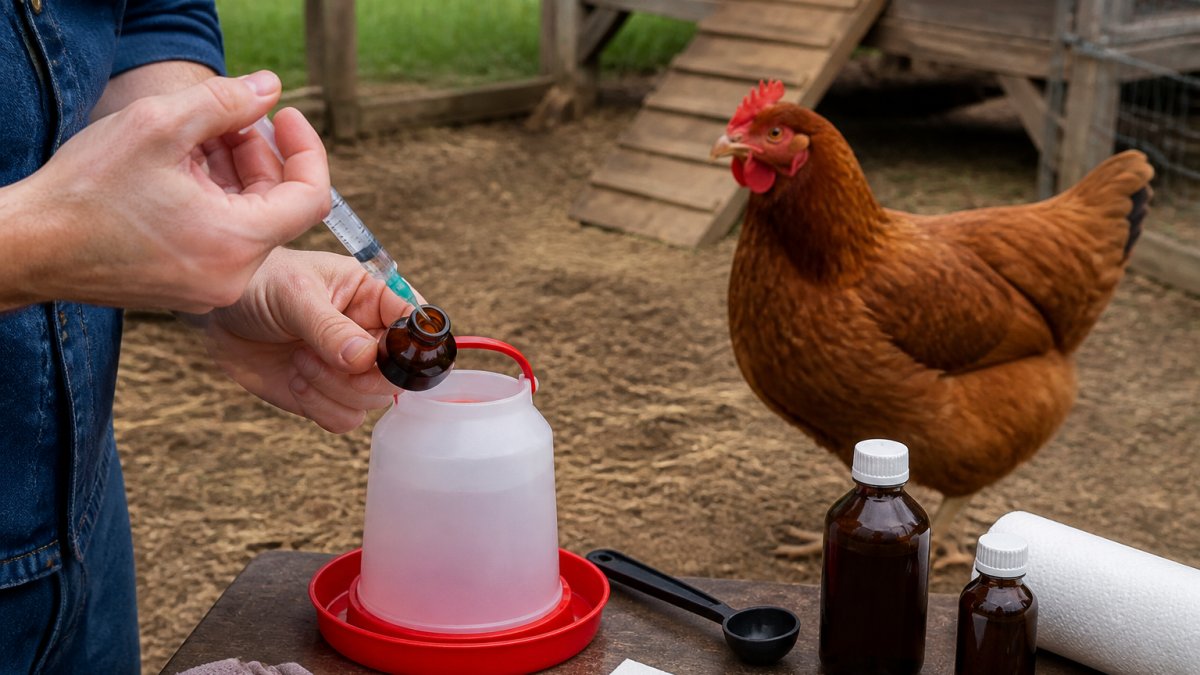
Liquid medication goes into a chicken two ways: in the drinking water for the whole flock, or directly into the beak for a single bird. Water dosing is easier and less stressful.
For water dosing, measure the dose exactly, mix it into the full waterer, and remove every other water source. If the bird can drink clean water elsewhere, it will, and the treatment fails.
CORID (amprolium 9.6%), 16oz →
For direct dosing:
- Wrap the bird in a towel so wings stay still.
- Hold the head level, not tipped back.
- Place a drop at the side of the beak and let the bird swallow.
- Never squirt a full syringe down the throat, which can cause choking.
Our CORID (amprolium 9.6%) 16oz mixes easily into drinking water and is one of the medications we stock specifically for small backyard flocks. For respiratory and general condition support, VetRx Poultry Remedy 2oz is applied topically or added to water.


Pro Tip
Mix only as much medicated water as the flock will drink in 24 hours. Medicated water loses potency over time, so fresh batches each day work better than one big batch left to sit.
Signs a Chicken Is Responding to Treatment
A chicken that is improving shows it in predictable ways, usually in this order: droppings first, then appetite, then energy, then weight. Watch the droppings before you judge anything else.
Signs treatment is working:
- Droppings firm up and lose the blood or watery texture
- The bird eats and drinks on its own again
- It stands, walks, and rejoins the flock
- Comb color returns to a healthy red
- Feathers look less ruffled over several days
Signs treatment is not working:
- Droppings stay bloody or watery past day 3
- The bird refuses food and water entirely
- It sits puffed up with eyes closed
- Weight keeps dropping
- New birds in the flock start showing symptoms
Weigh or handle the bird once a day. A chicken that feels lighter each day is losing the fight, no matter how it looks.
Key Takeaway
Judge recovery by droppings and appetite, not by how the bird looks standing. A chicken can look alert while still losing ground.
What to Do If a Chicken Is Not Improving on Medication
No improvement after 3 to 4 days of correct treatment means something is wrong with the diagnosis, the dose, or the drug. This is the point where most owners either double the dose or switch medications at random. Both make things worse. Work through the likely causes in order instead.
Step 1: Confirm the Dose and the Delivery
Underdosing is more common than resistance. Recheck the math against total flock weight, not bird count, and confirm no second water source was left in the coop. For water-soluble medications, verify the flock actually drank the full medicated volume in 24 hours. A flock that drinks less than expected because of heat, stress, or illness gets a sub-therapeutic dose even when the math on paper is right.
Step 2: Confirm the Diagnosis
Medication cannot work if the underlying cause is misidentified. Coccidiosis, worms, and bacterial infections can present with overlapping signs, and treating for the wrong one does nothing while the real problem progresses. A fecal float test confirms worms and coccidia; a vet or diagnostic lab confirms bacterial infection and identifies which antibiotic is appropriate. Guessing between them wastes the treatment window.
Step 3: Check for a Second Problem
Sick birds often have more than one issue at once, such as worms plus coccidiosis, or a bacterial infection layered on top of a parasitic one. Treating one leaves the other active, and the bird does not improve. If the first treatment produces partial improvement and then stalls, a second concurrent condition is a common explanation.
Step 4: Rule Out an Adverse Reaction
If the bird got worse after starting medication rather than staying flat, consider an adverse reaction or an overdose. Signs include sudden worsening, neurological signs, or a bird that was eating and now will not. Stop the medication and contact a veterinarian before giving another dose.
When to Call a Veterinarian
- No improvement after 4 to 5 days of correct treatment at the correct dose
- Blood in droppings that does not fade by day 3 on Corid
- Multiple birds dying in the flock
- Symptoms you cannot match to a known condition
- Any suspected adverse reaction to a medication
For deworming, we stock Safe-Guard (Fenbendazole) Liquid Dewormer 125 ml and the small-flock-friendly Fenbendazole AquaSol 9 ml, which treats over 800 lbs of chickens and carries no egg withdrawal period.

Watch Out
Never extend a treatment course or repeat a dose without guidance. Extending an antibiotic past its labeled duration, or re-dosing a dewormer too soon, can build resistance and, for food-producing birds, push you past the egg or meat withdrawal window.
Conclusion
Waiting on a sick chicken is the hardest part of backyard flock keeping, and the timeline never matches your worry. Most chicken medication needs 2 to 5 days to show real results, and finishing the full course matters more than any single dose.
RestockYourKit.com stocks the hard-to-find poultry medications small flocks actually need, in the smaller quantities that make sense for a backyard coop. We offer specialized poultry first aid supplies, individual quantities at near-wholesale prices, and free shipping on orders of $79 or more within the US. Get your flock care kit stocked before the next sick bird, and shop now at RestockYourKit.com.
Frequently Asked Questions
How long does it take for chicken medication to work?
Timelines depend on the medication and condition. Corid (amprolium) for coccidiosis typically shows improvement in droppings and appetite within 2-3 days of starting the 5-day treatment course. Dewormers like fenbendazole often clear worms within 24-72 hours, though a second dose 10-14 days later is recommended. Antibiotics vary widely; some show response in 24-48 hours. Always complete the full treatment course even if the chicken looks better.
How can I tell if my chicken's medication is working?
Watch for returning appetite, more active behavior, firmer and less bloody droppings, and a brighter comb. In Corid treatment for coccidiosis, bloody droppings should decrease within 48 hours. With dewormers, you may see dead worms in droppings within a day or two. If symptoms worsen after 3 days or show no change by the end of the treatment course, contact a veterinarian.
Can I stop giving my chicken medication once it looks better?
No. Stopping early is one of the most common mistakes. For coccidiosis, the full 5-day Corid course is needed to clear the parasite, and stopping early allows relapse. Dewormers require a follow-up dose 10-14 days later to kill newly hatched worms. Antibiotics also need a complete course to prevent resistant infections. Always follow the label or your veterinarian's instructions.
What should I do if my chicken is not improving on medication?
First, confirm the diagnosis was correct and the dose was accurate. Check that medicated water is the only water source and that no vitamin supplements or medicated feed are interfering, since these can reduce Corid's effectiveness. If there is no improvement after 3 days, or the chicken worsens, contact a veterinarian for a fecal float or culture. You may need a different medication or additional supportive care.


