

Where to Buy Specialized Medical Supplies
Table of Contents
- Types of Specialized Medical Supplies You Can Buy
- Where to Source Professional Grade First Aid Supplies
- How to Build a Custom Medical Kit for Your Needs
- Understanding FDA Regulated Medical Devices for Home Use
- Evaluating Quality and Sourcing When Buying Medical Supplies
- Specialized Supplies for Specific Use Cases
- Cost-Effective Strategies for Restocking Medical Supplies
- Frequently Asked Questions
Last Updated: September 19, 2026
Types of Specialized Medical Supplies You Can Buy
When you're building a home medical arsenal, understanding what actually exists in the specialized supplies category makes the difference between being prepared and just having a junk drawer of random bandages. Specialized medical supplies go far beyond what you'll find at a typical pharmacy. They include clinical-grade wound management products, diagnostic equipment, respiratory therapy supplies, orthopedic supports, and hard-to-find medications that address specific health scenarios most people never anticipate until they need them.
The key distinction is that specialized supplies are designed for particular use cases rather than generic first aid. A standard adhesive bandage works fine for a paper cut. But if you're managing a chronic wound, dealing with a blister during a wilderness trek, or handling a respiratory condition at home, you need supplies engineered for that specific situation. According to FDA guidance on medical devices for home use, many of these products fall into regulated categories that require proper sourcing and verification.

RestockYourKit.com specializes in exactly this category, custom-built kits and individual quantities of specialized medical supplies at near-wholesale prices. Rather than forcing you to buy in bulk quantities meant for clinics, we stock items in quantities that make sense for personal preparedness, outdoor adventures, and specialized animal care. The difference matters. You can actually afford to keep your kit current without overspending on supplies you won't use.
Where to Source Professional Grade First Aid Supplies
Finding professional-grade first aid supplies requires knowing where to look, because not every retailer carries them. Retail chains stock consumer-grade basics. Wholesale distributors require business licenses and minimum orders. But there's a middle ground where individual consumers can access clinical-grade supplies without jumping through institutional hoops.
Direct sourcing from medical supply retailers designed for consumer access is your best bet. These businesses understand that individuals, outdoor enthusiasts, and small organizations need hospital-grade supplies in reasonable quantities. They stock items like sterile gauze pads in multiple sizes, trauma shears, splinter forceps, and medications in individual packets rather than bulk bottles. The [American Red Cross standards for first aid kit(/products/ultra-light-hiker-first-aid-kit) contents | redcross.org] outline what professional-grade kits should contain, and specialized retailers align with those standards.
Online retailers focused on outdoor recreation and emergency preparedness often carry better selections than general e-commerce platforms. They curate supplies based on actual field use rather than shelf space, which means you're getting products that have been tested in real conditions. RestockYourKit.com, for example, builds kits. The Individual First Aid Kit at $41.99 contains tools and medications specifically selected for common injuries encountered on trails and in backcountry settings, trauma shears, sterile gauze in multiple sizes, blister management supplies, and medications like ibuprofen and diphenhydramine in individual packets.
Verify sourcing transparency. Reliable suppliers document where their products come from and can confirm expiration dates. Since RestockYourKit.com custom-builds kits to order, you receive supplies with the longest possible shelf life. This matters more than most people realize. A first aid kit assembled months ago might contain medications approaching expiration. A kit built when you order it stays current.
How to Build a Custom Medical Kit for Your Needs
Building a custom kit means starting with your actual use case, not a generic template. A wilderness medicine kit looks completely different from a home medical cabinet, which looks different from a car emergency kit. The supplies you need depend on who you're treating, what conditions you're most likely to encounter, and how far you are from professional medical help.
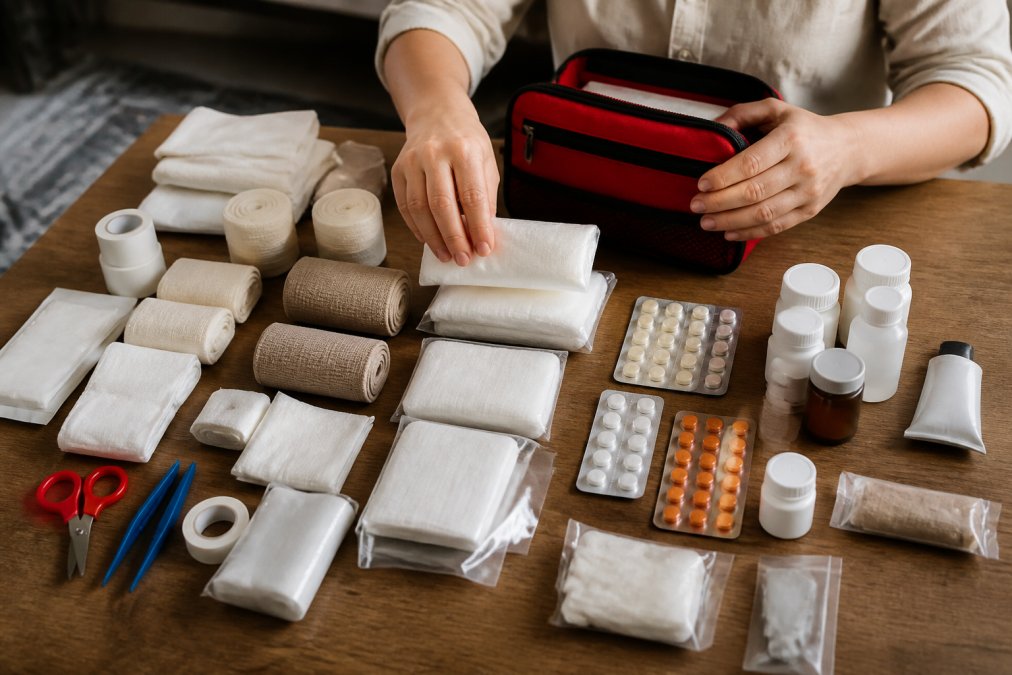
Start by identifying your primary scenarios. Are you preparing for cold and flu season at home? Outfitting a scout crew for a week-long backcountry trek? Building a kit for your car? Managing chronic conditions? Each scenario drives different supply selections. A home kit emphasizes comfort medications and common illness management. A backcountry kit prioritizes lightweight trauma supplies and blister management. A car kit focuses on supplies for accidents and minor emergencies on the road.
Next, audit what you already have. Most people have some first aid supplies scattered around. Rather than starting from zero, identify gaps. If you have basic bandages but no sterile gauze, that's a gap. If you have ibuprofen but no antihistamine for allergic reactions, that's another one. This approach saves money and prevents redundant supplies.
Consider the group size and duration. A kit for one person on a day hike needs different quantities than a kit for eight people on an eight-day expedition. The High Adventure Crew First Aid Kit from RestockYourKit.com at $149.99 is designed specifically for groups of 8-12 people on 8-12 day trips, containing over 250 pieces and meeting Scouts BSA recommended contents for high adventure. An individual day hiker needs something lighter, like the Ultralight Hiker First Aid Kit at $29.99, designed by an Appalachian Trail thru-hiker and weighing just 9 ounces.

Build in modularity. Rather than one monolithic kit, consider multiple smaller kits for different locations, one for your car, one for your home, one for your pack. This approach means you're never without supplies because you took the home kit on a trip. It also makes restocking easier. When you use supplies from your car kit, you only restock that kit rather than rebuilding everything.
Understanding FDA Regulated Medical Devices for Home Use
Not all medical supplies are created equal from a regulatory standpoint. The FDA classifies medical devices into categories, and understanding which category applies to supplies you're buying matters for safety and effectiveness. A thermometer is a Class II medical device. Sterile gauze pads are Class II devices. Compression bandages fall into regulated categories. Knowing this helps you verify you're buying legitimate products rather than counterfeit or substandard alternatives.
Class I devices include basic items like bandages and gauze. They require general controls but not pre-market approval. Class II devices like thermometers and wound care supplies require more rigorous standards and often need FDA clearance before sale (the FDA). Class III devices are the most heavily regulated and typically used in clinical settings.
For home use, the key is sourcing from suppliers who maintain proper documentation. Legitimate medical supply retailers can tell you the FDA classification of products and provide evidence of compliance. They understand that hospital-grade supplies require proper sourcing chains. Counterfeit medical supplies exist, particularly online, and they present real safety risks. A counterfeit thermometer might give you inaccurate readings when you need accurate health information most. Counterfeit sterile supplies might not actually be sterile.
RestockYourKit.com maintains current inventory. When you order a kit, you're receiving products that meet FDA standards for their classification. The supplies in the Weekender Backcountry First Aid Kit at $64.99, including sterile gauze pads, trauma shears, and medications, are sourced to meet regulatory standards for safety and effectiveness.

Evaluating Quality and Sourcing When Buying Medical Supplies
Quality in medical supplies isn't subjective. It's measurable through several concrete factors: sterility standards, expiration dates, manufacturing compliance, and sourcing transparency. A quality supplier can answer specific questions about where products come from and how they're verified.
Sterility matters enormously for wound care supplies. Sterile gauze must be manufactured and packaged to prevent contamination. Non-sterile gauze is cheaper but inappropriate for open wounds. Quality suppliers differentiate clearly between sterile and non-sterile products. Look for packaging that indicates sterility, usually marked as "sterile" on the package with a lot number and expiration date.
Expiration dates on medications and supplies aren't arbitrary. They indicate when the manufacturer guarantees the product's potency and safety. Aspirin tablets, antihistamines, and other medications lose effectiveness over time. A quality supplier either builds kits to order (ensuring maximum shelf life) or clearly displays expiration dates so you know what you're getting.
Manufacturing compliance means the supplier follows established standards for production.
Sourcing transparency means you can trace where products come from. A supplier should tell you about their distribution channels, quality control processes, and inventory management. RestockYourKit.com maintains current inventory and custom builds kits to order rather than warehousing pre-assembled kits that age over time. This approach ensures you receive supplies with maximum shelf life.
Specialized Supplies for Specific Use Cases
Different situations demand different supplies. Understanding which specialized products address your specific scenarios prevents you from buying irrelevant items while missing critical ones.
Wilderness medicine requires lightweight supplies focused on trauma management and blister prevention. Trauma shears for cutting clothing and bandages, sterile gauze in multiple sizes, elastic bandages for sprains, and blister management supplies like moleskin and second skin pads are essential.
Cost-Effective Strategies for Restocking Medical Supplies
Restocking medical supplies efficiently means understanding where you're spending money and finding use points. Most people either buy supplies reactively after using them (expensive and time-consuming) or overbuy trying to be prepared (wasteful and costly).
Frequently Asked Questions
Where can I buy high-grade medical supplies for personal use?
You can purchase specialized medical supplies from dedicated medical supply retailers, online vendors that specialize in first aid and emergency preparedness, and custom kit builders. Look for vendors that source from certified manufacturers and clearly display expiration dates. RestockYourKit.com offers professional-grade supplies in individual quantities at near-wholesale prices, with options like the Individual First Aid Kit ($41.99) and Weekender Backcountry First Aid Kit ($64.99), plus free shipping on orders over $79.
What is the difference between retail and professional-grade medical supplies?
Professional-grade medical supplies meet higher quality standards, include clinical-grade materials, and are often sourced directly from manufacturers rather than repackaged retail versions. They typically have longer shelf lives, better sterility assurance, and are designed for actual emergency use rather than casual first aid. Professional-grade supplies often cost more upfront but provide better reliability when you need them. Retail supplies from general stores may be cheaper but often lack the durability and clinical certification.
How do I verify the quality of medical supplies from online vendors?
Check for vendors that clearly state their sourcing process, display product certifications, and offer detailed inventory information including expiration dates. Reputable vendors custom-build kits to order, ensuring fresh inventory rather than shelf stock. Request information about manufacturer partnerships and ask how often they update their supply lines. Read customer reviews focusing on whether supplies performed as expected in actual use.
Do I need a prescription to buy specialized medical equipment online?
Most first aid supplies and general medical equipment do not require prescriptions. However, some specialized items like certain medications, wound care products for specific conditions, or diagnostic equipment may have restrictions. Over-the-counter medications included in first aid kits (aspirin, ibuprofen, antihistamines) are freely available. Always check product listings for any regulatory notes. If you need prescription medications or specialized medical devices for a specific condition, consult your healthcare provider first.