

Cart
0

Table of Contents
- Understanding Internal Parasites in Small Flocks
- Signs of Worms in Chickens: What to Watch For
- Best Practices for Coop Sanitation
- Poultry First Aid Kit Essentials for Parasite Care
- Seasonal Parasite Calendar for Small Flocks
- Natural vs. Chemical Intervention Protocols
- Biosecurity and Equipment Maintenance for New Additions
- Frequently Asked Questions
Last Updated: September 25, 2026
Understanding Internal Parasites in Small Flocks
Internal parasites are organisms that live inside a chicken's body, feeding off nutrients and causing damage that ranges from reduced egg production to life-threatening illness. Preventing common parasites in small flocks starts with knowing what you're up against: worms, protozoa, and the conditions that let them thrive. This guide from RestockYourKit.com walks through practical prevention, from coop hygiene to seasonal planning.
The two biggest threats are helminths (parasitic worms) and coccidia (single-celled protozoa). Both spread through fecal-oral transmission, meaning birds pick them up from contaminated soil, water, or bedding.
Common Worms and Their Life Cycles
The worms you'll encounter most often are roundworms, cecal worms, and tapeworms. Each has a direct or indirect life cycle that determines how it spreads through your flock.
Roundworms lay eggs that pass through droppings and become infective in soil within days. Cecal worms follow a similar direct cycle. Tapeworms require an intermediate host, often beetles or earthworms, which chickens eat while foraging. Understanding these cycles matters because it tells you where to interrupt them: remove droppings before eggs become infective, and limit foraging in wet, shaded areas where intermediate hosts breed.
A common mistake is assuming a clean-looking coop means a parasite-free flock. Subclinical infection is the norm, not the exception. Birds can carry a moderate parasite load for months without obvious signs.
Signs of Worms in Chickens: What to Watch For
The earliest signs of worms in chickens are easy to dismiss: a drop in egg production, pale combs, and birds that eat well but stay thin. By the time symptoms are obvious, the parasite load is usually significant.
Watch for these indicators:
- Weight loss despite normal appetite
- Diarrhea, sometimes with visible worms in droppings
- Ruffled feathers and reduced activity
- Pale or shrunken combs and wattles
- Delayed growth in young birds
If you suspect worms, a fecal egg count performed by a veterinarian confirms the diagnosis and identifies the species. This matters because different worms require different treatments, and treating blind wastes money while contributing to anthelmintic resistance.
Watch Out
Never deworm your entire flock on a fixed schedule "just in case." Routine, unnecessary deworming is the fastest route to drug-resistant parasites. Test first, then treat only the birds that need it.
Best Practices for Coop Sanitation
Coop sanitation is the single most effective prevention tool you have, because most parasite eggs and coccidia oocysts need moisture and warmth to become infective. A dry, clean coop breaks the cycle before it starts. The goal is not sterility, it is removing the wet, warm conditions that let eggs sporulate and oocysts mature.
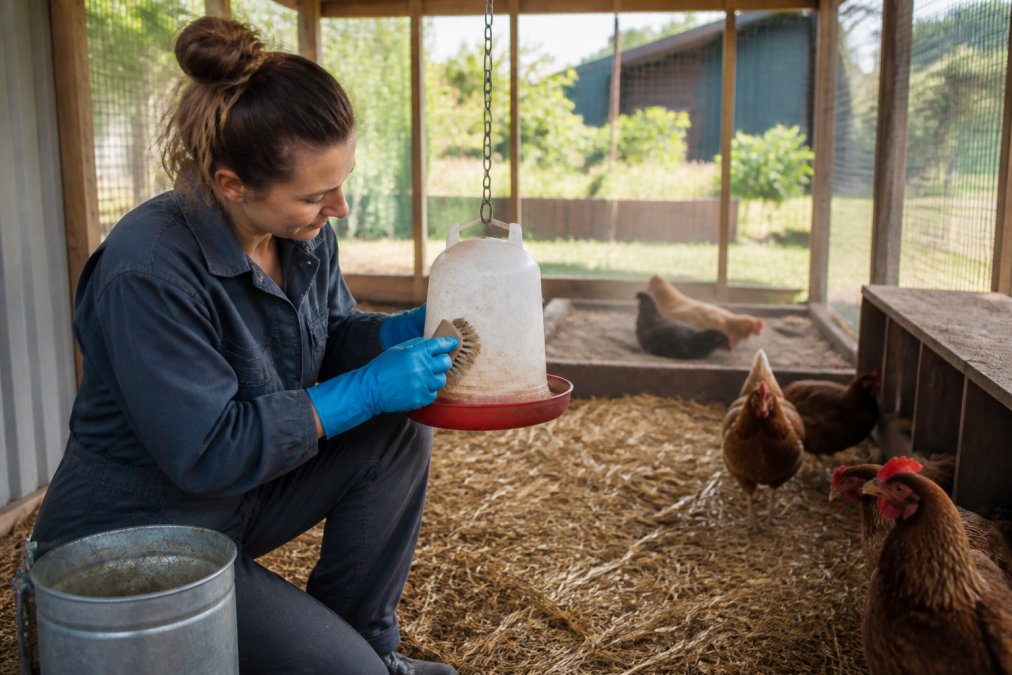
Work from a simple weekly rhythm:
- Daily: Scrape droppings from roosts and nest boxes into a bucket, not onto the floor. Fecal-oral transmission is the primary route for both worms and coccidia, so removing fresh manure removes the source.
- Weekly: Replace bedding fully, scrub waterers and feeders with a mild disinfectant, and wipe down surfaces birds contact.
- Monthly: Empty and scrub waterers with a bottle brush, including the interior of nipples and the lip of troughs where biofilm forms.
- Seasonally: Strip the coop to the floor, treat wood with a poultry-safe disinfectant, and let it dry completely before re-bedding.
Pay attention to corners, under roosts, and the area beneath elevated feeders, these are where moisture collects and where oocysts concentrate.
Bedding Management and Ventilation
Bedding management and ventilation work together, and the interaction matters more than either one alone. Deep bedding that stays dry is fine; deep bedding that stays damp is a parasite nursery. The mechanism is straightforward: coccidia oocysts require moisture and oxygen to sporulate into their infective form, and worm eggs in the genus Ascaridia become infective in soil within roughly two to four weeks under warm, moist conditions.
Integrated Pest Management for the Coop
Sanitation is one leg of an integrated pest management (IPM) approach. The other legs are exclusion, monitoring, and targeted intervention.
- Exclusion: Use hardware cloth rather than chicken wire on vents and openings. Wild birds and rodents are intermediate hosts for some worms and can carry mites and lice into the coop.
- Monitoring: Check a sample of birds monthly for external parasites by parting feathers at the vent and under the wings. Look for mite eggs clustered at feather shafts and for lice nits.
- Targeted intervention: Treat only when monitoring confirms a problem. Blanket treatment of a clean flock selects for resistance and wastes product.
Pro Tip
Keep a dedicated coop-only set of tools, scraper, bucket, and gloves, that never goes into another coop or into the house. Shared tools are one of the most overlooked ways parasites move between flocks.
Manure Management and Composting
How you handle manure determines whether you are removing parasites or recycling them. Fresh manure should not go directly onto pasture that birds will graze.
Poultry First Aid Kit Essentials for Parasite Care
A poultry first aid kit essentials list for parasite care differs from a general wound kit. You need tools to identify the problem, treat the bird, and support recovery.
Deluxe Backyard Chicken First Aid Kit →

At minimum, keep:
- A fecal sample container for vet testing
- Nitrile gloves and antiseptic wipes for handling infected birds
- Probiotics and electrolytes to support birds recovering from infestation
- A reliable dewormer, stored per label instructions
- A poultry health reference guide for identifying species and dosing
Seasonal Parasite Calendar for Small Flocks
Parasite pressure follows the seasons, and most flock owners miss this entirely. Timing your prevention around the calendar is more effective than reacting after an outbreak.
| Season | Primary Threat | Key Action |
|---|---|---|
| Spring | Coccidia, roundworms | Test fecal samples as birds return to pasture |
| Summer | External parasites, tapeworms | Inspect for mites weekly, limit wet foraging areas |
| Fall | Reinfestation risk | Full coop cleanout, cull chronically thin birds |
| Winter | Dormant larvae in soil | Deep-clean equipment, plan spring testing |
Natural vs. Chemical Intervention Protocols
Most guides either push natural remedies or push dewormers. Neither is a protocol. A protocol is a decision tree: what you do at each level of parasite pressure, and when you escalate. This section lays out that framework, which is the piece competitors consistently skip. Establishing these thresholds allows you to integrate targeted natural pest control into your management plan without compromising the health of your flock.
Step 1: Establish a Baseline
Before choosing any intervention, know what you are dealing with. A fecal egg count performed by a veterinarian or a veterinary diagnostic lab identifies the species and gives you a quantitative load. Different worms respond to different drugs, and coccidia require a completely different class of treatment than helminths. Treating blind wastes money and contributes to anthelmintic resistance.
Step 2: Match the Intervention to the Load
Prevention tier (no confirmed load): Focus on management. Dry litter, pasture rotation, clean waterers, and dust baths. Apple cider vinegar in water and diatomaceous earth in dust baths are popular, but treat them as hygiene aids, not treatments. They do not clear an established worm burden.
Step 3: Respect Withdrawal Periods
Withdrawal periods exist because drug residues can carry into eggs and meat. The withdrawal period is printed on the product label and varies by product and formulation. Do not rely on a general rule of thumb from a forum, read the specific label for the specific product you are using. Eggs laid during the withdrawal window should be discarded, not sold or eaten.
Step 4: Support Recovery
A bird recovering from a heavy parasite load needs more than the dewormer. Provide electrolytes and probiotics to support gut recovery, and expect a lag of several weeks before egg production returns. Do not re-treat immediately if production stays low, re-test first, because the bird may simply need time.
What Natural Methods Can and Cannot Do
Natural methods are strongest at the prevention tier. Pasture rotation interrupts life cycles by moving birds off contaminated ground before eggs become infective. Diatomaceous earth in dust baths helps with external parasites by abrading the waxy cuticle of mites and lice. Clean water reduces fecal-oral exposure.
When to Call a Veterinarian
Call a veterinarian when you see blood in droppings (a hallmark of coccidiosis in young birds), when multiple birds are affected at once, when a bird is lethargic and not eating, or when a dewormer you used did not resolve the problem. A veterinarian can run a fecal float, identify the species, and prescribe the correct drug at the correct dose, something no over-the-counter product can do.
Biosecurity and Equipment Maintenance for New Additions
New birds are the most common way parasites enter a clean flock. Biosecurity for new additions means quarantine, not optimism.
Frequently Asked Questions
What are the most common internal parasites in backyard chickens?
The most common internal parasites in small flocks are roundworms, cecal worms, and tapeworms. Coccidia, a protozoan parasite, also frequently affects chickens, especially young birds. These parasites live in the digestive tract and can cause weight loss, reduced egg production, and diarrhea. A fecal egg count performed by a veterinarian can identify which parasites are present, allowing you to target treatment correctly rather than deworming blindly.
How can I tell if my chickens have worms?
Signs of worms in chickens include pale combs, weight loss despite eating, diarrhea, and visible worms in droppings. You may also notice reduced egg production or lethargy. However, subclinical infections are common, meaning birds can carry a parasite load without obvious symptoms. Regular fecal testing is the only reliable way to confirm an infestation, so monitor your flock and consult a veterinarian if you suspect parasites.
Are there natural ways to prevent parasites in poultry?
Natural prevention focuses on management: rotating pasture to break parasite life cycles, keeping bedding dry, providing dust baths with diatomaceous earth, and avoiding overcrowding. Adding probiotics and electrolytes supports gut health and immunity. Some owners use garlic or apple cider vinegar, but evidence for these is limited. For active infestations, a veterinarian may recommend anthelmintics like fenbendazole, available in small quantities from suppliers like RestockYourKit.com.
What should I include in a poultry first aid kit for parasite issues?
A poultry first aid kit essentials list for parasite care includes a dewormer such as fenbendazole, a mite treatment like Elector PSP, antiseptic wipes, gloves, and a fecal sample container. The Deluxe Backyard Chicken First Aid Kit from RestockYourKit.com ($129.98) includes many of these items plus care cards for dosing guidance. Having supplies on hand lets you act quickly when you spot signs of worms or external parasites.


