

Cart
0
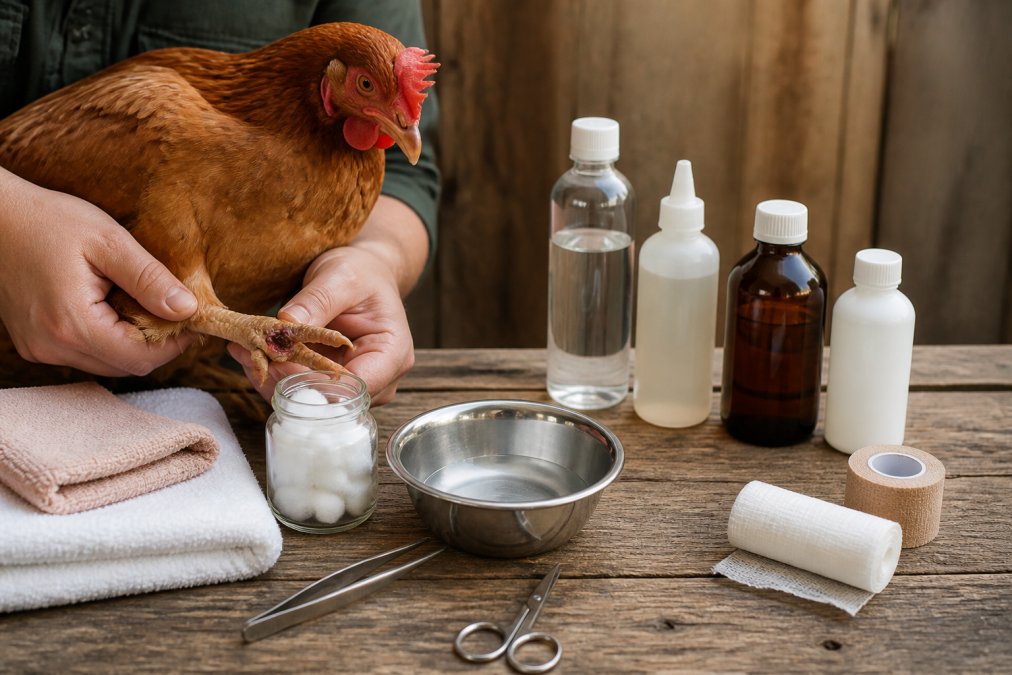
Table of Contents
- What Is Bumblefoot and How to Identify It Early
- 1. Epsom Salt Soaks: The First-Line Bumblefoot Treatment
- 2. Drawing Salves and Antimicrobial Ointments
- 3. Wound Cleaning, Disinfection, and Debridement
- 4. How to Wrap a Chicken Foot for Bumblefoot
- 5. Chicken Bumblefoot Surgery Kit: When Home Removal Is Necessary
- 6. Bumblefoot Recovery Time and Post-Treatment Care
- 7. Coop Sanitation and Roost Height Adjustments to Prevent Recurrence
- Frequently Asked Questions
Last Updated: September 26, 2026
What Is Bumblefoot and How to Identify It Early
Bumblefoot is a bacterial infection of the footpad, medically called pododermatitis, that shows up as swelling, heat, and a dark scab on the plantar surface. Catching it early is the difference between a simple soak routine and a surgical procedure. This guide from RestockYourKit.com walks through 7 ways to treat bumblefoot in chickens at home, from first-line soaks to post-treatment care.
Stages of Infection: From Mild Erythema to Deep Abscess
Early-stage bumblefoot looks like mild erythema, a warm pink footpad with slight swelling. The chicken may show subtle lameness or favor the other leg. At this point, an Epsom salt soak and a drawing salve often resolve it.

| Stage | What You See | Typical Approach |
|---|---|---|
| Early | Mild swelling, warm footpad, small scab | Soaks and ointment |
| Moderate | Firm swelling, dark scab, visible lameness | Soaks, salve, wrapping |
| Advanced | Hot, swollen foot, deep abscess | Debridement, possible vet care |
Merck Veterinary Manual on pododermatitis in poultry
1. Epsom Salt Soaks: The First-Line Bumblefoot Treatment
Pro Tip
Add the Epsom salt to water that feels comfortably warm on your wrist, not hot. Chickens have sensitive footpads, and water that's too warm causes more swelling, not less.
After soaking, pat the foot dry with a clean gauze pad. Don't rub. You want the tissue intact, not irritated.
2. Drawing Salves and Antimicrobial Ointments
After the soak, apply a drawing salve or antimicrobial ointment to the affected area and cover it with a gauze dressing. Change the dressing daily.
3. Wound Cleaning, Disinfection, and Debridement
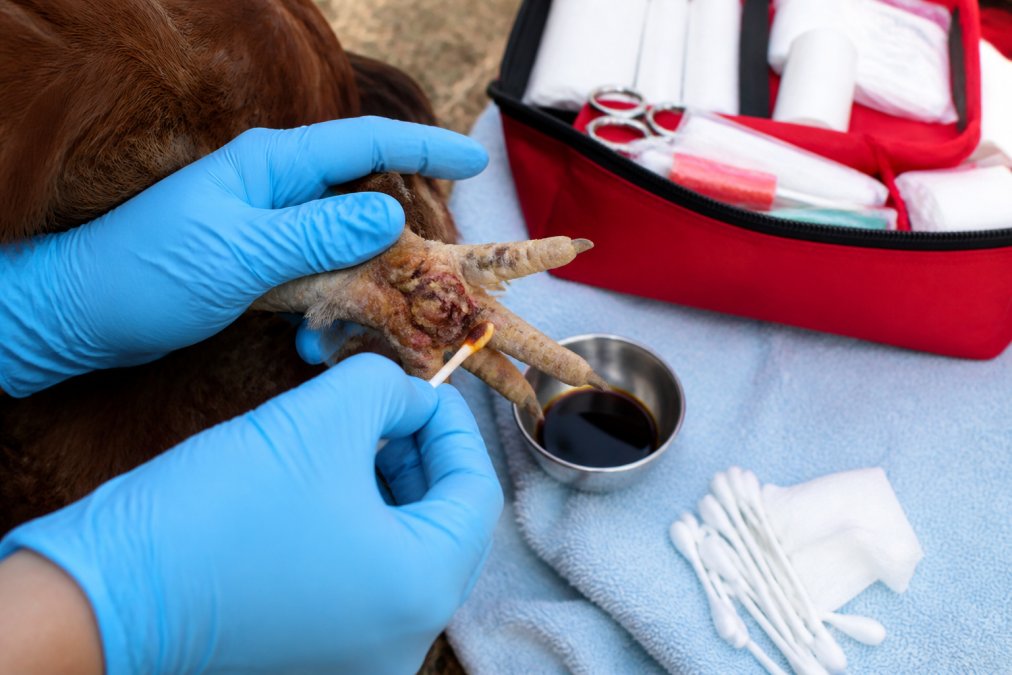
Once the scab softens, clean the wound with a saline solution or an antiseptic wipe. Povidone-iodine swabsticks work well because they're non-stinging and easy to control. Swab the area gently, working from the center outward.
Pain Management During Debridement
Most guides skip this, and it's the part that determines whether your bird tolerates the procedure or goes into shock. A chicken's footpad is densely innervated, and pulling a firmly attached kernel without any pain control is genuinely painful. A few practical protocols backyard keepers use: Minimizing this acute stress is vital for the overall health of your flock, just as maintaining proper nutrition remains the most effective way to improve egg quality throughout the recovery process.
- Soak longer before you pull. Twenty minutes in warm Epsom salt water, not ten, softens the keratin enough that the scab often lifts with light traction instead of force.
- Topical lidocaine. A small amount of over-the-counter 4% lidocaine gel applied to the scab 5 to 10 minutes before debridement dulls the surface. Ask your veterinarian before using it on a bird you intend to keep for eggs, and wipe the residue off before bandaging.
- Oral pain relief is a veterinary call. Meloxicam (Metacam) is the most common poultry analgesic, but dosing is weight-based and species-specific. Do not guess. A single wrong dose can cause kidney damage in a small bird.
- Work in short bursts. Two to three minutes of manipulation, then a break. If the bird's breathing speeds up, she vocalizes sharply, or she goes limp, stop and resume the next day.
- Keep her calm. Wrap the body in a towel so only the affected foot is exposed. A flapping, struggling bird is harder to work on and more likely to tear tissue.
Step-by-Step Debridement
- Soak the foot for 15 to 20 minutes in warm Epsom salt water.
- Pat dry with sterile gauze. Do not rub.
- Swab the scab and surrounding skin with povidone-iodine.
- Apply lidocaine gel if you're using it, and wait 5 to 10 minutes.
- Using sterile tweezers or gloved fingers, apply gentle upward traction to the edge of the scab. If it lifts, continue. If it resists, stop.
- If the scab comes off, a firm kernel of caseous pus (yellowish, rubbery, sometimes described as cheesy) is usually underneath. Remove it in one piece if possible.
- Flush the cavity with sterile saline using an irrigation syringe.
- Pack with triple antibiotic ointment, not a spray, so it stays in the wound.
- Bandage immediately (see Section 4).
Sterile technique matters here. Wear nitrile gloves. Use a fresh gauze pad for each wipe. Contaminated tools reintroduce bacteria and undo your progress.
Watch Out
Never dig at a scab that hasn't softened, and never use a scalpel on a foot you can't fully visualize. You risk cutting into healthy tissue and creating a larger wound than the one you're treating. If the kernel is deeply embedded, if you see multiple abscesses, or if the bird is non-weight-bearing, this is a veterinary case, not a kitchen-table one.
When to Stop and Call a Vet
- The bird stops eating or drinking for more than 24 hours
- The foot is hot, swollen above the hock, or has a foul smell
- You see red streaks tracking up the leg (a sign of ascending infection)
- The bird is gasping, listless, or has a purple comb
- You've debrided twice and the wound is not improving
A veterinarian can culture the wound, prescribe systemic antibiotics, and perform surgical drainage under anesthesia. Home treatment is appropriate for a single, well-defined kernel. Anything beyond that is a medical problem, not a husbandry one.
4. How to Wrap a Chicken Foot for Bumblefoot
A proper wrap keeps ointment in place, cushions the footpad, and prevents the chicken from picking at the wound. Here's how to wrap a chicken foot for bumblefoot:
- Apply ointment to the cleaned footpad
- Place a sterile gauze pad over the wound
- Wrap self-adhesive vet wrap around the foot, snug but not tight
- Secure the top edge with hypoallergenic silk tape
- Check circulation after 30 minutes
5. Chicken Bumblefoot Surgery Kit: When Home Removal Is Necessary
The Non-Surgical Bumblefoot Treatment Kit for Chickens + Poultry includes the essentials for this work: sterile gauze pads, povidone-iodine wipes, triple antibiotic ointment packets, nitrile gloves, silk tape, and vet wrap. It's a 20+ piece kit priced at $11.99, which saves more than 20% versus buying each item separately.

Key Takeaway
Home removal works best on a single, well-defined kernel. If the foot is hot, the chicken refuses to stand, or you see multiple abscesses, that's a veterinary case, not a kitchen-table one.
6. Bumblefoot Recovery Time and Post-Treatment Care
Bumblefoot recovery time runs 2 to 4 weeks for mild cases and 4 to 8 weeks for advanced infections that required debridement. The wound heals from the inside out, so the surface may close before the tissue underneath is fully repaired. Plan for the long end of that range, and don't pull the bandage the moment the scab looks closed.
Mobility Aids: Keeping the Bird Off the Footpad Without Stressing Her Out
This is the part most guides skip. A bird that keeps walking on a healing footpad re-injures it, but a bird locked in a small crate for six weeks develops its own problems: muscle wasting, feather damage, and stress that suppresses the immune response you need for healing.
A workable middle ground:
- Short supervised yard time. Ten to fifteen minutes, twice a day, on soft grass or bedding. Let her walk, dust-bathe, and rejoin the flock visually. This keeps her social rank and her circulation.
- A padded recovery pen. A dog crate or a small wire pen inside the coop, lined with 3 to 4 inches of soft pine shavings, keeps her off hard surfaces while staying near the flock.
- A wrapped foot is not a waterproof foot. Keep her out of mud, puddles, and wet litter. A soaked bandage is a bacterial incubator.
- Check the wrap twice a day. Look for swelling above the wrap, a slipped bandage, or a bird chewing at the dressing. Any of those means rewrap now, not tomorrow.
- Reintroduce carefully. After a long isolation, put her back on the roost at night so she wakes up with the flock instead of walking into a territorial dispute.
Nutritional Support for Tissue Repair
Healing a footpad takes protein, vitamin A, and zinc. A bird on layer pellets alone is usually fine, but a bird in pain often eats less, and that's where recovery stalls. Practical additions:
- Scrambled or hard-boiled egg. One egg per day for the first week is a cheap, highly digestible protein boost most chickens will eat even when off their feed.
- Vitamin A. Supports epithelial tissue repair. A few drops of a poultry vitamin supplement in the water, or grated carrot and dark leafy greens, covers the need without over-supplementing.
- Vitamin E and selenium. Commonly paired in poultry recovery supplements for tissue healing. Follow the label; more is not better with selenium.
- Electrolytes and probiotics. Especially useful if the bird has been on antibiotics, which disrupt gut flora. Offer in the water for the first 5 to 7 days.
- Free-choice grit and oyster shell. Keeps digestion moving if you're adding new foods.
Signs Recovery Is on Track
- The bird is eating, drinking, and passing normal droppings
- She puts weight on the foot for short periods by week two
- The wound bed is pink and clean, not gray or foul-smelling
- Swelling above the wrap is going down, not up
Signs It's Going Backward
- Lameness gets worse instead of better after the first week
- The foot is hotter than it was on day one
- New swelling appears above the hock
- The bird loses weight or stops eating
Any of those means the infection is not controlled. Call a veterinarian.
Key Takeaway
Recovery is a two-front job: keep the footpad off hard surfaces and keep the bird eating. A chicken that heals slowly is almost always a chicken that stopped eating, not a chicken whose wound care failed.
7. Coop Sanitation and Roost Height Adjustments to Prevent Recurrence
Prevention comes down to two things: coop sanitation and roost height. Bumblefoot is a pressure-and-bacteria problem, so reducing both is the fix.
USDA Animal and Plant Health Inspection Service biosecurity guidance
Frequently Asked Questions
Should you squeeze bumblefoot in chickens?
Never squeeze a bumblefoot abscess. Squeezing can push bacteria deeper into the footpad, cause severe pain, and spread infection to the bone. If the scab is loose and a plug of necrotic tissue and pus is ready to come out, gentle manipulation during an Epsom salt soak is fine. Otherwise, use a drawing salve like PRID to soften the scab over several days. If the foot is hot to the touch or not improving, seek veterinary care for proper draining.
Can chickens heal from bumblefoot on their own?
Mild cases with a small scab and no swelling may resolve on their own if the coop floor is kept dry and clean, but most cases progress without intervention. The bacteria that cause bumblefoot (often Staphylococcus aureus) stay trapped under the scab, and the infection can move into the tendon or bone. Early treatment with soaks and antimicrobial ointment shortens recovery time significantly and reduces the risk of lameness becoming permanent.
Can I put Neosporin on chicken bumblefoot?
Triple antibiotic ointment packets, which are similar to Neosporin, are safe for topical use on a chicken's footpad. Apply a small amount after cleaning the wound and cover with a gauze dressing and vet wrap. Do not use ointments that contain pain relievers like lidocaine or hydrocortisone, as those ingredients are toxic to poultry. The Non-Surgical Bumblefoot Treatment Kit includes four triple antibiotic ointment packets sized for this exact use.
How long does bumblefoot recovery time take?
Mild cases caught early often heal in 7 to 14 days with daily soaks and bandage changes. Moderate cases with a visible abscess may take 2 to 4 weeks. If surgery or debridement is needed, expect 3 to 6 weeks for full recovery, including regrowth of the footpad skin. Keep the bird on soft bedding and limit roost height during healing to reduce pressure on the treated foot.
What is the best ointment for treating bumblefoot?
For drawing out infection, PRID Drawing Salve is a common choice because it softens the scab and helps pull debris to the surface. For antimicrobial coverage after cleaning, triple antibiotic ointment or a hypochlorous acid spray like the generic Vetericyn Plus Poultry Care Spray works well and has no egg withdrawal period. Match the ointment to the stage: drawing salve for a hard scab, antimicrobial ointment for an open wound.
Bumblefoot is manageable at home when you catch it early and stay consistent with treatment. The hard part isn't the technique; it's having the right supplies on hand before you need them. RestockYourKit.com builds custom first aid kits with the gauze, vet wrap, iodine wipes, and drawing salve that bumblefoot care actually requires, all at near-wholesale prices. Get started with RestockYourKit.com and keep your flock prepared.


