

Cart
0

Table of Contents
- Understanding Sudden Death in Chickens
- Sudden Death Syndrome in Chickens
- When a Chicken Died Suddenly With No Signs
- Infectious Diseases and Toxins
- Predation, Trauma, and Accidents
- What to Do When a Chicken Dies
- Prevention and Early Warning Signs
- Frequently Asked Questions
Last Updated: October 12, 2026
Understanding Sudden Death in Chickens
Losing a chicken to sudden death is one of the hardest parts of backyard poultry keeping.
Sudden death in chickens happens more often than many keepers realize. Causes range from metabolic issues to infections, predation, and environmental stress, and some birds show no warning signs.
At RestockYourKit.com, we help backyard poultry enthusiasts prepare for flock emergencies. Knowing the most common causes of sudden death helps you recognize risk factors early.
Sudden Death Syndrome in Chickens
Sudden death syndrome affects poultry, particularly broiler chickens and fast-growing breeds. Birds can die within hours of symptoms, eating normally one moment, dead the next.
Metabolic Origins and Rapid Growth
Rapid growth is a major risk factor for sudden death in chickens.
This mismatch between growth rate and organ development stresses the system. Broiler hearts work overtime to pump blood through an increasingly heavy body.
Young broilers face the highest risk, birds as young as three days old can die from metabolic stress, and the problem worsens with age and weight.
Nutrition and High-Energy Diets
Feed plays a critical role. High-energy, high-carbohydrate diets push growth rates even faster, raising mortality along with meat production.
Birds fed rich grain diets without adequate minerals and vitamins face additional stress.
Selective feeding creates another problem: chickens that pick through mixed feed fill up on empty calories while missing essential minerals.
Treats like scratch grains or bread worsen the problem, they are low in the nutrients chickens need for healthy organ development.
When a Chicken Died Suddenly With No Signs
The most frustrating scenario is finding a chicken dead with no warning, active and eating one moment, gone the next.
Heart and Organ Failure
Heart failure is the leading cause of sudden death in chickens with no prior symptoms, most often in fast-growing birds whose hearts cannot handle the strain.
Organ failure can hit multiple systems at once, when the liver, kidneys, or lungs fail suddenly, the others cannot compensate fast enough.
Developmental heart issues are common in broilers: the heart muscle does not fully mature before the bird reaches market weight, so a spike in activity or stress can trigger immediate failure.
Environmental Stress Factors
Heat stress kills chickens fast, a bird can go from normal to dead in minutes during extreme heat.
Cold stress also triggers sudden death, though usually more slowly.
Dehydration compounds environmental stress, a chicken without water for even a few hours on a hot day may not survive.
Overcrowding stresses the flock. When birds cannot move freely or reach food and water, stress hormones spike and sudden organ failure becomes more likely.
Infectious Diseases and Toxins
Disease and toxins can kill a chicken in hours, sometimes before any symptom appears. Know which pathogens move fast, how they spread, and which require you to call authorities.
Viral Diseases That Kill Quickly
Marek's disease is a herpesvirus spread through coop dander and dust, typically striking birds 8 to 24 weeks old.
Newcastle disease is a paramyxovirus with a wide range of virulence.
Highly pathogenic avian influenza (HPAI) often presents as sudden death with few or no preceding symptoms.
Infectious bronchitis is a coronavirus affecting the respiratory tract and oviduct.
Bacterial and Fungal Infections
Fowl cholera (Pasteurella multocida) can cause sudden death in older birds, especially with poor sanitation or standing water.
Aspergillosis is a fungal infection from inhaling Aspergillus spores in moldy bedding, damp feed, or contaminated incubators.
Botulism comes from eating decaying carcasses, spoiled feed, or stagnant water containing Clostridium botulinum toxin. It causes progressive paralysis from the legs upward, and death comes from respiratory paralysis.
Toxins in Feed and Water
Aflatoxins are produced by Aspergillus molds on corn, peanuts, and other feed stored in warm, humid conditions.
Mycotoxins beyond aflatoxin, ochratoxin, T-2 toxin, and fumonisin, cause kidney damage, mouth lesions, and neurological signs.
Heavy metals like lead and zinc can leach into water from old pipes, galvanized containers, or painted surfaces.
Pesticides and rodenticides frequently cause sudden death in free-ranging flocks.
Reportable Diseases and Biosecurity
Some chicken diseases must be reported to animal health authorities. Highly pathogenic avian influenza and virulent Newcastle disease are the two most serious. If you suspect either, do not move birds, do not sell eggs or meat, and contact your state animal health office immediately.
Warning signs that should trigger a call, not a wait-and-see approach:
The Chicken Health Handbook, 2nd Edition (paperback) →
- Three or more deaths in 48 hours.
- Sudden drop in egg production across the flock.
- Swollen heads, purple combs, or neurological signs in multiple birds.
Biosecurity that actually works:
- Keep a dedicated pair of boots and coveralls for the coop. Do not wear them into feed stores, auctions, or other poultry premises.
- Quarantine new birds for 30 days, not two weeks, when disease risk is elevated.
- Disinfect feeders and waterers weekly with a poultry-safe disinfectant.
Key Takeaway
Most sudden deaths from disease or toxins are preventable with three habits: clean water, fresh feed stored dry, and strict biosecurity. When in doubt about a reportable disease, call first and clean later.
Predation, Trauma, and Accidents
Not all sudden deaths are from disease or metabolic failure. Predators like raccoons, hawks, and foxes kill chickens in seconds.
Predator attacks often leave obvious signs, missing feathers, wounds, or trauma injuries, but sometimes the bird is killed and left hidden.
Cannibalism among stressed birds can turn deadly, pecking injuries become infected, and a bird can bleed out from flock-mate wounds.
What to Do When a Chicken Dies
Finding a dead chicken is stressful. After grief, respond with a structured approach that protects the rest of your flock and, when possible, identifies what happened.
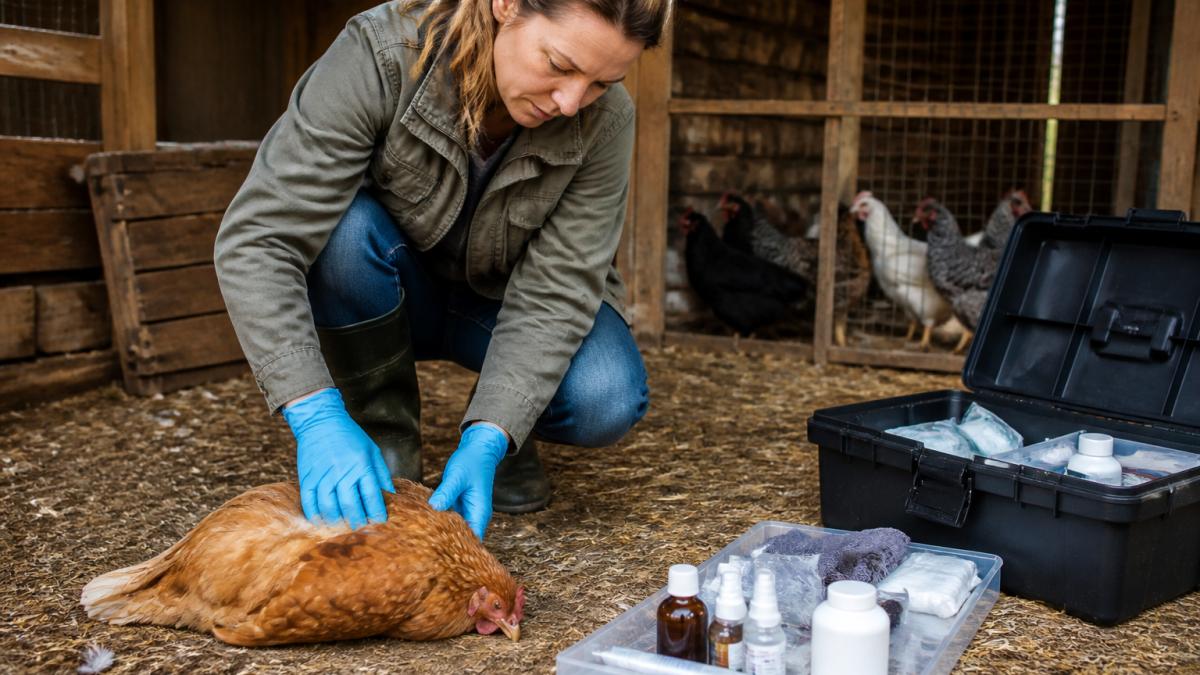
A Practical Triage Checklist for a Sudden Death
Before you move the bird, slow down and observe. The clues around the carcass often tell you more than the carcass itself. Work through these questions in order:
1. Where was the bird found?
- Inside a closed coop with no entry points disturbed → think metabolic, cardiac, heat, or disease.
- Outside the coop, near a fence line, or with disturbed bedding → think predation or trauma.
- Under a roost or in a corner → think overcrowding, smothering, or a bird that went down and could not get back up.
2. What does the body look like?
- Missing head, neck, or internal organs, or a neat pile of feathers → predator kill (raccoon, fox, hawk, owl).
- Bloody vent, prolapse, or an egg-bound appearance → reproductive or laying-related cause, more common in hens.
- No visible injury, bird on its side or back, comb pale or blue → cardiac or metabolic failure.
3. What was the bird's age and type?
- Broiler or fast-growing meat breed under 8 weeks → sudden death syndrome (SDS) is a leading suspect.
- Laying hen in peak production → egg binding, prolapse, fatty liver hemorrhagic syndrome, or heat stress.
- Chick under 2 weeks → chilling, dehydration, pasty butt, or a congenital defect.
4. What changed recently?
- New feed batch, new birds introduced, weather swing, power outage, or a new predator sighting. Any of these narrows the cause quickly.
Pro Tip
A definitive cause often requires a necropsy. Triage narrows the likely category; it does not replace professional examination. If more than one bird dies within 72 hours, skip triage and go straight to testing.
Immediate Steps to Protect the Rest of the Flock
Isolate and observe:
- Move any bird showing lethargy, ruffled feathers, or labored breathing to a separate crate away from the flock.
- Keep the isolated bird warm, quiet, and hydrated. Do not reintroduce it until you know what you are dealing with.
- Watch remaining birds closely for 14 days. Most infectious diseases show a second case within that window.
Check the basics:
- Smell and inspect the water. Biofilm, algae, or a sulfur odor means dump, scrub, and refill.
- Inspect feed for clumping, discoloration, or a musty smell, signs of mold and possible aflatoxin.
- Confirm ventilation. Ammonia smell at bird height means the coop needs more airflow, which reduces respiratory disease risk.
Reduce stress on the survivors:
- Avoid adding new birds, moving the flock, or changing feed for at least two weeks after an unexplained death.
- Keep handling to a minimum. Stress can trigger a second metabolic death in broiler flocks.
Document everything:
- Note age, breed, sex, and production status of the dead bird.
- Record what you fed, when, and from which bag or batch.
- Log temperature highs and lows for the 48 hours before death.
When and How to Arrange a Necropsy
A necropsy is a veterinary examination of the carcass and the only reliable way to confirm cause of death when triage clues are ambiguous or multiple birds are affected.
When a necropsy is worth the cost and effort:
- Two or more deaths in a week with no obvious predator or trauma.
- Any death in a flock where you sell eggs, meat, or live birds.
- Symptoms in surviving birds that suggest a contagious disease.
How to preserve and transport the carcass:
- Refrigerate, do not freeze. Freezing ruptures cells and ruins tissue diagnosis.
- Place the bird in a sealed plastic bag, then in a second bag or cooler with ice packs.
- Submit within 24 hours when possible. After 48 hours, tissue quality drops sharply.
What to bring and tell the veterinarian:
- Flock size, ages, breeds, and production type.
- Vaccination history and any recent medications or dewormers.
- Feed brand, batch, and how it is stored.
Your local university extension office can often refer you to a poultry-friendly veterinarian or a state diagnostic laboratory that performs low-cost necropsies for backyard flocks.
Biosecurity and Reportable-Disease Warning Signs
Some causes of sudden death are not just a flock problem, they are a public health and industry problem. Two diseases require immediate escalation:
- Highly pathogenic avian influenza (HPAI), sudden death, swollen head, purple discoloration of comb and wattles, and a sharp drop in egg production.
- Virulent Newcastle disease (vND), sudden death, twisted neck, paralysis, and respiratory distress.
Both are reportable. If you suspect either, do not move birds, do not sell eggs or meat, and do not wait for a necropsy. Contact your state animal health office or the USDA toll-free line for sick or dead bird reporting immediately.
Everyday biosecurity that limits spread:
- Dedicate one pair of boots and one set of clothes to the coop. Do not wear them anywhere else.
- Wash hands before and after handling birds.
- Quarantine any new bird for at least 30 days, not two weeks, when disease risk is elevated.
Watch Out
If three or more birds die within a 48-hour window, treat it as a potential reportable disease until proven otherwise. Isolate, stop all movement on and off the property, and call your state animal health office.
Differences by Age, Breed, and Production Type
Sudden death looks different depending on what kind of chicken you keep. Do not apply broiler advice to a backyard layer flock or vice versa.
- Broiler and fast-growing meat breeds: SDS, ascites, and heart failure dominate. Prevention focuses on slowing growth, managing feed energy, and controlling heat.
- Laying hens: Egg binding, prolapse, fatty liver hemorrhagic syndrome, and heat stress are the leading sudden causes. Prevention focuses on calcium balance, body condition, and coop temperature.
- Chicks under 2 weeks: Chilling, dehydration, pasty butt, and starve-out are common. Prevention focuses on brooder temperature, water access, and checking vents daily.
Matching your response and prevention plan to your flock type is the single biggest improvement most keepers can make after an unexplained death.
Prevention and Early Warning Signs
The best response to sudden death is prevention. Knowing the warning signs helps you catch problems before they become fatal.
Watch for these early warning signs:
- Lethargy or lack of movement
- Ruffled feathers or poor appearance
- Loss of appetite or reduced water intake
Reduce sudden death risk with good management:
- Provide clean water at all times
- Feed a balanced, age-appropriate diet
- Maintain proper temperature and ventilation in the coop
Backyard chicken keepers who invest in preparation handle emergencies better. The Chicken Health Handbook provides detailed guidance on recognizing and treating poultry diseases.
Our Basic Backyard Chicken First Aid Kit includes care cards covering common conditions and treatments.

Frequently Asked Questions
Can a chicken die suddenly with no symptoms?
Yes. Sudden death syndrome in chickens can occur without warning signs, particularly in broiler breeds and fast-growing birds. Heart failure, metabolic collapse, or acute infections may cause death within hours or minutes. A chicken that appeared healthy and normal at feeding time can be found deceased by evening. This is why monitoring your flock daily and maintaining biosecurity is critical.
What should you do when a chicken dies unexpectedly?
First, isolate the remaining flock and check all birds for signs of illness or injury. Remove the deceased bird carefully using gloves to prevent disease transmission. Document the chicken's age, breed, and any symptoms you noticed. Consider arranging a necropsy if multiple deaths occur or if the cause is unclear. Clean and disinfect the coop area. Keep the body refrigerated if you plan to have a veterinary examination performed.
What is the most common cause of sudden death in backyard chickens?
Metabolic disease is the leading cause in fast-growing broiler breeds, while disease, predation, and trauma account for many deaths in mixed-age flocks. Nutritional imbalances, heat stress, and organ failure are also common. The cause depends on your flock's age, breed, and living conditions. Younger birds are more vulnerable to metabolic issues, while older birds face greater disease and predation risk.
When should I contact a veterinarian after a chicken dies?
Contact a veterinarian immediately if multiple chickens die within a short period, if you suspect a reportable disease, or if the cause is unknown. A necropsy can identify infectious diseases, toxins, or organ failure. Even a single unexplained death warrants professional evaluation if your flock shows other signs of illness. Many veterinarians offer necropsy services; costs vary but are worth the investment for disease diagnosis and flock protection.
Sudden death in chickens is tragic, but understanding the causes helps you protect your flock. Metabolic stress, disease, environmental factors, and predation all play roles. The key is recognizing risk factors early and responding with good management practices. Stock your coop with the supplies you need before an emergency strikes. RestockYourKit.com provides the medications, tools, and reference materials backyard keepers rely on to keep their flocks healthy and safe.


