

Cart
0

Table of Contents
- When Your Flock Actually Needs Poultry Vitamin Supplements
- Best Vitamins for Chickens: Comparing Supplement Types
- Poultry Vitamin Deficiency Symptoms: What to Watch For
- Chicken Vitamins During Molting and Stress
- Vitamins for Chickens in Water: Delivery Methods That Work
- Cost-Benefit Analysis: Small Flocks vs. Larger Operations
- Risks of Over-Supplementation and Nutrient Interactions
- Frequently Asked Questions
Last Updated: October 10, 2026
When Your Flock Actually Needs Poultry Vitamin Supplements
Is a poultry vitamin supplement worth it? The answer depends on what your birds are eating and what condition they're in. If your flock is on a complete, balanced commercial feed formulated for their age and production stage, they're likely getting adequate nutrition without extras. But the moment you deviate from that baseline, whether through inconsistent feed quality, stress from molting, illness recovery, or free-ranging birds eating variable forage, a targeted poultry vitamin supplement becomes practical insurance.
The real question isn't whether vitamins are universally necessary, but whether your specific flock, at this specific time, would benefit from one.
Most backyard flocks thrive on quality feed alone. Commercial layer feeds contain vitamins A, D, and E, plus B-complex vitamins and essential minerals. Stress from heat, cold, illness, molting, or breeding season increases nutrient demand beyond what maintenance feed provides, that's when supplementation becomes worthwhile.
Best Vitamins for Chickens: Comparing Supplement Types
Different situations call for different approaches: broad-spectrum products, targeted formulas for specific deficiencies, and various delivery methods. Understanding these categories helps you match the right product to your flock's actual needs.
Multivitamin and Mineral Formulas
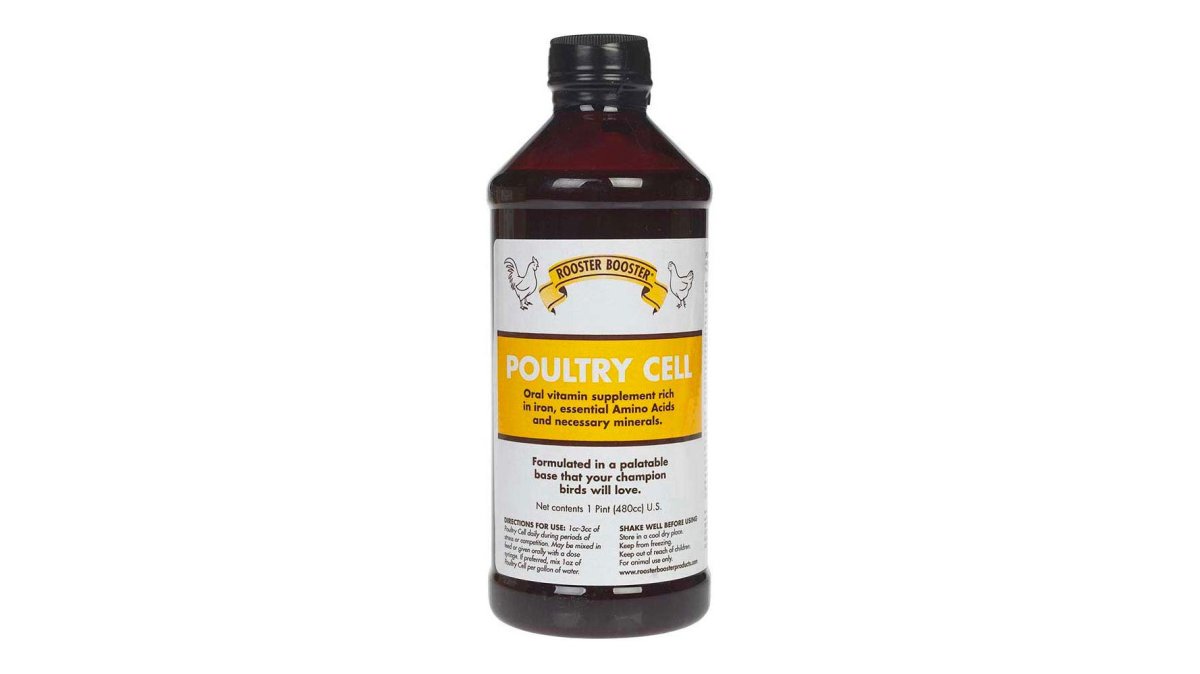
Poultry Cell (Rooster Booster) Mineral Supplement combines iron, vitamins A, D, E, and B-complex vitamins in a single formula at $24.98 for 16 ounces, roughly 4-6 cents per bird per week.

Multivitamins handle multiple deficiency risks simultaneously, but you pay for nutrients your birds may not need. If your flock shows signs of anemia specifically, a targeted iron supplement might be more cost-effective.
Targeted Supplements for Specific Needs
The Liquid B-12 + Vitamin K Supplement at $25.99 per 16-ounce bottle contains 10,000 mcg of B-12 per ounce, high enough to show results in stressed or recovering birds within days.

The Selenium + Vitamin E Oral Gel at $19.99 targets wry neck and neurological issues caused by selenium or vitamin E deficiency, with a gel base that melts at body temperature for easier administration.
The advantage is efficiency; the disadvantage is that you must correctly identify the deficiency first.
Poultry Vitamin Deficiency Symptoms: What to Watch For
Deficiency signs tell you when supplementation becomes necessary, but many symptoms overlap with parasites, infectious disease, poor feed quality, or environmental stress, observation alone is not diagnosis.
Vitamin A deficiency shows as eye swelling, discharge, crusty buildup, and dull feathers. However, respiratory discharge also appears in infectious bronchitis and mycoplasma infection. A bird on excellent commercial feed with these signs is more likely dealing with infection or injury than vitamin A deficiency.
Vitamin D deficiency causes soft, rubbery bones and poor eggshell quality, but soft shells also result from inadequate calcium intake, heat stress, or infectious bronchitis. True vitamin D deficiency is rare in birds on complete commercial feed. If you see soft-shell eggs, check calcium intake and feed freshness first.
B-vitamin deficiencies produce neurological signs: tremors, loss of coordination, or wry neck. Wry neck can result from vitamin E or selenium deficiency, head trauma, or Marek's disease virus. A bird showing wry neck needs immediate attention, but the cause determines treatment.
Vitamin E and selenium work together; deficiency causes muscle weakness, poor growth, and reproductive failure. If multiple birds show muscle weakness, check feed storage conditions and expiration dates before supplementing.
Iron deficiency shows as pale combs and wattles, lethargy, and poor feather condition. Pale wattles are often misinterpreted; a healthy bird on excellent feed likely has parasites, not iron deficiency. Check for parasites first, treat them, then reassess. If wattles remain pale after parasite treatment, iron supplementation may help.
When to seek veterinary confirmation: Contact a veterinarian if multiple birds show the same sign, signs appear suddenly across the flock, or a bird's condition worsens despite supplementation. A veterinarian can confirm specific deficiencies and rule out infectious disease.
Chicken Vitamins During Molting and Stress
Molting is the most common reason backyard keepers supplement. During molt, birds redirect enormous nutritional resources toward regrowing feathers while maintaining egg production or body condition, a dual demand that exceeds standard maintenance feed.
The Poultry Nutri Drench at $17.89 for 4 ounces absorbs rapidly without requiring digestion, delivering nutrients to the bloodstream within minutes, important when appetite drops during molt.

Stress from heat, cold, illness, or predator attacks also justifies supplementation. A vitamin supplement bridges the gap between what the bird is eating and what it actually needs during these periods.
Supplement during the stressor, then step back once the bird recovers or molt finishes. Perpetual supplementation suggests either the base diet is inadequate or the bird has a chronic problem.
Vitamins for Chickens in Water: Delivery Methods That Work
Delivery method affects absorption and compliance. Water-soluble vitamins are convenient but degrade quickly in water and require fresh preparation daily.
Liquid supplements mixed into drinking water work best for large flocks. Mix according to label directions, prepare fresh daily, and replace water if birds don't finish it within a few hours.
Oral administration with a syringe targets specific birds and allows precise dosing, guaranteeing the bird receives the full dose.
Feed-mixed supplements work well for birds eating from a common trough. Shake well before each use to avoid separation.
Poultry Cell (Rooster Booster) Mineral Supplement, 16oz →
Cost-Benefit Analysis: Small Flocks vs. Larger Operations
Small backyard flocks (5-15 birds):
A $25 bottle of multivitamin treating five birds costs $5 per bird. If that supplement prevents one bird from dying or stops egg production from dropping during molt, it pays for itself immediately.
Practical calculation: If your five birds produce 20 eggs per week and you value those eggs at $0.50 each (home consumption or local sale), that's $10 per week in production value.
Conversely, if your five birds are pets producing no eggs and eating only what you feed them, supplementation is pure insurance against illness or stress. The cost-benefit is emotional, not financial.
Medium flocks (15-50 birds):
Per-bird cost drops significantly. A $25 supplement treating 30 birds costs roughly 83 cents per bird. The same intervention becomes easier to justify as insurance.
At this scale, consider the cost of flock loss. If one bird in a 30-bird flock dies from stress-related illness during molt, you've lost 3% of your flock.
Practical calculation: If 30 birds produce 150 eggs per week at $0.50 each, that's $75 per week in production value.
Larger operations (50+ birds):
Per-bird cost becomes negligible. A $25 supplement treating 100 birds costs 25 cents per bird. At this scale, preventive supplementation during seasonal stress is standard management, not a discretionary expense.
For operations selling eggs, meat, or breeding stock, supplementation during molt, heat stress, or breeding season is a business expense with measurable return.
Targeted versus routine supplementation:
The most cost-effective approach is targeted supplementation, adding supplements only when birds face specific stress or show specific signs, rather than year-round supplementation. This strategy works for all flock sizes:
- Molting season: Supplement for 6-12 weeks during the annual molt. Cost: $25-$50 per season for a small flock, $50-$100 for a medium flock.
- Heat stress: Supplement during heat waves (typically June through August). Cost: $15-$25 for the season.
- Illness recovery: Supplement for 1-2 weeks after illness or injury. Cost: $10-$20 per incident.
- Breeding season: Supplement breeding stock for 4-8 weeks before and during breeding. Cost: $25-$50 per season.
- Individual treatment: Supplement a single bird showing deficiency signs for 1-4 weeks. Cost: $5-$15 per bird.
Year-round supplementation of a healthy flock on complete feed is rarely cost-effective and may increase the risk of nutrient imbalances. Reserve supplementation for periods when birds actually need it.
When supplementation is not worth the cost:
- Your birds are on a complete, balanced commercial feed formulated for their age and production stage, and they show no signs of stress or deficiency.
- Your flock is small (fewer than 10 birds) and you're considering routine supplementation rather than targeted treatment. The absolute cost is low, but the benefit is uncertain.
- You're supplementing based on general principles rather than observed need. "Chickens might benefit from vitamins" is not the same as "my chickens are showing signs of deficiency."
- You're using supplements as a substitute for addressing the root cause. If birds are pale because of parasites, supplementing iron without treating parasites is wasted money.
Risks of Over-Supplementation and Nutrient Interactions
More vitamin is not better. Excess fat-soluble vitamins (A, D, E, K) accumulate in body tissues and can cause toxicity. Vitamin A overdose causes bone fragility and reproductive failure. Vitamin D excess causes calcium deposits in soft tissues. These problems develop slowly but are hard to reverse.
Water-soluble vitamins (B-complex, C) are safer in excess because the body excretes them, but wasteful spending still stings. Mineral imbalances create their own problems. Too much calcium interferes with phosphorus absorption. Too much zinc blocks copper uptake. Supplementing one nutrient without considering others can create new deficiencies.
The VetRx Poultry Remedy at $15.95 avoids this problem by using herbal ingredients rather than synthetic vitamins, though it addresses symptoms (respiratory issues, external parasites) rather than nutritional deficiency. It's a different category of product suited to specific problems.
Safe supplementation means following label directions exactly, not doubling doses to speed results. It means understanding what your birds actually need before adding products. A bird on complete feed with no visible deficiency signs needs no supplement, period. A bird showing clear symptoms needs targeted intervention, not guessing.
The worth of a poultry vitamin supplement comes down to specifics: your feed quality, your birds' current condition, and the stressors they face. Quality complete feed eliminates the need for most backyard flocks. Molting, illness, or heat stress justifies targeted supplementation. Visible deficiency signs demand it. RestockYourKit.com carries the products that address real problems without requiring guesswork, from broad-spectrum multivitamins to precision formulas targeting specific deficiencies. Choose based on what your flock actually needs, not on general principles, and you'll see results without wasting money on unnecessary products.
Frequently Asked Questions
Can chickens get all the vitamins they need from balanced feed?
Most commercial complete feeds are formulated to meet standard poultry nutrition requirements, including essential vitamins and minerals. However, homemade diets, treats-heavy feeding, or feed stored improperly may lack sufficient vitamin content. Stress, illness, molting, and high egg production can also deplete nutrient reserves faster than a balanced diet replenishes them. If your flock eats quality layer or grower feed as their primary diet, supplements are typically optional unless specific deficiency signs appear.
What are the best vitamins for chickens during high-stress periods?
During molting, heat stress, illness recovery, or after transport, B-vitamins and electrolytes become critical. Poultry Nutri-Drench ($17.89) is formulated for rapid absorption and works well for immediate stress response, offering 99% utilization without requiring digestion. Liquid B-12 plus Vitamin K ($25.99) supports appetite stimulation and blood oxygenation during recovery. For ongoing support, Poultry Cell mineral supplement ($24.98) provides iron, vitamins A, D, E, and B-vitamins in a palatable base your birds will consume readily.
Is it possible to give chickens too many vitamins?
Yes. Fat-soluble vitamins (A, D, E, K) accumulate in body tissue and can reach toxic levels with chronic over-supplementation. Excess vitamin D can cause calcium metabolism problems; excess vitamin A can impair bone health. Water-soluble vitamins (B-complex, C) are excreted in urine, but very high doses may still cause imbalance. Follow product label dosages carefully. If your flock receives both a complete feed and multiple supplements, you risk nutrient interactions. Stick to one primary supplement or rotate them seasonally rather than layering multiple products year-round.
Should small backyard flocks (5-10 birds) use poultry vitamin supplements?
Small flocks on quality complete feed rarely need routine supplements unless specific signs appear: poor feather condition, reduced egg production, lethargy, or visible deficiency symptoms. The cost of supplements ($15-$26 per bottle) may not justify routine use for a tiny flock eating balanced diet. However, supplements become worthwhile if you notice molting delays, stress-related illness, or egg quality decline. Keep a single bottle on hand for emergencies rather than using supplements as preventive maintenance for small operations.
How do you administer vitamins for chickens in water safely?
Mix supplements into drinking water according to product instructions. Liquid B-12 plus Vitamin K recommends 1 ounce per gallon of drinking water. Change water daily to prevent bacterial growth and nutrient degradation. Ensure all birds have access to treated water, not just dominant individuals. Monitor consumption, if birds refuse treated water due to taste or odor, switch to feed mixing or oral dosing. Store mixed water solutions at room temperature and discard unused portions after 24 hours to maintain efficacy and safety.


