

Cart
0

Table of Contents
- 7 Essential Items for a Home Medical Kit
- First Aid Kit Checklist for Home
- First Aid Kit Expiration Dates: How to Track and Refresh
- Triage and Decision-Making Flowcharts
- Sustainable and Eco-Friendly Kit Alternatives
- Conclusion
- Frequently Asked Questions
Last Updated: October 2, 2026
7 Essential Items for a Home Medical Kit
Most households are one bad kitchen knife moment away from a frantic search through bathroom drawers. A well-built home medical kit ends that scramble.
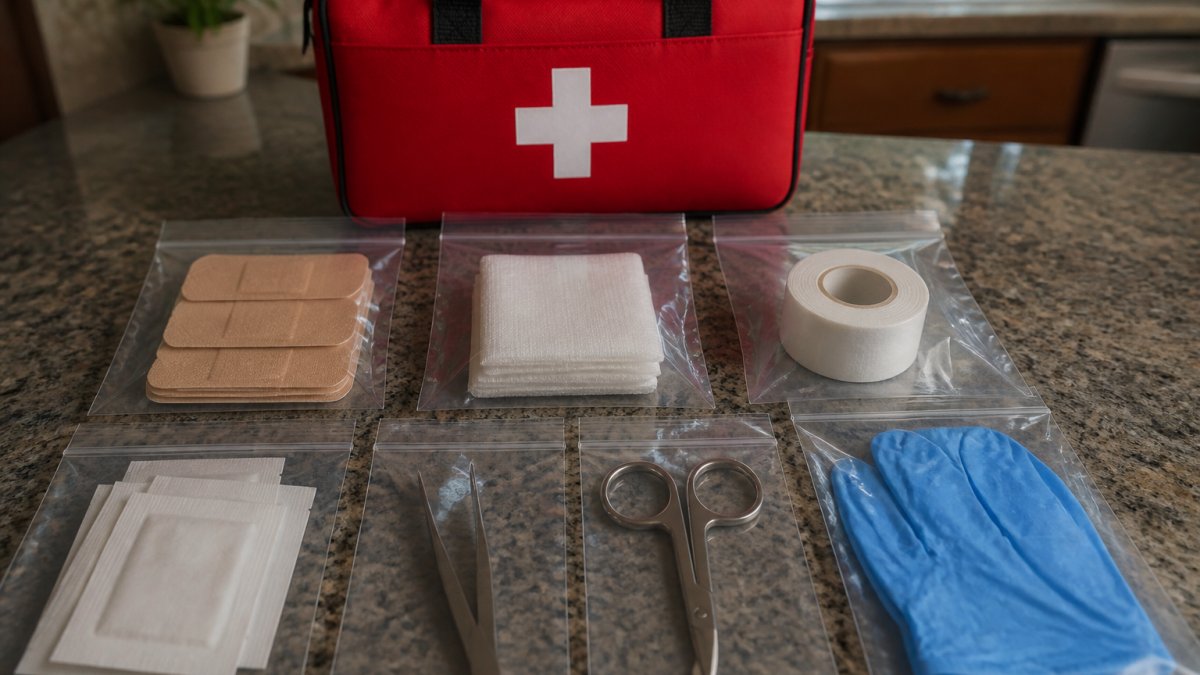
A complete home medical kit is a curated collection of wound care supplies, medications, tools, and sanitation items stored together so you can treat common injuries and illnesses without hunting for supplies.
Below, we'll show you exactly how to build each layer and how to keep it current.
1. Wound Care: Bandages, Gauze, and Medical Tape
Wound care supplies handle the injuries you'll actually treat most often: cuts, scrapes, and minor bleeding. Stock a range of sizes rather than a pile of one type.
Adhesive bandages in regular, fingertip, knuckle, butterfly, and large sizes cover everyday cuts. Sterile gauze pads in 2x2 and 4x4 inch sizes handle scrapes too big for a bandage. Gauze rolls in 3-inch and 4-inch widths apply light compression over a dressing, and medical tape holds everything in place.
For heavier bleeding, add abdominal pads and trauma dressings in 5x9 and 8x10 inch sizes. These absorb far more than a standard gauze square and buy time before professional care.
Pro Tip
Buy gauze with a cotton-polyester blend rather than 100% cotton. It absorbs more and sheds fewer loose fibers into the wound, which matters when you're cleaning a cut on a squirming child.
Individual items cost very little when bought separately. Adhesive bandages run about $0.05 each and sterile gauze pads about $0.15, so you can build a serious wound care layer for a few dollars.
2. Antiseptics and Topical Treatments
Antiseptics clean wounds and prevent infection; topical treatments calm the skin issues that follow. Both belong in the same pouch.
For burn and blister care, add burn gel packets and blister pads or moleskin sheets. These get used more than people expect, especially in households with hikers, runners, or anyone who wears new shoes to a long event.
Keep antiseptics in single-use packets where possible. Packets stay sterile and make restocking simple.
3. Essential Over-the-Counter Medications for Home
Essential over-the-counter medications for home cover pain, fever, allergies, and stomach upset. These are the items you reach for at 2 a.m. when no pharmacy is open.
Keep at minimum:
- Pain relievers: ibuprofen and acetaminophen in both adult and children's formulations
- Aspirin: for adults, including as a chewable option
- Antihistamines: diphenhydramine for allergic reactions and sleep support
- Anti-diarrheal medication: for stomach illness
- Oral rehydration packets: for dehydration from fever, vomiting, or heat
Store medications in their original packaging with the expiration date visible. Loose pills in an unlabeled bag tell you nothing about what they are or when they expire.
Watch Out
Never repackage medications into unlabeled containers. In an emergency, a responder or family member needs to know exactly what a pill is and how old it is. Unlabeled medication is a liability, not a convenience.
4. Tools and Instruments
Tools turn a pile of supplies into a working kit. Without them, you can't clean a wound properly or remove a splinter.
The core set includes tweezers or splinter forceps for debris removal, scissors or trauma shears for cutting tape and clothing, a thermometer for fever checks, and a CPR barrier for rescue breathing.
A wallet-sized first aid guide card earns its place too. It walks you through bleeding control, burns, poisoning, choking, and CPR steps in plain language. Under stress, nobody remembers the sequence correctly.
Stainless steel tools outlast plastic ones and can be cleaned between uses.
5. Disposable Gloves and Sanitation Supplies
Sanitation supplies protect both the injured person and whoever is providing care. Skipping them risks infection at the wound site and exposure for the caregiver.
Disposable gloves are the foundation. Nitrile gloves work for anyone with a latex allergy and hold up to most chemical contact. Plan on at least three pairs per kit.
Pair gloves with:
- Biohazard bags for contaminated waste
- Saline solution for wound irrigation
- Hand sanitizer for cleanup after glove removal
- Paper towels or absorbent pads for spill control
Watch Out
Never treat a wound barehanded, even a small one on a family member. Bloodborne pathogens don't care that you know the person. Gloves take two seconds to put on and prevent a much longer problem.
6. Emergency Preparedness and Disaster Supplies
Emergency preparedness supplies keep your kit useful when normal infrastructure fails.
Add water purification tablets or a filter, a three-day supply of non-perishable food, a battery-powered or hand-crank flashlight, and a battery or hand-crank radio.
For medication management during a disaster, keep a seven-day buffer of any prescription drugs each household member takes.
Store this layer in a separate bag inside your main kit.
7. Storage and Organization
Storage determines whether your kit works when you need it. A kit packed in a single unmarked box becomes a search mission under stress.
Basic Car + Home First Aid Kit →
Use a bag with clear compartments or labeled pouches, one per category. Keep the bag in a consistent, known location that every household member can find in the dark.
RestockYourKit.com's Weekender First Aid Bag is built for exactly this: durable Oxford nylon, a bright medical red exterior for quick identification, and closable clear middle pockets that let you see what's inside without unpacking. At $19.99 and 3.5 ounces, it holds a surprising amount in a grab-and-go format.
Label each pouch with its category and the earliest expiration date inside. That single habit makes the next section far easier.
First Aid Kit Checklist for Home
A first aid kit checklist for home turns a vague intention into a specific shopping list. Print this, tape it inside a cabinet door, and check items off as you build.

- Adhesive bandages: regular, fingertip, knuckle, butterfly, large
- Sterile gauze pads: 2x2 and 4x4 inch
- Gauze rolls: 3-inch and 4-inch
- Medical tape, 1-inch
- Abdominal pads and trauma dressings
- Antiseptic wipes and alcohol wipes
- Antibiotic ointment packets
- Hydrocortisone cream
- Burn gel and blister pads
- Ibuprofen, acetaminophen, aspirin
- Diphenhydramine
- Oral rehydration packets
- Tweezers, scissors, thermometer
- CPR barrier
- Nitrile gloves, minimum three pairs
- Biohazard bags
- Saline solution
- First aid guide card
- Emergency layer: water purification, food, flashlight, radio
If building this from scratch sounds tedious, RestockYourKit.com's Basic Car + Home First Aid Kit covers most of the wound care, medication, and tool categories in one $19.99 package sized for six to eight people. It saves over 30% compared to buying the contents individually.
First Aid Kit Expiration Dates: How to Track and Refresh
First aid kit expiration dates are the most neglected part of home preparedness. Most households build a kit once and never touch it again until something goes wrong.

Here's the tracking system that actually works:
| Supply Type | Typical Shelf Life | Check Frequency | Action |
|---|---|---|---|
| Adhesive bandages | Indefinite if sealed | Yearly | Replace if packaging fails |
| Sterile gauze | 3-5 years sealed | Yearly | Replace if torn or damp |
| Ointments and creams | 1-3 years | Every 6 months | Replace at expiration |
| Oral medications | 1-2 years | Every 6 months | Replace at expiration |
| Antiseptic wipes | 2-3 years | Every 6 months | Replace if dried out |
| Gloves and barriers | 3-5 years | Yearly | Replace if degraded |
| Batteries | 5-10 years | Yearly | Test and rotate |
Write the earliest expiration date from each pouch on a single index card taped inside the kit lid. Set two calendar reminders a year, one in spring and one in fall, to open the kit and check that card.
Key Takeaway
The single most useful habit for kit maintenance is a dated index card inside the lid. It converts a vague "I should check this sometime" into a two-minute task with a clear trigger.
Age-Specific Customization
A kit built for a household of adults looks different from one built for a family with a toddler. Customize these layers by age.
For infants and toddlers, add a digital thermometer, infant acetaminophen, a nasal aspirator, and children's bandages in small sizes. For older adults, prioritize a seven-day prescription buffer, a blood pressure log, and larger-print instruction cards. For households with pets, add a tick removal tool and a separate pet-specific pouch so animal supplies never get confused with human ones.
Triage and Decision-Making Flowcharts
Triage is the practice of sorting injuries by urgency so you treat the most serious problem first. In a home setting, that usually means one simple question: can I handle this, or do I need emergency care?
Run this sequence for any injury:
- Check for danger to yourself before approaching anyone
- Check responsiveness and breathing first, always
- Control severe bleeding with direct pressure before anything else
- Assess the injury once immediate threats are handled
- Decide: treat at home, call a nurse line, or call 911
Call 911 for chest pain, difficulty breathing, uncontrolled bleeding, head injury with confusion, suspected poisoning, or any loss of consciousness. Treat at home for minor cuts, small burns, sprains, and mild allergic reactions.
RestockYourKit.com's First Aid Guide Wallet Card condenses these steps into a 3.5 by 2 inch folded card for $1.55. Keep one in the kit and one in your wallet.
Sustainable and Eco-Friendly Kit Alternatives
Sustainable kit choices reduce waste without sacrificing readiness, and they're easier than most people assume. The trick is targeting the items you replace most often.
Switch to reusable cold packs instead of disposable instant compresses. Choose cloth tape over plastic where adhesion allows. Buy gauze in larger sterile packages and portion it into reusable pouches rather than accumulating single-use wrappers.
The biggest environmental win is simply restocking rather than rebuying.
Conclusion
Building a home medical kit is a small project that pays off on the worst day of someone's year. The seven categories above cover the injuries and illnesses that actually happen in households.
RestockYourKit.com builds custom first aid kits and sells individual supplies at near-wholesale prices, including hard-to-find medications in smaller quantities. Our Individual First Aid Kit covers one to two people for a weekend outing at $41.99, and our Micro-Kit DELUXE packs everyday essentials into an 8-ounce pouch for $15.99. Free shipping applies on orders of $79 or more. Get started with RestockYourKit.com and build a kit you'll actually be able to find and use when it matters.

Frequently Asked Questions
What are the 7 essential items in a first aid kit?
The seven essentials are wound care supplies (adhesive bandages, sterile gauze pads, medical tape), antiseptics and topical treatments, over-the-counter medications, tools like tweezers and scissors, disposable gloves, emergency preparedness items, and a storage system. A home medical kit should also include a first aid guide wallet card for quick reference during emergencies.
How often should you check your home medical kit for expired items?
Check expiration dates every six months and replace anything that has expired or is running low. Medications like ibuprofen, acetaminophen, and antibiotic ointment lose effectiveness over time. Set a calendar reminder for spring and fall to review your kit. RestockYourKit.com custom-builds kits to order, which helps ensure you get the longest medication expiration dates possible.
What is the difference between a basic first aid kit and a trauma kit?
A basic first aid kit handles everyday cuts, scrapes, and minor burns with adhesive bandages, gauze pads, and antiseptic wipes. A trauma kit includes larger dressings like abdominal pads, tourniquets, and chest seals for severe bleeding. For home use, start with a basic kit and add trauma supplies if you want broader coverage.
Where is the best place to store a home medical kit?
Store your kit in a cool, dry place that is easy to reach, such as a kitchen cabinet or hallway closet. Avoid bathrooms because humidity can degrade medications and sterile supplies. Keep a smaller kit in your car for emergencies away from home. Make sure everyone in the household knows where the kit is kept and how to use the contents.
What over-the-counter medications should be in a home medical kit?
Include pain relievers like ibuprofen and acetaminophen, antihistamines such as diphenhydramine for allergic reactions, hydrocortisone cream for itching and rashes, and antibiotic ointment for minor wounds. Aspirin is useful for heart-related emergencies. Check expiration dates every six months and replace anything that has expired.


