

Cart
0

Table of Contents
- Professional Grade Medical Equipment vs Consumer Devices: What's the Real Difference?
- When Professional Grade First Aid Supplies Make Sense for Home Use
- Durable Medical Equipment for Home: Cost, Insurance, and Hidden Expenses
- Medical Equipment Maintenance and Calibration: Keeping Your Devices Accurate
- Regulatory Standards and Safety: FDA Clearance for Home Medical Devices
- Psychological Impact of Medicalizing Your Home
- Decision Framework: Is Professional Grade Equipment Worth It for You?
- Conclusion
- Frequently Asked Questions
Last Updated: October 3, 2026
Professional Grade Medical Equipment vs Consumer Devices: What's the Real Difference?
The short answer: professional grade medical equipment is worth it for home use when you're managing a chronic condition, monitoring vital signs regularly, or need readings you can trust enough to act on. For occasional fever checks or one-off blood pressure readings, consumer devices usually do the job.

At RestockYourKit.com, we hear this from families building home kits and backyard poultry keepers who need dependable diagnostic tools. The stakes differ by situation, so the answer isn't a simple yes or no.
A consumer-grade and a medical-grade device can look nearly identical on the shelf. The gap shows up months later, when one still reads accurately and the other has drifted.
Clinical Accuracy and Diagnostic Precision
Clinical accuracy is how closely a device's reading matches a calibrated reference instrument. Consumer devices are often allowed wider error margins than clinical-use devices.
For blood pressure, that margin matters: a cuff reading a few points high or low can push you toward unnecessary worry or false comfort.
Diagnostic precision works the same way. A digital thermometer accurate across its full range, from roughly 89.6°F to 109.4°F, tells you more than one reliable only near normal body temperature.
Build Quality and Longevity
Manual, mechanical devices tend to outlast cheap electronics: fewer parts to fail, no batteries to die mid-reading. Metal valves, adjustable binaurals, and reinforced tubing hold up better than molded plastic.
A device you replace every year isn't cheaper than one that lasts five, even if the sticker price says otherwise.
When Professional Grade First Aid Supplies Make Sense for Home Use
Professional grade first aid supplies earn their place when you're managing something ongoing rather than treating a one-time scrape. If someone in your household checks blood pressure daily, monitors a chronic condition, or needs reliable readings to share with a physician, the upgrade pays off.
The same logic applies to preparedness. Families restocking a home or car kit, Scout troop leaders building wilderness kits, and poultry keepers watching flock health all benefit from supplies that won't fail at the wrong moment.
Essential Devices for Chronic Condition Management
A practical home setup for chronic condition management usually includes:
- A blood pressure cuff for routine readings
- A stethoscope if you're taking manual measurements
- A digital thermometer with memory recall for tracking trends
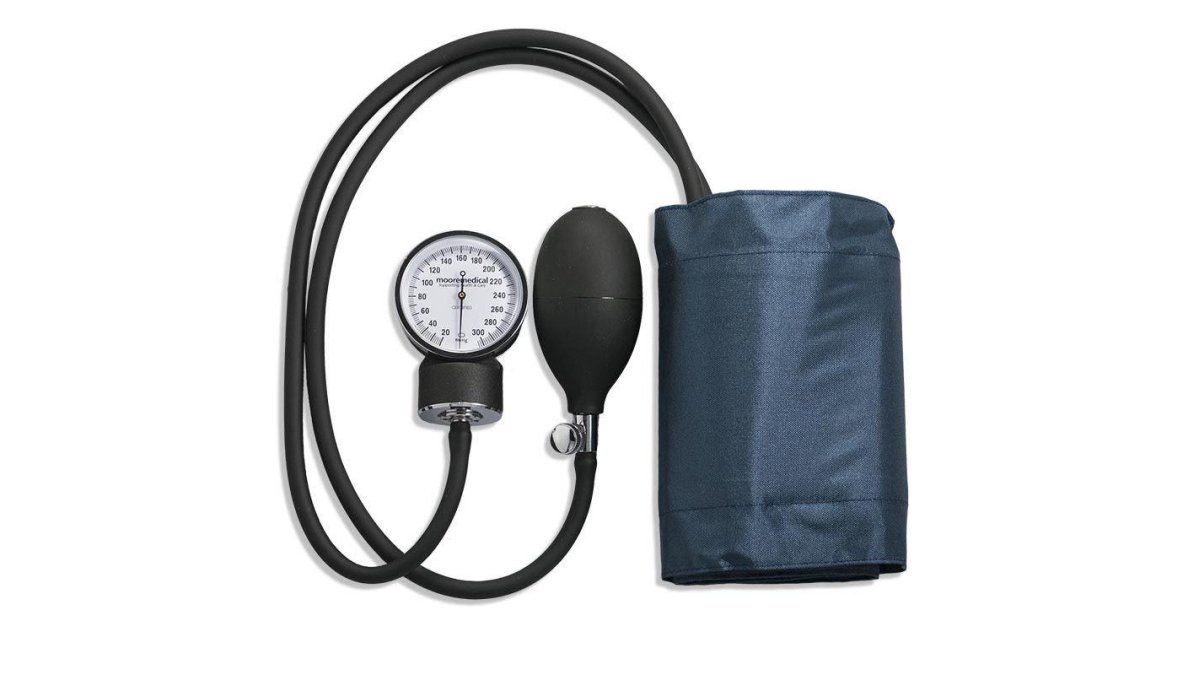
Manual blood pressure measurement takes practice: a cuff alone won't give a reading, you need a stethoscope to hear the pulse, which is why a combined kit is often the smarter first purchase.

Pro Tip
If you're new to manual blood pressure readings, practice on a willing family member and compare your numbers against an automated machine. Getting within a few points consistently is the goal before you rely on your own readings.
Durable Medical Equipment for Home: Cost, Insurance, and Hidden Expenses
Durable medical equipment for home covers reusable devices meant for long-term use, blood pressure monitors, thermometers, mobility aids, and similar items. Some qualifies for insurance reimbursement; plenty doesn't. The purchase price is also rarely the full cost.
Insurance Reimbursement and Medicare Coverage
For most covered equipment, Medicare pays 80% of the approved amount after you meet the Part B deductible, and you owe the remaining 20% as coinsurance (Durable Medical Equipment Coverage).
A few practical points that trip people up:
- Assignment matters. If your supplier accepts assignment, they agree to Medicare's approved amount and bill you only for your share. If they don't, they can charge more, and you may pay the difference out of pocket.
- Competitive bidding applies to some categories. For certain equipment types, Medicare only covers items from suppliers who won a competitive bidding contract in your area. Buying from a non-contracted supplier can mean no coverage at all.
- Over-the-counter devices are usually excluded. A blood pressure cuff you buy yourself for convenience rarely qualifies, even if a doctor recommended it. The device has to fit the covered-equipment definition and be furnished through a qualifying supplier.
The Medicare durable medical equipment guidelines spell out the coverage tests, the rental-versus-purchase rules, and how to file. If coverage is the deciding factor, confirm your supplier's status and your plan's rules first.
Hidden Costs of Ownership
A professional-grade device is a platform, not a one-time purchase. Recurring costs are where the real ownership math lives:
- Replacement parts. Cuffs, tubing, bulbs, valves, ear tips, and diaphragms wear out. A cuff that's been over-inflated hundreds of times loses its calibration; replacement cuffs for a quality manual unit typically run a meaningful fraction of the original device price.
- Consumables. Thermometer probe covers, disposable sheaths, and cleaning supplies are ongoing line items. Shared thermometers in a household with kids or multiple users burn through covers steadily.
- Calibration and verification. Devices that drift need periodic checks against a reference. Some manufacturers offer service; others expect you to replace the unit. Either way, it's a cost.
Run the numbers over the device's expected life, not just at checkout. A sturdy manual cuff with replaceable parts often has a lower five-year cost than a cheaper digital unit needing a proprietary replacement cuff, a new battery pack, and a software subscription. The sticker price is the least informative number on the box.
Skipping calibration on a device you rely on for daily readings is the mistake we see most. A cuff that's quietly drifted out of spec gives you confident, wrong numbers, and you'll make health decisions on them.
Medical Equipment Maintenance and Calibration: Keeping Your Devices Accurate
Medical equipment maintenance and calibration is the routine care that keeps a device reading true. Calibration checks a device against a known standard and adjusts it if it's drifted. Maintenance covers the cleaning, part replacement, and storage that prevent premature failure.
Most home devices don't need lab-grade calibration, but they do need basic care, and you can verify accuracy yourself without a lab.
How to Verify a Device Is Actually Accurate
The core idea is comparison against a reference you trust: you don't need a calibration certificate, just a second data point known to be good.
For blood pressure cuffs, the most reliable home verification is a same-session comparison at a clinic.
For thermometers, verification is harder because you can't easily create a known temperature at home.
For pulse oximeters and similar sensors, compare against a clinic reading during a visit and watch whether readings track your symptoms.
What Drift Actually Looks Like
Drift is gradual, which is why it's dangerous. A cuff accurate when new can lose a few points over a year or two of regular use, and nothing signals the change, the reading still looks normal, the number still appears on screen. The only way to catch it is comparing against a reference on a schedule.
A workable routine:
- Verify against a clinical reference at least once a year for any device you use to make health decisions.
- Compare against a second home device more often, monthly is reasonable, as an early-warning check. If the two disagree consistently, one of them is wrong.
- Log your readings so you can see trends. A device that's drifting often shows a slow shift in the numbers over weeks, not a sudden jump.
Maintenance Habits That Extend Device Life
- Store cuffs and tubing away from heat and direct sun. UV and heat degrade rubber and plastic.
- Check tubing for cracks or stiff spots every few months. A pinhole leak in a cuff or hose causes inaccurate readings long before it's visible.
- Replace ear tips and diaphragms when they harden or tear. A stiff diaphragm on a stethoscope muffles the sounds you're listening for.
Build verification into your routine rather than treating it as a one-time event. A device you check against a clinical reference once a year, and against a second home device monthly, will catch drift before it affects a decision. The goal isn't lab-grade precision, it's knowing your numbers are close enough to trust.

Regulatory Standards and Safety: FDA Clearance for Home Medical Devices
FDA clearance matters because it tells you a device has been reviewed for safety and performance claims before it reaches you.
The FDA guidance on medical devices explains the classes and what clearance means for each.
Here's the practical takeaway: when a device makes a specific medical claim, like measuring blood pressure accurately, look for evidence it's been reviewed for that claim.
Psychological Impact of Medicalizing Your Home
Turning a home into a monitoring station has a cost that doesn't show up on any invoice. Daily readings can shift a household's mood, especially when the numbers aren't what you hoped for.
There's a real difference between tracking a condition and letting it run the house. Devices are tools, not verdicts.
The healthiest setups build monitoring into a routine rather than letting it dominate: check at the same time, log the number, move on.
Decision Framework: Is Professional Grade Equipment Worth It for You?
Professional grade equipment is worth it when you'll use it often, need readings you can act on, and want a device that lasts. It's usually not worth it for occasional, low-stakes checks.
Run your situation through this quick framework:
| Your Situation | Recommendation | Why |
|---|---|---|
| Daily blood pressure monitoring | Professional grade cuff + stethoscope | Accuracy and durability matter at this frequency |
| Occasional fever check | Consumer digital thermometer | Low stakes, infrequent use |
| Managing a chronic condition | Medical-grade devices | Readings inform real decisions |
| Building a preparedness kit | Professional grade supplies | Reliability when you can't replace them |
| One-off reading before a checkup | Borrow or use a basic device | Not worth the investment |
Calculate Your ROI Based on Health Needs
Think about cost per reliable reading. If you'll take a reading several times a week for years, a sturdy device spreads its cost across thousands of uses; a cheap device that drifts or breaks resets that math every replacement.
Factor in the cost of a wrong reading too: acting on bad data, unnecessary worry or missed warning signs, carries a price that's hard to quantify.
For most households managing something ongoing, the math favors buying once and buying well.
Conclusion
Getting the right equipment for your home comes down to matching the tool to how often you'll use it and how much the reading matters. When accuracy and reliability are non-negotiable, professional grade gear earns its keep.
At RestockYourKit.com, we stock the supplies that make that decision easier: custom-built kits, individual quantities at near-wholesale prices, and hard-to-find items in the amounts you actually need.
Frequently Asked Questions
What is the difference between consumer-grade and professional-grade medical devices?
Consumer-grade devices are designed for occasional home use, prioritize ease of use, and often have lower upfront costs. Professional-grade medical equipment, like the Sprague Rappaport Stethoscope ($27.99), offers clinical accuracy, durable construction, and often better acoustic or measurement performance. For example, professional blood pressure cuffs use metal valves and no-pin gauges for precise readings, while consumer models may rely on automated sensors that can drift over time.
Does Medicare pay for home medical equipment?
Medicare Part B may cover durable medical equipment (DME) if it is medically necessary and prescribed by a doctor. Coverage typically includes items like hospital beds, wheelchairs, and blood glucose monitors, but not all home devices qualify. You may need to use a Medicare-approved supplier and meet specific criteria. For professional grade first aid supplies and smaller diagnostic tools, Medicare usually does not cover them, so check your plan details.
How do I maintain and calibrate my home medical equipment?
Regular maintenance and calibration are crucial for accurate readings. For blood pressure cuffs, check the gauge against a known standard annually and inspect tubing for cracks. Stethoscopes need ear tip replacement and diaphragm checks. Digital thermometers like the Lightweight Digital Thermometer ($8.99) should be cleaned. Follow manufacturer guidelines and keep a log of calibration dates to ensure reliability.
Are professional medical supplies safer for home use?
Professional medical supplies are often safer because they meet stricter regulatory standards and are built for repeated use. For instance, the Economy Blood Pressure + Stethoscope Kit ($39.99) includes a no-pin stop manometer that reduces the risk of mercury exposure and provides consistent readings. However, safety also depends on proper training and maintenance. Always read instructions and seek training if you are unsure how to use a device correctly.


