

How to Maintain an OSHA-Compliant Farm First Aid Kit
Quick Summary
An OSHA-compliant farm first aid kit is one that stays fully stocked, easy to reach, and matched to your workplace's likely injuries. Inspect it on a set schedule, replace expired or damaged supplies, and keep a log of each check.
- Federal OSHA rules under 29 CFR 1910.151 require adequate first aid supplies readily available at the worksite.
- Supplies should not be locked in a truck; they must be quickly accessible.
- Match kit contents to your crew size, including seasonal help, and your distance from care.
- Check expiration dates, packaging, and the case for cracks or leaks during each inspection.
- Keep an inspection log showing the date, the checker, items restocked, and the next inspection date.
Table of Contents
- What OSHA Requires for a Farm First Aid Kit
- Building Your Farm First Aid Kit Checklist
- Matching Kit Contents to Your Farm's Hazards and Crew Size
- Checking First Aid Kit Expiration Dates and Supply Condition
- Setting an Inspection Schedule for Your Workplace First Aid Kit
- Keeping a First Aid Kit Inspection Log
- Restock Your Farm Kit This Week
- Frequently Asked Questions
What OSHA Requires for a Farm First Aid Kit
Last Updated: October 27, 2026
Keeping an OSHA-compliant farm first aid kit starts with knowing what the rules actually say. Many farm owners assume there is one federal checklist. There isn't.
Here's the core rule. Under federal OSHA, employers must ensure that adequate first aid supplies are readily available at the worksite. That language comes from 29 CFR 1910.151, and it applies to general industry.
- Supplies must be readily available, not locked in a truck
- Contents must fit the workplace's likely injuries
- Someone trained should be able to find and use them quickly
Which Farm Operations Fall Under OSHA Rules
Check official OSHA sources before you assume which requirements apply to your operation. Our OSHA first aid kit compliance checklist walks through the requirements item by item.
Watch out: Confirm your obligations with an official source.
Building Your Farm First Aid Kit Checklist
- Adhesive bandages in several sizes
- Sterile gauze pads and rolls
- Adhesive tape
- Triangular bandages for slings and wraps
- Antiseptic wipes or spray
- Disposable gloves
- Eye wash or saline for eye irrigation
- Instant cold packs
- Tweezers and trauma shears
Our Super Basic Refill Kit includes aspirin, antacid, ibuprofen, diphenhydramine, and loperamide packets. The Band-Aid Assortment includes adhesive bandages and waterproof dressings, and the Gauze refill kit includes sterile gauze pads and rolls. These essential supplies address immediate injuries, yet comprehensive outdoor worker safety requires proactive measures against environmental hazards like intense solar exposure.
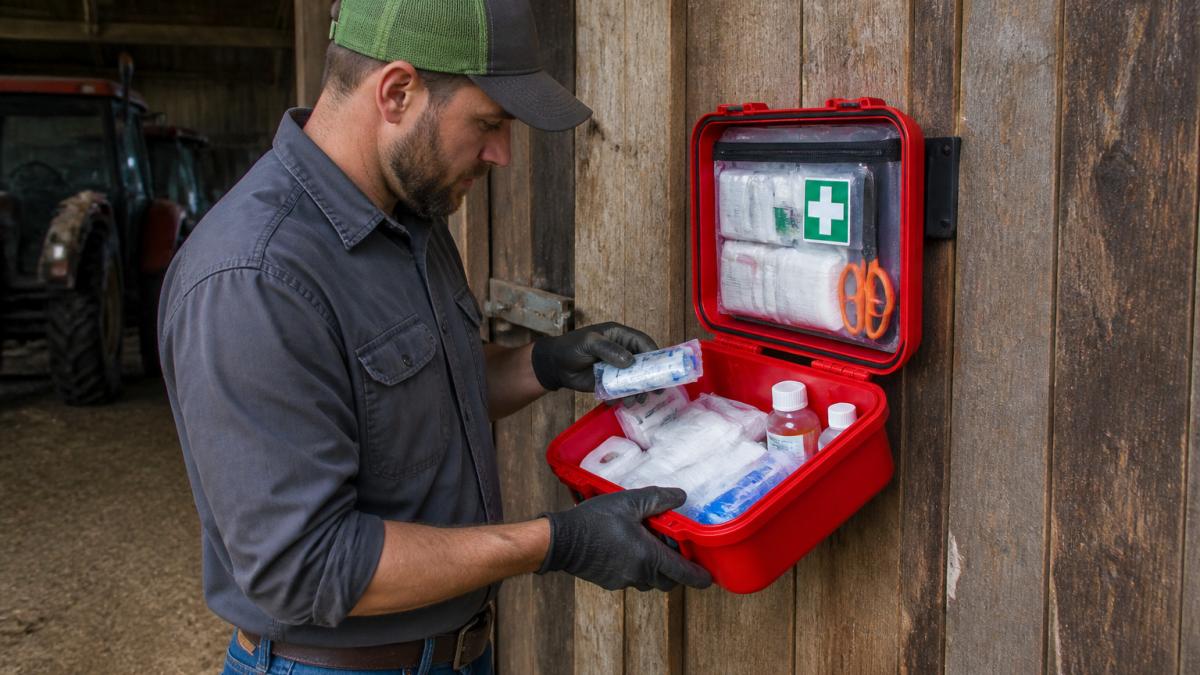
The Hard Clamshell First Aid Kit Case measures 10" x 8" x 3" and has two internal pockets and a smaller flip-out clear pocket.
Matching Kit Contents to Your Farm's Hazards and Crew Size
- Count your workers, including seasonal help
- Note where you work and how far you are from care
- Add extra supplies for bite, sting, or burn risks on your land
Checking First Aid Kit Expiration Dates and Supply Condition
Check dates and replace anything expired or damaged. Our guide to maintaining expiration dates across kit contents covers what to track for each item.
- Expiration dates on medications, sterile items, and ointments
- Torn or wet packaging on sterile gauze and bandages
- Cracks or leaks in the case that let in dust or moisture
- Missing items, which often shows up only when you need them
Use this list to spot the most common problems during a kit check.
The Super Basics (REFILL KIT) →
| Check | What to look for | Action |
|---|---|---|
| Expiration dates | Medications, sterile items, ointments | Replace expired items |
| Packaging | Torn or wet sterile gauze and bandages | Replace damaged packs |
| Case | Cracks or leaks letting in dust or moisture | Repair or replace the case |
| Contents | Missing items | Restock before you need them |
Setting an Inspection Schedule for Your Workplace First Aid Kit
Tier 1, Monthly baseline.
Tier 2, After every use or incident.
Tier 3, Seasonal and event-driven.
Keeping a First Aid Kit Inspection Log
- The date and the name of the person who checked
- Items restocked and items removed as expired
- Any damage to the case or packaging
- The next scheduled inspection date
Restock Your Farm Kit This Week
Replace items that are expired, used, or damaged. For practical steps, read our guide on restocking medical kits for small businesses. If you find expired supplies, see how to safely dispose of expired medical supplies.
Most of your restocking can happen in one order. Our refill kits are built around common farm injuries, so you can replace bandages, gauze, and medications without buying each item one by one. Start with the Super Basic Refill Kit, then add the Band-Aid Assortment and Gauze refill packs. Once everything is restocked, your kit is ready for the next season of work.
Frequently Asked Questions
What does OSHA require regarding first aid supplies in the workplace?
Check official OSHA sources for current information about workplace first aid requirements.
How long can I keep a first aid kit?
The Super Basics Refill Kit is $5.99. Its expiration dates may vary; the listing says the store strives to ship medications and sterile items with expiration dates at least six months out.
How often should a farm first aid kit be inspected?
Inspect the kit at least monthly and after any use, and do a full review at least every six months. Kits in dusty barns, hot equipment sheds or vehicles may need checks more often. Record each inspection in a log so that anyone on the crew can see when the kit was last checked and what was restocked.
Where should first aid kits be placed on a farm?
Place the kit in a clearly marked, easy-to-reach location that every worker knows, such as the shop, the barn office or the main tractor shed. Keep it away from heat, moisture and dust, which can degrade bandages and medications. For larger operations, consider a second kit in field vehicles so injuries far from the main building can be treated quickly.
