

OSHA First Aid Kit Compliance Checklist
Table of Contents
- Understanding OSHA First Aid Kit Requirements
- Workplace First Aid Kit Supplies List
- Assessing Workplace Hazards and Kit Selection
- Workplace First Aid Kit Inspection Checklist
- First Aid Kit Restocking Checklist
- First Aid Kit Checklist Template and Implementation
- Industry-Specific Compliance Scenarios
- Conclusion
- Frequently Asked Questions
Last Updated: October 19, 2026
Understanding OSHA First Aid Kit Requirements
Many business owners assume OSHA has a single, prescriptive list of what must go into a first aid kit.

OSHA doesn't mandate a specific first aid kit inventory.
At RestockYourKit.com, we help businesses move beyond generic "one-size-fits-all" kits. Start with what OSHA actually requires, then layer in ANSI/ISEA guidance so your first aid kit compliance strategy is both legally sound and practically effective.
What OSHA Actually Requires
OSHA's general duty clause requires employers to provide a safe workplace, for first aid, that means appropriate medical supplies and trained responders. The agency does not publish a mandatory contents list, a critical distinction many miss.
What OSHA does require:
- Adequate first aid supplies must be available at the worksite
- Supplies must be appropriate to the hazards present
- At least one trained first aid responder must be on-site during all work hours
- First aid kits must be easily accessible to employees
"Adequate" and "appropriate" are where your hazard assessment comes in: a retail office needs different supplies than a construction site or restaurant kitchen.
ANSI/ISEA Standards vs. OSHA Regulations
ANSI (American National Standards Institute) and ISEA (International Safety Equipment Association) publish voluntary guidelines for first aid kit contents.
OSHA compliance is the legal floor; ANSI/ISEA guidance is the professional standard.
ANSI/ISEA standards address kit contents, storage, accessibility, inspection frequency, and training, recommending specific quantities based on worksite size and risk level.
The practical takeaway: Build your first aid kit compliance strategy around ANSI/ISEA recommendations.
Workplace First Aid Kit Supplies List
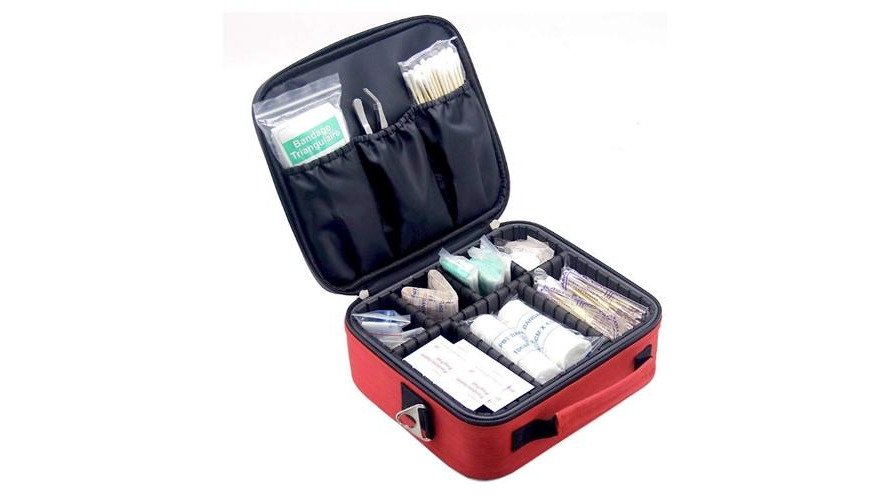
A compliant workplace first aid kit needs to cover the most common injuries and emergencies your employees are likely to encounter. The core categories remain consistent across industries, though quantities and specialized items shift based on your hazard assessment.

Core Wound Management Supplies
Sterile dressings and wound care form the foundation of any first aid kit, handling cuts, scrapes, and minor lacerations, the most frequent workplace injuries.
Your wound management section should include:
- Sterile gauze pads (2x2 inch and 4x4 inch) in multiple quantities
- Adhesive bandages in assorted sizes (regular, knuckle, fingertip, and large)
- Gauze rolls for wrapping larger wounds
- Hypoallergenic surgical tape for securing dressings
Quantities depend on employee count and nature of work. This is where the hazard assessment directly shapes your kit contents.
Medications and Wipes
Beyond wound care, your kit needs basic medications and cleaning supplies to manage common ailments and prevent infection.
Standard medications and wipes include:
- Antiseptic wipes and alcohol wipes for cleaning wounds
- Triple-antibiotic ointment packets
- Hydrocortisone cream packets for minor skin irritation
- Ibuprofen and acetaminophen for pain and fever
Antiseptic wipes are critical. The medications above address the most common non-emergency needs employees face during the workday.
Assessing Workplace Hazards and Kit Selection
Your first aid kit compliance checklist begins with a hazard assessment, not bureaucratic overhead, but the foundation that determines what supplies you need and how many.

Hazard Assessment Process
Start by identifying the injuries most likely to occur in your workplace. Walk through each area and note the equipment, materials, and processes employees interact with daily.
Ask these questions:
- What are the most common injuries in this type of work?
- Are there chemical, electrical, or thermal hazards?
- Is there risk of eye injury, respiratory exposure, or skin contact with irritants?
- How far is the nearest hospital or emergency response?
Document your findings: this record guides purchasing decisions, you're responding to identified risks, not guessing about kit contents.
Sizing Kits by Employee Count and Risk Level
Employee count alone doesn't determine kit size. Risk level matters more.
Five office workers in a low-hazard environment need a smaller kit than five workers in a restaurant kitchen or on a construction site. Restaurants face burn and cut hazards; construction sites add crush, puncture, and environmental exposure risks.
Use this framework:
- 1-5 employees, low-hazard environment: Basic personal first aid kit (like our Individual First Aid Kit at $41.99) covers everyday injuries
- 6-15 employees, moderate-hazard environment: Mid-size workplace kit with expanded wound care and medications
- 15+ employees or high-hazard work: Comprehensive kit with duplicate supplies, specialized items, and documented inspection protocols
For restaurant environments specifically, burns and thermal injuries require burn gel packets and blister management supplies beyond a basic kit. Our Restaurant First Aid Kit at $120.00 addresses these specific risks with burn treatment items and expanded first aid supplies for a food service team.
Workplace First Aid Kit Inspection Checklist
Regular inspection ensures supplies are present, unexpired, and ready to use.
Inspection Frequency and Documentation
Inspect your first aid kit at least quarterly, more frequently if items are used. After any use, restock immediately. Create a simple log documenting inspection dates, items checked, and any restocking performed.
An inspection checklist should verify:
- All items present and accounted for
- No expired medications or supplies
- Packaging intact and undamaged
- Kit accessible and clearly marked
Keep the log with the kit or in a central safety file. Digital logs work fine, the point is demonstrating ongoing attention to first aid kit compliance.
Checking for Expiration Dates and Damage
Medications and sterile supplies have expiration dates (the FDA). Check them during every inspection. Antiseptic wipes, gauze, and bandages remain sterile only in intact packaging. Damaged packaging compromises sterility.
Pay special attention to:
Basic Car + Home First Aid Kit →
- Medication expiration dates (replace immediately if expired)
- Sterile dressing packaging (discard if torn or compromised)
- Ointment and cream packets (check for leaks or damage)
- Elastic bandages and gauze rolls (check for moisture or mold)
Temperature and humidity affect supply integrity. Store kits in cool, dry locations away from direct sunlight.
First Aid Kit Restocking Checklist
Restocking is where many organizations fall short.
Replenishing Used or Expired Items
Create a standing restocking schedule. After an inspection, immediately order replacement items. Don't wait until the next inspection cycle.
Your restocking checklist should include:
- Identify all expired items from inspection
- Identify all used items that need replacement
- Count quantities against your hazard assessment baseline
- Order replacements from a reliable supplier
- Verify receipt of new items before discarding expired stock
At RestockYourKit.com, we offer individual quantities of medical supplies at near-wholesale prices, so you're not forced to buy bulk quantities you don't need. For example, if your inspection reveals you used three antiseptic wipes packets and two gauze pads, you can restock exactly those quantities without overspending.
Maintaining Audit-Ready Records
Document everything.
Maintain these records:
- Inspection dates and inspector name
- Items checked and condition noted
- Expiration dates of all medications and sterile supplies
- Restocking dates and items replaced
- Names of trained first aid responders and their certification dates
Digital spreadsheets work fine, the format matters less than the consistency and completeness of the documentation.
First Aid Kit Checklist Template and Implementation
A structured template makes building a compliant first aid kit easier.
Using a Hazard-Based Checklist
Start with your hazard assessment and build a custom checklist specific to your workplace.
Your hazard-based checklist should list:
- Specific items appropriate to your identified hazards
- Quantities for your employee count and risk level
- Inspection frequency (quarterly minimum)
- Expiration date check procedure
- Restocking trigger (when to reorder)
Here's a simplified template framework:
| Item Category | Item Name | Quantity | Inspection Notes | Expiration Date | Restock Needed |
|---|---|---|---|---|---|
| Wound Care | Sterile Gauze 4x4 | 8 | Present, intact | N/A | No |
| Wound Care | Adhesive Bandages Regular | 12 | Present, intact | N/A | No |
| Medications | Ibuprofen Packets | 4 | Present, intact | 03/2027 | No |
| Medications | Antiseptic Wipes | 6 | Present, intact | 06/2027 | No |
Print this template and use it during every inspection. Mark items as present or needing replacement. This becomes your restocking list.
Kit Placement and Accessibility Standards
OSHA requires kits to be easily accessible to employees.
Placement guidelines:
- Mount kits at eye level in high-traffic areas
- Use clear signage so employees know where the kit is
- Keep kits in unlocked, unobstructed locations
- In multi-floor buildings, place a kit on each floor
- In large facilities, place kits in multiple locations
Accessibility also means employees know the kit exists. Post a simple instruction card on or near the kit with emergency contact information.
Industry-Specific Compliance Scenarios
First aid kit compliance requirements shift based on industry and workplace hazards. A one-size-fits-all approach misses critical gaps.
General Industry Requirements
Office, retail, and administrative workplaces fall under OSHA general industry standards and typically carry lower injury risk than construction or manufacturing.
General industry first aid kits should include standard wound care (gauze, adhesive bandages), medications (ibuprofen, acetaminophen, antihistamine), and basic tools (shears, gloves). A kit like our Basic Car + Home First Aid Kit at $19.99 covers general industry needs for small teams, though you may expand quantities based on employee count.
Construction and High-Risk Workplaces
Construction sites, manufacturing facilities, and other high-hazard environments require more comprehensive kits. These workplaces face crush injuries, thermal burns, chemical exposure, and eye injuries, hazards that demand specialized supplies.
High-risk workplaces need:
- Expanded gauze and dressing quantities
- Burn treatment supplies (burn gel, blister pads)
- Eye wash or saline solution for eye injuries
- Elastic bandages and splinting materials for sprains and fractures
- CPR masks and potentially AED access
For construction crews and outdoor groups, our Troop First Aid Kit at $72.99 provides a portable, comprehensive option designed for teams working away from immediate medical facilities.
Documentation becomes even more critical in high-hazard environments.
Conclusion
OSHA first aid kit compliance isn't about buying a pre-made kit and calling it done. It's about a real hazard assessment, supplies that match your actual workplace risks, regular inspection, and documentation.
Compliance is achievable: start with your hazard assessment, size your kit appropriately, inspect quarterly, and restock immediately when items are used or expired. RestockYourKit.com helps you build exactly the kit your workplace needs, with individual quantities at near-wholesale prices and free shipping on orders over $79. Shop Now to get started with a custom-built kit tailored to your specific hazards and employee count.
Frequently Asked Questions
What does OSHA require in a workplace first aid kit?
OSHA does not mandate a specific first aid kit inventory. Instead, 29 CFR 1910.151(b) requires employers to provide medical and first aid services, with the type and quantity of supplies depending on workplace hazards and the number of employees. ANSI/ISEA Z535.1 provides recommended guidelines for kit contents, but OSHA compliance centers on having adequate supplies to address identified workplace risks and ensuring trained responders can access them quickly.
How often should workplace first aid kits be inspected?
Inspect first aid kits at least monthly, or more frequently if supplies are used. After any incident requiring kit use, restock immediately. Check for expired medications and damaged or contaminated supplies. Document all inspections in a log that includes the date, inspector name, items replaced, and any issues found.
What is the difference between OSHA requirements and ANSI/ISEA guidance for first aid kit contents?
OSHA mandates that employers provide appropriate medical services and first aid supplies but does not specify exact kit contents. ANSI/ISEA Z535.1 is a voluntary consensus standard offering detailed recommendations for kit assembly based on workplace size and hazard level. Following ANSI guidance, OSHA enforcement focuses on whether your kit adequately addresses your specific workplace hazards and is accessible to trained responders.
Who is responsible for maintaining a workplace first aid kit?
The employer is responsible for providing, maintaining, and inspecting first aid kits. Designate a specific employee or team to conduct monthly inspections, document findings, and restock supplies promptly. Ensure the trained first aid responder knows the kit's location and contents. Assign accountability for checking expiration dates and replacing used items.
How many first aid kits does a workplace need?
Kit quantity depends on workplace size, layout, and hazard level. General guidance: one kit for every 50-100 employees in low-hazard settings; one per 25-50 in moderate-hazard areas; and one per floor or work area in high-hazard environments like construction. Ensure kits are accessible within a few minutes of any work station. Multiple smaller kits distributed throughout the facility are often more effective than one centralized location, particularly in larger or multi-floor workplaces.
What should employers document when inspecting first aid kits?
Maintain an inspection log recording the date, inspector name, kit location, items checked, expiration dates reviewed, supplies replaced, and any damage or contamination found. Note which items were used for actual incidents. Keep records for at least one year.