

Cart
0

Table of Contents
- Why Proper Disposal of Expired Medical Supplies Matters
- How to Dispose of Expired Medication Safely
- How to Dispose of Sharps Safely
- Expired First Aid Supplies Disposal
- Medical Waste Disposal at Home
- Preparing Medical Supplies for Safe Disposal
- Business and Bulk Medical Supply Disposal
- Frequently Asked Questions
Last Updated: October 7, 2026
Why Proper Disposal of Expired Medical Supplies Matters
Expired medical supplies pose real risks: medications lose potency, first aid items degrade, and improper disposal harms the environment and others.
Expired medications in landfills or water systems contaminate soil and groundwater.
Learning how to safely dispose of expired medical supplies is straightforward once you know your options.
How to Dispose of Expired Medication Safely
The safest way to dispose of expired medication depends on what you have and where you live. Your first choice should always be a drug take-back program or pharmacy drop box.
Drug Take-Back Programs and Collection Sites
Drug take-back programs are the gold standard for medication disposal. The DEA's National Prescription Drug Take Back Day happens twice yearly and accepts medications at thousands of locations across the country.
Many communities run permanent take-back programs year-round. To find one near you:
- Visit the DEA's official drug disposal locator and enter your zip code
- Call your local police department, many run collection sites
- Ask your pharmacy if they accept returned medications
Take-back programs accept most medications in original containers, free and with no questions asked, and law enforcement or pharmacies destroy them safely.
Pharmacy and Law Enforcement Drop Boxes
Most major pharmacies, CVS, Walgreens, and many independents, have drop boxes at their counters for expired or unwanted medications, no appointment needed.
Many police stations and sheriff's offices also maintain drop boxes, some open 24/7. Call ahead to confirm hours and accepted medications.
Drop boxes are convenient and private, staff never handle your medications directly, and collected drugs are destroyed by incineration or other approved methods.
Mail-Back Envelopes and Packages
If no local drop box is available, mail-back programs let you send medications through the postal service using pre-paid envelopes from some pharmacies and disposal services. To use one:
- Check if your pharmacy offers a mail-back program
- Request an envelope at the counter
- Place expired medications inside
- Seal and mail per instructions
- The service destroys them at a licensed facility
Mail-back programs are free at most pharmacies and ideal for rural areas or limited mobility; envelopes are designed so medications can't leak in transit.
When Flushing Is Permitted
Flushing is only appropriate for specific medications. The FDA's guidance on medication disposal lists medications safe to flush down the toilet or sink.
Most medications should NOT be flushed. They contaminate water supplies and harm aquatic life.
Check the label or packaging insert. If it says "flush down the toilet," that's safest for that drug.
Disposing of Medication in Household Trash
Household trash is a last resort, only when no other options exist. If you must:
- Remove the medication from its container
- Mix it with used coffee grounds or cat litter
- Place the mixture in a sealed plastic bag
- Double-bag if possible
- Put it in the trash just before collection day
This makes medication less appealing to children or pets, but still poses environmental risks. Always try a take-back program or pharmacy drop box first.
How to Dispose of Sharps Safely
Sharps, needles, lancets, syringes, and similar items, require special handling because they can puncture skin and transmit infections. Never throw loose sharps in the trash; sanitation workers can be seriously injured. Use a sharps container, a puncture-resistant plastic box with a secure cap. You can:
- Buy one at any pharmacy or medical supply store
- Use a rigid plastic container like a laundry detergent bottle with a secure cap
- Ask your pharmacy or doctor's office, many provide them free
Fill it only three-quarters full, then seal securely. Many communities have sharps collection sites, call your local health department or waste management service. Some areas allow sealed containers in household trash, but check local rules first. If you use insulin pens or epinephrine auto-injectors, ask your pharmacy about needle-destruction devices, which safely remove and contain the needle.
Expired First Aid Supplies Disposal
First aid supplies expire too: bandages lose adhesion, ointments separate, sterile packaging breaks down, and medications lose potency. The right disposal method depends on what the item is made of, not just whether it's expired.
Identifying Expired First Aid Items
Check expiration dates on all first aid supplies, especially antibiotic ointments and creams, pain relievers and fever reducers, antihistamines, hydrocortisone cream, sterile gauze and bandages, elastic wraps, CPR face shields, and instant cold and heat packs. Items without printed dates typically expire 3-5 years after purchase. If unsure, replace it, expired supplies won't work when needed.
Item-by-Item Disposal Guide
Most expired first aid supplies aren't hazardous waste, but a few are. Use this table to sort your kit before throwing anything away.
| Item | Disposal method | Why |
|---|---|---|
| Adhesive bandages, gauze, tape (unused, dry) | Household trash | No active ingredients; landfill-safe |
| Elastic wraps, splints, slings | Household trash or textile recycling | Fabric and foam; check local recycling rules |
| Antibiotic ointment, hydrocortisone, burn cream | Take-back or pharmacy drop box | Contains active drug ingredients |
| Oral medications (pills, liquids) | Take-back, drop box, or mail-back | Controlled and non-controlled drugs |
| Alcohol wipes, antiseptic swabs | Household trash once dried out | Flammable while wet; let evaporate first |
| Hydrogen peroxide, rubbing alcohol (bottles) | Household trash if under local limits; otherwise household hazardous waste | Flammable and reactive in large volumes |
| Instant cold packs (ammonium nitrate type) | Household trash, single pack | Not hazardous in small household quantities |
| Instant heat packs (iron powder type) | Household trash | Inert once spent |
| Reusable gel hot/cold packs | Household trash; do not puncture | Gel is non-toxic but messy |
| CPR face shields, breathing barriers | Household trash | One-way valve; not recyclable |
| Nitrile or latex gloves (unused) | Household trash | Not recyclable once packaged |
| N95, KN95, surgical masks (unused) | Household trash | Not recyclable |
| Digital thermometer (mercury-free) | Household trash after removing battery | Battery must be separated |
| Mercury thermometer | Household hazardous waste | Mercury is toxic; never trash |
| Glucose meter, pulse oximeter | E-waste drop-off or retailer take-back | Contains battery and electronics |
| Insulin pen (unused, expired) | Pharmacy take-back; remove needle first | Medication plus sharps |
| Epinephrine auto-injector (expired) | Pharmacy take-back or mail-back | Medication plus sharps |
| Metered-dose inhaler (expired, unused) | Pharmacy take-back; do not puncture or incinerate | Pressurized canister |
| Batteries (AA, AAA, button, lithium) | Retailer or municipal battery drop-off | Fire and chemical hazard in trash |
| Test strips, lancets | Lancets go in sharps container; strips in trash | Strips are not biohazardous once dry |
Watch Out
Never put a pressurized inhaler, aerosol, or lithium battery in household trash. They can rupture or ignite in a garbage truck or landfill.
Separating Medical Supplies from Medications
Don't mix expired medications with other first aid supplies, medications require special disposal. Everything else goes through trash, recycling, e-waste, or household hazardous waste.
Separate items into four piles:
- Medications, pills, liquids, ointments, or creams with active ingredients (pharmacy or drop box)
- Sharps, needles, lancets, syringes, auto-injectors (sharps container)
- Hazardous items, batteries, aerosols, mercury thermometers, large volumes of liquid antiseptics (e-waste or household hazardous waste)
- Other supplies, bandages, gauze, wraps, cold packs, masks, gloves (regular trash)
Non-medication supplies are generally safe for household trash once you've removed personal information from packaging.
Pro Tip
When in doubt, treat an item as hazardous. A single phone call to your county's solid waste authority will tell you whether a specific item belongs in the trash, at a drop-off event, or at a household hazardous waste facility.
Devices and Specialty Products
Some expired supplies contain electronics, batteries, or pressurized chemicals that need their own path:
- Glucose meters and test kits, recycle the battery, take the meter to retailer or municipal e-waste. Test strips go in the trash; lancets in a sharps container.
- Insulin pens, needle into a sharps container; the pen body goes to a pharmacy take-back program because it still contains medication.
- Epinephrine auto-injectors, many pharmacies accept expired auto-injectors. Don't remove the needle yourself; if no pharmacy takes it, use a sharps mail-back program.
Verify Before You Toss
Disposal rules vary by state, county, and city. Before your next kit clean-out, confirm three things:
- Whether your county allows sealed sharps containers in household trash or requires a drop-off.
- Where your nearest household hazardous waste facility or collection event is.
- Whether your pharmacy accepts expired medications, sharps, or both.
A five-minute check with your county's solid waste or public health department prevents a fine, an injury, or a contaminated recycling stream.
Medical Waste Disposal at Home
Medical waste, items contaminated with blood, body fluids, or other infectious material, requires more care than a simply expired bandage. This includes used gauze, wound dressings, ostomy supplies, dialysis materials, and anything saturated with blood or bodily fluids. Proper disposal protocols for these hazardous materials are just as critical as maintaining medical equipment to ensure that home care environments remain free from the risks of cross-contamination.
What Counts as Regulated Medical Waste
State agencies generally classify the following as regulated medical waste, which cannot go in household trash:
- Sharps, needles, lancets, syringes, scalpel blades, broken glass from a wound-care kit
- Blood-soaked items, gauze, dressings, or clothing that would release blood if squeezed
- Pathological waste, tissue, organs, or body parts (rare at home, but relevant for home hospice and dialysis)
Not regulated medical waste in most states: dry unused bandages, expired but clean gauze, empty pill bottles, and used but dry test strips.
Household Disposal: What Most States Allow
For small quantities generated at home, most states allow a bag-and-trash approach with precautions:
- Place contaminated items in a leak-resistant plastic bag.
- Double-bag if the outer bag could be punctured.
- Seal it inside a second, opaque bag.
- Label the outer bag with a marker or biohazard sticker.
- Put it in the regular trash on collection day, not days in advance.
- Wash your hands thoroughly afterward.
Watch Out
Never place loose sharps, saturated dressings, or items from a home-isolation household in a recycling bin. Recycling facilities are not designed to handle biohazardous material, and workers sort by hand.
When Household Trash Is Not Allowed
A growing number of states and counties restrict household trash, even in small quantities:
- Sharps, many states require a sharps container and a designated drop-off, mail-back program, or pharmacy collection site.
- Large volumes of blood-soaked waste, daily dressing changes for a wound or post-surgical recovery may exceed municipal trash limits.
- Home dialysis and home infusion waste, often regulated medical waste subject to a separate pickup service.
How to Verify Your Local Rules
Rules are set at the state level and enforced by county or municipality, so the same item can be legal in one zip code and prohibited in the next. Before your next clean-out:
- Find your state's medical waste rules. Search your state health or environmental agency site for "household medical waste" or "sharps disposal."
- Check your county solid waste authority. Many publish a one-page guide listing what belongs in trash, recycling, household hazardous waste, and medical waste drop-off.
- Call your waste hauler. Private haulers sometimes have stricter rules than the county; ask about bagged medical waste and sharps containers.
- Ask your pharmacy. Chains often accept sharps containers and expired medications; independents vary.
- Look for a mail-back program. If no local option exists, mail-back services for sharps and medical waste are often covered by insurance or state programs.
Key Takeaway
When in doubt, treat it as regulated medical waste. A single call to your county solid waste office is faster than a fine, and it protects the sanitation workers who handle your trash every week.
If you generate medical waste regularly, a chronic wound, home dialysis, or home hospice care, ask your healthcare provider whether a pickup service is available. Some home health agencies and hospices include it; others can refer you to a licensed hauler.
If you generate medical waste regularly, consider using biohazard disposal bags designed for infectious waste. These red bags with biohazard labels clearly identify the contents and protect sanitation workers. RestockYourKit.com carries Bio-Hazard Bags in liner size for just $0.75 each.

Preparing Medical Supplies for Safe Disposal
Before throwing anything away, protect your privacy and prevent accidental harm.
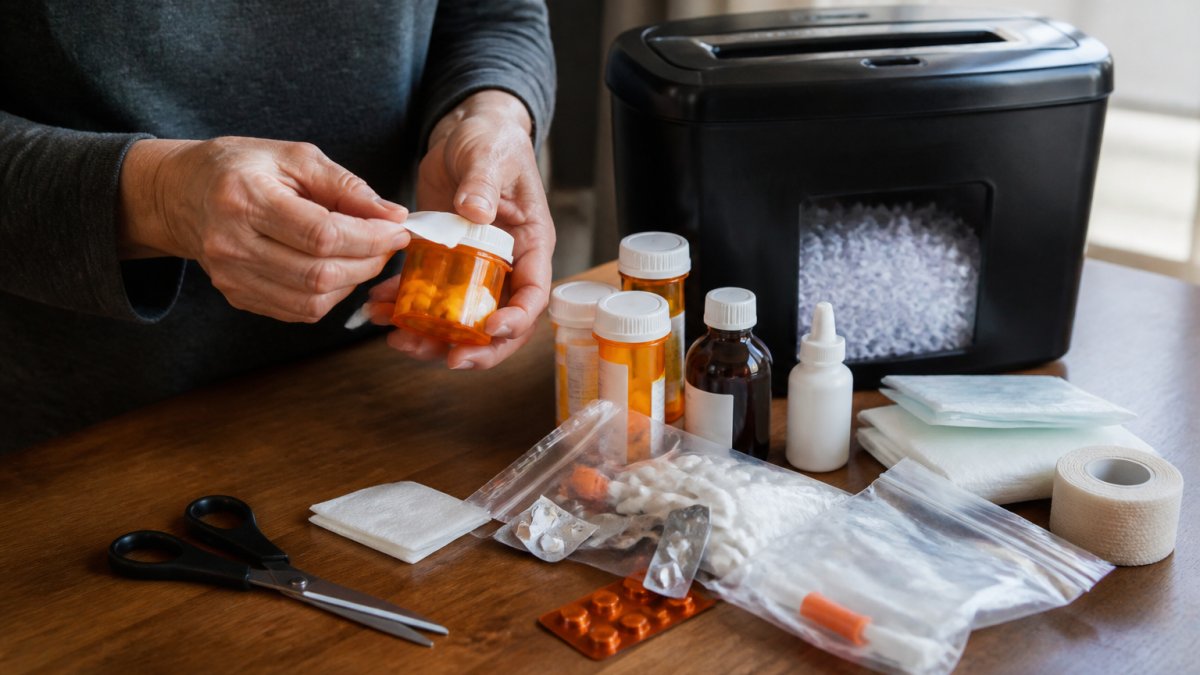
Removing Personal Information from Containers
Prescription bottles contain sensitive health information. Don't leave labels intact on empty containers:
- Peel off the prescription label completely
- Black out any visible text with a permanent marker
- Shred the label if possible
- Remove stickers or identifying marks
- Rinse the container if it held liquid medication
This prevents identity theft. Never throw away a prescription bottle with your name, address, or medication details visible.
Securing Sharps and Hazardous Items
Before disposal, make sharps impossible to access in a container that can't be opened accidentally:
- Fill only three-quarters full
- Seal the cap tightly
- Tape the cap to prevent opening
For other hazardous items like expired topical medications or ointments, seal them in plastic bags before trashing to prevent leakage and accidental contact.
Business and Bulk Medical Supply Disposal
If you run a clinic, dental office, veterinary practice, or other medical business, you generate more medical waste than home disposal methods handle.
Contact a licensed medical waste disposal company.
Properly disposing of expired medical supplies protects your family, your community, and the environment.
When you're ready to restock with fresh supplies, RestockYourKit.com makes it simple.
Frequently Asked Questions
Can you throw expired medicine in the garbage?
Throwing expired medication directly in household trash is generally not recommended and may be illegal in some jurisdictions. The safest approach is to use a drug take-back program or pharmacy drop box. If trash disposal is your only option, mix medications with unappetizing substances like coffee grounds or cat litter in a sealed bag to prevent accidental ingestion by children or pets, then place it in your household trash. Always check local disposal rules first, as regulations vary by location.
What is the safest way to dispose of expired first aid supplies?
Expired first aid supplies disposal depends on the item type. Non-hazardous items like expired bandages, gauze, and dressings can usually go in household trash after removing any personal information from packaging. Sharps like expired lancets or needles require a sharps container. Expired ointments or topical medications should be treated like expired medication, use a drug take-back program when possible. Separate medical supplies from medications to ensure proper handling of each category.
How do I safely dispose of used needles and sharps?
Never throw loose sharps in regular trash or recycling. Place used needles, lancets, and other sharps in a designated sharps container with a biohazard label. Fill containers only three-quarters full, seal them securely, and label them clearly. Some pharmacies and hospitals accept sharps containers for disposal. Contact your local waste management facility or healthcare provider for sharps collection locations. For home use, consider purchasing a small sharps container designed for personal medical waste.
Where can I find a drug take-back program near me?
The DEA's National Prescription Drug Take Back Day occurs twice yearly and provides free, anonymous medication disposal at participating pharmacies, police stations, and hospitals. Many pharmacies operate year-round take-back programs, ask at your local pharmacy's counter. Use the DEA website or call your local law enforcement agency to locate drop boxes in your area. Mail-back envelopes are also available from some pharmacies and online retailers if in-person drop-off is inconvenient.


