

Supplies Needed for Chicken Water Belly Treatment
Last Updated: November 8, 2026
Quick Summary
The core supplies for water belly treatment in chickens are a 60 cc irrigation syringe, sterile 18 gauge needles, nitrile gloves, sterile gauze pads, rubbing alcohol or antiseptic, and absorbent pads. Needle gauge, length and fluid limits should be set by a veterinarian, since drainage is only temporary and the underlying cause must be treated.
- Draining water belly fluid gives only short-term relief because the fluid often returns.
- Use a 60 cc irrigation syringe and sterile 18 gauge needles, with gauge confirmed by your vet.
- Nitrile gloves, sterile gauze pads, antiseptic and absorbent pads keep the procedure clean.
- Your vet should set the needle gauge, length and fluid volume limit before any drainage.
- Never drain at home if the bird is gasping, collapsed, has broken skin or has not been diagnosed.
Table of Contents
- What Water Belly (Ascites) Is and Why Draining Is Only Temporary
- Early Signs of Water Belly in Chickens and When to Call a Vet
- Water Belly in Chickens Symptoms and the Causes Behind Them
- Complete Supply Checklist for Water Belly Treatment, With Prices
- How to Drain Water Belly in Chickens Without a Needle, and Why It Is Not Advised
- Ascites in Chickens Treatment at Home: Risks, Stop Conditions and Aftercare
- Scheduling Your Vet Visit and Stocking Your Water Belly Kit
- Frequently Asked Questions
What Water Belly (Ascites) Is and Why Draining Is Only Temporary
Water belly, also called ascites, is a condition where fluid builds up inside a chicken's abdomen and makes the belly look swollen and feel squishy.
Think of draining as comfort care. It can help a chicken breathe and move more easily for a while.
Before you buy any supplies, know what you are signing up for.
Watch out: draining without knowing the cause can hide a fast-moving illness that needs a vet's care.
Early Signs of Water Belly in Chickens and When to Call a Vet
Water belly often shows up slowly. Watch for a belly that looks rounder or fuller than usual, especially when the chicken walks or stands. Many keepers first notice a bird that waddles, sits low or seems less active.
Call a vet quickly if you see any of these:
- Rapid breathing or open-mouth breathing
- Pale comb and wattles, or a bluish tint
- Loss of appetite or sudden weight loss
A vet can check the heart, liver and lungs and help you find the real cause. If you want to compare gentler options first, our guide to natural remedies for sour crop in chickens covers symptoms, treatment steps and when to see a vet.
Water Belly in Chickens Symptoms and the Causes Behind Them
Water belly symptoms overlap with several other problems, so guessing is risky. The swollen belly is the most visible sign, but breathing changes, low energy and weight loss are common too.
Possible underlying causes include:
- Heart disease or heart strain
- Liver damage
- Lung disease
Because so many conditions look alike, a vet visit can save you from treating the wrong problem. Keep notes on when you first saw the swelling, how the bird is eating and drinking, and any changes in droppings.
Complete Supply Checklist for Water Belly Treatment, With Prices
A supplies-first guide is only useful if it tells you what each item does, what you can safely buy on your own, and what should come from your veterinarian. The checklist below is organized by purpose so you can build a kit that is complete without overbuying.
The easiest starting point is our Water Belly (Ascites) Treatment Kit for Chickens + Poultry, which bundles most of the essential items in one place for $9.99.

Essential Supplies You Can Buy Yourself
These are the items most keepers need on hand before a veterinary appointment, and they are safe to purchase without a prescription:
- Irrigation syringe, 60 cc: Included in our Water Belly (Ascites) Treatment Kit.
- Sterile hypodermic needles, 18 gauge: Included in our Water Belly (Ascites) Treatment Kit. Choose the gauge your vet recommends.
- Nitrile gloves, large: Included in our Water Belly (Ascites) Treatment Kit.
You can also buy a sterile needle on its own with our Hypodermic Needle (Sterile) listing.

Optional Supplies That Improve Safety and Comfort
These items are not strictly required but make the process safer and less stressful for the bird:
- A second pair of hands: A helper to hold the chicken gently and steady the bird reduces the chance of a sudden movement mid-procedure.
- A headlamp or bright task light: Good lighting helps you see the insertion site and monitor the fluid.
- A sharps container: A rigid plastic container with a lid for used needles.
- A scale for weighing the bird: Daily weight checks help you track fluid recurrence.
Supplies Best Supplied or Recommended by a Veterinarian
Some items should not be purchased on your own for this procedure. Your vet may supply or specify:
- The correct needle gauge and length for your bird's size and condition. A vet can assess whether an 18-gauge needle is appropriate or whether a different size is safer.
- A local anesthetic or pain management plan, if indicated.
- Antibiotics or other medications, which require a prescription and a diagnosis.
- A confirmed insertion site and fluid volume limit. These are clinical decisions, not supply-list items.
Watch out: buying a kit does not replace a diagnosis. Using the wrong needle size or draining too much fluid can cause serious harm, so confirm the plan with a vet before the first attempt.
Sterilizing the Equipment and Treatment Area
Clean is just as important as sharp. Prepare the workspace before the bird comes in:
- Wipe the table or surface with a disinfectant
- Wash your hands thoroughly, then put on fresh gloves
- Clean the bird's skin with rubbing alcohol or an approved antiseptic
- Use a fresh sterile needle and syringe every time
For more on keeping a wound-care area clean, see our guide on essential wound care supplies for backyard livestock.
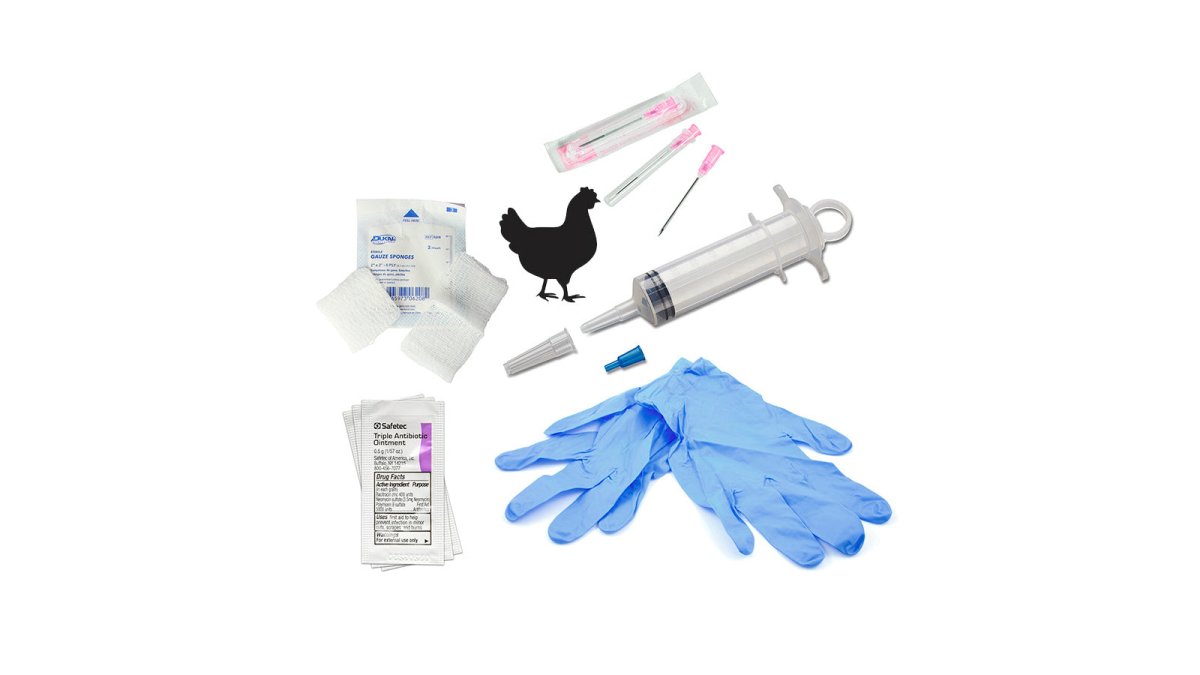
The table below sums up the essential supplies, what each one is for, and where the article says to get it.
| Item | Purpose | Source |
|---|---|---|
| Irrigation syringe, 60 cc | Draining fluid | Water Belly Kit, $9.99 |
| Sterile hypodermic needle, 18 gauge | Insertion, gauge set by vet | Water Belly Kit or Hypodermic Needle listing |
| Nitrile gloves, large | Hygiene during procedure | Water Belly Kit |
| Gauze pads, 2 x 2 inch (sterile) | Dressing the site | Water Belly Kit |
| Rubbing alcohol or antiseptic | Skin prep | Local supplier |
| Absorbent pads or clean towels | Catching fluid | Buy yourself |
| Sharps container | Safe needle disposal | Optional |
| Needle gauge, length, fluid limit | Clinical decision | Veterinarian |
How to Drain Water Belly in Chickens Without a Needle, and Why It Is Not Advised
Some keepers look for ways to drain fluid without a needle. We do not recommend it. Improvised methods can cause infection, injury and serious stress to the bird.
Any drainage should follow your vet's guidance. A vet can show you the safe spot, the right needle size and how much fluid is too much.
Ascites in Chickens Treatment at Home: Risks, Stop Conditions and Aftercare
Home treatment has real limits, and the most important skill is knowing when not to proceed. This section covers contraindications, stop conditions, a practical aftercare plan, and how to think about long-term decisions with your veterinarian.
When Not to Attempt Drainage
Do not attempt drainage at home, and call a vet instead, if any of the following apply:
- The bird is in severe respiratory distress, gasping, open-mouth breathing at rest, or a bluish comb or wattles.
- The bird has collapsed, is unable to stand, or is unresponsive.
- The abdomen is hot, painful to the touch, or the skin is broken or infected.
- You have not confirmed with a vet that the swelling is ascites and not another condition, such as an egg-related blockage, a reproductive tumor, or an abdominal infection.
A swollen abdomen is not diagnostic of ascites. A vet can distinguish fluid buildup from other causes and tell you whether drainage is appropriate.
Risks and Complications of Drainage
Even when performed correctly, drainage carries risks:
- Infection at the insertion site, especially if sterile technique is not followed.
- Bleeding or hematoma if a blood vessel is nicked.
- Puncture of an organ if the needle is inserted too deep or in the wrong location.
- Sudden cardiovascular collapse if fluid is removed too quickly, particularly in a bird with heart disease.
Watch out: if you see blood or unusual fluid in the syringe, heavy bleeding at the site, or breathing that worsens during the procedure, stop immediately and contact your veterinarian.
Aftercare and Monitoring Plan
After veterinary-directed drainage, keep the bird in a clean, quiet, warm space away from flock stress. Monitor the following daily for at least a week:
- Breathing: Rate and effort at rest. Note any increase in open-mouth breathing.
- Appetite and water intake: Track whether the bird is eating and drinking normally.
- Activity: Whether the bird stands, walks, and interacts as it did before.
- Wound condition: Check the insertion site for redness, swelling, discharge, or reopening.
Keep a simple log of these observations so you can share them with your vet at follow-up.
Recurrence and Long-Term Decision-Making
Draining brings only short-lived relief. The fluid often returns because the underlying heart, liver, or lung problem remains. Plan for repeated vet checks and discuss with your veterinarian:
- How often drainage may be needed and whether repeated procedures are fair to the bird.
- Whether underlying conditions can be managed with diet, environment, or medication.
- Quality-of-life markers, such as ability to eat, drink, stand, and breathe comfortably.
- Humane options if the bird's condition declines despite treatment.
A poultry veterinarian can help you weigh ongoing treatment against humane euthanasia when the bird's quality of life is poor. That conversation is part of responsible care, not a failure of it.
Scheduling Your Vet Visit and Stocking Your Water Belly Kit
Book a vet visit before you need one in an emergency. Ask the clinic whether they treat poultry and how fast they can see a sick bird.
Once you know your plan, stock a ready kit so you are not hunting for supplies during a crisis. You can start with our Deluxe Backyard Chicken First Aid Kit, which covers many poultry first aid needs, and add the water belly kit for the drainage supplies.

Your flock depends on you to act early and wisely. Keep your supplies sterile, your vet's number handy and your notes current.
Merck Veterinary Manual on poultry ascites
Cornell University Animal Health Diagnostic Center on poultry diseases
USDA guidance on backyard poultry health
Frequently Asked Questions
Can water belly in chickens go away on its own?
Rarely. Ascites is usually a sign of an underlying problem such as heart or lung strain, liver disease, or fluid leaking from a stressed circulatory system, so the fluid tends to return unless the cause is addressed. Some mild cases stabilize with rest, reduced stress and good feed, but a swollen, breathing-labored bird needs a veterinarian's assessment rather than waiting. Draining can relieve pressure temporarily, but it does not cure the condition, and fluid often rebuilds within days to weeks.
What should I put in my chicken's water when it has water belly?
Water additives do not treat ascites, and no supplement replaces a diagnosis. Fresh, clean drinking water should always be available, and you should avoid adding anything to the water without advice from a veterinarian. Some keepers use electrolyte or probiotic products for general support during recovery, but these only support a bird that is already being evaluated. Do not give calcium or other supplements to a bird with ascites unless a vet has approved them, since dehydration and imbalance are real risks.
When should I contact a veterinarian about chicken ascites?
Contact a veterinarian as soon as you notice a swollen abdomen, especially if the bird is breathing with its beak open, sitting fluffed and lethargic, refusing food, or losing weight. A vet can confirm the cause, which may be heart disease, liver problems, reproductive issues or infection, and can advise whether draining is appropriate. A veterinarian experienced with poultry is a good option. Waiting until the bird is down or gasping often leaves little room for a safe outcome.
How long can a chicken live with a water belly?
Survival time varies widely depending on the underlying cause and how quickly fluid builds. Some birds live for weeks or months with careful management, while others decline within days, especially when breathing is affected. Repeated drainage can improve comfort temporarily, but each procedure carries infection risk. Keepers should discuss realistic prognosis with a veterinarian and be prepared to make a humane decision if the bird cannot eat, breathe comfortably or move around.
