

Essential Wound Care Supplies for Backyard Livestock
Last Updated: November 5, 2026
Quick Summary
The essential wound care supplies for backyard livestock cover four jobs: cleansing, covering, controlling bleeding, and protecting the injury. Build your kit around sterile saline, irrigation syringes, gauze pads, vet wrap, styptic powder, and an antimicrobial wound spray, plus gloves and antiseptic wipes.
- For five or six hens, start with two pairs of nitrile gloves, four to six gauze pads, one vet wrap roll, and wound spray.
- Flush wounds with sterile saline from the clean edge outward using an irrigation syringe.
- Self-adhesive vet wrap works well because it sticks to itself, not to feathers.
- Call a vet for wounds deep enough to see muscle or bone, or bleeding that pressure will not stop.
- Check and restock your kit twice a year, replacing expired sterile items even if unopened.
Table of Contents
- What Belongs in Backyard Livestock Wound Care Supplies
- Livestock First Aid Kit Supplies: Pre-Built Kits vs. Build-Your-Own
- How to Clean Livestock Wounds Without Making Them Worse
- Livestock Wound Dressing Supplies: Gauze, Bandages, and Barriers
- Livestock Wound Care Best Practices and Product Cautions
- Storage, Expiration, and Restocking Your Wound Kit
- Build Your Backyard Wound Kit Before the Next Injury
- Frequently Asked Questions
What Belongs in Backyard Livestock Wound Care Supplies
A working wound-care kit for a small flock comes down to four jobs: cleansing, covering, controlling bleeding, and protecting the injury while it heals. A kit built for backyard keepers should cover more than bandages, because a box full of bandages with nothing to flush a wound or stop bleeding first leaves the most urgent jobs undone. The essential wound care supplies for backyard livestock are not the same as a human medicine cabinet, and treating them that way costs you time when a hen is bleeding on the coop floor.
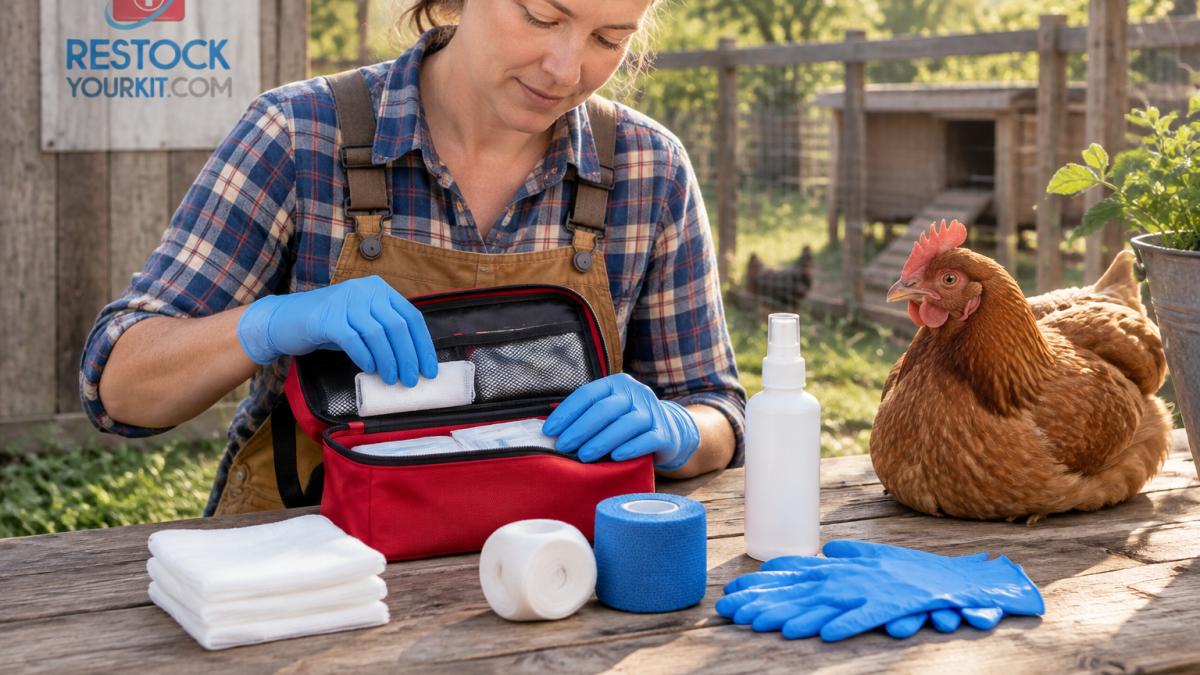
Core categories: cleansing, covering, controlling, and protecting
Think in four groups, and you will never buy the wrong thing again:
- Cleansing: sterile saline, wound wash, irrigation syringes, povidone-iodine wipes
- Controlling: styptic powder or blood-stop powder, gauze pads for direct pressure
- Covering: sterile gauze dressings, gauze rolls, self-adhesive vet wrap, silk tape
Add disposable gloves and a thermometer to that list and you have a kit that handles most cuts, lacerations, and pecking injuries. Poultry skin tears easily, and a wound that looks minor at dusk can be a fly magnet by morning, so covering supplies matter as much as cleaning supplies.
How many supplies a small flock actually needs
For a flock of five or six hens, a practical starting quantity is two pairs of nitrile gloves, four to six sterile gauze pads in mixed sizes, one roll of vet wrap, one bottle of wound spray, and a handful of antiseptic wipes. You are not stocking a barn. You are stocking for one injury at a time, plus a little margin for a second bird getting picked on while the first one heals.
Our backyard poultry medical kit checklist walks through the full list if you want to confirm nothing is missing before you assemble your own.
Livestock First Aid Kit Supplies: Pre-Built Kits vs. Build-Your-Own
Pre-built kits can suit many backyard keepers because they arrive packed and sealed. Building your own makes sense when you already own half the contents or need one specific item replaced. The trade-off is time versus control.
Here is how the two routes compare in practice:
| Approach | What You Get | Best For | Watch Out For |
|---|---|---|---|
| Pre-built kit | Curated contents, sealed pouches, care cards | First-time keepers, small flocks | Paying for items you already own |
| Build-your-own | Only what you choose, exact quantities | Keepers restocking an existing kit | Missing a category you did not think of |
If you would rather buy once and be done, our Deluxe Backyard Chicken First Aid Kit covers all four categories in one box. The kit's listing describes sterile gauze pads, gauze rolls, vet wrap, silk tape, an antimicrobial wound spray, triple-antibiotic packets, povidone-iodine wipes, nitrile gloves, forceps, trauma shears, irrigation syringes, styptic bleeding-control powder, and a 20-card care reference set. It is priced at $129.98. For a smaller budget, the Basic kit at $49.99 covers minor wounds and bumblefoot.

How to Clean Livestock Wounds Without Making Them Worse
Cleaning a livestock wound generally means flushing it with sterile saline or wound wash, inspecting it in good light, and deciding whether it can be treated at home. Gentle flushing is generally preferred over aggressive scrubbing.
Step-by-step: flush, inspect, and decide
- Restrain and glove up. Wrap the bird in a towel so wings stay still. Put on nitrile gloves before you touch anything.
- Control bleeding first. Apply direct pressure with a sterile gauze pad. If bleeding continues, use styptic or blood-stop powder as directed on the label.
- Flush the wound. Draw sterile saline into an irrigation syringe and flush from the clean edge outward. Repeat until debris is gone.
- Inspect in good light. Look for embedded material, torn skin flaps, or exposed tissue. Use forceps only for material you can see and reach easily.
- Decide. Minor cuts and pecking wounds can be treated at home. Deep lacerations, punctures near a joint, or anything with heavy bleeding need a veterinarian.
- Protect and cover. Apply an antimicrobial spray, then a light dressing held with vet wrap. Keep the wrap snug but not tight.
For a deeper walkthrough of cleaning technique, see our guide to chicken wound care for backyard flocks.
Livestock Wound Dressing Supplies: Gauze, Bandages, and Barriers
Gauze does the absorbing, bandages do the holding, and barriers do the protecting.
Gauze dressings and wound sponges come in pads and rolls. Before applying a pad or wrap, gently cleaning pet wounds helps remove debris so the dressing can sit against the injury.
Bandages and wound coverings hold the dressing in place. Self-adhesive vet wrap is the workhorse because it sticks to itself, not to feathers.
Barriers sit on top of the wound to keep dirt, moisture, and insects out.
You can shop gauze dressings and pads in individual quantities if you only need to top up one part of your kit.
Livestock Wound Care Best Practices and Product Cautions
Good wound care is mostly discipline: clean hands, clean supplies, and a willingness to stop treating and call for help. A few product cautions matter more than any single technique.
Deluxe Backyard Chicken First Aid Kit →
- Check every label for egg withdrawal. Some products carry a withdrawal period and some do not. The generic Vetericyn Plus Poultry Care Spray listing states it has no egg withdrawal period, but read the label on anything you apply.
- Skip human antiseptics that sting or stain. Hydrogen peroxide and alcohol damage healing tissue. Povidone-iodine wipes are fine for cleaning skin around a wound, not for pouring into it.
- Do not use antibiotics casually. Consult a veterinarian before relying on antibiotic products for a wound.
Our broader guide to treating backyard chicken injuries covers the full recovery timeline and the signs that home care is not enough.
When to call a veterinarian instead of treating at home
Call a veterinarian when bleeding will not stop with pressure and styptic powder, when the wound is deep enough to see muscle or bone, when a joint is involved, when the bird stops eating or drinking, or when a wound is not improving after a few days of care. Signs of infection, including swelling, discharge, foul odor, or a bird that sits fluffed and withdrawn, also warrant professional help.
Storage, Expiration, and Restocking Your Wound Kit
A wound kit fails quietly. Nothing announces that the saline bottle was left in a hot shed or that the sterile gauze pouch was opened and resealed with a bit of coop dust inside. The only defense is a storage routine and a restock schedule you actually follow.
Where to store the kit
Store the kit somewhere dry, out of direct sun, and away from temperature swings. Keep the kit off the floor so bedding, manure, and moisture do not reach it, and keep it closed between uses so dust and insects stay out.
Label the outside of the kit with the date you assembled it and the date of your next check. A kit with no date on it is a kit you will not trust when you open it.
What actually expires, and how fast
Not everything in the kit ages the same way. Sterile packaging generally carries a manufacturer expiration date, and products past that date should be replaced rather than relied on.
A practical rule: anything that touches an open wound and carries a printed expiration date gets replaced at that date, not stretched. Consumables without a date get replaced on your twice-yearly check if opened or visibly degraded.
A twice-yearly restock schedule
Pick two dates a year, many keepers use the start of spring and the start of fall, when they are already doing seasonal animal care, and run the same checklist each time:
- Open every pouch and confirm the contents are sealed, dry, and within date.
- Replace any expired sterile item, even if unopened.
- Replace opened saline, wound wash, sprays, and ointments.
- Test adhesive products by pressing a short length of vet wrap to itself; replace rolls that no longer hold.
- Confirm glove sizes and counts, and replace any pair that has been opened and exposed.
- Check that forceps and shears are clean and that the care cards are still in the box.
- Write the new check date on the outside of the kit.
The kit listings state that contents are packed and shipped in individual waterproof resealable poly bags.
Build Your Backyard Wound Kit Before the Next Injury
The injury always happens on a Sunday evening, and the supply run always happens the next morning.
RestockYourKit.com offers individual medical supplies at near-wholesale prices, specialized poultry first aid supplies, and hard-to-find medications in smaller quantities, with free shipping on orders of $79 or more within the US.
Start with the categories you are missing, add a care card set so the guidance is in the box with the supplies, and check the kit twice a year.
Frequently Asked Questions
What should you put on a livestock wound?
Start with a gentle flush of sterile saline or a wound wash to clear dirt, then apply a poultry-safe antimicrobial spray such as the generic Vetericyn Plus Poultry Care Spray ($17.99), which the listing says is non-irritating and has no egg withdrawal period. Cover with a non-stick gauze pad and vet wrap if the wound is open. Consult a veterinarian before using antibiotic creams on a wound. For bumblefoot, PRID Drawing Salve ($11.79) is commonly applied under a daily dressing change.
What are the 4 C's of wound healing?
The four C's are cleansing, controlling bleeding, covering, and checking. Clean the wound with saline or a wound wash, control bleeding with direct pressure or a styptic powder, cover it with gauze and a bandage, and check the site daily for swelling, odor, or pus. In backyard livestock, the checking step matters most because birds hide pain and a small cut can turn into a fly-strike or pecking problem within a day. Write the date on the bandage so you know when to change it.
How do you protect a livestock wound from dirt and flies?
A two-layer dressing works best: a sterile gauze pad against the wound, then a self-adhesive vet wrap over it, secured with silk tape if needed. Manna Pro Hen Healer ($14.98) creates a lanolin-based barrier against insects, moisture, and dirt and helps prevent pecking because of its blue color. Keep the bird on clean bedding and check the dressing twice daily. If you see maggots or a foul smell, call a veterinarian, because fly-strike needs professional care.
How often should a livestock wound dressing be changed?
Change the dressing once daily for the first two to three days, then every other day as the wound closes. Change it immediately if it becomes wet, dirty, or loose. For bumblefoot treated with PRID Drawing Salve, the product listing recommends changing the dressing daily. Clean the wound each time before re-bandaging, and note the date so you do not lose track. A wound that looks worse after three days of care needs a veterinarian.
When should a livestock wound be treated by a veterinarian?
Call a veterinarian for deep or gaping cuts, heavy bleeding that does not stop with pressure, wounds near the eye or vent, a broken bone, or any sign of infection such as swelling, heat, pus, or foul odor. Also call if the animal stops eating or drinking, or if a wound has not improved after three days of home care. A vet is the right call for anything that needs stitching, antibiotics, or pain control.
A kit is only as good as the day you last checked it. Build yours around the four categories, restock on a schedule, and know when to hand the case to a veterinarian.
