

Professional Grade Wilderness Medical Gear
Table of Contents
- What Makes Wilderness Medical Gear Professional Grade
- Wilderness Trauma Kit Essentials for Bleeding Control
- Wilderness First Aid Kit Checklist 2026
- How to Restock Wilderness Medical Supplies
- Customizing Your Kit for Specific Environments
- Evidence-Based Medical Gear Selection
- Conclusion
- Frequently Asked Questions
Last Updated: September 4, 2026
The difference between a kit that sits in your pack and one that saves a limb often comes down to a single decision: choosing professional grade wilderness medical gear over basic consumer supplies. When you are hours from a trailhead and help cannot arrive quickly, the quality, sterility, and durability of your equipment determine your options. At RestockYourKit.com, we build custom kits for wilderness medicine enthusiasts and rescue volunteers, so we have strong opinions about what belongs in the field. This guide breaks down what actually separates professional-grade supplies from the rest, which trauma essentials you cannot skip, and how to build a kit that matches your specific trips and training level.
Below, we will walk through the core components of a serious backcountry medical system, the three kit configurations we recommend for 2026, and the restocking habits that keep your gear ready when it matters. Professional grade wilderness medical gear is not about buying the most expensive items; it is about selecting proven tools, organizing them for quick access, and maintaining them properly. By the end, you will know exactly how to evaluate your current setup and what to add before your next expedition.
What Makes Wilderness Medical Gear Professional Grade
Professional grade wilderness medical gear is equipment designed and tested for prolonged field care, where evacuation may be delayed for hours or days and environmental conditions stress both the responder and the supplies. Unlike standard household first aid contents, this gear prioritizes hemorrhage control, infection prevention, and patient stabilization using materials that survive temperature swings, moisture, and rough handling.

Several factors separate field-grade items from generic ones. Packaging matters: individual sterile wrappers keep gauze and dressings clean until the moment of use, and waterproof or ruggedized cases protect contents from river crossings and rain. The supplies themselves should be medical grade, meaning they meet manufacturing standards for sterility and biocompatibility. A common mistake is assuming a large kit equals a professional one; in practice, a compact system with the right trauma essentials outperforms a bulky bag stuffed with adhesive bandages. Wilderness first responder (WFR) training programs consistently emphasize that your gear must match your skill level, so choose components you are actually certified and confident to use.
Wilderness Trauma Kit Essentials for Bleeding Control
Uncontrolled bleeding is the most immediate, survivable threat in the backcountry, and your wilderness trauma kit essentials must address it before anything else. The window to act is measured in minutes, not hours, and the gear you carry must allow for rapid, effective intervention even under stress. A trauma kit is a dedicated subset of your medical supplies, organized for instant access rather than buried beneath routine items.
Tourniquets and Hemostatic Dressings
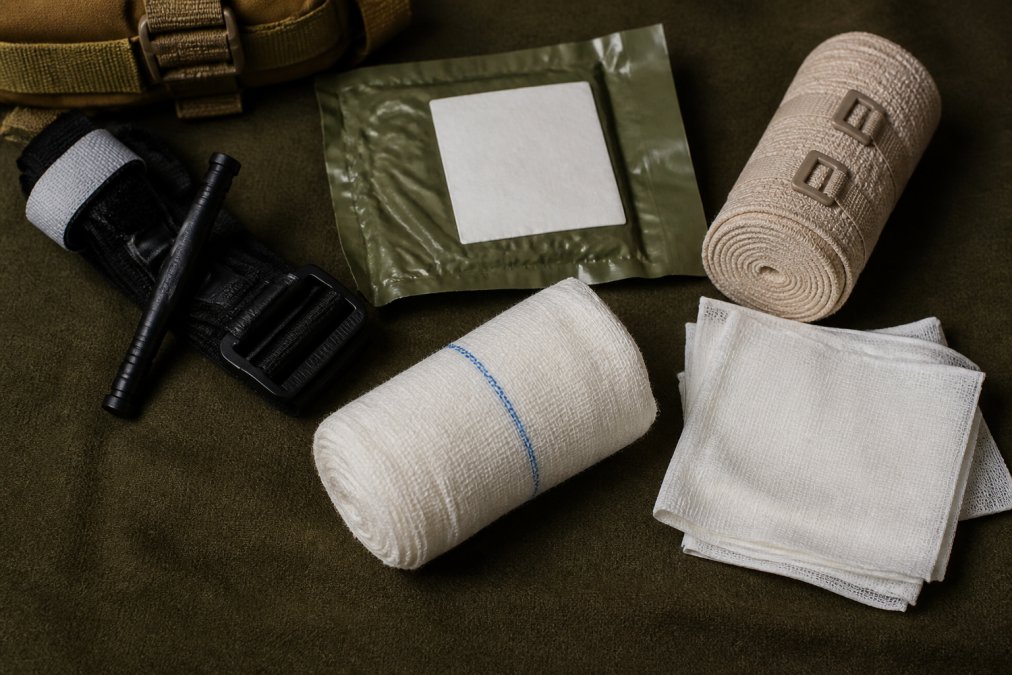
A tourniquet is the single most critical item for life-threatening limb hemorrhage, and the Committee on Tactical Combat Casualty Care guidelines recommend carrying one that is proven under field conditions. The North American Rescue C-A-T Tourniquet (Gen-7) is the standard we trust, authorized for purchase by the US Army and proven effective at occluding blood flow in extremities. It features a single routing buckle for faster application and a windlass system that locks to maintain pressure during evacuation. This is the only tourniquet we stock for our bleeding control kits because generic brands tend to fail when fine motor skills are compromised.
Hemostatic dressings work in tandem with tourniquets for wounds where a tourniquet cannot be applied, such as junctional areas. These dressings contain agents that promote rapid clotting and are packed directly into the wound. They are not a substitute for direct pressure but are a critical addition when standard gauze fails to control bleeding. Your trauma kit should include at least one, and you should practice packing it under simulated conditions before you need it in the field.
Pressure Bandages and Sterile Gauze
Once a tourniquet or hemostatic agent controls the immediate bleed, you need pressure bandages and sterile gauze to dress the wound and protect it from contamination. An elastic pressure bandage, often called an ACE bandage, applies consistent compression over a gauze dressing to maintain hemostasis. Sterile gauze pads in multiple sizes, including 4x4 and 5x9 trauma pads, provide the absorbent layer between the wound and the bandage.
The distinction between sterile and non-sterile gauze matters in the backcountry. Sterile individually wrapped pads are essential for open wounds; non-sterile rolls are useful for splinting and padding. A 36-inch aluminum padded SAM splint is another core trauma item, versatile enough for nearly any fracture and light enough at roughly 5 oz to justify its place in every kit we recommend.
Wilderness First Aid Kit Checklist 2026
Building a wilderness first aid kit checklist for 2026 means moving beyond a generic list of supplies and thinking in terms of system architecture: the duration of your trip, the size of your group, and the specific risks of your environment. The most effective kits are modular, allowing you to carry a light personal kit for day trips and add expedition modules for longer treks. Below are the three configurations we recommend, each designed for a specific use case and backed by our experience outfitting Scout units and expedition teams.
Personal Weekender Kit for 3-5 Day Trips
For solo hikers or small groups of up to five people on trips lasting three to five days, the Weekender Backcountry First Aid Kit at $64.99 is the sweet spot between weight and capability. At 1 lb 7 oz, it covers common injuries like blisters, minor wounds, and sprains while including a CPR mask, trauma shears, and a tick twister. This kit is built around the supplies taught in Wilderness First Aid courses, and its compact size makes it easy to grab for day hikes as well as weekend camping trips. rugged field accessories.
Expedition Kit for Extended Backcountry Travel
When your trip extends to seven to ten days, you need additional supplies for wound management, orthopedic injuries, and prolonged care. The Personal Expedition First Aid Kit at $89.99 adds a SAM splint, irrigation syringe, and a broader medication selection while still weighing just 1 lb 13 oz. This is the kit our own directors carry for longer treks, and it is designed to handle more technical scenarios without becoming a burden on your back.
Crew Kit for Group Expeditions
Group leaders managing eight to twelve people for eight to twelve days need a system with redundancy and a wider range of supplies. The High Adventure CREW First Aid Kit at $149.99 contains over 250 pieces, including multiple tourniquets, trauma dressings, and a full complement of medications, all organized for quick access. It is also designed to meet Scouts BSA recommended crew first aid kit contents for High Adventure treks. For water-based expeditions, the Northern Tier (BSA) Crew First Aid Kit offers the same capacity with water-resistant bags and additional waterproofing.
| Kit | Group Size | Trip Duration | Weight | Price |
|---|---|---|---|---|
| Weekender Backcountry | 1-5 people | 3-5 days | 1 lb 7 oz | $64.99 |
| Personal Expedition | 1-5 people | 7-10 days | 1 lb 13 oz | $89.99 |
| High Adventure CREW | 8-12 people | 8-12 days | 2 lb 9 oz | $149.99 |
| Northern Tier (BSA) CREW | 8-12 people | Up to 14 days | 2 lb 10 oz | $149.99 |
How to Restock Wilderness Medical Supplies
A kit is only as good as its most expired item, and learning how to restock wilderness medical supplies properly is what separates a maintained system from a false sense of security. The American Red Cross preparedness guidance stresses that supplies must be checked and replaced regularly to remain effective. Many outdoor enthusiasts build a comprehensive kit once and then let it sit in a closet for years, discovering too late that medications have degraded and sterile packaging has been compromised.
Tracking Expiration Dates and Shelf Life
Every medication and sterile product has a finite shelf life, and tracking expiration dates requires a simple but consistent system. When you restock, write the expiration date on the outside of each item or module in permanent marker, then log everything in a spreadsheet or a dedicated app. Check your kit at the start of each season and after any trip that exposed it to extreme temperatures or moisture. A practical rule is to replace any medication or sterile dressing that is within six months of its expiration date, not waiting until it has already expired.
Modular Restocking for Custom Kits
The most efficient way to maintain a professional kit is to restock by module rather than item by item. RestockYourKit.com offers individual quantities of medical supplies at near wholesale prices, so you can refresh your trauma module, wound management module, and medication module without buying an entirely new kit. This approach is cost-effective and ensures you always have the longest possible expiration dates on your medications, since kits are custom built to order.
Customizing Your Kit for Specific Environments
No single kit works for every environment, and customizing your wilderness medical gear for the specific conditions you face is a core principle of professional practice. A desert trek demands more irrigation supplies and electrolyte replacement, while a wet climate requires waterproof packaging and extra blister care. Consider the specific injuries most likely in your terrain, the distance to definitive care, and the availability of communication.
Weight vs. Utility in Remote Locations
Weight-to-capability ratio is the most overlooked factor in kit design. Every ounce you carry must justify itself against the probability and severity of the injuries it addresses. A 2 lb trauma kit that stops severe bleeding is worth more than a 5 lb bag of general supplies that lacks a tourniquet. The Wilderness Medical Society practice guidelines emphasize carrying equipment that matches your training and the realistic risks of your trip, not a maximalist collection of every possible item.
Organization and Quick-Access Design
Organization is a safety feature. If you cannot find the tourniquet in the first ten seconds of an emergency, it might as well not be in your pack. Use clear, labeled pouches for each module: trauma, wound management, medications, and tools. Keep the trauma kit in an external pocket or on your hip belt, not buried at the bottom of your pack. Practice accessing and using each item until the motions are automatic, and consider carrying a small quick-access pouch with just your tourniquet and hemostatic dressing for the highest-risk scenarios.
Evidence-Based Medical Gear Selection
Professional grade wilderness medical gear selection is moving toward an evidence-based approach, where products are chosen based on field testing and clinical data rather than tradition or marketing. This shift is reflected in the growing emphasis on wilderness first responder standards and the adoption of gear proven in military and tactical medicine contexts. The National Outdoor Leadership School wilderness medicine curriculum now integrates bleeding control and patient assessment protocols that mirror civilian and military best practices.

Wilderness First Responder Standards
The Wilderness First Responder (WFR) certification is the benchmark for serious backcountry medical training, covering patient assessment, prolonged care, and evacuation decision-making. Your kit should align with the protocols taught in WFR courses, which emphasize systematic assessment, documentation, and the use of specific supplies like irrigation syringes and SAM splints. If you are leading groups or venturing far from help, WFR training is the single best investment you can make in your preparedness, and it will change how you select and use your gear.
Ruggedized and Durable Field Equipment
Field equipment must survive the environment it is carried into. Ruggedized cases, waterproof bags, and durable tools are not luxuries; they are necessities for multi-day expeditions. Trauma shears with a 7.5-inch blade, stainless steel splinter forceps, and a CPR mask with a keychain attachment are examples of tools that hold up under field conditions. When selecting gear, check for features like waterproof foam in splints, reinforced windlasses on tourniquets, and packaging that can withstand being packed and unpacked repeatedly.
Conclusion
Building a truly professional kit requires more than buying a pre-assembled bag and calling it done. It demands that you understand the difference between consumer-grade supplies and professional grade wilderness medical gear, prioritize trauma essentials for bleeding control, and maintain your system through regular restocking and practice. The weight of your kit matters, but the weight of your knowledge matters more. Pair your gear with wilderness first responder training, and you will have the confidence to act when it counts.
At RestockYourKit.com, we provide the individual supplies, custom kits, and expert-curated modules that keep your system current and effective. From the North American Rescue C-A-T Tourniquet to the High Adventure CREW kit that meets Scouts BSA guidelines, we stock the professional grade gear you need at near wholesale prices. Get started with RestockYourKit.com and build a kit that matches your training, your environment, and your commitment to being prepared.

Frequently Asked Questions
What is considered professional grade wilderness medical gear?
Professional-grade wilderness medical gear meets wilderness first responder standards and has been tested for field durability. It includes evidence-based trauma supplies like tourniquets authorized by the U.S. Army, hemostatic dressings, sterile gauze, and splinting materials. The key difference from standard first aid kits is the focus on stabilization and evacuation protocols when professional emergency care is hours or days away, not minutes.
What should I include in a wilderness first aid kit checklist for extended expeditions?
An expedition-grade wilderness first aid kit checklist should cover trauma management (tourniquet, hemostatic gauze, pressure bandages), wound care (sterile gauze pads, trauma shears, antiseptic wipes), orthopedic support (SAM splint, elastic bandages, triangular bandages), medications (ibuprofen, diphenhydramine, antacid, hydrocortisone cream), and documentation tools (patient assessment notes, waterproof pen). For 7-10 days with 1-5 people, the Personal Expedition First Aid Kit at $89.99 includes all these elements in a ruggedized package.
How often should I restock wilderness medical supplies?
Restock wilderness medical supplies annually or after each trip. Check expiration dates on medications and sterile items every 6 months, as wilderness environments accelerate degradation. Hemostatic dressings, tourniquets, and bandages remain effective longer if stored in dry conditions. Many wilderness medicine professionals use a modular system where individual components are replaced as needed rather than replacing entire kits, reducing waste and cost.
What's the difference between wilderness trauma kit essentials and a standard home first aid kit?
Wilderness trauma kits prioritize bleeding control and stabilization for evacuation, including tourniquets, hemostatic gauze, and pressure bandages. Standard home kits focus on minor wound care. Wilderness kits also include tools like trauma shears, irrigation syringes, and SAM splints for field repair of fractures and sprains when professional help is distant. They're built for medical care lasting hours or days, not minutes until an ambulance arrives.