

7 Natural Tick Bite Prevention Methods for Pets
Last Updated: October 31, 2026
Quick Summary
Effective natural tick bite prevention methods for pets start with yard habitat reduction: keep grass short, clear leaf litter, and create mowed barrier zones where lawn meets woods. Layer that with daily tick checks after every outing, weekly grooming comb-outs, and a veterinarian-led prevention plan, since essential oils have limited evidence and several are toxic to cats.
- Place yard control tubes no more than 10 yards apart, twice a year, with six tubes covering a quarter acre.
- A full tick check takes about two minutes on a short-haired dog and five on a thick-coated one.
- Tea tree, pennyroyal, and wintergreen oils are the most dangerous common oils for pets.
- Pull a tick straight out with steady pressure; never twist, squeeze, or apply a lit match.
- Free shipping applies on RestockYourKit.com orders of $79 or more within the US.
Table of Contents
- Start With the Yard: Habitat Reduction That Actually Works
- How to Check Pets for Ticks After Every Outing
- Grooming and Coat Checks That Catch Ticks Early
- Essential Oils and Tick Prevention for Pets: What's Safe
- Natural Tick Prevention for Cats: A Different Set of Rules
- How to Remove a Tick from a Dog (and What to Do Next)
- Build Your Tick-Ready Kit Before the Season Starts
- Frequently Asked Questions
Start With the Yard: Habitat Reduction That Actually Works
Most pet owners rely on collars and overlook natural tick bite prevention methods for pets that start with the ground beneath their feet. Ticks rarely drop from trees; they quest from tall grass, leaf litter, and the shaded edges where lawns meet woods, waiting for a host to brush past.
At RestockYourKit.com, we build kits for people who spend real time outdoors with animals. Here is the practical sequence, plus the timing and regional context to consider.
Mowing, Trimming, and Barrier Zones
Keep grass short along fence lines, around outbuildings, and anywhere pets rest. Trim shrubs back so sunlight reaches the soil, and clear fallen leaves from under decks and along foundations.
A common approach is a three-part barrier: a mowed strip between lawn and woods, a band of wood chips or gravel at the transition, and regular leaf removal inside the yard.
For the yard itself, Thermacell Tick Control Tubes are designed to reduce the tick population by placing permethrin-saturated cotton where small rodents can use it for nesting.

Time the Work to the Tick Season, Not the Calendar
Yard work done in the wrong month misses the point. Tick activity follows temperature and moisture, and the timing differs by region and species. A common pattern:
- Spring: Clear winter debris and leaf litter before the first warm weeks, when overwintering ticks become active. This is the highest-value cleanup of the year.
- Early summer: Maintain the mowed barrier and keep grass short through the peak questing period.
- Late summer to fall: Continue leaf removal; adult ticks of some species are most active in cooler weather, and fallen leaves create the damp layer they need.
Regional context matters. Tick species and their ranges vary, so check which species are established in your area with your veterinarian or local extension office. Your veterinarian or local extension office can tell you which species are established locally and when they are most active.
Build the Yard Work Into a Weekly Routine
Habitat reduction works best when it is a habit, not a spring project. A practical weekly loop:
- Mow and edge the barrier strip and pet rest areas.
- Clear leaves and debris from under decks, along foundations, and around woodpiles.
- Check the yard-control tubes and replace or reposition as the label directs.
- Walk the pet areas and note tall grass or brush that needs trimming.
Pair that with daily tick checks after every outing and a weekly grooming comb-out. The yard reduces the population; checks and grooming catch what gets through.
How to Check Pets for Ticks After Every Outing
A full tick check takes about two minutes on a short-haired dog and five on a thick-coated one. Do it every time, before the pet comes inside, because a tick found within the first few hours is far easier to deal with than one that has fed overnight.
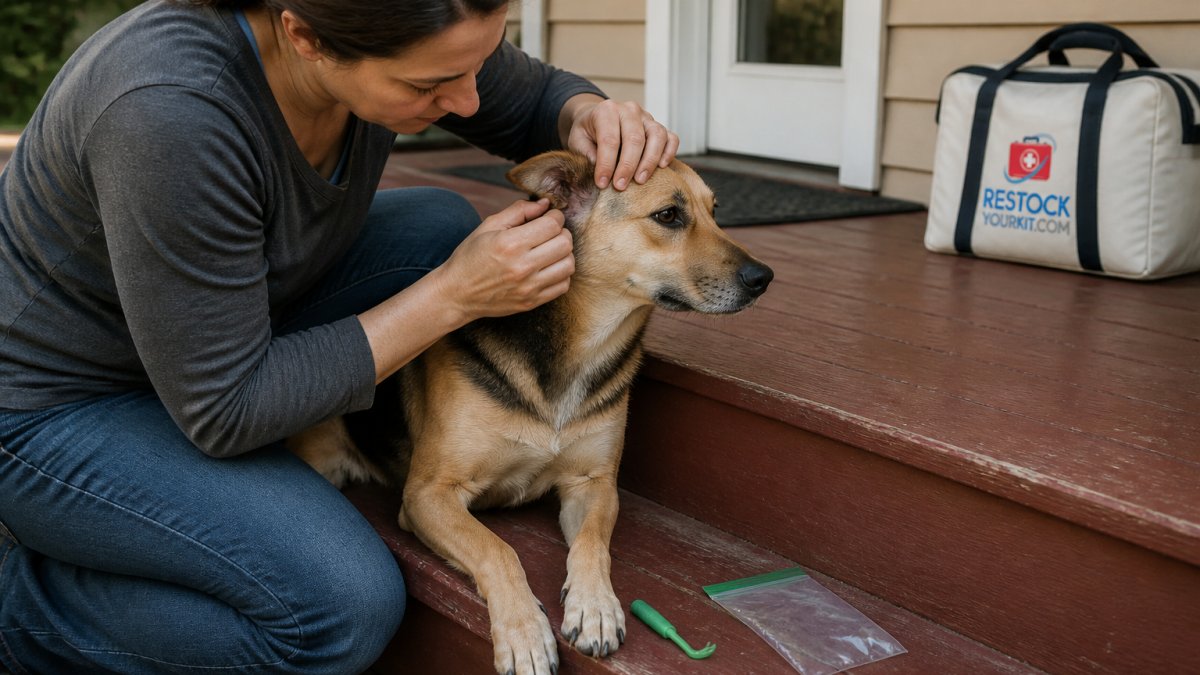
Run your hands over the whole body with light pressure. You are feeling for a small bump the size of a pinhead or a sesame seed, not looking for it.
Where Ticks Hide on Dogs and Cats
Ticks prefer warm, thin-skinned, hard-to-reach places. Check these first:
- Inside and behind the ears
- Around the eyelids and under the chin
- In the armpits and groin
On cats, add the cheeks and the area under the front legs. Long-haired pets hide ticks for days, which is why grooming matters as much as the check.
Grooming and Coat Checks That Catch Ticks Early
Brushing is not just tidiness. A five-minute session with a fine-toothed comb over the coat surfaces attached ticks, and it does it before they have time to swell and become obvious.
Work in good light, parting the coat down to the skin in sections. Pay attention to the neck, chest, and hindquarters.
For pets that spend a lot of time in brush, a weekly comb-out between outings catches what a quick porch check misses.
Essential Oils and Tick Prevention for Pets: What's Safe
Essential oils are often promoted as tick fixes, but their evidence for preventing tick bites on pets is limited, and several common oils are toxic to cats and small dogs. Treat oils as a supplement to checks and yard control, never a replacement for a veterinary-led prevention plan.
Thermacell Tick Control Tubes →
Grading the Evidence: What Actually Has Support
Use this as a rough ranking, not a guarantee. "Lab activity" means the compound repelled or killed ticks in controlled tests; it does not mean it will protect your pet on a hike.
| Ingredient | Evidence level | What it does | Pet safety note |
|---|---|---|---|
| Oil of lemon eucalyptus (refined) | Moderate for human use; not established for pets | Repellent | Not approved for pets; avoid around cats |
| Cedarwood oil | Weak, largely anecdotal | Mild repellent; cedar chips may discourage insects in bedding | Neat oil on skin can cause irritation; do not apply to cats |
| Lavender oil | Weak | Calming scent; repellent claim is not well supported | Neat oil can irritate skin; avoid on cats |
| Peppermint oil | Weak | Repellent in some lab tests | Can irritate skin and mucous membranes; toxic to cats |
| Tea tree oil | Not recommended | Antimicrobial, not a reliable repellent | Highly toxic to cats and dangerous to small dogs |
| Pennyroyal oil | Not recommended | Traditional repellent | Toxic to cats and dogs; do not use |
| Wintergreen oil | Not recommended | Anecdotal | Contains methyl salicylate; toxic to cats and risky for dogs |
Dog vs. Cat: Different Rules, Different Risks
Dogs and cats metabolize plant compounds differently, and the gap is large. A diluted oil blend a dog tolerates can cause drooling, tremors, or worse in a cat. Cats also groom constantly, so anything applied to the coat gets ingested.
- Dogs: Only use products labeled for dogs, follow the dilution on the label, and never apply undiluted essential oil to skin. Watch for redness, scratching, or lethargy after any application.
- Cats: Do not apply essential oils to a cat. Keep cats away from treated dogs immediately after application, and store all repellents where a cat cannot reach them.
- Multi-pet households: Never let a treated dog and a cat share bedding right after application, and keep the cat out of the room while a spray dries.
Dilution and Application Cautions
If you use a plant-based product on the environment, a kennel, porch, or bedding area, follow the label dilution exactly. More is not better: concentrated oils on surfaces a pet licks or lies on increase exposure. Apply in a ventilated space, let surfaces dry fully, and keep pets off until dry. Never mix your own essential-oil blend for a pet without veterinary guidance; the risk of getting the dilution or ingredient wrong is high, and the evidence for benefit is low.
Where Oils Fit in a Real Prevention Plan
Keep the pet's prevention plan veterinary-led. Practical tick bite prevention methods for pets include daily tick checks, prompt removal, grooming, yard habitat reduction, and a veterinarian-recommended preventive. Oils are at best a small supporting layer, and only when ingredient and species are matched correctly.
Natural Tick Prevention for Cats: A Different Set of Rules
Cats are not small dogs, and the natural tick prevention for cats that works for a dog can be actively harmful. Many essential oils, and several conventional spot-on products labeled for dogs, are toxic to cats.
Cats groom constantly, so anything applied to the coat gets ingested. That rules out most topical oil blends. Keep cats indoors during peak tick season where possible, check them after any outdoor time, and speak to your vet before using any product, natural or otherwise, on a cat.
How to Remove a Tick from a Dog (and What to Do Next)
Grasp the tick as close to the skin as possible and pull straight out with steady pressure.
A purpose-made tool makes this far easier than fingernails or tweezers. The Tick Twister is a tick removal tool that grips the tick close to the skin and works on pets as well as people.

Clean the bite site with an antiseptic wipe, then keep the area clean and dry. The PET PLUS First Aid Kit includes antiseptic and iodine wipes, gauze, and a pet first aid guide.

Post-Bite Monitoring and When to Call the Vet
Watch the bite site and the pet's behavior for the next few weeks. Call your vet if you see:
- A spreading rash or persistent redness at the site
- Lethargy, loss of appetite, or reluctance to move
- Lameness that shifts between legs
Bring the saved tick to the appointment if you can. Identification and, where relevant, testing give your vet useful information.
Build Your Tick-Ready Kit Before the Season Starts
The households that handle ticks well prepared in March, not July.
Our essential tick removal kit guide walks through every item worth including. If you want the broader seasonal picture, our guide to preparing for tick season covers timing and yard work alongside the kit itself.
Here is the minimum we would assemble:
| Item | Purpose | Where to Keep It |
|---|---|---|
| Tick removal tool | Removes ticks intact | Door, car, pack |
| Antiseptic wipes | Cleans the bite site | With the removal tool |
| Sealable bag or canister | Stores removed ticks for ID | With the removal tool |
| Fine-toothed comb | Surfaces ticks during grooming | Grooming station |
| Pet first aid kit | Wound care and monitoring | Home and vehicle |
| Yard control tubes | Reduces tick population at source | Applied twice yearly |
RestockYourKit.com offers individual items and kits, so you can build what your household needs. Free shipping applies on orders of $79 or more within the US.
Ticks are not going away, and the seasons are getting longer. The households that stay ahead have a plan, a kit, and a habit of checking every pet after every outing.
Frequently Asked Questions
How can I naturally prevent my dog from getting ticks?
Layer three habits: keep the yard trimmed and use tick control tubes around flowerbeds and woodpiles, run a full-body tick check after every walk, and groom your dog's coat several times a week. No single natural method is enough on its own, so stack yard control, daily checks, and prompt removal together for the best protection.
Are essential oils safe to use as tick repellents on pets?
Some are, some absolutely are not. Do not apply essential oils to a cat without veterinary guidance. Ask your vet before applying anything to your pet's skin, and treat oils as a supplement to tick prevention, not a replacement.
How often should I check my pet for ticks after being outdoors?
Check within a few hours of every outing, ideally before your pet comes back inside. Ticks often take hours to settle and attach, so catching them early makes removal easier and lowers disease risk. During peak season, do a quick visual scan daily and a thorough hands-on check at least every other day, focusing on ears, armpits, groin, and between the toes.
Are natural tick prevention methods enough to protect pets from tick-borne diseases?
They can help reduce risk but do not eliminate it. Yard maintenance, grooming, and daily tick checks are practical steps, and prompt removal with a tool like a Tick Twister is part of that routine. Because natural repellents vary in how long they last, pair them with veterinary-recommended preventives in high-risk areas and watch for symptoms like lethargy, lameness, or fever for several weeks after a bite.
