

Farm Injuries: Common Hazards and How to Prevent Them
Last Updated: November 4, 2026
Quick Summary
Common farm injuries come from machinery entanglement, falls, animal kicks and crushing, chemical and dust exposure, and overexertion. Most can be prevented by shutting off equipment before service, keeping guards in place, handling livestock calmly, and following chemical labels.
- Shut off the engine, remove the key and disconnect the battery before reaching into any machine.
- Treat every grain bin as a confined space, lock out the power and never work alone inside.
- Read the pesticide label every time, since it specifies the required gloves, respirators and re-entry intervals.
- Drink water steadily through the day and take shade breaks every hour in hot weather.
- Post crisis resources, including the 988 Suicide and Crisis Lifeline, alongside emergency numbers in the shop.
Table of Contents
- The Most Common Farm Hazards on Working Operations
- Farm Safety Tips for Machinery, Livestock and Chemicals
- Ergonomics, Heat Stress and Keeping Workers Healthy
- A Seasonal Farm Safety Checklist You Can Actually Use
- What to Keep in a Farm First Aid Kit and How to Restock It
- Scheduling Your Next Safety Review and Restock Before Peak Season
- Frequently Asked Questions
Farm work is among the most dangerous jobs in the United States, and many injuries happen in places that feel routine (the CDC). At RestockYourKit.com, we put together this guide to help farm families spot the common hazards and prevent them.
Farm injuries happen more often than most people think because hazards blend into daily chores. A quick trip to clear a jam or check a gate can turn into a serious accident.
The Most Common Farm Hazards on Working Operations
Farms bring together moving machines, animals, chemicals and confined spaces. Each one can cause serious harm on its own. Together, they create a workday full of risk.
Most farm injuries fall into a few groups:
- Machinery entanglement and crush injuries
- Falls from equipment, ladders and hay stacks
- Animal kicks, bites and crushing
- Chemical and dust exposure
Tractors, PTOs and Rollover Risks
Tractors cause more farm deaths than almost any other machine. A tractor can tip on a slope or ditch edge, and the operator may be crushed. The power take-off (PTO) shaft is another major danger. Loose clothing or long hair can catch on a spinning shaft in seconds.
Use these habits to lower your risk:
- Install a rollover protective structure (ROPS) and wear the seat belt
- Keep the PTO guard in place at all times
- Shut off the engine before you clean or unclog equipment
- Hitch implements at the proper height and point
Grain Bins, Augers and Confined Spaces
Grain bins look harmless, but grain can trap a worker in seconds. Stored grain flows like liquid, and a worker standing on it can sink and suffocate. Augers are just as risky. A worker who reaches into a running auger can lose a hand or arm.
Treat every grain bin as a confined space. Lock out the power before entry, and never work alone inside a bin.
Farm Safety Tips for Machinery, Livestock and Chemicals
Good habits prevent most farm injuries, and many of the fixes cost little or nothing. But the reason these three hazard groups cause so much harm is mechanical: each one fails in a specific, predictable way, and knowing the failure mode is what makes the prevention step stick.
Machinery: Lockout/Tagout Is the Core Habit
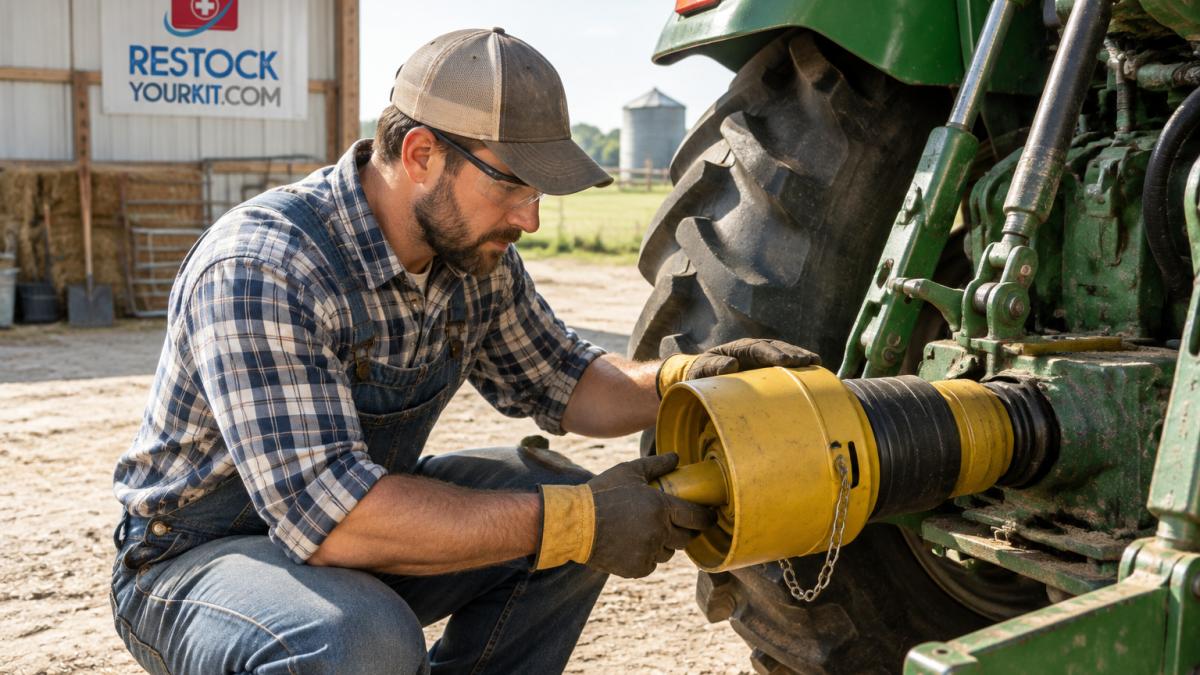
Most machine injuries happen during service, not operation. A jammed auger, a plugged baler, or a wrapped PTO draws a worker in because the machine can restart or store energy even after the key is off.
- Shut off the engine, remove the key, and disconnect the battery before you reach into any machine
- Release stored hydraulic and spring energy, and block raised implements before working under them
- Keep all guards and shields in place, and replace damaged ones before the next use
- Never wear loose clothing, jewelry, or long untied hair near a PTO or rotating shaft
A common pattern is that the injury happens during a "quick" unclog that skipped the shutdown. Build the shutdown into the task itself so it is not a judgment call under time pressure.
Livestock: Read the Animal, Not the Clock
Cattle, hogs, and horses injure workers through crushing against gates and walls, kicks, and falls during handling. Most of these events trace back to an animal that was startled, separated from herdmates, or moved faster than it could process.
- Use solid-sided chutes and panels where animals can see a clear path forward
- Avoid loud noises, whip cracking, and electric prods except as a last resort
- Never work a bull, boar, or cow with a newborn calf alone
- Keep an escape route in mind every time you enter a pen
Watch out: a seemingly calm animal can react to a sudden sound or movement in a fraction of a second, so never position yourself between an animal and a solid object.
Chemicals and Dust: Labels and Engineering Controls First
The Worker Protection Standard (WPS), administered by the U.S. Environmental Protection Agency (EPA), sets the baseline for agricultural pesticide handling, including training, notification, and required personal protective equipment (the EPA).
- Store pesticides in their original labeled containers, locked, and away from feed, seed, and water sources
- Mix and load outdoors or in a well-ventilated area, and never eat, drink, or smoke during handling
- Wear the label-specified gloves, eyewear, and respiratory protection, and remove contaminated clothing before entering the house
- Keep an eye wash station and clean water at every mixing site
A common mistake is assuming a short job does not need protection. Most serious chemical and machine injuries happen during quick, routine tasks, which is exactly when the guard, the glove, or the shutdown gets skipped.
Ergonomics, Heat Stress and Keeping Workers Healthy
Farm work strains the body, and the strain compounds. Repeated lifting, bending, and twisting cause back and shoulder injuries that build over years, while heat and fatigue degrade the judgment that prevents acute injuries. Most safety content stops at the physical hazards. The under-covered angle is the human one: a tired, stressed, or overheated worker is the single most common contributing factor in farm accidents, and addressing that state is a prevention strategy in its own right.
Musculoskeletal Strain: Change the Task, Not Just the Technique
Good lifting form helps, but engineering the task matters more. Musculoskeletal disorders in agriculture cluster around repetitive bending, heavy lifting, and sustained awkward postures during harvest, milking, and livestock handling.
Basic Car + Home First Aid Kit →
- Lift with your legs, keep the load close, and pivot rather than twist
- Use carts, hoists, and lift assists for feed bags, seed, and chemical containers instead of carrying them by hand
- Adjust work surfaces and stool heights so you are not stooping for hours
- Rotate heavy tasks across the crew, and build short stretch breaks into long harvest days
A common pattern is that back injuries show up after years of small overloads, not one dramatic lift, so the fix is cumulative as well.
Heat Stress: Act on Early Signs
Heat illness escalates in stages, and the early signs are easy to dismiss. Thirst, headache, and heavy sweating progress to dizziness, nausea, and confusion, and confusion is a red flag for heat stroke, which is a medical emergency.
- Drink water steadily throughout the day, not just when thirsty
- Take shade breaks every hour during hot weather, and schedule the heaviest work for cooler hours
- Wear light, loose clothing and a hat, and use cooling vests or neck wraps where practical
- Acclimate new workers over one to two weeks rather than throwing them into a full harvest day
Watch out: stopped sweating and confusion together suggest heat stroke, and cooling must begin before transport, not after.
Fatigue, Stress, and Mental Health: The Accident Multiplier
This is the part most farm safety guides leave out. Because stress can make workers overlook the strain of long hours on their feet, preventing workplace foot pain is another practical part of protecting attention and safety on the farm.
- Treat sleep as a safety control: cap consecutive long days and build in real rest during planting and harvest
- Watch for changes in a coworker's behavior, such as withdrawal, irritability, or recklessness, and check in directly
- Keep crisis resources posted in the shop alongside emergency numbers, and know that the 988 Suicide and Crisis Lifeline is available by call or text
- Break isolation by scheduling crew check-ins and shared meals during peak seasons
A tired or overwhelmed worker is not a personal failing to manage alone; it is a hazard to plan around, the same as a missing PTO guard.
A Seasonal Farm Safety Checklist You Can Actually Use
A checklist keeps safety from slipping during busy seasons. Use this list before planting, harvest and winter storage.
- Inspect guards and shields on all power equipment
- Check tractor brakes, lights and hitch pins
- Test grain bin sensors and ladder cages
- Review chemical labels and storage areas
- Confirm fire extinguishers are charged and accessible
Print the list and post it in your equipment shed. A visible reminder works better than a file on a shelf.
What to Keep in a Farm First Aid Kit and How to Restock It
Even with good prevention, injuries happen. A well-stocked kit lets you treat small problems quickly and buys time for serious ones. The U.S.
A solid farm kit should include:
- Gauze pads and rolls in several sizes
- Adhesive bandages and medical tape
- Trauma shears and nitrile gloves
- A cold compress and an elastic bandage
- Antiseptic wipes and eye wash
Our Basic Car + Home First Aid Kit covers many everyday needs, and it's an easy way to start a kit for a shed or truck. For bleeding emergencies, a C-A-T tourniquet-style device belongs in the kit as well, since severe bleeding can become life-threatening within minutes.

Restock after every use, and replace anything opened, damaged or past its date. You can read our guide to maintaining an OSHA-compliant farm first aid kit for a full restocking checklist.
The article lists what a farm first aid kit should contain, so the key items are summarised below.
| Item | Use | Note |
|---|---|---|
| Gauze pads and rolls | Covering wounds | Stock several sizes |
| Adhesive bandages and medical tape | Small cuts and securing dressings | Keep in the kit |
| Trauma shears and nitrile gloves | Cutting clothing and protecting the helper | Keep in the kit |
| Cold compress and elastic bandage | Swelling, sprains and strains | Keep in the kit |
| Antiseptic wipes and eye wash | Cleaning wounds and eyes | Replace once opened |
| CPR barrier mask | Rescue breathing safely | Keep in the kit |
| C-A-T tourniquet-style device | Severe bleeding | Can be life-saving within minutes |
Scheduling Your Next Safety Review and Restock Before Peak Season
Safety works best as a routine, not a one-time project. Pick two dates each year for a full review: one before spring planting and one before harvest. Walk the farm, test your equipment, check the kit and replace supplies. Set reminders on your phone so the dates don't slip.
Pick the items your farm needs, plan your restock date and stay ready for the busy season ahead.
Frequently Asked Questions
What are the most common farm workplace injuries?
Farm workers most often suffer injuries from machinery such as tractors, grain augers and power take-off shafts, along with falls from ladders and silos, livestock kicks and bites, and overexertion from lifting. Strains and sprains from repetitive tasks are also common. Many of these injuries are predictable, which means a documented daily check of equipment, clear rules for working around animals, and fall protection on elevated work can prevent a large share of them before they happen.
What should a farm first aid kit include?
A practical farm first aid kit should include adhesive bandages in several sizes, sterile gauze pads and rolled gauze, elastic compression bandages, trauma shears, nitrile gloves, antiseptic wipes, and a pressure dressing for heavy bleeding. Add a tourniquet and a bleeding control kit if the farm is far from emergency services. Check expiration dates each season and restock used items right away, since a kit that is empty or expired when needed offers little protection.
How can farmers prevent injuries from tractors and other machinery?
Keep all shields and guards in place, shut off equipment and wait for moving parts to stop before clearing jams, and never ride on implements or in areas not designed for passengers. Use a rollover protective structure with a seatbelt on tractors where available. Lock out power before service, and train every worker, including seasonal help, on each machine they will operate before they start the job.
How should farm injuries and near misses be reported?
Record every injury and near miss in a written log the same day, noting the date, location, task, equipment involved, and what could have prevented it. Report serious injuries to emergency services first, then notify your insurance carrier and follow any reporting obligations that apply to your operation. Reviewing near-miss records each month often reveals the hazards most likely to cause a future injury.
