

Backyard Poultry Medical Kit Essentials: Complete Checklist
Table of Contents
- Essential Wound Care Supplies for Backyard Poultry
- How to Treat Backyard Chicken Wounds: Tools and Techniques
- Essential Chicken Medications and Pain Relief
- Bandaging, Dressing Materials, and Antiseptic Washes
- How to Set Up a Chicken Sick Bay or Hospital Pen
- Vitamins, Electrolytes, and Recovery Supplements
- Backyard Poultry Medical Kit Comparison and Storage
- Conclusion
- Frequently Asked Questions
Last Updated: September 2, 2026
Essential Wound Care Supplies for Backyard Poultry
When a chicken arrives at your coop with a torn wing, bleeding foot, or infected scratch, you need to act fast. Wound care is the foundation of any backyard poultry medical kit essentials collection, and it's where most chicken keepers stumble by grabbing whatever bandages are lying around the house.
A proper poultry medical kit starts with sterile, poultry-appropriate supplies. Your birds' skin is thinner and more delicate than human skin (peer-reviewed research). Sterile gauze pads in multiple sizes (2x2 and 4x4 inches) form the backbone of wound management, absorbing blood and protecting wounds from dirt without adhesive that damages feathers. Non-stick gauze is especially important for deeper wounds.
Beyond gauze, you'll need styptic powder to control bleeding immediately after injury and a veterinary-grade antimicrobial wound spray designed for poultry. These sprays disinfect without stinging and create a protective barrier against infection. Self-adhesive vet wrap and hypoallergenic silk tape secure dressings without pulling feathers, vet wrap clings to itself rather than feathers, which is critical for keeping bandages in place during a chicken's natural movement.
RestockYourKit.com's Deluxe Backyard Chicken First Aid Kit includes all these essentials pre-assembled, saving you the guesswork of sourcing individual items.

How to Treat Backyard Chicken Wounds: Tools and Techniques
Treating a chicken wound requires the right tools and a calm approach. Start with disposable nitrile gloves in large size, they maintain dexterity while protecting both you and your bird. Never use latex gloves; nitrile is more reliable.
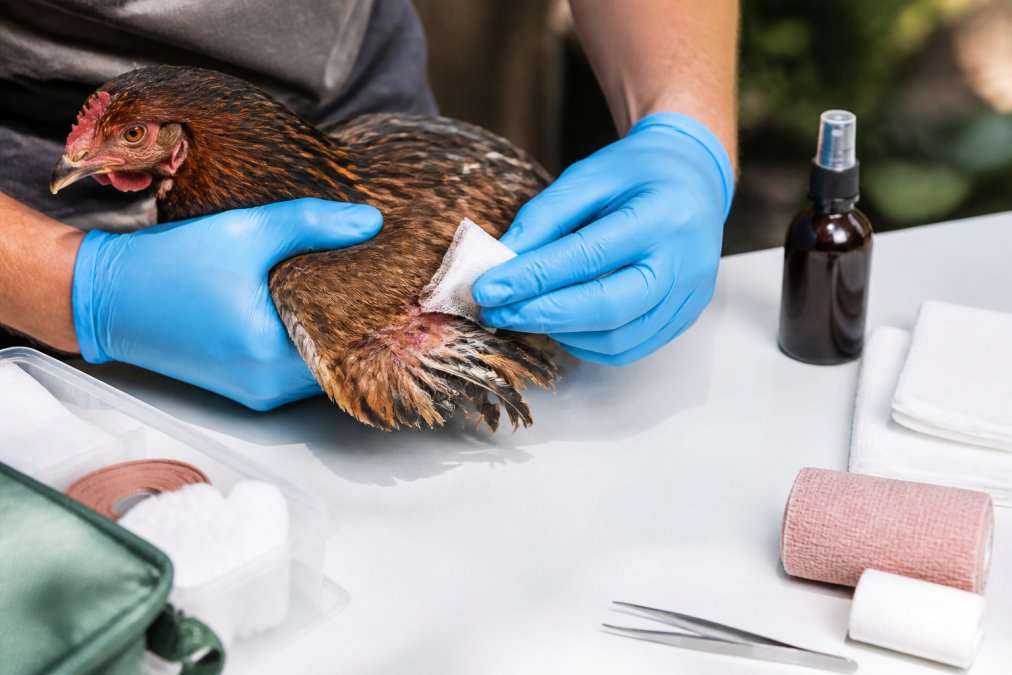
For wound assessment, stainless steel splinter forceps and trauma shears are essential. Forceps gently remove dirt and debris without touching the wound directly. Trauma shears trim away damaged feathers that might trap bacteria. Irrigation syringes in 1ml and 10ml sizes flush wounds with sterile saline or clean water, the 1ml syringe provides precision for small wounds, while the 10ml handles larger wounds needing thorough cleaning.
The basic treatment sequence is straightforward: assess the wound, flush with saline or clean water, remove debris with forceps, dry with sterile gauze, apply antiseptic spray, and bandage if necessary. Most minor wounds heal without bandaging if they're clean. Deeper wounds or those on the foot need dressing changes every 2-3 days until healing is visible.
Essential Chicken Medications and Pain Relief
A poultry medical kit must include medications for common ailments. Pain relief matters more than many chicken keepers realize, an injured bird in pain stops eating and weakens rapidly.
Probiotics and electrolytes restore gut health and hydration after stress, injury, or illness. Sav-a-Chick Probiotic & Electrolytes is formulated specifically for poultry and includes beneficial bacteria that prevent secondary infections. For respiratory issues, VetRx Poultry Remedy offers natural relief and has been trusted for over 100 years.
Coccidiosis is a parasitic infection that kills chicks and weakens adult birds (the CDC). If you suspect coccidiosis (bloody droppings, lethargy, huddling), CORID (amprolium 9.6%) is the standard treatment, administered through drinking water for five consecutive days after veterinary confirmation.

For recovery and immune support, Poultry Nutri-Drench delivers fast-acting nutrition directly into the bloodstream without requiring digestion. This is invaluable for weak or recovering birds that aren't eating normally. Use it during molting, after illness, or during stress periods.
RestockYourKit.com stocks these medications in smaller quantities than farm supply stores. The Basic Backyard Chicken First Aid Kit includes Sav-a-Chick probiotics, antiseptic wipes, and triple-antibiotic ointment packets.
Bandaging, Dressing Materials, and Antiseptic Washes
Proper bandaging prevents infection and protects healing wounds from dirt and further injury. Gauze rolls in 3-inch and 4-inch widths provide flexible coverage for larger wounds. Non-sterile gauze works fine for outer layers once a sterile inner layer is in place, maximizing protection while minimizing cost.
Antiseptic wipes in both alcohol and povidone-iodine varieties disinfect the wound site and your hands. Povidone-iodine wipes are gentler on tissue than alcohol, making them preferable for direct wound contact. Triple-antibiotic ointment packets work safely on poultry wounds after initial cleaning and come in individual doses, preventing contamination and waste.
The bandaging sequence matters: apply antiseptic spray or ointment to the clean wound, place a sterile gauze pad directly on it, wrap with non-sterile gauze roll, then secure with vet wrap. Change dressings every 2-3 days for actively draining wounds, or every 5-7 days for clean wounds healing well. Most wounds heal completely within 2-3 weeks with consistent care.
How to Set Up a Chicken Sick Bay or Hospital Pen
When a bird is seriously injured or ill, isolation in a hospital pen prevents stress from flock mates and allows close monitoring. A large plastic storage container, dog crate, or small pen works perfectly. Line the bottom with puppy pads or towels for comfort and to monitor droppings.
Provide food and water in shallow dishes within easy reach. Electrolyte-fortified water is preferable to plain water during recovery. Change water twice daily to prevent contamination. A heat lamp positioned so the bird can move away if too warm provides comfort without overheating.
Keep the hospital pen in a quiet, low-stress location away from the main flock. Check on the bird multiple times daily, but minimize handling unless treatment is necessary. Rest is as important as medication for recovery. Monitor eating and drinking closely, a bird that stops eating for more than 24 hours is in serious trouble. An irrigation syringe from your poultry medical kit delivers food or electrolytes directly into the bird's mouth without causing stress.
Vitamins, Electrolytes, and Recovery Supplements
Recovery requires supporting the bird's immune system and nutritional status. Vitamins and minerals are depleted during stress and illness. Poultry Cell (Rooster Booster) Mineral Supplement provides iron-rich, vitamin-fortified support that rebuilds blood and energy after injury or illness, including vitamins A, D, E, and B-complex vitamins plus 400mg of bio-available iron per bottle.
Probiotics deserve special mention. Gut bacteria in healthy birds support digestion, nutrient absorption, and immune function. Stress, illness, or antibiotics disrupt this balance. Sav-a-Chick Probiotic & Electrolytes restores beneficial bacteria while providing electrolytes lost through dehydration or diarrhea.
Electrolytes alone are crucial during heat stress, illness, or dehydration. Poultry Nutri-Drench delivers electrolytes plus vitamins directly into the bloodstream, making it ideal for severely weakened birds that aren't eating. Start supplements immediately after injury or at the first sign of illness, and continue for at least 2-3 weeks after the acute problem resolves.
Backyard Poultry Medical Kit Comparison and Storage
RestockYourKit.com offers two pre-assembled options covering different flock sizes and budgets. The Basic Backyard Chicken First Aid Kit ($49.99) includes core essentials: tools, wound care supplies, probiotics, and antiseptic items. The Deluxe Backyard Chicken First Aid Kit ($129.98) expands with additional gauze sizes, more medication options, and supplementary supplies including VetRx Poultry Remedy and Rooster Booster Pick-No-More lotion.

| Kit Option | Price | Best For | Key Inclusions |
|---|---|---|---|
| Basic Kit | $49.99 | Flocks under 10 birds, minor injuries | Gauze, vet wrap, antiseptic spray, probiotics, care cards |
| Deluxe Kit | $129.98 | Larger flocks, comprehensive coverage | All basic items plus VetRx, ointments, additional medications |
| Individual Items | Variable | Restocking or specific needs | Buy exactly what you need without overpaying |
Storage determines how long your supplies remain effective. Keep medications in a cool, dry location, ideally a climate-controlled closet or cabinet. Organize supplies by category: wound care, medications, tools, and reference materials. The Backyard Chicken Care Card Set ($19.99) provides quick-reference guidance on common ailments and medication dosing.
Rotate stock regularly and check expiration dates every six months. Consider keeping a secondary kit in your vehicle if you transport birds to shows or vet appointments.
Conclusion
A backyard poultry medical kit essentials setup separates chicken keepers who can handle emergencies from those who panic when injury or illness strikes. The difference between a bird that recovers fully and one that deteriorates is often just having the right supplies on hand and knowing how to use them.
RestockYourKit.com has curated pre-assembled kits that eliminate guesswork and deliver supplies at near-wholesale prices. Whether you start with the Basic Kit for your small flock or invest in the Deluxe option for comprehensive coverage, you're building the foundation for confident, effective care. Add the [Chicken Health Handbook(/products/the-chicken-health-handbook-2nd-edition) | restockyourkit.com] for deeper knowledge on specific conditions, and you've created a complete system.
The peace of mind that comes from being prepared is worth far more than the cost of supplies. When your bird needs help, you'll have everything you need to provide it immediately. Shop RestockYourKit.com's poultry medical supplies today and build your kit before you need it.
Frequently Asked Questions
Q: What are the essential items in a backyard poultry medical kit?
A: A complete poultry medical kit should include sterile gauze pads, antiseptic wound spray, non-latex nitrile gloves, stainless steel tweezers and trauma shears, syringes for administering medication, triple antibiotic ointment, povidone-iodine wipes, self-adhesive vet wrap, hypoallergenic silk tape, and probiotics with electrolytes. The Basic Backyard Chicken First Aid Kit ($49.99) covers most common issues, while the Deluxe kit ($129.98) adds extra supplies for serious injuries and medications like VetRx and healing ointments.
Q: How do I treat a wound on a chicken effectively?
A: Start by wearing disposable nitrile gloves and cleaning the wound with antiseptic wash or povidone-iodine wipes. Use sterile gauze pads to gently dry the area. Apply antimicrobial wound spray to prevent infection. Once dry, apply triple antibiotic ointment or healing ointment. Cover with non-stick gauze if needed, then secure with vet wrap or hypoallergenic silk tape. For bumblefoot specifically, soak the foot in warm epsom salt water first, then follow the same cleaning and dressing steps. Monitor daily for signs of infection.
Q: What essential chicken medications should I stock in my kit?
A: Stock VetRx Poultry Remedy ($15.95) for respiratory issues and general wellness, Sav-a-Chick Probiotic and Electrolytes for hydration and stress recovery, and CORID ($37.99) if you have a positive fecal float test for coccidiosis. Include Poultry Nutri-Drench ($17.89) for quick nutritional support and Poultry Cell ($24.98) for mineral and vitamin supplementation. Store all medications in a cool, dry place and check expiration dates every six months.
Q: How do I set up a chicken sick bay or hospital pen?
A: Create a separate, quiet enclosure away from the main flock to reduce stress and prevent disease spread. Use a small crate, dog crate, or isolation pen with bedding changed daily for biosecurity. Stock it with food and water dishes, a heat lamp for cold weather, and your medical kit supplies within arm's reach. Keep the Backyard Chicken Care Card Set ($19.99) nearby for quick reference on symptoms and treatments. Ensure good ventilation, minimal drafts, and dim lighting to calm sick birds. Place the pen in a temperature-controlled area and check on the bird every few hours.
Q: Should I buy a pre-assembled kit or build my own?
A: Pre-assembled kits save time and ensure you don't miss critical items. The Basic Backyard Chicken First Aid Kit ($49.99) is ideal for small backyard flocks with 5-6 chickens and covers common wounds, bumblefoot, and minor illnesses. The Deluxe kit ($129.98) adds extra supplies and premium medications. If you prefer customization, buy individual items, but track expiration dates carefully. Most backyard keepers find a kit plus The Chicken Health Handbook ($26.99) provides the best balance of preparedness and cost.