Cart
0
That expired packet at the bottom of your kit always seems harmless until you actually need it. Then the question gets real fast: can you use expired first aid supplies when someone is bleeding, sick, or injured and the fresh replacement is not there?
The honest answer is: sometimes, but not all supplies expire the same way. In a home kit, boat bag, troop trailer, truck box, or backcountry medical kit, some items become less effective, less sterile, or less reliable after the date on the package. Others may still be serviceable for training, backup use, or true last-resort care. If you manage kits for a family, crew, Scout unit, or expedition, the goal is not to panic over every date. It is to know what matters most and replace the items that create real risk.
Can you use expired first aid supplies in an emergency?
If the choice is expired supplies or no care at all, expired supplies are often better than doing nothing. But that does not mean expired gear should stay in an active kit on purpose.
In wilderness and remote care, we work with what we have. A bandage one month past date may still cover a wound. A roll of tape that has lost adhesion may fail right when you need it. An expired antihistamine may still have some effect, but you cannot count on full potency. The closer you are to definitive care, the less reason there is to accept that uncertainty. The farther you are from help, the more likely you are to use what is available.
That is the trade-off. Expiration dates are about reliability, not just legality or shelf appearance. In a first aid context, reliability matters.
What expiration dates actually mean
Manufacturers assign expiration dates based on stability testing, packaging performance, and sterile barrier integrity where applicable. That date usually means the product is expected to meet its labeled performance through that point if stored correctly.
It does not automatically mean the item becomes dangerous the next day. It means confidence drops after that date. Heat, humidity, freezing, sun exposure, and repeated opening and closing can shorten useful life even before the printed date. A glove packet stored in a cool closet ages differently than one left for two summers in a vehicle. A medication packet in a dry indoor kit is in better shape than one rattling around in a raft box or camp trailer.
So when people ask, can you use expired first aid supplies, the better question is this: what kind of supply is it, and how has it been stored?
Supplies you should replace on schedule
Some first aid items deserve very little debate. If they are expired, damaged, or questionable, replace them.
Medications
OTC meds and emergency medications are the biggest category to watch. Pain relievers, antihistamines, anti-diarrheals, aspirin, glucose products, hydrocortisone, burn gels with active ingredients, and similar items can lose potency over time. In low-stakes situations, a slightly expired ibuprofen packet might still do something. In a real allergic reaction, severe GI illness on a trip, or chest pain situation where aspirin matters, “maybe still effective” is not a standard you want in your kit.
Liquids, gels, and anything that changes color, smell, or texture should be replaced immediately. Heat-sensitive medications need even tighter attention if they live in cars, boats, garages, or field packs.
Sterile wound care products with compromised packaging
Sterile gauze pads, trauma dressings, eye pads, wound closure strips, and occlusive dressings depend on intact packaging. If the wrapper is torn, punctured, soaked, crushed open at the seal, or heavily worn, do not trust the sterility just because the date has not passed. The package condition matters as much as the date.
If a sterile item is expired but the package is pristine, some people will still keep it as backup for austere settings. That may be reasonable in a secondary reserve bin, but it is not ideal for your front-line kit.
Gloves and PPE that show age
Nitrile gloves, masks, and other PPE degrade with time and poor storage. Gloves become brittle, sticky, discolored, or easier to tear. That is a bad surprise when blood or bodily fluids are involved. PPE is cheap compared with the cost of failure. Replace aging stock before it becomes a problem.
Supplies that may still be usable, depending on condition
Not every expired first aid item is an automatic discard. Some products are more about physical condition than expiration date.
Elastic wraps, triangular bandages, and slings
These usually do not “expire” in the same way medications do. What matters is whether the material still functions. If an elastic bandage has lost stretch, if hook-and-loop closures no longer hold, or if the fabric is moldy, stiff, or contaminated, replace it. If it is clean, dry, and intact, it may still be fine.
Splints, shears, tweezers, and non-sterile tools
These are condition-based items. A SAM-style splint, scissors, tick tool, irrigation syringe, or tweezers can remain usable for years if stored well and kept clean. Corrosion, cracks, contamination, and damage are the deciding factors here.
Adhesive bandages and tape
These sit in the middle. The bandage itself may still cover a minor cut, but old adhesive often fails. Tape can dry out, separate, or stop sticking in cold or wet conditions. For a household drawer kit, that is annoying. For a trail or marine kit, it can ruin wound management fast. If adhesive performance is inconsistent, replace it.
When expired supplies are a hard no
There are a few situations where using expired items is harder to justify.
If you are stocking kits for a group, program, camp, Scout crew, school activity, or workplace, expired meds and questionable sterile items should not be your standard inventory. If someone else is depending on that kit, your duty is readiness, not improvisation.
The same goes for high-consequence kits. Trauma kits, remote expedition kits, boating kits, and anything intended for delayed evacuation should be maintained tighter than the junk-drawer kit in a bathroom cabinet. Remote medicine already has enough uncertainty. Your supplies should reduce it, not add to it.
How to inspect a kit the right way
Most people check dates only when a trip is coming up, which is exactly when replacements are hardest to source in time. A better system is simple and repeatable.
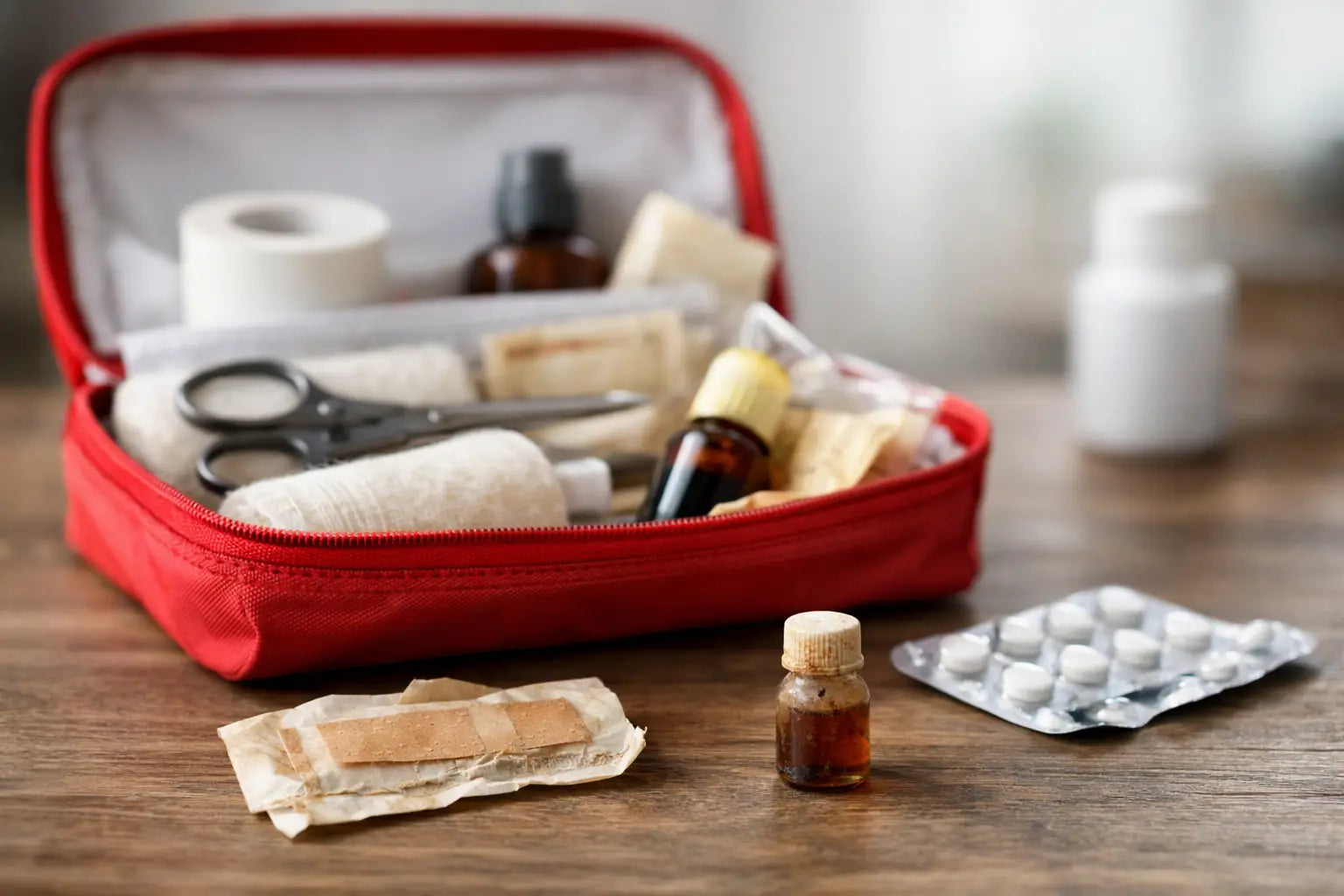
Open the kit completely. Do not just peek at the top layer. Pull medications into one pile, wound care into another, PPE into another, and tools into another. Check expiration dates, but also check packaging integrity, moisture exposure, discoloration, adhesive quality, and signs of heat damage.
Pay close attention to kits stored in vehicles, garages, boats, barns, and uninsulated sheds. These environments are rough on both medications and packaging. If you keep poultry or livestock care supplies nearby, separate human first aid from animal treatments clearly so nothing gets mixed in during a stressful moment.
A good field habit is to label the outside of the kit with the next inspection month. For active-use kits, every six months is reasonable. For vehicle and boat kits, quarterly checks are even better because temperature swings are so hard on supplies.
Restocking without wasting money
A lot of people leave expired items in place because replacing a whole kit feels expensive. Usually, the fix is not buying a brand-new kit. It is replacing the exact components that age out first.
That means medications, ointments, gloves, wound closure items, adhesive bandages, and sterile dressings often need attention before durable tools or fabric items. A modular refill approach is the practical answer, especially if you manage multiple kits for home, trail, troop, vehicle, and travel use.
Buying individual packets and smaller refill quantities also helps reduce future expiration waste. If your family uses two antihistamine packets a year, there is no reason to buy a giant retail box that will age out in storage. If you run larger group kits, standardizing the same components across bags makes inspection faster and restocking simpler.
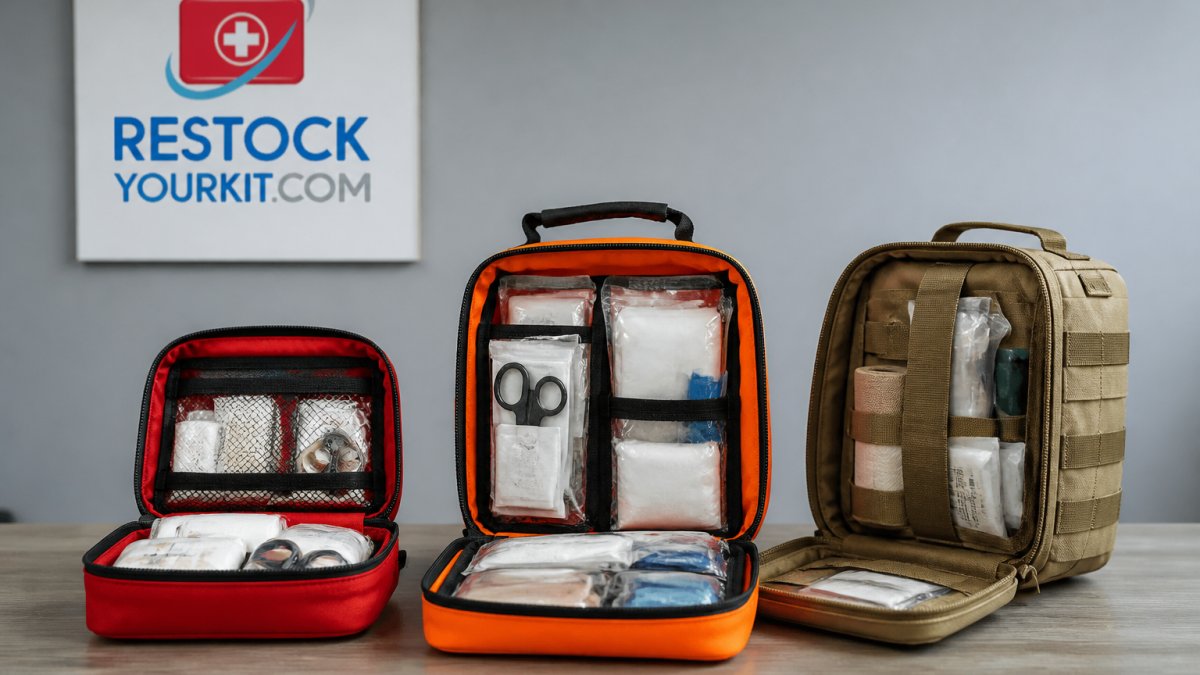
That is the logic behind how we think about kit maintenance at RestockYourKit.com: practical refill units, clear categories, and supplies chosen for real use, not shelf appearance.
The smart rule for expired supplies
If an item affects sterility, drug potency, or barrier protection, be strict. If it is a durable tool or fabric-based support item, inspect condition and function. If you are heading into the backcountry, onto the water, or out with a group, tighten your standards even more.
Preparedness is not about having the most stuff. It is about knowing that what is in your kit will work when the moment gets noisy, wet, dark, and urgent.
Before your next trip, training weekend, or seasonal reset, open the kit and check the dates you have been ignoring. The best time to discover an expired supply is on your table, not at the trailhead.