Cart
0
Blood on the ground changes the math.
If you have ever cracked open a “general” first aid kit during a real emergency, you know the feeling - plenty of tiny bandages, not much that helps when bleeding is fast, deep, or hard to access. A trauma kit is different on purpose. It is built around minutes that matter, messy scenes, and the reality that you might be alone, cold, wet, or trying to care for someone while you wait for EMS.
This article is a practical, field-driven trauma first aid kit supplies list, with the why behind each category and the trade-offs that decide what makes it into your bag.
What a trauma kit is (and isn’t)
A trauma kit is for life-threatening problems you can actually influence before definitive care: massive bleeding, airway issues, breathing problems, and shock. In wilderness and remote settings, “before definitive care” might be an hour or a day - which changes what you carry and how much.
It is not a clinic in a bag. You are not trying to treat every ache, rash, or blister. That is a separate module.
It is also not a substitute for training. The right supplies without reps can create hesitation, or worse, false confidence. If you are responsible for a crew, pair your kit with a stop-the-bleed class and a wilderness-focused curriculum so you understand when to escalate and when to conserve supplies.
How to think about your trauma first aid kit supplies list
Before you buy anything, decide three things.
First, your likely injuries. A home shop kit leans toward lacerations and crush injuries. A boating kit leans toward prop trauma, hooks, and hypothermia. A Philmont-style trek leans toward falls, axes/knives, and long evacuations.
Second, your time to help. If EMS is 8 minutes away, you can prioritize immediate hemorrhage control and airway positioning. If you are two ridgelines from the trailhead, you need redundancy, more dressings, and more ways to secure splints and wraps.
Third, your patient count. A personal kit for one person is not the same as a crew kit for 12. Group leaders should assume at least one high-consumption event plus smaller “supporting” needs.
The core trauma first aid kit supplies list (by function)
Massive bleeding control
This is the non-negotiable category. If you only upgrade one part of a kit, upgrade this.
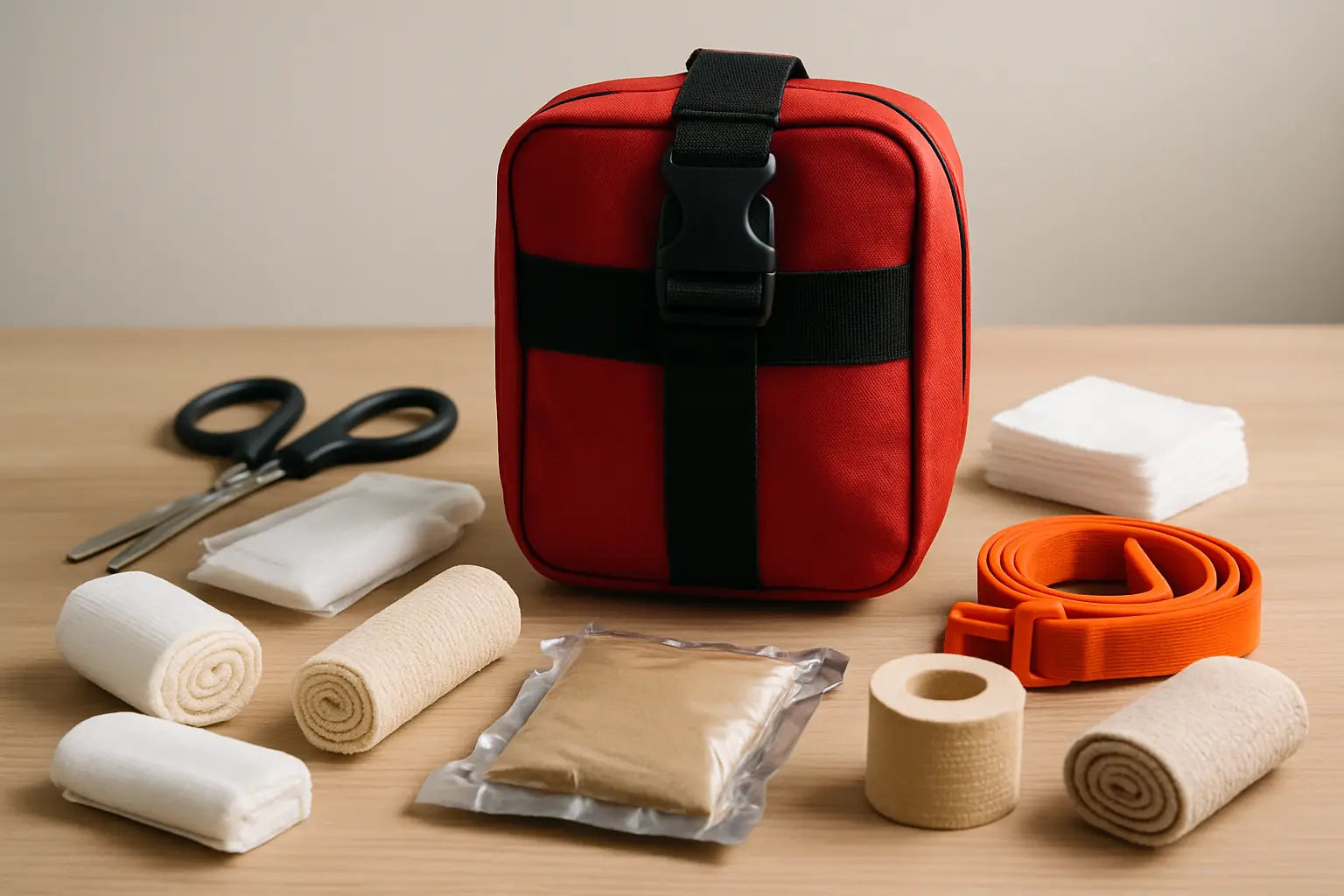
Carry at least one windlass tourniquet from a reputable manufacturer. If you lead groups, two is more realistic - one injury can require two tourniquets on one limb, or you may need one for a second patient. Tourniquets need to be staged for speed: out of plastic, pre-threaded, and reachable with one hand.
Add hemostatic gauze for junctional areas where tourniquets do not work well (groin, armpit, shoulder) and for deep wound packing. Standard compressed gauze still matters because hemostatic gauze is not infinite and you may need bulk to fill space and maintain pressure.
Finish bleeding control with a pressure dressing or elastic wrap that can maintain firm compression without you holding it for 20 minutes. In cold weather or on wet skin, plan for tape that actually sticks.
Wound packing, dressings, and securing
Trauma care burns through gauze. Not the cute squares - the kind you can pack with and wrap with.
Include compressed gauze, rolled gauze, and a few larger sterile pads for broad coverage. Abdominal pads (ABD pads) are a solid choice when you need absorption and coverage on larger wounds.
Securing materials are where kits quietly fail. Bring a mix of cloth medical tape and a tougher tape that handles moisture and movement. If you operate around water, sweat, or rain, assume you will need to dry skin and still fight adhesion.
Consider skin closure strips for clean lacerations when evacuation is delayed and bleeding is controlled. These are not for dirty wounds, animal bites, or gaping injuries under tension, but they can help protect a wound and reduce ongoing oozing.
Airway and breathing support
Most lay rescuers will not be placing advanced airways, but you can do a lot with positioning, suctioning the obvious, and basic adjuncts if trained.
At minimum, carry a CPR mask or face shield for barrier protection. Add a couple pairs of nitrile gloves so you can work cleanly and protect yourself.
If your training supports it, an oropharyngeal airway (OPA) set in common sizes can help maintain a patent airway in an unconscious patient without a gag reflex. If you do not know when to use it, skip it and focus on positioning, recovery position when appropriate, and keeping the airway clear.
For chest injuries, a vented chest seal is the practical item to include. It packs flat and addresses open chest wounds that can become life-threatening. The trade-off is that it is only as useful as your ability to recognize the situation and monitor the patient.
Shock management and hypothermia prevention
Shock is not just “they look pale.” It is a life threat that gets worse when you let the patient get cold.
Include a compact emergency blanket, but do not stop there if you travel in shoulder seasons. A more effective option is a hypothermia wrap approach: a blanket plus an insulating layer and a windproof barrier. Even a simple heat-reflective blanket paired with a small tarp or bivy can be a big step up.
Add oral glucose or quick sugar if you are caring for diabetics or long-duration exertion scenarios, and consider electrolyte packets for supporting care once immediate threats are controlled.
Basic tools that make trauma care possible
You need to cut clothing fast. Trauma shears are not optional if you expect real injuries. Add a small, bright headlamp so you can work hands-free, because most emergencies happen at the worst light.
A permanent marker earns its place for writing tourniquet time on the device or the patient, and for quick notes on tape.
Include tweezers for obvious debris, but keep expectations realistic - trauma care is about control, not perfection.
PPE and scene safety
The kit that saves a patient but exposes you to blood is not a win.
Carry nitrile gloves in multiple pairs. Add eye protection if you lead groups or work around power tools. A small bottle of hand sanitizer helps after glove removal.
If you are building a vehicle or home kit, consider a CPR pocket mask with a one-way valve as a more durable, effective barrier than a thin shield.
Optional add-ons (when your use case justifies it)
Some items are excellent - but only when they match your setting and training.
A SAM splint and triangular bandages are useful when trauma includes fractures or joint injuries. For many outdoor leaders, the splinting and securing supplies end up being used more often than chest seals, even though bleeding control remains the priority.
Irrigation supplies matter more when you expect dirty wounds and delayed care. A small irrigation syringe and a bit of clean water capacity can reduce infection risk, but it is also weight and volume.
Burn dressings can be relevant for boating galleys, camp stoves, and shop injuries. If you include them, still prioritize cooling and clean coverage rather than fancy gels.
Pain meds and common OTCs belong in a separate medications module so your trauma kit stays fast. Mixing them together increases clutter and slows you down when seconds matter.
Quantities: personal vs crew vs vehicle
The hardest part of a trauma first aid kit supplies list is not naming items - it is deciding how many.
For a personal day-hike kit, one tourniquet, one hemostatic gauze, one compressed gauze, one pressure dressing, gloves, a chest seal, and a blanket is a reasonable baseline. If you are truly solo, consider redundancy in what you cannot improvise, especially tourniquet capability.
For a crew of 8-12, scale up dressings and gloves aggressively. Assume you might manage one major bleeding event plus a second smaller injury. That usually means multiple gauze options, more tape, and at least two tourniquets.
For vehicle kits, space is less constrained, so you can add comfort and capability: extra gloves, larger dressings, more robust hypothermia gear, and lighting. Vehicles also sit through heat cycles, so rotate adhesives and any temperature-sensitive items.
Packaging and restocking: the part people skip
A trauma kit fails most often because it is disorganized, expired, or missing half its consumables.
Keep your trauma supplies in a dedicated pouch or module. Use clear labeling and stage the “fast” items - tourniquet, gauze, pressure dressing, gloves - where you can grab them without digging.
Individually packaged items are worth it for cleanliness and fast counting. They also make restocking simple because you can replace exactly what you used instead of buying an entire new kit.
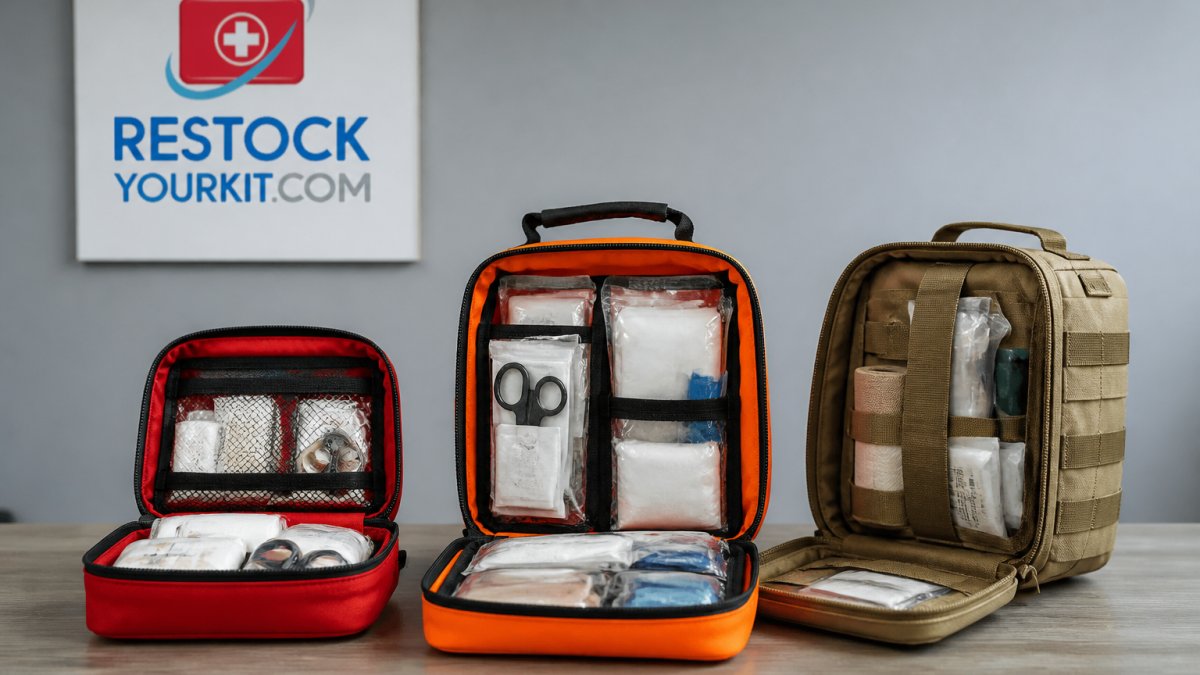
If you want a modular approach with small-quantity refills and individually packaged supplies, that is exactly how we build and restock kits at RestockYourKit.com - so your “used once” items do not become a reason to delay getting back to ready.
Common mistakes that quietly downgrade your kit
The most common mistake is building a kit that looks impressive but cannot be used quickly. If it takes you two minutes to find gloves, you will work barehanded, and that is how you get blood exposure.
Another mistake is over-indexing on rare problems and under-buying boring consumables. Gauze, tape, and wraps are what disappear first.
Finally, people buy gear that requires training they do not have. That is not a moral failure - it is just a mismatch. If you are not trained for a tool, either get trained or swap it for something you can use confidently.
A trauma kit should feel like a promise you can keep: fast access, simple choices, and supplies that match the places you actually go. The best time to find out what you forgot is on your living room floor, not on a trail at dusk with someone’s blood on your hands.