

First Aid Kits for Scout Troops: Top Alternatives
Table of Contents
- Why Scout Troops Need Specialized First Aid Kits
- Custom-Built First Aid Kits for Camping and Backcountry Trips
- Pre-Assembled Kits vs. Building Your Own
- First Aid Kit Refill Checklist for Troop Leaders
- Medical Supply Vendors for Scout Troops
- Kits for Different Trip Types and Durations
- Essential Supplies and Specialized Equipment
- Container Selection and Portability
Last Updated: August 28, 2026
Why Scout Troops Need Specialized First Aid Kits
Scout troops operate in environments that demand medical preparedness beyond standard drugstore kits. When a patrol is hours away from the nearest clinic on a backcountry expedition, the supplies in your pack become your entire emergency response system. A blister on day two of a five-day trek becomes serious without proper care. A twisted ankle demands splinting materials most household kits don't include. Scout troops face exposure, fatigue, and distance, conditions that turn minor injuries into major challenges without proper preparation.
RestockYourKit.com specializes in first aid kits designed for scout activities, from patrol day hikes to high-adventure expeditions. Their approach focuses on what matters in the backcountry: wound management, blister care, orthopedic support, and field triage tools when professional help isn't minutes away.

Custom-Built First Aid Kits for Camping and Backcountry Trips
Building a custom first aid kit means starting with the trip itself, not a generic template. Supplies should match group size, duration, terrain, and distance from help. A day hike near civilization requires different supplies than a week-long remote expedition.

Custom kits give you control over quantities and specifics. You're not paying for unused items or discovering mid-trip that you packed wrong sizes. For scout troops, this modularity matters because different patrols face different hazards. A crew heading to Philmont Scout Ranch faces different challenges than one paddling the boundary waters.
RestockYourKit.com offers pre-designed kits matching specific scout activities with customization options. The Scouts BSA - Patrol First Aid Kit at $15.99 serves patrols of 6-8 scouts on 1-3 day trips, while the High Adventure CREW First Aid Kit at $149.99 handles 8-12 people for 8-12 days with over 250 pieces, including trauma supplies, blister management, and wilderness first aid documentation.
Pre-Assembled Kits vs. Building Your Own
This decision hinges on cost, time, and expertise. Pre-assembled kits offer convenience and assurance that someone with wilderness medicine knowledge made supply decisions. Building your own offers flexibility and control.
Cost Comparison: Ready-Made vs. DIY Assembly
For troop leaders managing multiple patrols, pre-assembled kits provide predictable costs and eliminate guesswork. DIY assembly works only if someone has both expertise and time to execute properly.
Time and Expertise Required
Building a quality kit from scratch requires knowledge most troop leaders lack: which gauze sizes work best for field wounds? How much blister care material do you need for five days? Which bandaging tape performs in wet conditions?
Pre-assembled kits eliminate this learning curve. Items are selected by wilderness medicine experts, quantities are calculated, and everything is organized for quick emergency access.
First Aid Kit Refill Checklist for Troop Leaders
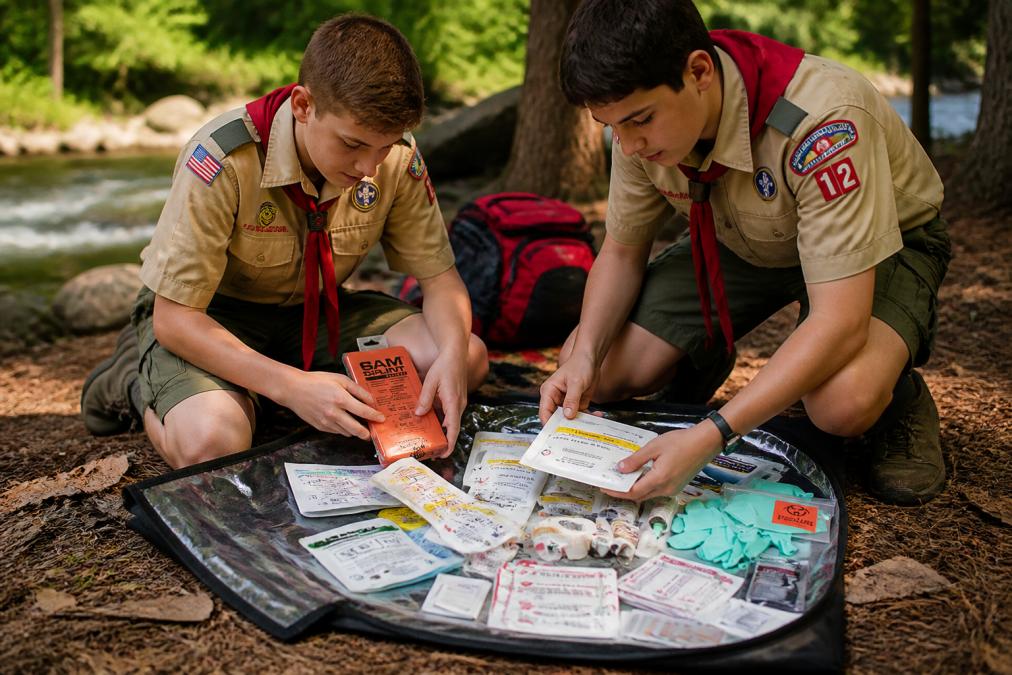
A first aid kit is only useful if current. Medications expire, supplies get used or damaged, and items degrade over time. Troop leaders need a system for tracking contents, expiration dates, and replacement needs.
Tracking Expiration Dates and Inventory
Medications are the priority. Antiseptic wipes, antibiotic ointment, pain relievers, and antihistamines all expire (the FDA). Using expired medications wastes critical moments on ineffective treatment. Gauze and bandages don't expire the same way but degrade if stored improperly or exposed to moisture.
A simple spreadsheet works for small troops. List each item, quantity, and expiration date. Before each trip, check actual items against it and replace anything expired or damaged.
Set phone reminders six months after purchase to check expiration dates. Use a shared Google Sheet for multiple patrols. Some troops assign one person as "kit manager" for quarterly checks.
Medical Supply Vendors for Scout Troops
Not all medical supply vendors understand scout activities or wilderness medicine. Finding vendors who grasp what scouts actually need and deliver supplies quickly and affordably matters.
Bulk Procurement and Wholesale Pricing
Scout troops benefit from bulk purchasing. RestockYourKit.com offers near-wholesale pricing on individual quantities without forcing case purchases. Free shipping on orders over $79 makes stocking up practical without excessive delivery costs.
Most medical vendors require minimum orders that don't fit scout budgets. Wholesale pricing typically requires volumes that make sense for large organizations, not volunteer groups managing a few patrols. Vendors focused on scout activities understand group sizes, trip durations, and specific hazards scouts face.
BSA Compliance and Safety Standards
Scout troops operate under Boy Scouts of America guidelines. The Guide to Safe Scouting establishes standards for first aid kit contents (scouting.org). Kits designed for scouts already meet these standards.

RestockYourKit.com's patrol and crew kits conform to BSA guidelines for specific activities and group sizes. The Northern Tier (BSA) Crew First Aid Kit at $149.99 was developed for scout leaders to conform to Scouts BSA guidelines for Northern Tier group leaders, designed for 8-12 people for up to two weeks with wilderness first aid documentation aligning with scout training standards.
When buying from vendors understanding BSA requirements, you know your kit meets standards. This matters for liability, advancement requirements, and ensuring emergency preparedness matches scout training. emergency medical kits.
Kits for Different Trip Types and Durations
One kit doesn't fit all scout activities. A day hike patrol has different needs than a two-week expedition crew. Water-based activities present different hazards than mountain trekking.
Day Hikes and Short Outings
Day hikes typically involve 4-8 hours away from civilization with possibility of returning to help relatively quickly. Injuries are likely minor: blisters, small cuts, sprains, insect bites. The kit needs to handle these effectively without comprehensive supplies of multi-day expeditions.
The Scouts BSA First Aid Kit - (Tenderfoot Req. 4d) at $14.99 is designed for 1-2 people on 1-3 day trips. It meets Tenderfoot advancement requirements and works perfectly for short outings. At 14 ounces, it's light enough that carrying it adds minimal burden.
Multi-Day Wilderness Expeditions
Multi-day trips change the equation. You're hours or days from professional medical help. Minor injuries become serious if they prevent hiking out. You need redundancy in key supplies.
The Weekender Backcountry First Aid Kit at $64.99 handles 1-5 people for 3-5 days with trauma supplies, blister management, splinting materials, and a wilderness first aid field guide. At 1 pound 7 ounces, it's heavier than a day-hike kit but still portable.
For larger crews on longer expeditions, the High Adventure CREW First Aid Kit at $149.99 scales appropriately for 8-12 people for 8-12 days with over 250 pieces including trauma gauze, SAM splints, and comprehensive medication options.
Water-Based Activities and High Adventure
Water degrades supplies and increases infection risk. The Northern Tier (BSA) Crew First Aid Kit at $149.99 was specifically developed for water-based activities in remote areas. It includes waterproof documentation, extra antiseptic supplies for water-related wounds, and materials for handling injuries in wet conditions, designed for 8-12 people for up to two weeks.
Essential Supplies and Specialized Equipment
Not all first aid supplies are created equal. The difference between generic adhesive bandages and field-condition versions matters when miles from help. Specialized equipment separates adequate kits from excellent ones.
Wound Management and Trauma Supplies
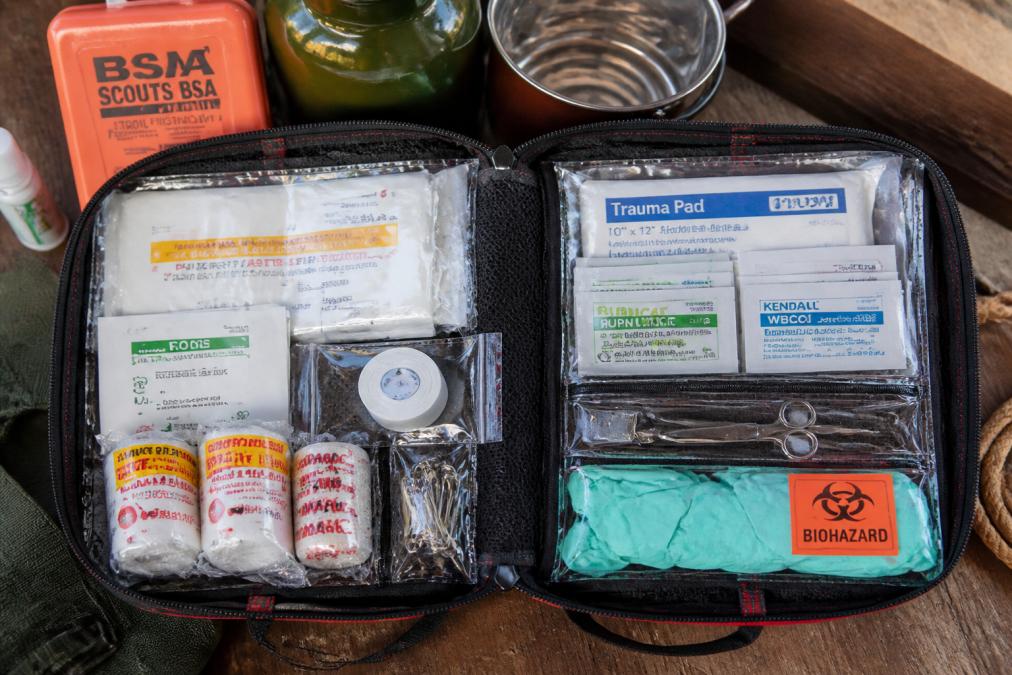
Proper wound management starts with cleaning using povidone-iodine or alcohol wipes to remove dirt and reduce infection risk (peer-reviewed research). Sterile gauze pads apply pressure if bleeding is significant. Antibiotic ointment protects wounds. Adhesive bandages secure small wounds. Trauma supplies address injuries beyond minor cuts: trauma gauze pads for significant bleeding, roller bandages for compression, and triangular bandages for support. Medical gloves protect both injured person and caregiver. A CPR mask enables rescue breathing if needed.
Blister Care and Orthopedic Support
Blisters end hiking trips. Proper blister care, moleskin for prevention, second skin for treatment, tincture of benzoin to help adhesive stay in place, keeps someone hiking when otherwise sidelined.
Orthopedic support addresses sprains and strains. An elastic bandage wraps a twisted ankle. A SAM splint immobilizes injured wrists or fingers. Silk tape secures dressings and provides joint support. A triangular bandage serves as a sling. These supplies transform injuries from "I can't continue" to "I can manage and get out safely."
Environmental Hazards and Specialized Medications
Different environments present different hazards. Medications address common trip problems: pain relievers for headaches and minor pain, antihistamines for allergic reactions and insect bites, antacids for upset stomachs, hydrocortisone cream for itching, electrolyte tablets for dehydration, and loperamide for diarrhea. High-adventure kits include burn gel packets and sting ease swabs reflecting the reality that multi-day expeditions encounter diverse problems.
Container Selection and Portability
The bag matters as much as contents. A poor container means supplies are hard to find in emergencies, items get damaged or wet, and the kit becomes a burden.
Waterproof containers protect supplies from rain and moisture. Individual waterproof resealable poly bags keep medications organized and dry. The outer container should be durable, accessible, and appropriately sized. For day hikes, a small pouch fits in a pack pocket. For multi-day trips, a dedicated first aid bag allows quick access without unpacking your entire backpack.
Weight and size matter on trips where every ounce counts. RestockYourKit.com kits balance comprehensiveness with portability: the High Adventure kit weighs 2 pounds 9 ounces for over 250 pieces, and the Northern Tier kit weighs 2 pounds 10 ounces. These are substantial enough for serious situations but light enough to carry without complaint.
Scout troops investing in purpose-built first aid kits demonstrate genuine commitment to safety and preparedness. The difference between generic kits and those designed for wilderness activities becomes obvious when treating injuries in the field. RestockYourKit.com offers kits specifically designed for scout activities at various scales, from the Scouts BSA - Patrol First Aid Kit for short outings to comprehensive crew kits for high-adventure expeditions. Each is built to BSA standards, includes supplies that matter in the backcountry, and delivers the peace of mind that comes with knowing your group is properly prepared.
Frequently Asked Questions
What should be included in a scout troop first aid kit for high-adventure activities?
Scout troops on high-adventure trips need trauma supplies, splinting materials, blister care products, antiseptic wipes, gauze pads, adhesive tape, roller bandages, and personal protective equipment like nitrile gloves and CPR barriers. For multi-day expeditions, include wound irrigation supplies, hemostatic agents, and medications like ibuprofen and diphenhydramine. The High Adventure Crew First Aid Kit ($149.99) contains over 250 pieces designed specifically for groups of 8-12 people on 8-12 day trips and meets BSA safety protocols.
Is it cheaper to buy a pre-made first aid kit or build a custom one for scout troops?
Custom assembly lets you tailor supplies to specific activities and group size, but requires time and expertise. For troop leaders managing multiple trips, standardized kits provide consistency and reduce the risk of missing critical supplies during emergency preparedness planning.
How often should scout troop first aid kits be inspected and restocked?
Inspect kits before every trip and conduct a full inventory check quarterly. Track expiration dates on medications, antiseptic wipes, and other time-sensitive items. Many troop leaders use digital inventory management systems or simple spreadsheets to flag items approaching expiration. RestockYourKit.com's modular refill approach lets you restock only what you've used without rebuilding the entire kit, keeping supplies current and reducing waste.
What makes custom-built first aid kits better for camping and backcountry trips than generic options?
Custom-built kits let you match supplies to your specific activity, group size, and trip duration. A weekend hiking kit differs from a multi-day canoe expedition or high-adventure trek. Custom assembly ensures you have the right quantities of blister care, wound irrigation, splinting materials, and medications without excess weight. RestockYourKit.com builds kits to order with the longest medication expiration dates, ensuring your supplies are fresh when you need them most.
What vendors offer bulk medical supplies specifically for youth organizations and scout troops?
RestockYourKit.com specializes in medical supply vendors for scout troops, offering near-wholesale pricing on individual quantities and pre-assembled kits that meet BSA guidelines. Unlike generic first aid retailers, they understand wilderness first aid and high-adventure requirements. Free shipping on orders over $79 makes bulk restocking affordable. Their expert-curated modules and bulk procurement logistics eliminate the need to source supplies from multiple vendors.