Cart
0
A Scout trip rarely goes sideways because of one big dramatic problem. More often, it is the small stuff stacking up - blisters on mile three, a scraped knee at camp, a headache after a hot afternoon, or a splinter that suddenly becomes the only thing anyone can think about. That is why a good kit is not about stuffing a bag full of random supplies. It is about carrying the right items, in the right quantities, for the way Scouts actually travel.
If you are building a bsa first aid kit list for a troop, patrol, Philmont shakedown, summer camp, or weekend outing, start with one rule: match the kit to the trip. A day hike kit should stay light and fast. A troop trailer kit can be broader. A backcountry crew kit needs to cover common problems well without turning into dead weight.
What a BSA first aid kit list should actually do
A Scout first aid kit has a simple job. It should handle the most likely issues early, cleanly, and without wasting time. That means cuts, scrapes, blisters, mild sprains, insect stings, headaches, upset stomach, and basic wound care. Depending on the activity, it may also need to support longer evacuation times, weather exposure, or remote travel.
This is where people often get tripped up. They buy a kit built for a car glove box, then expect it to serve a patrol on the trail. Or they build a giant troop box but forget the small items that get used every single month. Adhesive bandages disappear. Moleskin gets stripped out after one backpacking weekend. Gloves get borrowed. Nothing gets refilled.
A solid list works best when it is built in layers. Start with personal items each Scout should carry. Then add a group kit for leaders or the youth medical officer. Finally, keep a larger resupply box for camp, vehicles, or trailer storage.
Personal essentials for each Scout
Each Scout should carry a small personal kit, especially on hikes and overnight trips. This is not a full treatment center. It is a compact set of basics that can solve small problems fast and reduce strain on the group kit.
For most outings, that means a few adhesive bandages in assorted sizes, moleskin or blister treatment, a couple of antiseptic wipes, a small gauze pad, a short roll of medical tape, and any personal medications the Scout is approved to carry. Tweezers are useful, but if weight matters, one good pair in the group kit may be enough.
This is also where smart packing beats overpacking. A personal kit does not need ten large trauma dressings. It does need the items a Scout is most likely to use before asking an adult for the main bag.
Group gear for the troop or patrol
The main BSA first aid kit list belongs in a durable, clearly organized bag. It should be easy to open fast, and supplies should be grouped by use instead of thrown into one pocket. When something happens, no one wants to dig through loose packets while a youth is crying over a deep scrape.
Wound care and bandaging
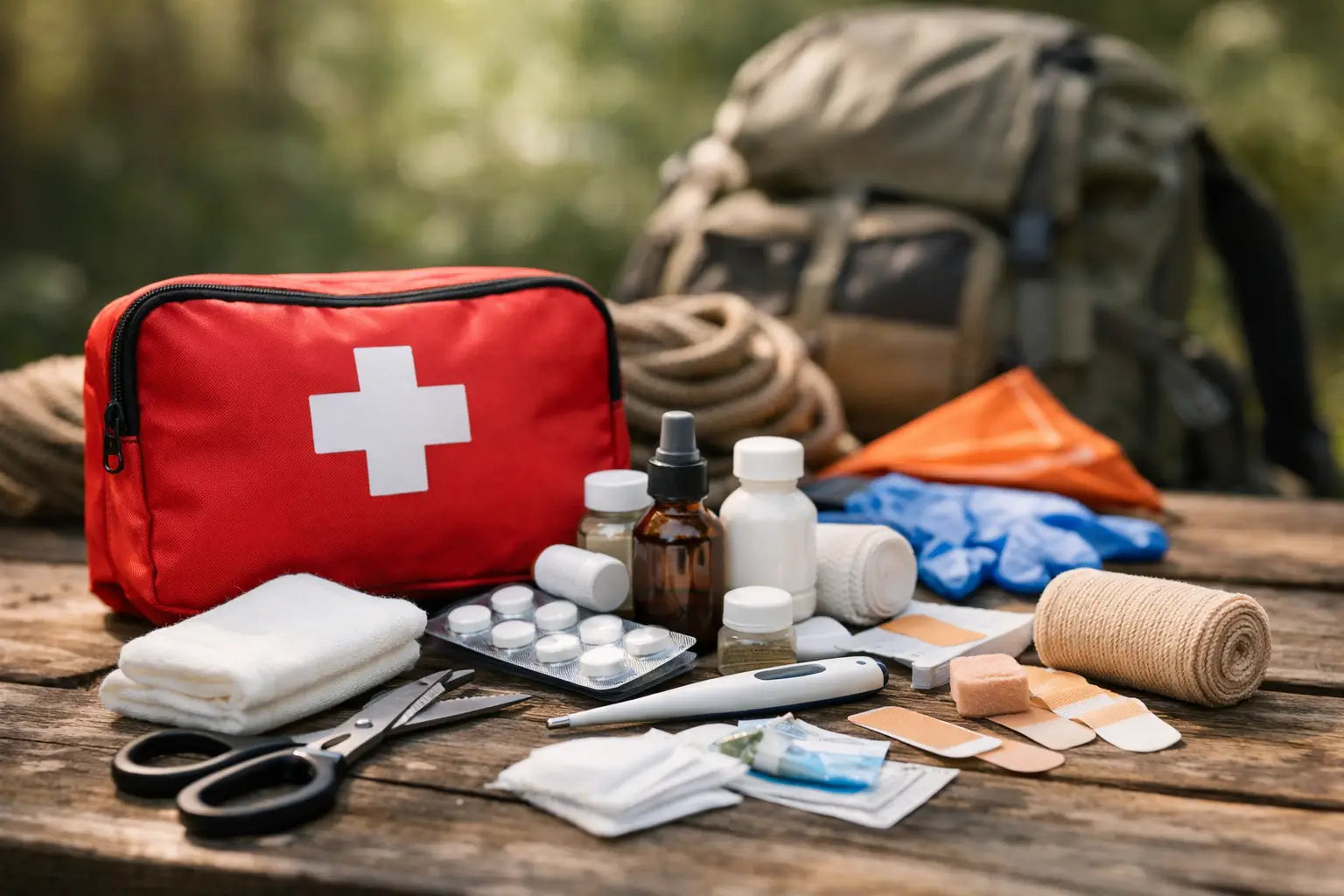
This is the core of most Scout kits. Carry assorted adhesive bandages, sterile gauze pads in multiple sizes, rolled gauze, adhesive tape, butterfly closures or wound closure strips, antiseptic wipes, antibiotic ointment packets if your unit uses them, and elastic wrap bandages for support. Add a few nonstick pads for larger abrasions or burns.
For troop use, quantity matters more than people expect. If you have 12 to 20 participants, a handful of bandages is not enough. Summer camp and high-use weekends can burn through your common items quickly.
Blister care
If your kit does not handle blisters well, your trip plan has a hole in it. Blister treatment belongs near the top of the bag, not buried under everything else. Moleskin, hydrocolloid blister dressings, alcohol prep pads, and small scissors all earn their place. On backpacking trips, these supplies often get used before anything else.
Medications and symptom relief
This category depends on your unit policies, age group, and how medications are handled. Many group kits include individually packaged over-the-counter medications for common problems such as pain, fever, allergies, upset stomach, or diarrhea, assuming your protocols and permissions are in order. Small-unit packaging makes sense because it keeps dosing cleaner, protects freshness, and makes restocking easier.
There is no universal answer here. Some units prefer to keep all medications tightly controlled with adult leaders. Others build a very limited symptom-relief section and rely mostly on personal meds and health forms. What matters is consistency, documentation, and staying within BSA and local council requirements.
PPE and hygiene
Gloves should be in every Scout group kit, and more than one pair. Add a CPR barrier if your leaders are trained and your protocols call for it. Hand sanitizer, soap sheets or simple hand-cleaning supplies, and a few resealable bags help with cleaner care and waste control.
PPE is one of the easiest areas to overlook because it is not dramatic gear. It is also one of the most important. Clean hands and barrier protection matter on every outing, from camporees to backcountry treks.
Tools
Good shears, tweezers, a digital thermometer, and a small notebook with a pen belong in most troop kits. A triangular bandage can still earn its keep because it is useful for slings, wraps, and improvisation. If your unit operates in remote areas, consider adding irrigation supplies for wound cleaning and a cold pack for front-country use.
The trade-off is bulk. Some tools are excellent in a base camp or vehicle kit but unnecessary on a five-mile loop trail. Build for the setting, not for every hypothetical at once.
Adjusting the list for different BSA trips
Not every trip deserves the same loadout. A meeting-night kit in the church basement is different from a canoe weekend or a ten-day trek. The biggest mistake leaders make is using one fixed kit for every event.
For day hikes, stay lean and focus on fast-moving basics: bandages, blister care, gloves, gauze, tape, a wrap, sting relief, and limited symptom medications if allowed. For car camping, expand your quantities and include a deeper bench of medications, burn care, and extra dressings. For backcountry trips, prioritize compact, high-use supplies and think carefully about evacuation time, weather, water treatment context, and communication plans.
If your crew is heading somewhere like Philmont or any remote high-adventure setting, your first aid plan should reflect distance, altitude, repeated foot care needs, and the likelihood that small issues become trip-altering if ignored. A field-tested kit for those trips usually looks more deliberate and less bloated than a generic big-box first aid bag.
What not to cram into the kit
A long list is not automatically a smart list. Scout kits often get overloaded with gear that sounds useful but rarely gets used by trained leaders in normal unit settings. Massive trauma supplies, specialty airway gear, or duplicate tools can eat space better spent on blister care, gauze, gloves, and refill meds.
It also helps to separate first aid from survival gear. Sunscreen, insect repellent, and lip balm are important on many trips, but they may live better in personal gear or in a separate trip-support pouch. Keeping the medical bag focused makes it easier to use under stress.
The part most troops skip - refills
A first aid kit is only as good as its last restock. Troops are especially vulnerable to half-empty kits because gear gets used a little at a time. One packet here, two bandages there, and by the next outing the bag looks full but cannot actually support the group.
Refill planning should be simple enough that it happens. After every outing, check the top-use categories first: adhesive bandages, gauze, tape, gloves, blister supplies, antiseptic wipes, and any allowed OTC packets. Replace opened, expired, wet, or damaged items. If your unit keeps larger camp or trailer kits, assign one person to inspect them monthly during active season.
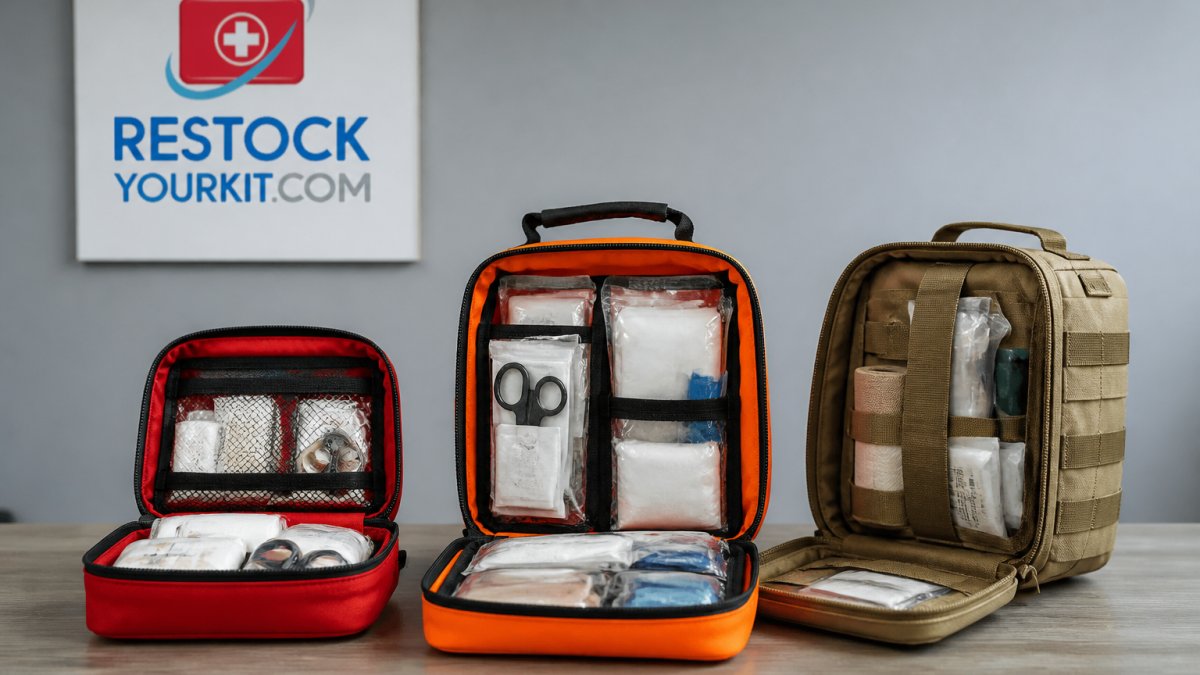
This is where modular restocking makes life easier. Instead of replacing a whole kit because five items are low, you can refill exactly what was used and keep your layout intact. That is usually cheaper, faster, and better suited to real troop use. If you are rebuilding or topping off a scouting setup, RestockYourKit.com is built around that exact restock problem, especially for practical refill quantities instead of oversized retail boxes.
A simple way to organize the bag
The easiest system is by function. Keep wound care together, blister care together, medications together, and PPE where it can be reached fast. Label internal pouches clearly. If youth leaders may access the kit, obvious organization matters even more.
You should also keep an inventory card inside the bag. Nothing complicated. Just a dated checklist of what belongs there, what was used, and what needs replacing. That turns your kit from a mystery pouch into managed equipment.
Training matters as much as the list
Even the best-stocked kit has limits if the people carrying it are unsure what they are looking at. A Scout unit benefits most when leaders and youth know basic wound care, blister prevention, medication handling rules, and when a small issue needs escalation. The list supports good judgment. It does not replace it.
That is why the best kits are usually the least flashy. They reflect actual trip patterns, realistic injury profiles, and the experience to know what gets used again and again. Build your kit for scrapes, hot spots, headaches, and the kind of preventable problems that can derail a weekend if ignored. Then maintain it like the rest of your gear.
Time to restock your first aid kit before the next outing, not after it.