Cart
0
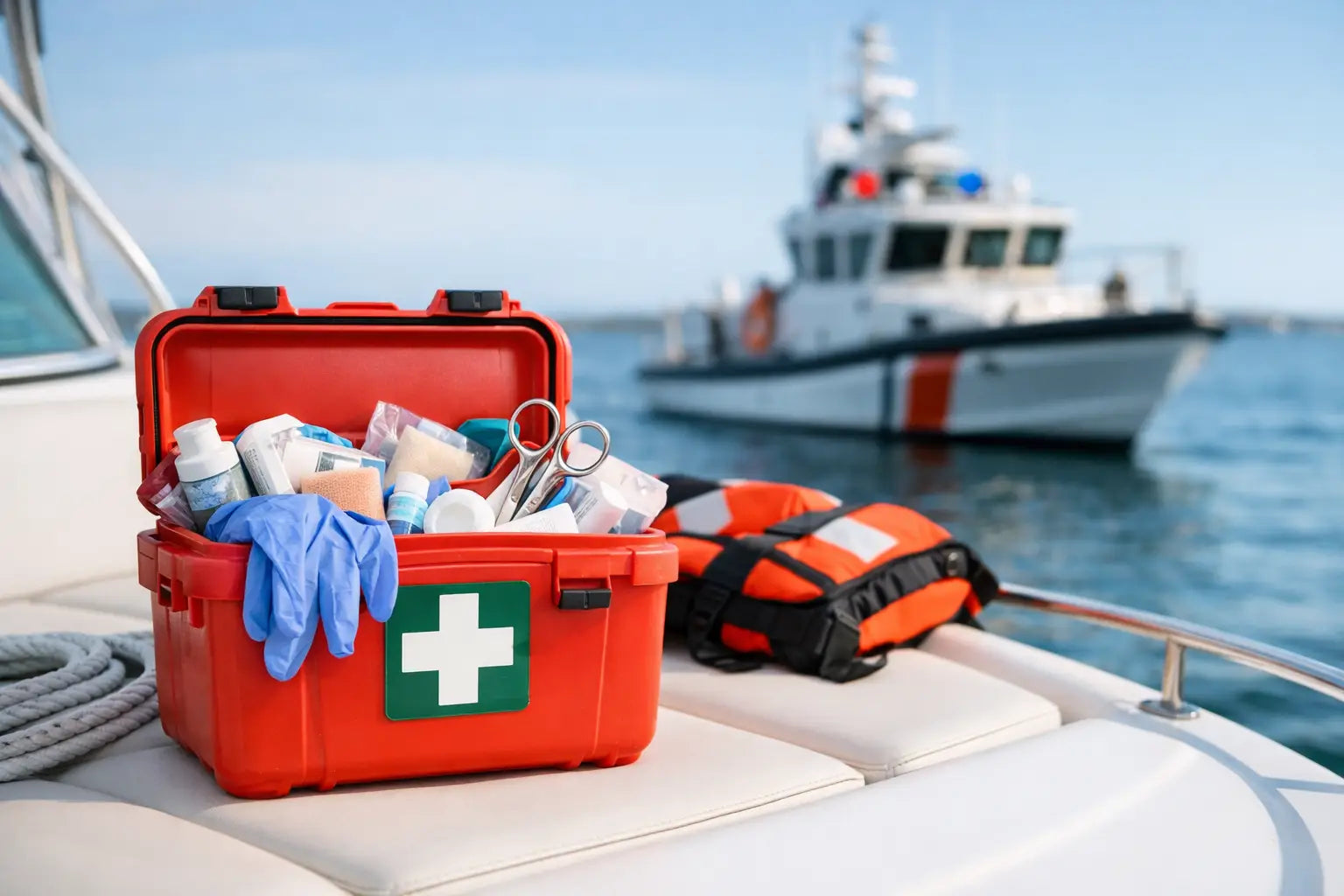
A lot of boaters assume the Coast Guard has a fixed checklist for first aid kits the same way it does for life jackets, fire extinguishers, and visual distress signals. That is where people get tripped up. When you search for boating first aid kit coast guard requirements, the practical answer is this: the US Coast Guard generally does not require recreational boats to carry a specific first aid kit by law, but that does not mean your boat is medically ready.
That gap matters most when the shoreline is farther away than it looked on the map. Hook injuries, fillet knife cuts, burns, sun exposure, seasickness, jellyfish stings, and slips on wet decks happen fast. If you run offshore, guide trips, take kids out, or operate where EMS response is delayed, a barebones box of adhesive bandages is not a serious plan.
What the Coast Guard actually requires
For most recreational vessels in the United States, the Coast Guard focuses on required safety equipment such as wearable life jackets, throwable flotation where applicable, sound-producing devices, navigation lights, fire extinguishers, ventilation, and visual distress signals depending on boat type and operating area. A first aid kit is strongly recommended, but in most typical recreational situations it is not itemized as a federal carriage requirement.
That is the key distinction. Recommended is not the same as required, but on the water, recommended equipment often becomes essential equipment the moment something goes wrong.
There are exceptions and gray areas. Commercial vessels, inspected passenger operations, licensed charter activity, and employer-governed workboats may fall under separate rules, company policies, or occupational safety requirements that go beyond what a weekend recreational boater sees. State boating agencies, marina operators, youth programs, and organized outings may also impose their own standards. If you run anything other than a straightforward private recreational boat, it is worth checking the specific rules that apply to your operation.
Why "not required" should not drive your medical planning
A Coast Guard equipment list is built around preventing death from the biggest marine hazards - fire, flooding, collision, falling overboard, and getting stranded. It is not designed to cover the full range of medical problems that happen during normal boating.
Most on-water medical issues are not dramatic rescues. They are manageable problems that become bigger because supplies were not onboard, medications were expired, or the kit was packed for a car instead of a wet, hot, remote environment. A small hand laceration can soak through cheap dressings. Motion sickness can disable the one person who knows the route home. A fish spine puncture can turn into a nasty infection if it is not cleaned and dressed properly.
Preparedness on a boat should be built around time to care. If you are 10 minutes from the dock, your kit can stay relatively compact. If you are trolling all day on a large lake, crossing coastal water, or running a multi-person trip where help could be an hour or more away, your kit needs more depth.
Boating first aid kit Coast Guard requirements versus real-world needs
If your goal is compliance alone, you may stop too early. If your goal is readiness, think in layers.
Start with the injuries and illnesses you are likely to see on your kind of boat. Small freshwater fishing boats tend to need solid wound care, eye irrigation, sting relief, sunscreen support, and nausea options. Sailboats and larger cruising boats benefit from more blister care, sprain support, medications, and a wider range of dressings because people stay aboard longer. Offshore and remote trips need a more serious approach to bleeding control, hypothermia, dehydration, and delayed evacuation.
This is also where store-bought generic kits often disappoint. They may look full because they contain many tiny bandages and a few low-value items, but they run thin on the supplies boaters actually burn through first - gloves, gauze, antiseptic, tape, OTC meds, and waterproof packaging.
What should be in a boating first aid kit?
A useful boating kit should cover five categories well: wound care, medications, protective gear, environmental issues, and stabilization supplies.
For wound care, think beyond adhesive bandages. You want sterile gauze pads, roller gauze, medical tape that holds in damp conditions, antiseptic wipes, wound closure strips, antibiotic ointment where appropriate, burn dressings or burn gel, and irrigation capability. On a boat, waterproof dressings earn their space.
For medications, the exact mix depends on your crew and trip length, but many boaters carry motion sickness options, pain relievers, antihistamines, aspirin if medically appropriate for the users, anti-itch support, and oral rehydration support. Individually packaged medications are especially useful on boats because they travel well, stay organized, and make restocking simpler.
Protective gear means nitrile gloves at a minimum. Add CPR barrier protection if you run trips with other people, and consider eye protection if you keep trauma supplies onboard.
Environmental supplies matter more on boats than many people expect. Sunscreen, after-sun support, lip protection, instant cold packs, emergency blankets, and blister care all get used. If you operate in cold water or shoulder seasons, warming gear and hypothermia planning move way up the list.
Stabilization supplies are where the "it depends" part comes in. A small day boat may only need elastic wrap and a triangular bandage. Boats going farther out may justify a tourniquet, trauma dressing, splinting material, and shears, but only if the person using the kit has at least basic training. Good gear without competence can create false confidence.
How to size the kit for your boat
The right kit is less about boat length and more about exposure, group size, and delay to definitive care.
A solo angler on a local pond can travel light. A family pontoon boat should carry enough for multiple minor injuries at once because kids, hooks, and bare feet create volume problems fast. A Scout outing, sailing club event, or guide operation should plan for group care, duplicate basics, and enough medications and PPE for several people. Once you cross into remote or offshore boating, you are no longer packing for convenience. You are packing to bridge time.
Storage matters too. Boats are hard on supplies. Heat degrades medications. Moisture ruins packaging. Salt air corrodes tools. The best boating kit is one you can open quickly and trust after a season onboard. That usually means water-resistant organization, clearly labeled modules, and a restock routine instead of a one-time purchase.
Common mistakes boaters make
The first mistake is treating a marine first aid kit like a glovebox kit. The environment is different, and so are the injury patterns.
The second is carrying too little bleeding control. Even minor cuts can be messy on deck, and fishing gear adds punctures and hooks to the mix.
The third is forgetting medications. A lot of boating trips get cut short by headache, nausea, allergy symptoms, heartburn, or dehydration long before a major injury ever happens.
The fourth is never checking expirations or used-up supplies. A kit that lost its gloves, antiseptic, and seasickness tablets last summer is not ready now. Time to restock your first aid kit before the season gets busy, not after the first incident.
A practical standard for recreational boaters
If you want a simple rule to follow, use the Coast Guard for legal minimums and build your medical kit for your actual operating reality. Those are two different jobs.
For most recreational boaters, a good standard is this: carry enough supplies to handle common cuts, punctures, burns, stings, motion sickness, allergic reactions, and basic sprains for everyone onboard, plus enough backup quantity to manage one more serious event while returning to shore. If your trips are remote, cold-weather, offshore, or group-based, step up from a convenience kit to a field-capable kit.
That is also where modular refills make sense. Instead of replacing an entire kit because you used a few meds, gloves, or gauze pads, you can top off the exact items that disappear first. For boaters who manage family gear, Scout gear, or expedition gear, that saves money and keeps readiness from slipping.
If you want to build or refresh a boating kit with real use in mind, RestockYourKit.com carries boating kits, refills, medications, and individually packaged supplies that make ongoing maintenance much easier than buying another generic box every spring.
Training beats gear alone
The best-stocked kit on the dock is still second to judgment and practice. At minimum, the person running the boat should know how to control bleeding, clean and dress a wound, recognize heat illness and hypothermia, respond to allergic reactions, and make a clear call on whether to head in or call for help.
That matters because marine incidents rarely happen in ideal conditions. Wind, motion, wet hands, poor light, and a nervous patient make simple tasks harder. Familiar supplies and a little training go much farther than a giant kit packed with tools nobody knows how to use.
A first aid kit may not be on every Coast Guard-required checklist for recreational boating, but on the water, reality is the checklist that counts.