

Why Choose Custom Medical Kits: A Practical Guide
Table of Contents
- Why Choose Custom Medical Kits Over Pre-Packaged Kits
- How to Build a Custom First Aid Kit Step by Step
- OSHA First Aid Kit Requirements and ANSI Standards
- First Aid Kit Refill Checklist for Ongoing Readiness
- Cost-Effectiveness and Scalability of Custom Medical Kits
- Beyond Basic Supplies: Training, Sustainability, and Digital Tracking
- Conclusion
- Frequently Asked Questions
Last Updated: September 16, 2026
Why Choose Custom Medical Kits Over Pre-Packaged Kits
Below, we break down exactly how to assess your environment, configure medical components, stay compliant, and keep the whole thing current without overspending.
How to Build a Custom First Aid Kit Step by Step
Building a kit starts with two questions: what can go wrong here, and who is on site when it does? Answer those before you buy a single item.
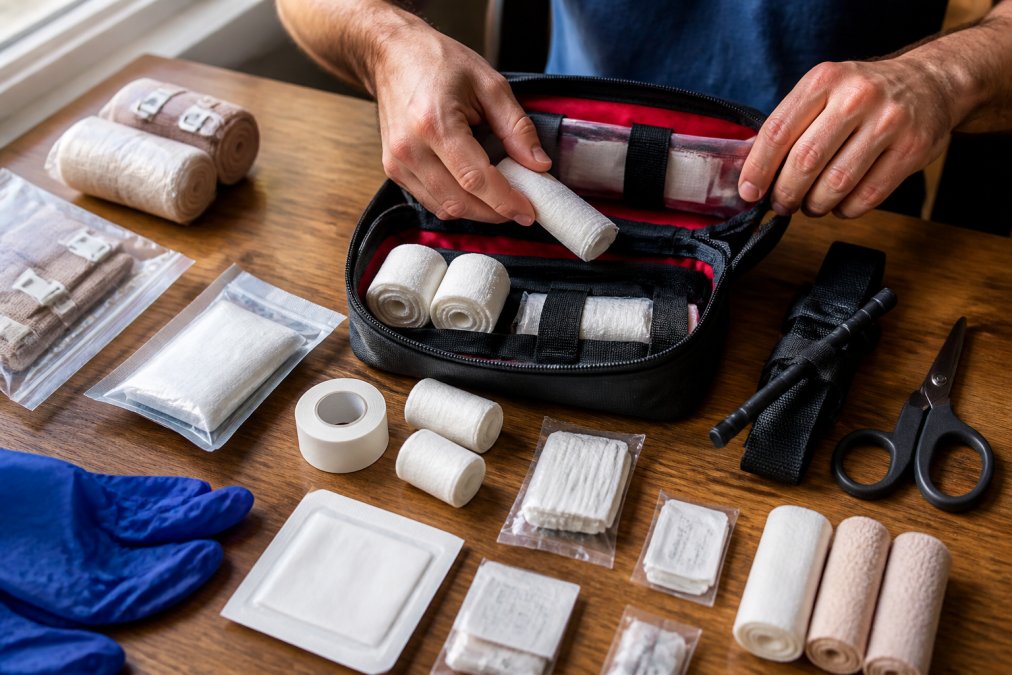
Assess Your Operational Environment and Risks
Risk assessment drives every later decision, so do it on paper. Walk your site, list the hazards, and note how far you are from professional medical care.
Ask three things:
- What injuries are plausible here, not just possible?
- How long until EMS or a clinic can reach us?
- Who on this team has medical training?
Select Medical Components and Configure Your Kit
Component selection follows directly from your risk list. Buy to the injury, not to the category.
OSHA First Aid Kit Requirements and ANSI Standards
OSHA does not publish a fixed list of required items. The agency requires that first aid supplies be readily available and that someone trained respond, and it points employers toward the ANSI/ISEA Z308.1 standard for kit contents.
What Inspectors Look For
Inspectors check readiness, not packaging. A kit that is sealed, current, and matched to the site's hazards passes scrutiny far more easily than a brand-new box with expired contents.
Common findings include:
- Expired sterile items still in service
- Missing or empty refill slots
- No trained responder assigned to the kit
- Kits that do not match the documented hazard assessment
First Aid Kit Refill Checklist for Ongoing Readiness
A refill checklist turns a one-time purchase into a system. Set a recurring date, walk the kit, and restock what is low or expired.
Use this as your working list:
- Check expiration dates on all sterile items and medications
- Confirm tourniquet and trauma supplies are present and undamaged
- Replace any opened or partially used items
- Restock adhesive bandages, gauze, and gloves
- Verify wound closure supplies are sealed
- Confirm the kit matches the current hazard assessment
- Log the date and initials inside the lid
Cost-Effectiveness and Scalability of Custom Medical Kits
Custom kits usually cost less over time, not more, but only if you understand where the money actually goes. The upfront price tag is the least useful number in the comparison. What matters is cost per treated incident, cost per year of readiness, and the cost of the kit that fails when you need it.

The Real Cost Drivers
Four line items separate a cheap kit from an economical one:
- Unit cost of consumables. Buying individual quantities of gauze, bandages, and sterile items typically lands below the per-item cost inside a pre-packaged box, because you are not paying for the packaging, the molded case, or the items you will never open.
- Replacement scope. When a pre-packaged kit is used, the common practice is to replace the whole kit or buy a full refill pack. A modular kit lets you replace only the module that was consumed.
- Expiration loss. Every sterile item that expires unused is money spent for zero readiness. The more items in a kit that do not match your actual risk profile, the higher that loss runs.
- Administrative time. Counting bandages by hand across a dozen kits costs labor. A defined module list with fixed quantities turns restocking into a checklist instead of an inventory project.
A Simple Way to Compare
Rather than guessing, track three numbers per kit over twelve months:
- Total spend on the kit and all refills
- Number of items discarded unused at expiration
- Number of incidents where a needed item was missing
| Approach | Upfront Cost | Ongoing Cost | Waste Profile | Best For |
|---|---|---|---|---|
| Pre-packaged kit | Lower | Higher (replace whole kit) | High, unused items expire | Low-risk, single-location settings |
| Custom modular kit | Higher | Lower (refill modules only) | Low, replace what was used | Crews, remote work, varied hazards |
Scalability Without Redesign
Scalability is where modular kits pull ahead of anything pre-packaged. Once a configuration is documented, module list, quantities, storage layout, you can duplicate it across sites, vehicles, or shifts without re-deciding anything. Adding a new hazard means adding one module, not rebuilding the kit.
Three practical levers:
Bleeding Control Kit - Customizable →
- Standardize the core, customize the edge. Keep a common core module across all kits, then add site-specific modules (burn care, cold-weather, chemical exposure) only where the hazard assessment calls for them.
- Assign an owner per kit. A named person with a recurring check date prevents the drift that turns a good configuration into an expired one.
- Buy refills in the quantities you actually consume. Ordering individual quantities instead of fixed refill packs keeps the replenishment cycle matched to real usage rather than to a vendor's packaging.
The Cost of Getting It Wrong
The cheapest kit is not the one with the lowest invoice. It is the one that is current, matched to your hazards, and restocked without a scramble. A kit that fails during an incident carries costs that never appear on a purchase order, delayed care, an OSHA recordable, and in the worst case, a liability question about whether you provided reasonable supplies for a known risk.
Beyond Basic Supplies: Training, Sustainability, and Digital Tracking
Four factors separate a good kit program from a great one, and most guides skip all four. Each one is a place where a custom kit can do something a pre-packaged box cannot.
Match the Kit to the Training Level
This is the gap almost every competitor misses. A kit should be built around what your people are actually certified to do, not around what a catalog says is comprehensive.
Three common training tiers drive three different kit designs:
- Layperson / basic first aid. The kit should emphasize what an untrained or minimally trained responder can safely use: adhesive bandages, gauze, roller bandages, gloves, cold packs, and a barrier device for CPR. Trauma items like tourniquets or chest seals belong only if someone on site is trained to apply them.
- BLS-level responder. With CPR and basic life support training, the kit can include a bag-valve mask, oral airways, and a trained-use tourniquet. These items are only useful if the responder has practiced with them.
- ALS / advanced provider. Advanced airways, IV supplies, and medications require both training and, in most workplaces, medical direction. These belong in a kit only when the program supports them.
Sustainability and Waste Reduction
Refillable modules cut medical waste because you replace only what is consumed. The EPA guidance on reducing waste supports source reduction, preventing waste before it is generated, as the most effective waste strategy, and a modular kit is source reduction applied to medical supplies.
A circular replenishment system has three parts:
- Track expiration dates so items are rotated before they expire, not after.
- Replace by module, not by kit, so unused items stay in service.
- Return or recycle where programs allow, rather than discarding whole kits.
Digital Tracking That Actually Gets Used
Simple tools beat complex ones for most teams. A shared spreadsheet with columns for item, quantity, expiration date, and assigned owner handles the majority of small-team needs. QR-coded kits take it a step further: scan the code, see the contents and expiration dates, and log the check. The value is not the technology, it is that the check gets done and the record exists.
Legal Liability and Duty of Care
This is the second gap competitors miss. Duty of care means providing reasonable, current supplies for known risks. A documented hazard assessment and a maintained kit show good faith. An expired, mismatched kit does the opposite, and in a workplace injury investigation, that gap is exactly what gets examined.
Three practices reduce exposure:
- Document the hazard assessment that drove the kit configuration.
- Keep a maintenance log with dates, items replaced, and initials.
- Match the kit to the site's actual hazards, not to a generic list.
Conclusion
The challenge is not buying supplies; it is building a kit that stays ready as your risks, team, and seasons change. RestockYourKit.com makes that practical with custom-built first aid kits, individual quantities of medical supplies at near-wholesale prices, specialized poultry and pet health supplies, and flexible refill options that keep your equipment current. Free shipping applies on orders of $79 or more.
Frequently Asked Questions
What are the primary benefits of using a custom medical kit over a pre-packaged one?
Custom medical kits offer several advantages: they reduce waste by including only the supplies you need, ensure compliance with OSHA and ANSI standards for your specific workplace, and can be tailored to specialized environments like poultry care or wilderness medicine. Pre-packaged kits often contain unnecessary items while missing critical components for your risks. Custom kits also make inventory management easier because you know exactly what's inside and when it expires, keeping your kit field-tested and ready.
Is it more cost-effective to build a custom medical kit or buy a pre-made one?
Building a custom medical kit is often more cost-effective in the long run. Pre-made kits may seem cheaper upfront, but they often include items you'll never use, wasting money. With a custom kit, you buy only what you need, and you can refill individual components instead of replacing the entire kit. For example, a custom bleeding control kit from RestockYourKit.com starts at $125, and you can restock items like gauze or tourniquets individually as they expire or get used, saving on replacement costs.
How do you determine what supplies to include in a custom medical kit?
Start by conducting a risk assessment of your environment and activities. Consider factors like the number of people, potential injuries (e.g., cuts, burns, allergic reactions), and distance from emergency services. For workplaces, OSHA and ANSI provide guidelines. Then, select medical components that address those specific risks. For example, a wilderness first aid kit might include trauma supplies like tourniquets and chest seals, while a home kit might focus on bandages and medications. Tailor the kit to your team's standard operating procedures and training level.
How often should you audit and refill a custom medical kit?
Audit your custom medical kit at least every six months, or more frequently if used often. Check expiration dates on medications, sterile items, and batteries. Use a first aid kit refill checklist to track inventory and identify missing items. Many kits from RestockYourKit.com come with expiration dates at least six months out, but regular checks ensure readiness. Set calendar reminders or integrate with digital tracking tools to stay on top of replenishment cycles and avoid expired supplies.