Cart
0
You find it at the worst time: headlamp dying, tent half-zipped, and someone says, “I think that’s a tick.” In that moment, you do not want to be improvising with fingernails, duct tape, or a multi-tool you can’t control.
A good tick plan is boring on purpose. It’s a tiny set of tick bite kit supplies that lets you remove the tick cleanly, reduce infection risk, document what matters, and make a calm decision about follow-up. That’s it. Anything beyond that is either a comfort item, a contingency for remote travel, or weight you’ll never use.
What “good” looks like for tick bite kit supplies
Tick bites sit in an awkward space between “minor first aid” and “this might matter in three weeks.” The immediate injury is usually small. The potential downstream problems are the reason you take it seriously.
Good tick bite kit supplies do three jobs.
First, they let you remove the tick without crushing it, twisting it, or leaving mouthparts behind. Second, they let you clean the site and protect broken skin. Third, they help you track symptoms and timing, because dates and details matter when you talk to a clinician later.
There’s also a fourth job that depends on where you travel: they support decision-making when you’re remote and can’t just drive to an urgent care.
The core tool: removal without drama
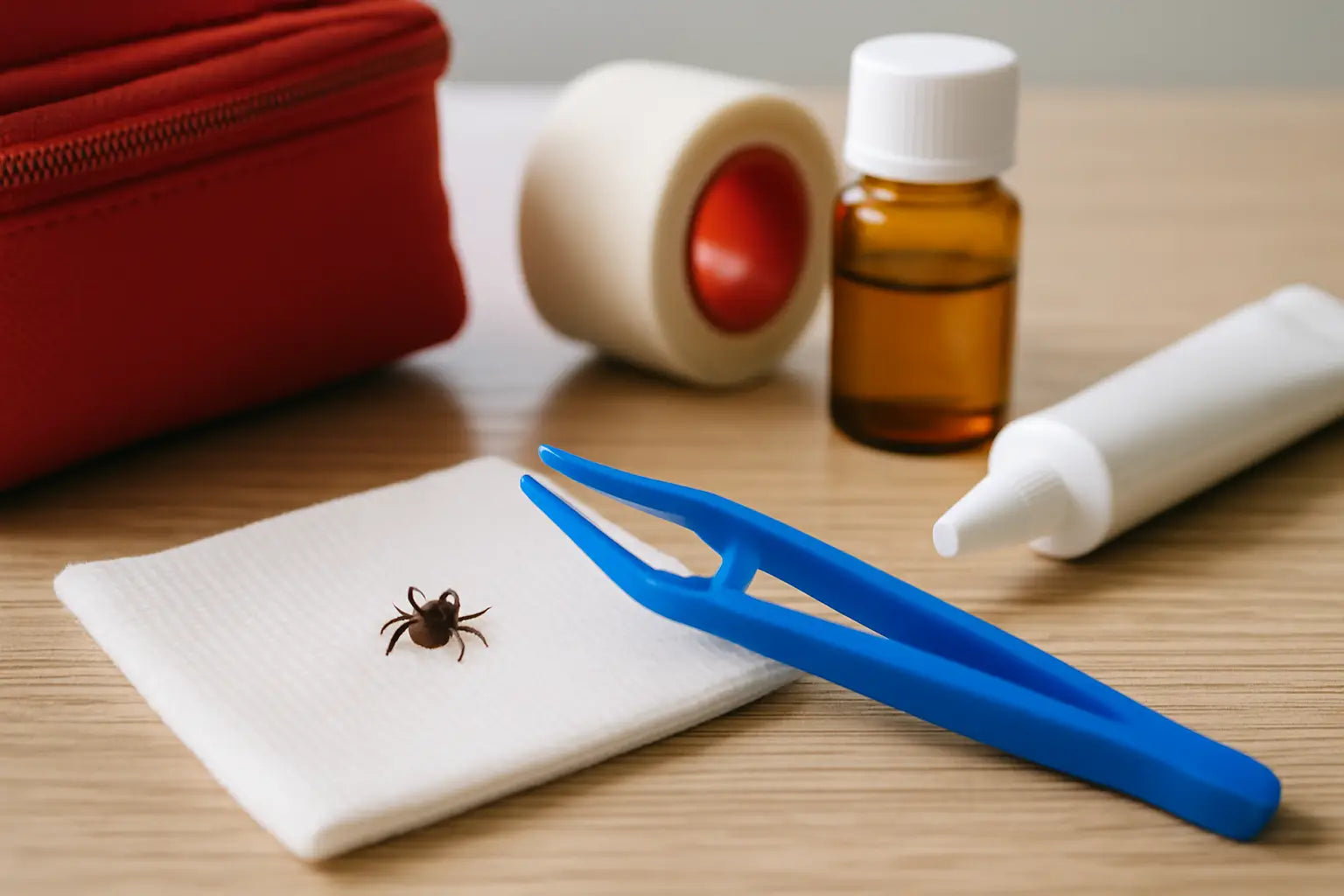
If you carry only one dedicated item, make it a proper tick remover. Fine-tip tweezers work, but they require steadiness and good light. Purpose-built tick tools often do better when hands are cold, the tick is small, or the location is awkward.
The goal is simple: get the tick out by grasping close to the skin and pulling upward with steady pressure. No twisting, no squeezing the abdomen, no heat, no petroleum jelly, no “paint it with alcohol until it backs out.” Those methods increase your chances of irritating the tick, breaking it, or delaying removal.
This is where trade-offs show up. Fine-tip tweezers are versatile and can also handle splinters. Tick keys and fork-style tools can be easier for quick removal, especially for average users, but they’re less useful for other tasks. For a family kit or group kit, it’s reasonable to carry both, because someone will want the option they’re most confident using.
What about tiny ticks?
Nymph ticks can be poppy-seed small. A standard drugstore tweezer with blunt tips is the wrong tool for that job. If you’ve ever tried to grab a tiny tick and ended up pinching skin instead, you already know why tip precision matters.
Clean the bite site like it’s a small wound
After removal, treat the area like any minor skin break. Clean it, dry it, and protect it if it’s going to be rubbed by clothing or gear.
For cleaning, individually packaged antiseptic wipes are the practical choice. They travel well, don’t leak, and you can use one without contaminating the rest. If you prefer an antiseptic solution, keep it in a small, reliable bottle that lives inside a zip bag. Remote trips are not the place for mystery leaks.
Then decide whether to cover it. Many bites can be left open after cleaning, but a small adhesive bandage can prevent scratching and reduce irritation under waistbands, pack straps, socks, or bra lines. If someone reacts with a lot of local redness or itching, the barrier can be surprisingly helpful.
One nuance: topical antibiotics are a personal call. They can be helpful when the site is scratched or dirty, but they also cause contact dermatitis in some people. If you include them, consider single-use packets so you’re not carrying a half-used tube that’s been rolling around in a hot vehicle since last summer.
Don’t skip documentation: the “future you” module
Most tick bites are managed with watchful waiting, not immediate medication. That makes documentation more valuable than people expect.
At minimum, your tick bite kit supplies should support three notes: date/time of removal, where on the body the tick was attached, and where you were geographically (state, park, trail system). Add a quick note on whether the tick looked engorged and approximately how long you think it was attached, even if it’s just an estimate.
This is easy to do with a small notepad and a pen that actually writes when damp and cold. If you prefer your phone, that’s fine - but batteries die, screens break, and crews often have spotty service. Paper is still the most dependable backup in a field kit.
Some people also want a small container or bag to save the tick. That can be reasonable, especially for remote travel, but it’s not mandatory. If you do save it, label it. A bag of random ticks is not helpful.
Symptom management that makes sense
Tick removal is not usually painful, but the bite can itch, and anxiety can spike fast in group settings.
A basic kit can include an oral antihistamine (for itching or mild reactions) and a simple analgesic for headache or muscle aches. Individually packaged OTC doses are a smart fit for group kits because they reduce waste and keep dosing clear.
Topical anti-itch products can help too, but they’re optional. In a minimalist kit, you can skip them and rely on keeping the area clean, covered, and not scratched.
It depends on the user. For Scout leaders managing a crew, or for guides who will be doing patient reassurance as much as patient care, having a couple comfort items can keep a small issue from turning into a morale problem.
PPE and hygiene: the unglamorous essentials
Tick removal is close work. Add a pair of nitrile gloves. They protect the patient’s skin if your hands are dirty, and they protect you from blood exposure if the site bleeds when the tick comes out.
Include a small hand wipe or sanitizer packet for the remover, too. You might be doing this in the back of a truck, on a boat, or on a trail bench. Clean hands and a clean tool reduce the chance you turn a tick bite into a skin infection.
Building for your use case: solo day hike vs crew expedition
This is where kit design stops being theoretical.
For a solo day hike kit, keep it lean: a reliable removal tool, antiseptic wipes, a couple bandages, and a way to record information. That’s enough for 95 percent of situations.
For a family kit, add redundancy and ease-of-use: two removal options (fine-tip tweezers plus a tick tool), more wipes, and kid-friendly bandage sizes. Families also benefit from a small flashlight or backup light source - not as a tick item, but because you’ll inevitably find the tick at night.
For crews and expeditions, scale matters. You need multiple removers, multiple gloves, and enough wipes and bandages to handle several incidents in one week. You also need a simple protocol that your leaders can repeat consistently.
A crew kit is also where you may consider adding a small magnifier or a headlamp with a bright, focused beam. These are not “medical,” but they directly improve removal success and reduce skin trauma.
What not to pack (even if you’ve seen it online)
Some items show up in tick discussions because they feel decisive, not because they help.
Avoid chemical gimmicks meant to “make the tick let go.” They delay removal, can irritate the tick, and often lead to more squeezing and twisting.
Skip bulky containers and “tick test” accessories unless you have a specific, trained workflow for them. Most people do not. Your best return on weight is clean removal and good documentation.
And be cautious with adding lots of creams and potions. The more you carry, the more likely you are to treat anxiety instead of treating the actual problem.
When it’s not a kit problem: escalation triggers
A kit can’t diagnose Lyme disease or other tick-borne illnesses. What it can do is help you notice early patterns and seek care at the right time.
If a person develops a spreading rash, fever, severe headache, neck stiffness, unusual fatigue, joint pain, facial droop, or flu-like symptoms after a tick bite, that’s a clinician conversation. The timing varies - symptoms can show up days to weeks later.
Also escalate if the tick was attached for a long time and engorged, especially in higher-risk regions, or if the bite site becomes increasingly painful, hot, swollen, or drains pus (think skin infection).
For remote groups, write the escalation criteria into your trip plan the same way you would for asthma, anaphylaxis, or dehydration. That reduces debate when someone feels “off” three days after a bite.
Storage, restocking, and the real reason kits fail
Tick supplies fail in two predictable ways: the tool isn’t where you think it is, or everything is loose and grimy.
Store the remover and wipes together in a small, clearly labeled pouch. If you use modular kits, give tick items their own module so they don’t get scattered across blister care, trauma supplies, and meds. The whole point is speed and simplicity.
Restocking is mostly about replacing what got used and what got contaminated. Wipes dry out if the packets get punctured. Gloves degrade in heat over time. Tweezers get bent when people use them as pliers. Check them before peak season, not after your first tick encounter.
If you’re building or refilling multiple kits for a troop, a camp, or a guide team, buying individually packaged items in small quantities makes the process realistic. It’s the difference between “we should restock” and “it’s done.” RestockYourKit.com is set up for exactly that kind of modular, refill-driven readiness, especially when you’re maintaining several kits at once.
A calm habit that pays off
The best tick bite kit supplies are the ones you can use half-asleep, in low light, with someone hovering over your shoulder. Put the remover where you can find it. Practice the motion once on a piece of lint or a tiny splinter so your hands know what to do.
Then do the most underrated step: write down the date and location before you forget. Future you will appreciate the boring details when they matter.