Cart
0
If you have ever opened a trauma kit right before a trip, a training day, or a big event shift and found an empty glove sleeve or a crushed gauze pack, you already know the truth: the kit you carry is only as good as the last time you refilled it.
Stop the Bleed kits are often bought with the right intent and then quietly age out. Supplies get borrowed for smaller incidents. Packaging gets torn in a pack. Tape dries up. A tourniquet sits in a hot car all summer. None of that shows up on the outside of the pouch, and it matters when seconds count.
Why stop the bleed kit refills are different than “first aid” refills
A basic first aid kit can limp along with substitutions. If you are out of one size of adhesive bandage, you can improvise. Bleeding control is less forgiving. When you need hemostatic gauze, you need it intact, within date, and immediately accessible. When you need a tourniquet, it must be a proven model, staged correctly, and not a questionable knockoff that showed up in a bundle.Refilling a Stop the Bleed kit is also about maintaining a system, not just replacing items. Your kit is a set of decisions: what you treat first, how you stage components, and how you protect them from moisture, heat, abrasion, and curious hands. Refills should preserve that system.
The refill mindset: restock after use, and also before use
Most people refill after they use something. That is good, but it is not enough.A better approach is to restock on a schedule tied to reality: before long trips, before seasons that drive risk, and after any time the kit lived in a rough environment. Summer heat in vehicles, winter freeze-thaw, a damp bilge compartment, and the bottom of a scouting trailer all stress packaging and adhesives.
It also depends on who the kit is for. A single-person everyday carry kit can be lean and refilled quickly. A crew kit for a dozen people needs depth and redundancy because you cannot assume you will only have one casualty, or that evacuation will be quick.
What to replace first (and why it fails)
Some items “fail” without ever being used. They are the first place to look when you are doing stop the bleed kit refills.Tourniquets: inspect, stage, and retire when questionable
A quality tourniquet is designed to be durable, but it is still a piece of equipment with stress points: the strap, stitching, windlass, and retention hardware.Inspect for cuts, fraying, UV damage, deformation, or grit packed into the mechanism. If it lived on the outside of a pack, got soaked, or spent months baking in a vehicle, be honest about whether you would trust it on someone you care about.
Also check staging. A tourniquet buried under loose gauze is slower than one pre-staged consistently. Refilling is a chance to reset your kit to the same layout every time.
Hemostatic gauze: watch the expiration date and the seal
If you carry hemostatic gauze, track its expiration date and the integrity of the packaging. A torn corner, pinhole, or compromised seal is enough reason to replace it. When you need it, you will likely be packing a wound with pressure and speed. You do not want to wonder whether the package stayed sterile, or whether moisture got in.Compressed gauze and pressure dressings: crushed packaging is a real problem
Compressed gauze bricks and pressure bandages often ride in the tightest space in a pouch. That is good for organization, but it means they get crushed and abraded.If a vacuum-sealed gauze pack loses its seal, it gets bulky and messy fast. If a pressure dressing wrapper is shredded, you lose the ability to deploy it cleanly under stress. In a refill, you are not just replacing “gauze.” You are restoring reliable deployment.
Gloves: they disappear, and heat makes them brittle
Gloves are the most commonly “borrowed” item from any kit, and the most commonly discovered missing.Refill with multiple pairs. Nitrile breaks down with heat and age, and glove pouches tear. Keep them in a protective sleeve or small inner bag so you do not open your main kit and find confetti.
Tape and shears: the quiet failures
Tape dries out, especially if it is carried loose where edges collect dust. Trauma shears get tossed in a kit and slowly corrode or dull.A refill is the right time to replace tape that no longer sticks aggressively, and to ensure your shears cut fabric cleanly in one motion. If you have ever tried to cut denim with dull shears, you already know why this matters.
Refilling by use case: it depends, and that’s the point
A Stop the Bleed kit for a school or workplace hallway is not the same as a kit for a remote trailhead, a boat, or a high-adventure crew.Household and vehicle kits
For home and vehicle readiness, your biggest enemy is environmental stress. Heat cycles and vibration destroy packaging and adhesives.Refills here should prioritize durable packaging, extra gloves, and at least one proven tourniquet per location, not per person. If you have multiple drivers in the family, consider whether you need multiple kits rather than one “shared” kit that is always in the wrong car.
Outdoor, wilderness, and remote travel
Remote travel changes the math. You cannot count on immediate EMS. Your refill should lean into redundancy: more gauze, more ability to hold pressure, and more than one way to secure a dressing.This is also where you should think about packing discipline. If your kit lives in a pack that gets dumped in the dirt, consider a second inner barrier to keep the bleeding-control items clean and quickly identifiable.
Scouts, crews, and group trips
Group kits are where refills get overlooked because “we have a big kit.” Big kits also get used more.For scouts and crews, plan for multiple minor uses that still deplete trauma supplies: a badly skinned knee that eats gauze, a nosebleed that burns through gloves, an incident where you hand off supplies to another leader.
Refilling should happen immediately after each outing, not at the end of the season. If you wait until the next trip, you will be refilling in a hurry, and that is when weird substitutions sneak in.
Boating and wet environments
Water is not just an inconvenience. It destroys packaging and turns a clean refill into a sloppy kit.If your Stop the Bleed kit lives on a boat, prioritize watertight organization. Check seals more aggressively, and replace anything that has been damp. “It dried out later” is not a plan.
A practical refill cadence that works
If you are managing multiple kits, you need a cadence that is simple enough to maintain.Monthly checks are realistic for vehicle and daily-carry kits. Quarterly checks work for stored kits that live in climate-controlled spaces. For crew kits, tie checks to your calendar: right after every trip, plus a pre-season full inventory.
If that sounds like overkill, consider the alternative: the moment you need the kit, you are already behind.
Avoid the most common refill mistakes
The biggest refill mistakes are predictable, which is good news because you can avoid them.First, do not mix unknown tourniquets into your system. If you would not train with it, do not carry it.
Second, do not refill with loose, unprotected items that will shred in a pouch. Individually packaged supplies cost a little more per unit, but they survive real carry.
Third, do not treat expirations as a suggestion. Some items are more forgiving than others, but hemostatic gauze and anything with a sterile seal should be managed by date and by packaging integrity.
Finally, do not let your kit become a junk drawer. Bleeding control works when you can find and deploy the right item without thinking.
Building a refill that is actually faster next time
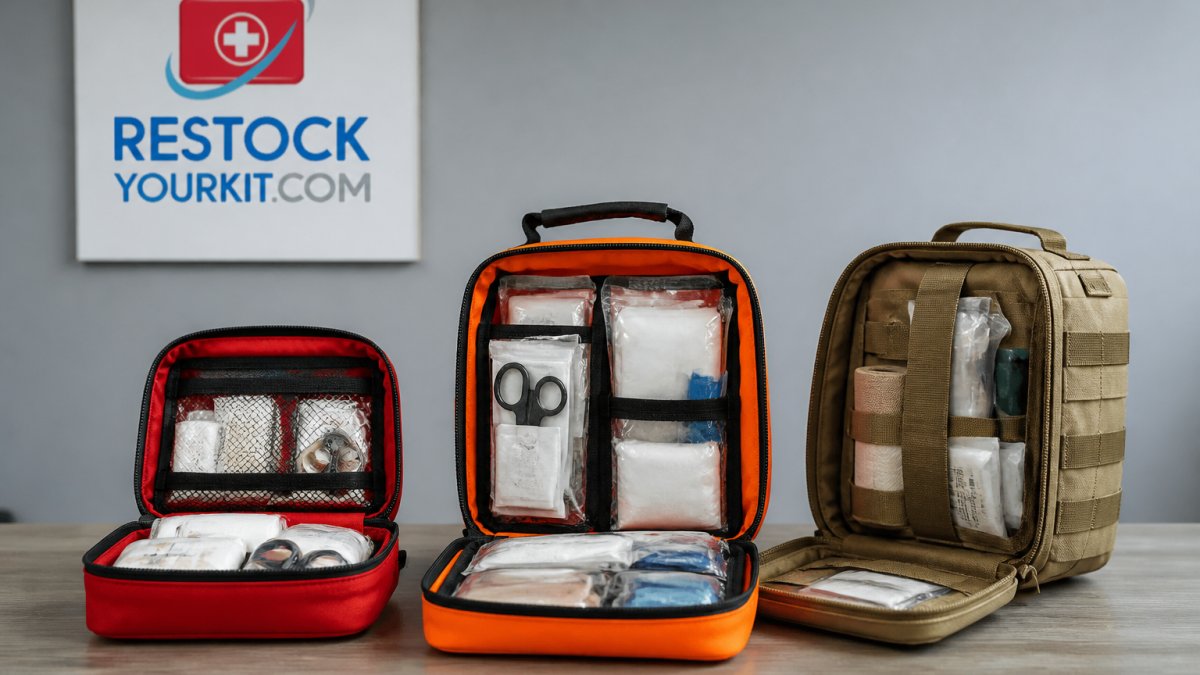
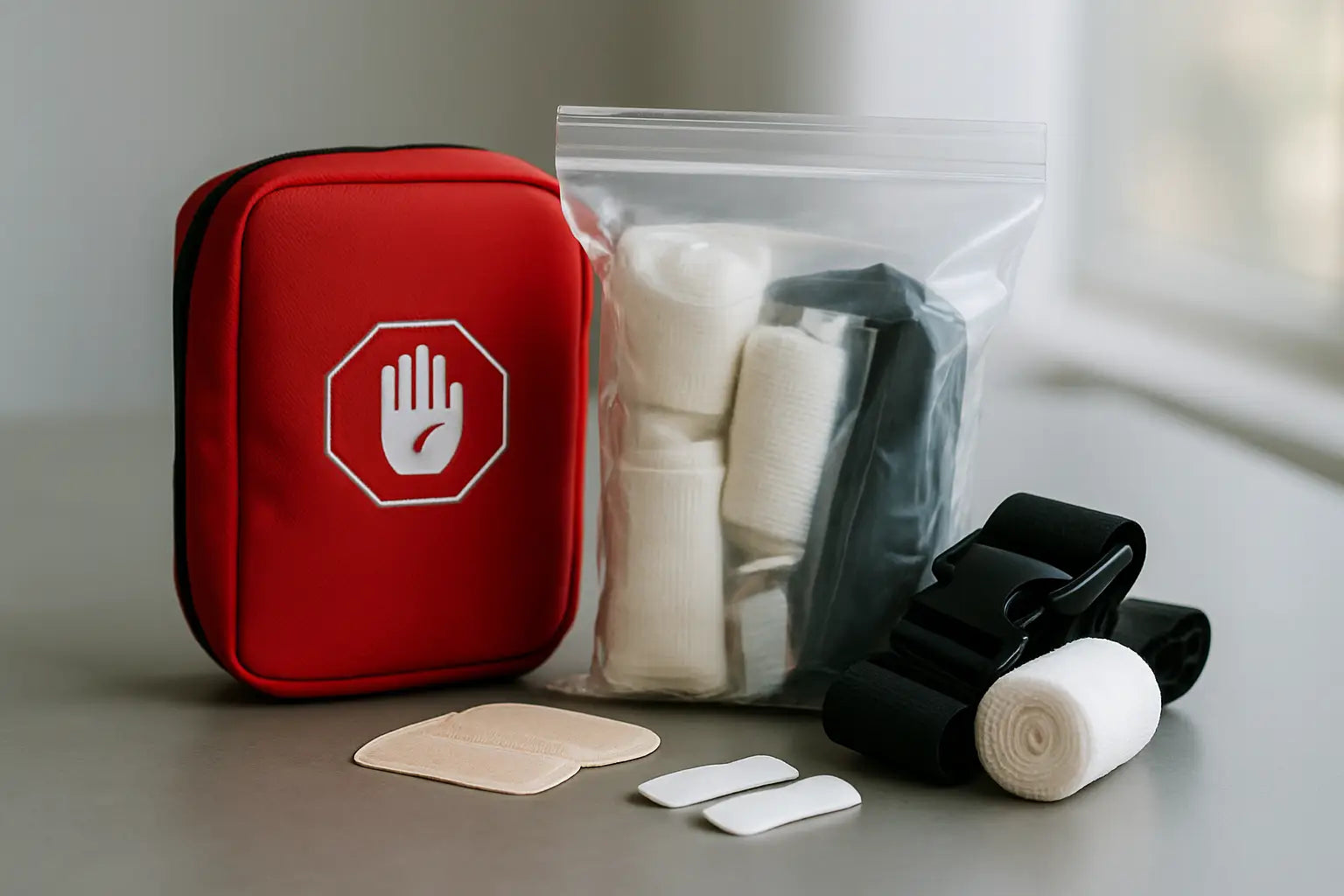
The best refill is the one you will repeat.Keep your kit layout consistent, and refill back to a standard. That might be “one tourniquet, one hemostatic gauze, one compressed gauze, one pressure dressing, two pairs of gloves, tape, and shears” for a compact kit, or it might be a deeper standard for a crew bag. The exact standard is less important than having one.
If you manage several kits, modular refills help because you can restock in the same pattern across all of them. That is where a retailer focused on small-quantity, individually packaged supplies can save time and money compared to buying oversized boxes you will not finish before they age out. If you are already operating that way, you will feel at home at RestockYourKit.com.
Training and refills should reinforce each other
Your refill choices should mirror how you were trained to respond.If you train “tourniquet first for life-threatening extremity bleeding,” your kit should make that easy. If you train wound packing and sustained direct pressure, you should have enough gauze to pack deeply and keep packing, plus something that helps you maintain pressure while you manage the next problem.
Also consider training consumption. If you run regular Stop the Bleed refreshers for a team, separate your training supplies from your operational kits. Otherwise your real kit quietly becomes your practice bin.
A refill is not just shopping. It is how you keep your decision-making clean under stress. Put the right items back in the right place, replace anything you would hesitate to use, and then close the kit knowing it will open the same way every time.
The most reassuring feeling in preparedness is not owning a kit. It is recognizing that your kit is ready because you made it ready, on purpose, before you needed it.