Cart
0
A hen always seems to pick the worst possible time to get hurt - five minutes after feed stores close, right before a storm, or on the morning you are supposed to leave town. That is why a poultry kit should not be built around convenience. It should be built around speed.
For backyard flocks, speed matters because small problems turn into flock problems fast. A minor peck wound can become a serious infection. A bird that seems just “off” can go downhill by evening. Having the right supplies on hand gives you time to assess, stabilize, isolate, and decide whether home care is appropriate or whether you need a poultry-savvy vet.
What poultry first aid kit essentials should actually cover?
The best poultry first aid kit essentials are not the most exotic items. They are the supplies you will reach for repeatedly when dealing with common flock issues - cuts, abrasions, pecking injuries, mites and lice, mild dehydration, leg wrapping, and temporary isolation.
A useful kit should help you do four jobs well. First, examine the bird safely. Second, clean and protect wounds. Third, support recovery with hydration, warmth, and reduced stress. Fourth, prevent a sick or injured bird from being pushed around by the rest of the flock.
That sounds simple, but it changes what belongs in the box. Fancy gadgets matter less than basic supplies that are sized right, easy to store, and easy to restock.
Start with handling and exam supplies
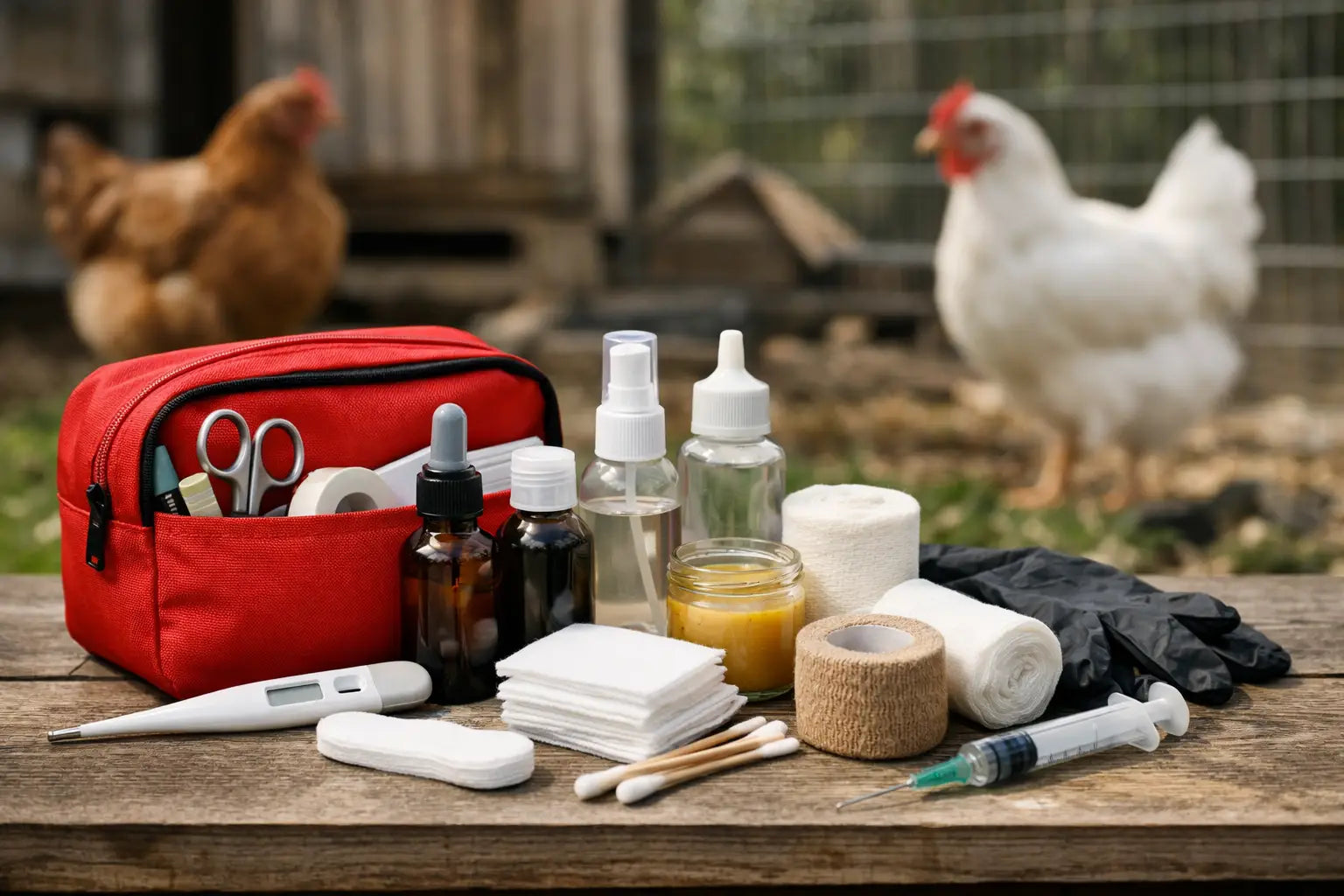
Every poultry first aid kit needs a few items that make it possible to work on a bird without making the situation worse. Disposable gloves are non-negotiable. They protect you, keep wounds cleaner, and are especially useful if you are dealing with drainage, mites, lice, or diarrhea.
A small towel is just as important. Wrapping a bird in a towel helps control wings and reduces stress during an exam. Chickens often tolerate treatment better when they feel contained. Good lighting also matters, whether that is a headlamp or a compact flashlight. You cannot treat what you cannot see, and vent injuries, scalp wounds, and leg issues are easy to miss in poor light.
Keep a digital thermometer nearby if you are comfortable using one, but know your limits. Temperature can be useful information, though many flock owners rely more on behavior, posture, droppings, appetite, and breathing effort to judge urgency.
Wound care supplies are the core of the kit
Cuts and peck injuries are the reason many people build a poultry first aid kit in the first place. Chickens are drawn to red, and even a small bloody spot can trigger aggressive pecking. That means your wound care section needs to be ready to clean, control mess, and protect tissue quickly.
Sterile saline is one of the most useful items you can keep on hand. It is simple, effective, and gentle for flushing dirt and debris from wounds. Gauze pads and nonstick dressings help blot, clean, and cover injured areas. Nonstick pads are particularly helpful because fragile tissue can reopen if ordinary gauze sticks.
You will also want self-adherent wrap and medical tape, but use both with restraint. Bandaging poultry can be helpful for certain foot, leg, or body injuries, yet bad wraps cause their own problems. Too tight, and you restrict circulation. Too loose, and the bandage slips, tangles, or gets picked at. If you are not sure a wrap will stay clean and safe, supervised wound management and isolation may be the better choice.
An antiseptic suitable for poultry belongs here as well. This is an area where more is not always better. Harsh products can damage healthy tissue. Gentle, field-practical wound cleansers usually outperform strong solutions used too aggressively.
Add a way to reduce pecking attention
This is one of the most overlooked poultry first aid kit essentials. If a bird has a visible red wound, the rest of the flock may keep targeting it. That can undo your treatment in minutes.
A wound dressing product that helps cover redness can be useful for minor external injuries, provided the area is appropriate for topical care and not a situation requiring veterinary treatment. The goal is not cosmetic. The goal is to make the injury less attractive to flock mates while the bird heals.
This is also where an isolation setup becomes part of first aid, not an optional extra.
Include isolation and recovery basics
A cardboard pet carrier, dog crate, wire kennel, or small tote setup can function as a recovery pen if you prepare it before you need it. The best treatment plan often starts with getting the bird out of the pecking order, into a clean space, and under close observation.
Your isolation area should have dry bedding, easy access to water, and protection from weather and predators. If temperatures are cold or the bird is weak, a safe heat source may help, but overheating is a real risk. A chicken that is panting, holding wings away from the body, or acting distressed may be too hot. Supportive care should be controlled, not improvised.
Electrolyte or vitamin support products can be helpful in recovery, especially after stress, heat, transport, or mild dehydration. They are not magic, and they do not replace proper diagnosis, but they can support a bird that is not bouncing back normally.
Parasite control deserves a permanent place in the kit
External parasites are common enough that they should not be treated like a special-case purchase. Mites and lice can cause feather damage, irritation, poor condition, and reduced laying. By the time birds look obviously rough, the problem may already be well established.
A poultry first aid kit essentials list should include a trusted treatment for mites and lice, along with gloves and a plan for treating housing if needed. This is where small-quantity bottles and practical refill sizes make sense. Most backyard keepers do not need commercial-scale volumes, but they do need something effective on hand when they spot trouble.
It depends on your setup, climate, and flock density how often parasite issues show up. Birds in dry runs may have different pressures than free-ranging flocks, and new birds often bring surprises. The point is simple - if you wait to shop after you confirm parasites, you are already behind.
Keep leg and foot care supplies simple
Minor sprains, abrasions, and foot issues are common enough to justify dedicated supplies. Gauze, nonstick pads, self-adherent wrap, and a small blunt-tip scissors cover a lot of ground. If you are managing bumblefoot or a more involved foot problem, care gets more specific quickly, and technique matters as much as supplies.
This is one area where restraint is useful. Not every limp needs a complex splint, and not every foot issue should be cut open at home. A first aid kit should let you stabilize and protect the bird while you evaluate next steps. It should not push you into procedures you are not trained to do.
Do not forget syringes and dosing tools
Small oral syringes or droppers are extremely useful for giving fluids, electrolytes, or measured liquid products. They also help you dose accurately. Guesswork is not a treatment plan.
Label these clearly and keep them clean. Cross-use between products without cleaning can create problems, especially when working with medications, supplements, or birds under stress. A simple measuring spoon set can help too if you use powdered additives in water.
Build the kit around restocking, not a one-time buy
The most effective kit is the one that is complete when something happens. That sounds obvious, but many poultry kits fail on maintenance. The saline bottle is empty. The gauze was borrowed for a camping trip. The mite treatment expired. The only gloves left are two singles stuffed in the bottom of a bucket.
Set up your poultry supplies like any other serious first aid system. Group wound care together. Keep parasite control separate. Store wraps, gauze, and syringes in sealed bags or small modules. Check dates. Replace what you used before the next emergency, not after.
That is also where a refill-friendly approach helps. Buying practical quantities instead of oversized containers makes it easier to keep the kit current without wasting money. For many backyard keepers, that matters more than buying the biggest bottle on the shelf.
A few items that are helpful, but situation-dependent
Some flock owners also keep poultry saddles, Epsom salt, tweezers, a magnifier, and a small notebook for tracking symptoms and treatment dates. These can all be useful, but they are not equally essential for every flock.
Your environment should guide the add-ons. If you routinely deal with rooster damage, feather picking, or seasonal parasite pressure, build for that. If you hatch chicks, your supplies may lean in a different direction. A good kit reflects the real injuries and health issues most likely to happen in your setup.
When first aid is not enough
A first aid kit buys time. It does not replace judgment. Severe bleeding, labored breathing, neurological signs, inability to stand, major prolapse, widespread flock illness, or a bird that continues to decline despite supportive care all justify escalation.
The strongest kits are built by people who understand this line clearly. First aid is for early action, safer handling, and better stabilization. It is not a reason to delay higher-level help when the bird needs more than home care.
If your flock is part of your food security, your family routine, or a youth agriculture project, treat kit readiness like feed storage or coop security - part of basic management. Time to restock your first aid kit before the next hen decides otherwise.