Cart
0
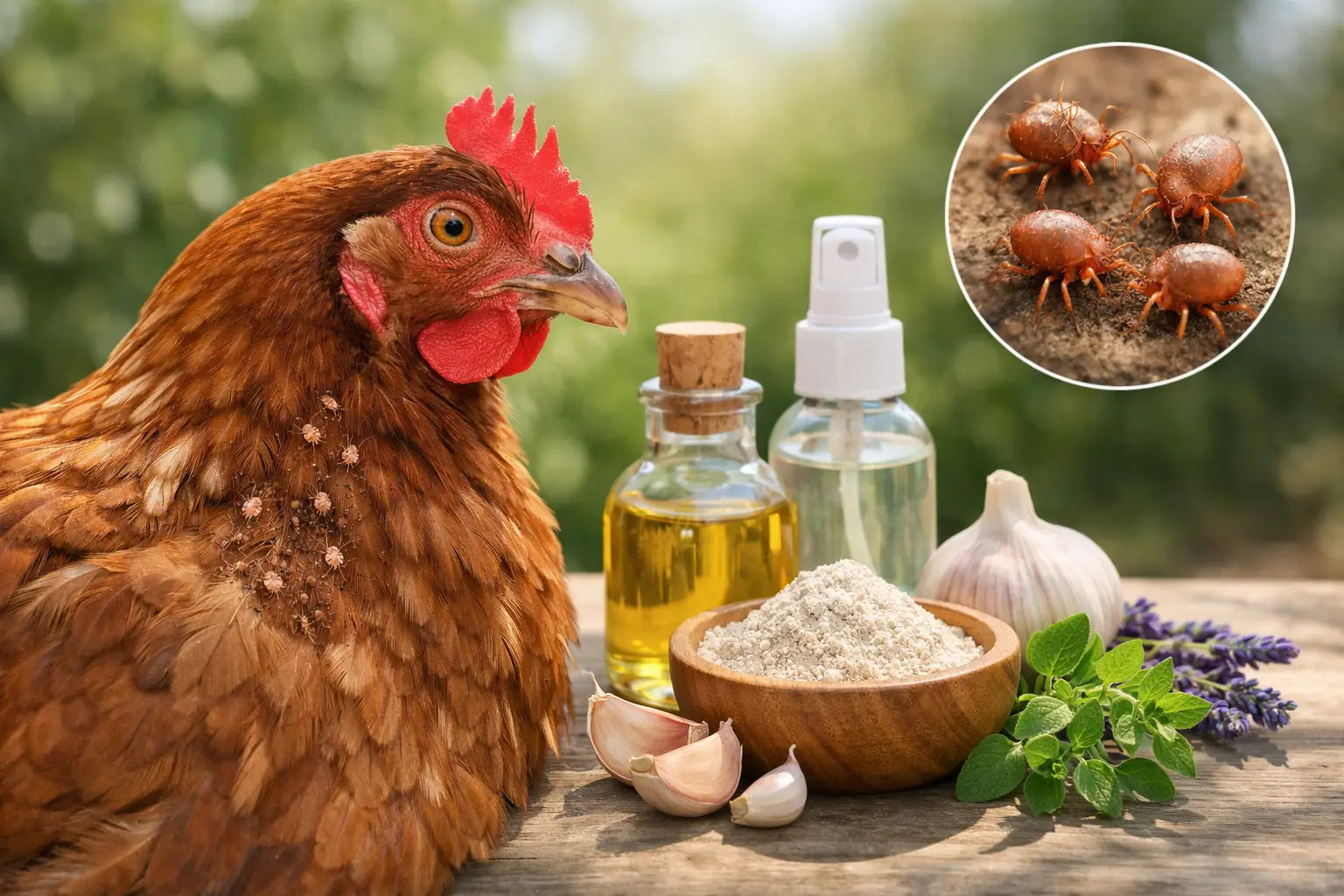
If your hens seem restless at night, egg production has dipped, and you are finding tiny gray or red specks around roosts or vent feathers, do not wait it out. Knowing how to treat chicken mites naturally matters most in the first few days, when a small parasite problem is still manageable and before your flock gets run down.
Mites are not just a nuisance. In a backyard flock, they can stress birds enough to affect weight, laying, feather condition, and overall resilience. Heavy infestations can contribute to anemia, especially in smaller birds, young birds, and older hens. The practical goal is not just to knock mites back for a day or two. It is to reduce the parasite load on the birds, break the life cycle in the coop, and make reinfestation harder.
How to treat chicken mites naturally without wasting time
Natural treatment works best when you stop thinking in terms of a single remedy. There is no one sprinkle, spray, or bedding swap that reliably fixes a mite problem on its own. The field-tested approach is layered: clean the environment hard, support the birds directly, and repeat treatment on schedule.
Start with identification. Chicken mites are often most active at night, especially northern fowl mites and red mites. Red mites commonly hide in cracks and come out after dark to feed, so you may not see much on the bird during the day. Northern fowl mites are more likely to stay on the bird, especially around the vent. If you only check the flock at noon, you can miss the true scale of the problem.
Take a flashlight into the coop after dark and inspect roost ends, nesting box seams, hardware joints, and the undersides of boards. Then check vent feathers, underwings, and around the tail head. If you see moving specks, clumped debris around feathers, pale combs, or irritated skin, act the same day.
Start with a full coop reset
Natural control fails most often because the coop gets a partial cleaning instead of a real reset. Mites live off the bird as well as on it, and the coop can stay contaminated long after the hens look better.
Remove all bedding, nesting material, loose feathers, and manure. Scrape roost bars, corners, and cracks. Wash hard surfaces with hot soapy water if the coop materials allow it, then let everything dry fully. Moisture control matters because damp, dirty housing gives parasites and secondary skin issues more room to persist.
If the coop has deep seams, rough lumber, or old nesting boxes, pay special attention there. Natural treatment has trade-offs. It is safer and often more practical for a small flock, but it usually takes more labor and more repeat passes than stronger chemical options.
Use dust baths as part of treatment, not decoration
A good dust bath helps birds do part of the work themselves. It will not solve a severe infestation by itself, but it can reduce the mite load and improve comfort.
Set up a dry dusting area where the birds actually use it. A blend of dry soil and clean wood ash is commonly used by backyard keepers. The key is dry, fluffy material in a protected location. If it cakes up or gets wet, it stops being useful. Some keepers add food-grade diatomaceous earth, but this is one of those it depends situations. It can help in very dry conditions, yet it also creates dust that can irritate lungs and eyes for both birds and people if overused. If you use it, use a light hand and avoid creating clouds in enclosed spaces.
Treat the birds gently and directly
When mites are on the birds, especially around the vent, direct support makes a difference. Separate heavily affected birds if they are being pecked or look weak. Trim badly soiled feathers only if needed for hygiene and visibility. Then use a natural poultry-safe dust or gentle topical approach appropriate for the skin condition.
Avoid drenching birds in oily homemade mixtures. Oil can mat feathers, interfere with insulation, and create more mess in already stressed birds. The better natural approach is low-drama, repeatable care: inspect, clean the vent area if needed, apply a poultry-safe dusting method sparingly, and return the bird to a clean environment.
If a bird looks pale, lethargic, or significantly underweight, the issue may be beyond what a natural home plan can handle alone. Parasites are one problem. Blood loss, dehydration, or a secondary infection is another.
Breaking the mite life cycle in the coop
Most flock owners focus on the bird and underestimate the building. That is why infestations keep coming back.
After cleaning, replace bedding with fresh, dry material. Clean straw or pine shavings can work well if they stay dry. Replace nesting material often during active treatment. Roost bars need the most attention because birds spend long periods there, and mites concentrate where the host returns every night.
Recheck the coop every few days. In practical terms, that means looking under roosts, inside nest corners, and along wall joints with a flashlight. Natural control depends on timing. Eggs and immature mites can survive your first cleanup, so a single round is rarely enough.
What repeat treatment schedule works best?
For most mild to moderate infestations, plan on an aggressive first cleanup followed by at least two more rounds of inspection and treatment over the next 7 to 14 days. The exact timing depends on temperature, humidity, coop design, and the mite species involved. Warmer weather tends to speed up the life cycle.
If you clean once and then wait two weeks, you are giving the next generation room to rebound. Shorter intervals are more effective while the problem is active.
Natural flock support while birds recover
Mites drain a flock. Even after the visible parasites are reduced, birds may stay off their game for a while.
Keep feed consistent and make sure water access is easy and clean. Stress reduction matters here. Avoid unnecessary flock changes, crowding, or major coop rearrangements during treatment. Birds dealing with parasites do better with predictable conditions, clean bedding, and steady nutrition.
Watch for signs that suggest the infestation has taken a toll: pale combs, weakness, poor appetite, and a drop in laying that does not begin to recover. If you have one hen that is lagging behind the rest, check her more closely rather than assuming the whole flock is equally affected.
A practical preparedness mindset helps here. Have cleaning tools, replacement bedding, gloves, and poultry care supplies on hand before mite season hits. Small flocks can turn quickly, and waiting several days for supplies can turn a manageable issue into a bigger one.
Prevention is part of how to treat chicken mites naturally
Prevention and treatment overlap. Once you have had mites in a coop, your best defense is a routine that makes the environment harder for them to reestablish.
Keep the coop dry, reduce clutter, and inspect roosts regularly. Quarantine new birds before adding them to the flock. Wild birds and contaminated equipment can also bring mites in, so keep borrowed crates, used nesting boxes, and secondhand coop gear out of the main housing until they have been cleaned thoroughly.
A quick night inspection once in a while is worth more than a lot of guesswork later. Mites are easier to control when numbers are still low.
When natural treatment is not enough
There is a point where the right answer is not purely natural anymore. If birds are becoming anemic, dying, or cycling back into infestation despite repeat cleaning, stronger intervention may be warranted. That does not mean you failed. It means the parasite pressure, coop conditions, or timing worked against you.
The practical standard is bird welfare first. Natural methods are often a solid first line for backyard flocks, especially when the infestation is caught early. But if the flock is declining, you need to escalate quickly and use products labeled for poultry according to directions.
For keepers who like to stay ready instead of scrambling, it helps to keep a small poultry-care bench stocked the same way you would restock a first aid kit. That includes gloves, cleaning supplies, bedding on hand, and a few proven poultry treatment basics from a source that understands both field use and small-quantity flock care, like RestockYourKit.com.
If your hens are scratching through the night and the coop suddenly feels like the source of the problem, trust that signal. Clean hard, inspect after dark, repeat on schedule, and stay focused on the flock in front of you - not on miracle cures.