

How to Treat Backyard Chicken Wounds: Step-by-Step
Table of Contents
- Initial Assessment of the Wound
- Stopping Active Bleeding
- Cleaning and Disinfecting the Wound
- Chicken First Aid Kit Essentials
- Signs of Infection in Chickens
- When to Isolate an Injured Chicken
- Post-Healing Recovery and Flock Reintegration
- Conclusion
Last Updated: August 27, 2026
Initial Assessment of the Wound
The first moments after discovering an injured chicken determine what happens next. Catch the bird safely and place it in a quiet, well-lit area. Stress makes everything worse. Look at the wound without touching it yet. Is the bird bleeding heavily? Can you see exposed tissue or bone? Is there dirt or debris embedded in the wound?
Different wounds demand different responses. Puncture wounds look minor but can hide serious damage underneath and introduce bacteria deep into tissue. Lacerations bleed more obviously but are often easier to assess because you can see the full extent of damage.
Check the bird's overall condition too. Is it alert or lethargic? A chicken attacked by a predator may have wounds in multiple places. If the bird is unresponsive or extremely weak, shock becomes your immediate priority before wound treatment.
Document what you see mentally or on your phone. You'll need this information if you contact a veterinarian. A clear description of wound location, size, depth, and whether you see bone or internal organs matters far more than a perfect photo.
Stopping Active Bleeding
Active bleeding needs to stop before you can properly assess or treat the wound.
Apply direct pressure with a clean cloth or gauze. Press firmly against the wound and hold it there. Don't peek at the wound every few seconds, that disrupts clotting. Most minor bleeding stops within 5-10 minutes of continuous pressure (the American Academy of Dermatology). For heavier bleeding, you may need 10-15 minutes. If bleeding hasn't slowed after 15 minutes of constant pressure, contact a veterinarian immediately.
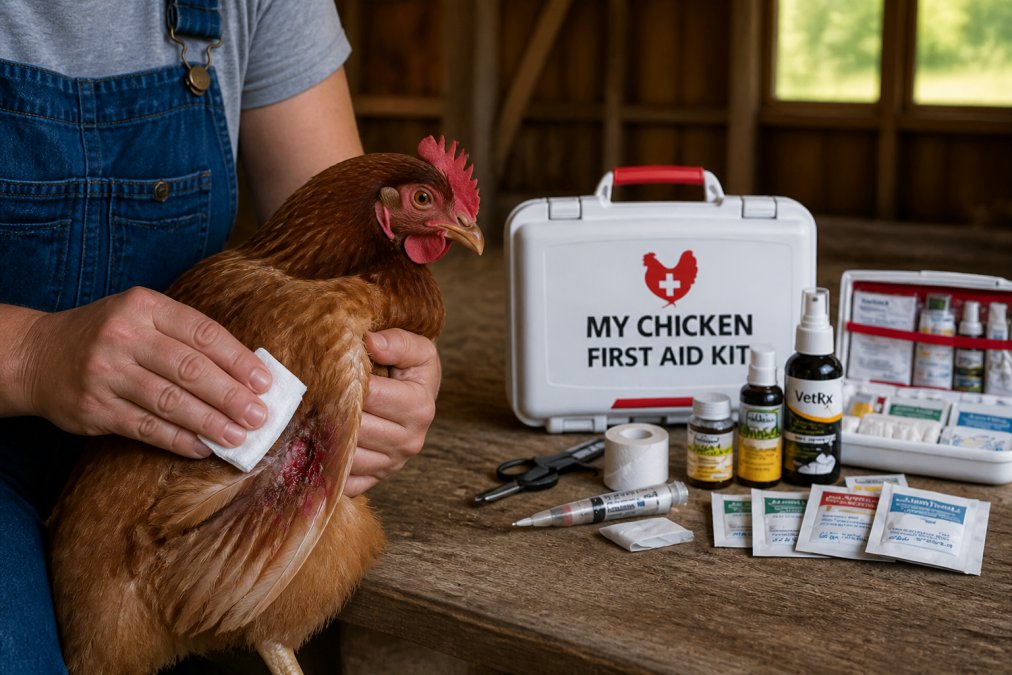
Once bleeding stops, let the cloth sit for another minute or two. When you lift it away, do so slowly. If bleeding restarts, reapply pressure. Patience matters here more than speed.
For wounds on the legs or wings, elevation helps. Hold the injured leg up if possible while applying pressure. Gravity works with you when the wound is above the heart.
Once bleeding is controlled, move to cleaning. Never skip this step just because the bleeding stopped. A dry wound is not a clean wound.
Cleaning and Disinfecting the Wound
A clean wound heals. A dirty wound becomes infected.
Rinse the wound with saline solution. If you don't have saline, dissolve one teaspoon of salt in one cup of distilled water. Use a syringe or spray bottle to irrigate the wound gently. The goal is to flush out dirt, debris, and bacteria. Don't scrub aggressively, that damages tissue.
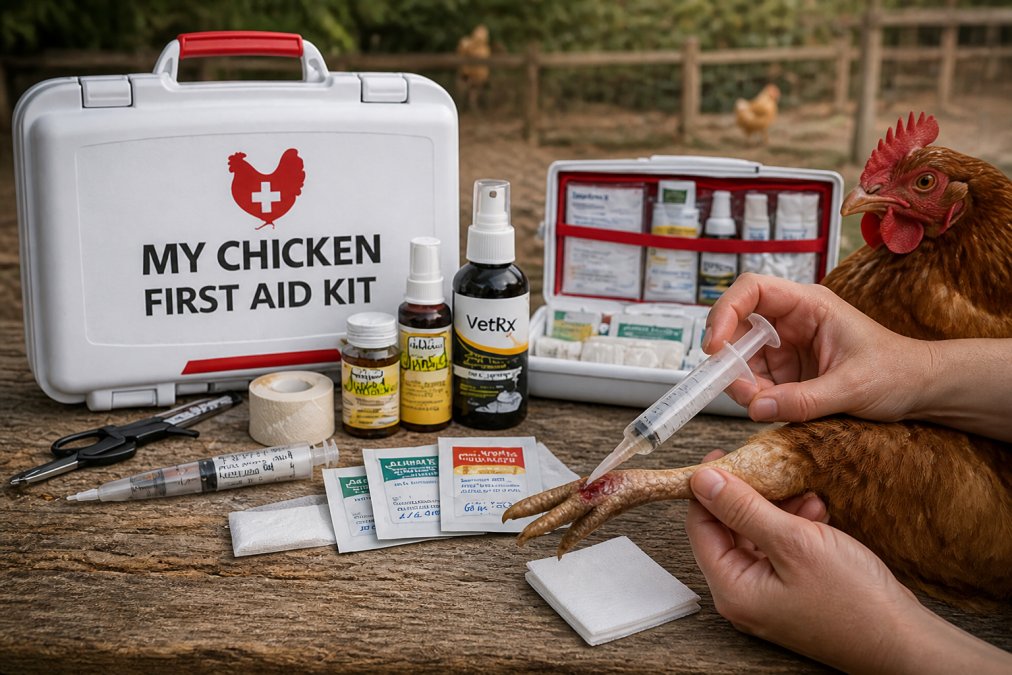
After rinsing, apply an antiseptic. Common options for poultry wounds include chlorhexidine solution, betadine, or antimicrobial sprays like Vetericyn Plus spray available through RestockYourKit.com. These products kill bacteria without damaging healthy tissue.

Apply your chosen antiseptic according to product instructions. A light coating does the job.
If the wound has debris you can't flush out, splinters, feathers matted into the wound, or visible dirt, gently remove what you can with clean tweezers. Don't dig into the wound trying to get everything. If debris is embedded deep, leave it for a veterinarian.
Let the wound air dry for a few minutes after cleaning. Then decide if bandaging is necessary. Small wounds that aren't in a location the chicken will peck at don't need bandaging. Larger wounds, especially on areas the chicken can reach with its beak, should be covered to prevent further damage and infection.
If you bandage, use non-stick gauze against the wound and secure it with medical tape or self-adhesive bandage material. Change the bandage daily and re-clean the wound during each change. A bandage that stays on for days traps moisture and bacteria.
Chicken First Aid Kit Essentials
You can't treat a wound if you don't have supplies on hand. The time to gather materials is before an emergency, not during one.
A well-stocked chicken first aid kit includes saline solution for wound irrigation, antiseptic solutions like chlorhexidine or betadine, non-stick gauze pads, medical tape, clean cloth or cotton balls, and tweezers for removing debris. You'll also want antibiotic ointment, though many experienced keepers skip it because chickens peck at ointment and ingest it.
Pain relief matters too. Aspirin can be given to chickens in distress, about 5 mg per pound of body weight mixed into water or food (peer-reviewed research). For a 4-pound chicken, that's roughly 20 mg. If you're unsure about dosing, skip the aspirin and focus on keeping the bird calm and comfortable.
Consider keeping electrolytes on hand. An injured chicken often won't eat or drink normally for the first day or two. Electrolytes in water encourage hydration and support recovery. Probiotics also help, many keepers add them to water during recovery to support gut health and reduce stress-related digestive issues.
The RestockYourKit.com Deluxe Backyard Chicken First Aid Kit includes most of these essentials in one package, eliminating guesswork about what to stock. For smaller flocks or those just starting out, the Basic Backyard Chicken First Aid Kit covers the most critical items at a lower cost. Both kits are specifically designed for poultry.

Keep your kit in a cool, dry place. Check it twice a year to replace expired items or supplies you've used.
Signs of Infection in Chickens
Even with perfect care, infections happen. Knowing the warning signs means you catch problems early, when they're still treatable.
Swelling around the wound is normal for the first 24-48 hours (the CDC). Beyond that, increasing swelling suggests infection. The area may feel warm to the touch. Redness spreading outward from the wound is a clear sign bacteria are multiplying.
Discharge is another red flag. A small amount of clear fluid is normal during healing. Pus, thick, yellowish, or greenish discharge means infection. Some chickens develop a foul smell around the wound.
Behavioral changes matter too. An infected chicken becomes lethargic, stops eating and drinking normally, and may separate itself from the flock. Tissue around the wound may turn dark or black, that's necrosis, dead tissue that won't heal.
If you notice any of these signs, contact a veterinarian. Infections in poultry progress quickly. What looks manageable on day three can become life-threatening by day five. Don't wait for the infection to "get better on its own." It won't.
When to Isolate an Injured Chicken
A wounded chicken needs separation from the flock, at least temporarily. This reduces stress and infection risk.
Isolate the bird immediately after injury if the wound is significant. A quiet, well-ventilated space away from other chickens reduces stress, which accelerates healing. An injured chicken in a stressful environment won't eat or drink well, and its immune system won't function optimally.
Set up a recovery pen with food, water, and a roosting area. The pen doesn't need to be large, 4x4 feet is adequate for a single chicken for a few days. Include clean, dry bedding and change it daily. Damp bedding promotes infection.
How long to isolate depends on wound severity. Minor wounds might need only 3-5 days of separation. More serious injuries require 2-3 weeks of isolation while the wound heals and infection risk drops. Once the wound is mostly closed and the bird is eating and behaving normally, you can attempt reintegration.
Reintegration can be tricky. Chickens establish a pecking order, and an injured bird that's been away may be treated as an outsider. Start by putting the recovering chicken in a separate enclosure within sight of the flock for a day or two. Then open access gradually, supervising the first few hours. If the flock attacks the recovering bird, separate them again for another week.
Some keepers keep a permanently isolated "hospital pen" set up and ready. A simple wooden frame with hardware cloth, a covered roosting area, and removable bedding works perfectly.
Post-Healing Recovery and Flock Reintegration
The wound has closed. The bird is eating and moving normally. But recovery doesn't end there.
Nutrition drives healing. An injured chicken needs more protein than usual to rebuild damaged tissue. Supplement with higher-protein treats, mealworms, scrambled eggs, or sunflower seeds during the active healing phase (2-4 weeks depending on wound severity).
Hydration matters equally. Offer fresh water constantly. Some keepers add electrolytes to water during recovery to replace minerals lost through stress and reduced food intake. Probiotics during this period support gut health.
Watch the wound site closely during healing. Scab formation is normal and necessary, don't pick at it or encourage the chicken to peck at it. If you bandaged the wound, continue changing the bandage daily and re-cleaning with saline until the wound is mostly closed. Once a scab forms and the wound is no longer open, bandaging becomes optional.
Granulation tissue, the pink, bumpy tissue that forms as the wound fills in, is a good sign. Tissue necrosis (dark or black areas) means the opposite. If necrotic tissue develops, contact a veterinarian.
Reintegration is the final phase. A chicken that's been isolated for weeks may not remember its place in the pecking order. Gradual reintroduction prevents bullying and stress. Start with visual contact through a fence, then supervised time together, then full-time reintegration.
Some chickens recover fully and show no lasting effects. Others develop behavioral changes, increased nervousness, or reluctance to free-range. These changes usually fade over time as the chicken regains confidence.
Seasonal factors affect recovery too. A chicken injured in winter needs extra calories just to maintain body heat while also healing a wound. A chicken injured in summer has an easier time because energy isn't diverted to temperature regulation.
Treating backyard chicken wounds is manageable with the right approach and supplies. Start with a clear assessment, stop the bleeding, clean thoroughly, and monitor for infection. Most wounds heal well with basic care. For anything beyond your comfort level, severe bleeding, deep wounds, or signs of serious infection, contact a veterinarian without hesitation.
RestockYourKit.com offers specialized chicken first aid kits designed specifically for poultry care, eliminating the guesswork about which supplies actually work for birds. Whether you choose the comprehensive Deluxe kit or the focused Basic kit, having pre-assembled supplies means you're ready when an injury happens. Proper preparation turns a stressful emergency into a manageable situation where you can focus on helping your bird recover.

Frequently Asked Questions
What can I put on a chicken wound at home?
Clean the wound with saline solution first, then apply an antiseptic spray like Vetericyn Plus or an antimicrobial hydrogel. Avoid human antibiotic ointments like Neosporin, which can be toxic to poultry. For puncture wounds or lacerations, antiseptic solutions with chlorhexidine or betadine work well. Keep the wound dry and monitor for signs of infection daily. Most backyard chicken first aid kits include these essentials pre-selected for poultry safety.
How do you tell if a chicken wound is infected?
Signs of infection in chickens include swelling, redness, discharge (especially pus or foul-smelling fluid), heat around the wound area, and scab formation that doesn't progress to healing. An infected chicken may also show behavioral changes: reduced activity, loss of appetite, or reluctance to move. Tissue necrosis (dark or blackened tissue) indicates serious infection. If you observe these symptoms, isolate the bird immediately and consider veterinary intervention within 24-48 hours to prevent systemic illness or flock contamination.
Will a chicken wound heal on its own?
Minor cuts and scratches often heal without intervention, but open wounds risk infection, fly strike, and complications. Active bleeding, puncture wounds, or wounds from predator attacks require immediate treatment to stop hemorrhage and prevent infection. Proper wound care, cleaning, disinfection, and isolation, dramatically improves healing speed and reduces infection risk. Granulation and skin integrity develop faster with antiseptic treatment than without it. Untreated wounds in warm or humid conditions are especially vulnerable to fly strike and tissue necrosis.
When should I isolate an injured chicken from the flock?
Isolate immediately if the wound is actively bleeding, deep, or caused by predator attack. Also isolate if other chickens are pecking at the injury, as this causes secondary infection and stress. Keep the bird in a quiet isolation pen with access to fresh water, electrolytes, and protein-rich feed to support healing. Maintain isolation for at least 7-10 days or until the wound shows clear signs of healing without discharge. Before reintroducing to the flock, ensure the scab is firm and the bird shows normal behavior and appetite.