

How to Store Poultry Medications: Coop-Safe Tips
Table of Contents
- Why Proper Storage Matters for Poultry Medications
- Essential Poultry First Aid Kit Supplies for Organized Storage
- Step 1: Choose the Right Container and Location
- Step 2: Control Temperature and Humidity in Your Coop
- Step 3: Follow Temperature Requirements for Chicken Vaccines
- Step 4: Protect Labels and Manage Expiration Dates
- Safe Disposal of Expired Veterinary Medicine
- Conclusion: Your Flock's Health Starts with Smart Storage
- Frequently Asked Questions
Last Updated: September 7, 2026
Why Proper Storage Matters for Poultry Medications
Most backyard flock losses from treatable illness trace back to one preventable issue: medications that lost their strength before they were ever used, which is why it is critical to store poultry medications properly. Heat, humidity, and light degrade veterinary medications quietly, and a dose that looks fine can deliver almost nothing by the time your hen needs it. Knowing how to store poultry medications correctly is the difference between a shelf full of useful treatments and a collection of expensive, ineffective bottles.
The good news is that proper storage does not require a pharmacy degree or expensive equipment. It requires consistent attention to temperature, moisture, and organization, the same principles that govern clinical storage in any veterinary practice. Your coop can meet those standards with a few deliberate choices.
Below, we will walk through a practical, step-by-step system for keeping your poultry medications potent, clearly labeled, and ready when your flock needs them. By the end, you will have a storage setup that protects your investment and your birds.
Essential Poultry First Aid Kit Supplies for Organized Storage
Before you organize anything, you need a clear picture of what you are storing. A well-stocked poultry first aid kit typically includes antibiotics, wound treatments, electrolytes, vitamins, and syringes for dosing. Each category has different storage sensitivities, so grouping them matters.

Start by inventorying what you keep on hand. Most backyard setups benefit from a dedicated container that holds everything in one place. For example, the Basic Backyard Chicken First Aid Kit from RestockYourKit.com comes with essential supplies for treating minor injuries and bumblefoot, and its compact layout makes it easy to transfer into a sealed storage tub.
A common mistake is storing medications loose in a drawer or feed bin. Loose bottles get knocked over, labels rub off, and you lose track of what you have. Group items by type: oral treatments separate from topical ointments, and syringes and applicators stored where they stay clean. This organization makes it easier to check expiration dates and prevents cross-contamination between products.
Step 1: Choose the Right Container and Location
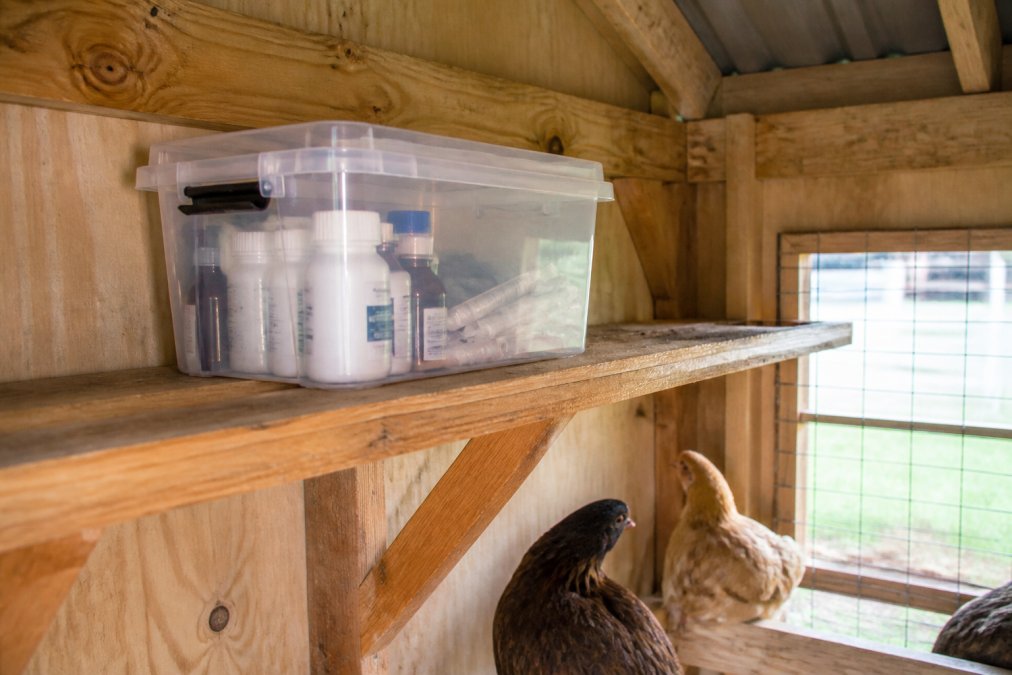
The container you choose is your first line of defense against moisture, pests, and temperature swings. A hard-sided plastic storage tub with a gasket-sealed lid works well for most coops. It protects contents from dust, humidity, and curious chickens while keeping everything visible at a glance.
Location matters just as much as the container. Pick a spot that stays cool year-round, away from direct sunlight and heat sources like water heaters or metal walls that bake in summer. Many keepers use a high shelf in a shaded corner of the coop, or a cabinet in an adjacent shed where temperatures are more stable.
For flocks kept in non-climate-controlled coops, consider a small insulated cooler inside the storage tub. This adds a buffer against extreme temperature shifts and gives you a dedicated, stable micro-environment for your most temperature-sensitive items. Keep the tub off the floor to avoid moisture wicking up from the ground and to make it harder for rodents to reach.
Step 2: Control Temperature and Humidity in Your Coop
Temperature and humidity are the two factors that most directly affect drug efficacy in a coop setting. Most poultry medications store best in a cool, dry place, generally between 59°F and 77°F, according to standard pharmaceutical guidance (usp.org). Humidity levels above 60% can cause powders to clump, capsules to soften, and labels to peel.
A simple thermometer and humidity gauge placed near your storage tub gives you the data you need. If summer heat pushes your coop past safe ranges, move medications to a cooler room in your house during the hottest months. Many keepers rotate seasonal medications between the coop and the house rather than risk degradation.
For moisture control, silica gel packets inside the storage tub absorb ambient humidity and protect moisture-sensitive products. Replace them every few months or whenever they change color, depending on the type you use. Avoid storing medications in a bathroom or laundry room, where humidity spikes are frequent and severe.
Step 3: Follow Temperature Requirements for Chicken Vaccines
Chicken vaccines are the most temperature-sensitive products you will handle, and they demand the strictest attention. Most vaccines require continuous refrigeration between 35°F and 45°F, and they lose potency rapidly if they freeze or warm up (the CDC). This is called the vaccine cold chain, and breaking it at any point means the vaccine may not protect your birds.
If you administer vaccines yourself, store them in a dedicated refrigerator, not the family fridge where the door opens constantly. A small dorm-style fridge set to the correct range works well. Keep vaccines in their original packaging, away from the cooling element where they could freeze, and monitor the temperature daily with a fridge thermometer. protecting outdoor storage.
For live vaccines that require mixing before use, follow the manufacturer's handling protocols exactly. Once reconstituted, most live vaccines must be used within a short window, often one to two hours. Discard any unused mixed vaccine according to the label instructions rather than saving it for later, since its potency drops quickly after mixing.
Step 4: Protect Labels and Manage Expiration Dates
A medication you cannot identify is a medication you cannot safely use. Label integrity is essential for veterinary prescription and over-the-counter products alike. Keep all medications in their original containers with the label intact, and never transfer them to unmarked jars or bags.
Clear packing tape over the label adds a protective layer against moisture and rubbing. For extra clarity, use a permanent marker to write the purchase date and expiration date on the bottle cap or a blank area of the label. This makes quick checks easy without disturbing the original printing.
Expiration date management is where most backyard keepers fall short. Set a recurring reminder on your phone to review your poultry medicine stash every three months. When you find expired products, remove them immediately so you do not accidentally reach for them during an emergency. Rotate new purchases to the back and older stock to the front, the same first-in, first-out system pharmacies use.
Safe Disposal of Expired Veterinary Medicine
Proper disposal of expired veterinary medicine protects your flock, your family, and the environment. Do not flush medications down the toilet or dump them in a water source, as this can contaminate local waterways. Do not toss them in the trash where pets or wildlife could access them either.
The recommended approach is to check for community drug take-back programs in your area, which accept unused medications for safe disposal. If no program is available, the FDA guidelines on disposal of unused medicines suggest mixing medications with an unpalatable substance like used coffee grounds or cat litter in a sealed container before placing them in the trash. This makes the medication less appealing to animals and less likely to be misused.
Remove or obscure personal information on prescription labels before disposal to protect your privacy. For needles and syringes, use a puncture-proof sharps container and check local regulations for proper disposal sites. Never place sharps loose in the trash, where they pose a risk to sanitation workers and anyone handling waste.
Conclusion: Your Flock's Health Starts with Smart Storage
Storing poultry medications correctly comes down to consistency, not complexity. A sealed container in a cool, dry location, attention to vaccine refrigeration, and a simple expiration date routine will keep your treatments effective for years. These habits protect your investment and, more importantly, give your birds the best chance at recovery when they fall ill.
RestockYourKit.com supports backyard flock owners with specialized poultry supplies, including the Deluxe Backyard Chicken First Aid Kit that consolidates essential treatments into one organized, portable system. Individual quantities of hard-to-find medications are available without forcing you to buy farm-sized volumes, and free shipping applies to orders of $79 or more within the US. Get started with RestockYourKit.com and build a storage system your flock can rely on.
Frequently Asked Questions
How long can refrigerated poultry medications be left out?
Check the label on the specific product. As a general rule, most refrigerated medications should not be left out for more than 8 hours. After that, the temperature can begin to degrade the active ingredients, making the medication less effective. If a medication has been left out longer, it is safer to discard it and use a fresh supply to ensure your flock gets the full dose.
How do you know if poultry medication has expired or degraded?
Always check the expiration date on the label first. Signs of degradation include changes in color, consistency, or a strange odor. Liquid medications may become cloudy or develop sediment. Never use medication that looks different than when you bought it. If you are unsure, throw it out. Using expired or degraded medication can be ineffective and potentially harmful to your chickens.
Can you store medication in the freezer?
No, you should not freeze poultry medications unless the label specifically says to. Freezing can alter the chemical structure of many drugs, including antibiotics and vitamins, rendering them useless or even dangerous. Most medications are best stored in a cool, dry place between 59 and 77 degrees Fahrenheit. For vaccines, follow the specific temperature requirements on the label, which usually means refrigeration, not freezing.
What is the best way to keep track of my poultry medication inventory?
Use a simple inventory log attached to the inside of your storage container. List each medication, its purpose, the date you opened it, and its expiration date. Check this list every few months and remove any items that have expired. A well-organized system, like the one in a poultry first aid kit, helps you avoid using outdated products and ensures you have what you need when a bird gets sick.