

How to Build a Custom Wilderness First Aid Kit
Table of Contents
- Assess Your Trip-Specific Needs
- Build Your Wilderness First Aid Kit Checklist
- Ultralight Backpacking First Aid Kit Approach
- Organize and Label Your Medical Supplies
- Choose Waterproof Storage and a Reliable Bag
- Create a First Aid Kit Refill Guide and Expiration System
- Add a Reference Guide and Consider Psychological First Aid
- Conclusion
Last Updated: August 30, 2026
Assess Your Trip-Specific Needs
Building a wilderness first aid kit starts with understanding exactly where you're going and what could go wrong there. A day hike in a local forest demands different supplies than a week-long backpacking trip in alpine terrain. The environment, distance from help, group size, and your own medical history all shape what belongs in your kit.

Start by asking yourself concrete questions. How far are you from the nearest road or medical facility? A two-hour hike differs dramatically from a remote backcountry expedition where rescue might take days. How many people are in your group? Solo travelers need different priorities than leaders responsible for larger crews. What's the season and elevation? Cold weather introduces hypothermia risks. High altitude changes oxygen availability and increases the chance of acute mountain sickness (the CDC).
Document any pre-existing conditions in your group. Someone with a peanut allergy needs epinephrine (the American Academy of Dermatology). A diabetic needs glucose tablets and insulin. Asthma requires inhalers. These aren't optional additions, they're foundational to your kit's purpose.
Trip duration matters enormously. A day trip might need only basics: bandages, pain relief, and blister treatment. A multi-day expedition requires medications, more comprehensive wound care supplies, and redundancy for critical items. Consider environmental hazards specific to your location. Desert trips need extra water and sun protection. Coastal areas introduce saltwater wound concerns. Forested regions increase tick exposure and require tweezers and tick removal techniques.
At RestockYourKit.com, we help outdoor leaders and wilderness medicine enthusiasts customize kits based on these exact variables. Rather than buying a pre-assembled kit that includes items you'll never use, you build what your trip actually requires.
Build Your Wilderness First Aid Kit Checklist
A wilderness first aid kit checklist is your blueprint. It ensures nothing critical gets forgotten and prevents you from overpacking items that don't match your trip profile. The best approach is modular: core items that go on every trip, plus specialized modules you add based on trip-specific needs.
Your core module should travel on every wilderness adventure. This includes basic wound care supplies, essential medications, and tools for patient assessment. From there, you add modules: blister prevention for long-distance hiking, cold weather supplies for winter trips, or insect protection for summer backcountry travel.
Wound Care and Irrigation Supplies
Wound care is the most common first aid need in wilderness settings. Cuts, scrapes, and blisters happen frequently, and proper treatment prevents infection when professional medical help is hours or days away.
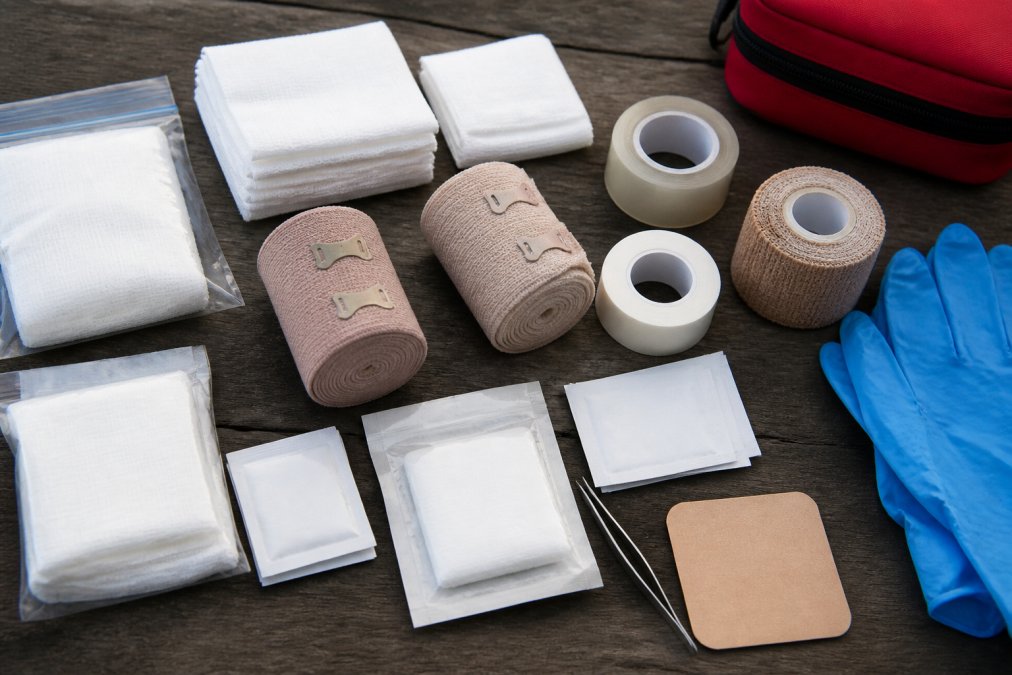
Your wilderness first aid kit needs sterile gauze pads in multiple sizes, 2x2 inch for small wounds, 4x4 inch for larger ones. Include at least a dozen of each. Add antiseptic wipes for initial cleaning, though clean water is equally effective if available. Include an irrigation syringe or squeeze bottle specifically designed for wound irrigation. This tool matters more than most guides emphasize: proper irrigation removes debris and bacteria that bandaging alone will trap inside the wound.
Elastic bandages (ACE-style wraps) serve double duty: securing dressings and providing compression for sprains. Medical tape holds gauze in place. Include both cloth tape and waterproof options. Tweezers are essential for removing splinters and ticks. A small container of antibiotic ointment adds another infection-prevention layer, though it's secondary to proper cleaning.
Moleskin prevents and treats blisters before they become serious problems. Blister prevention is always preferable to treatment in remote settings. Include at least two full sheets. Blister treatment supplies, sterile pads and tape, address blisters that develop despite prevention efforts.
Medications and Topical Treatments
Medications are where customization becomes critical. Over-the-counter pain relievers like ibuprofen address most wilderness pain situations, headaches, muscle soreness, minor fractures. Include at least a week's supply for multi-day trips, plus extra. Acetaminophen offers an alternative for those who can't take ibuprofen.
Antihistamines manage allergic reactions and itching from insect bites. Include both oral tablets and a topical cream. Anti-diarrhea medication prevents dehydration from gastrointestinal issues. Antacids address stomach problems. These seem minor until you're three days into a backcountry trip and your stomach is causing real problems.
Consider your group's specific needs. Anyone with asthma needs their rescue inhaler plus a backup. Allergy sufferers need their medications. Diabetics need glucose tablets or gel. These aren't generic additions, they're non-negotiable based on who's in your group.
Topical treatments include antibiotic ointment, hydrocortisone cream for inflammation, and sunscreen. Lip balm with SPF prevents sun damage. Insect repellent goes in the medication section, though some prefer carrying it separately. Blister fluid (tincture of benzoin) helps tape stick to skin in wet conditions.
Splinting and Fracture Management
Fracture management in wilderness settings focuses on immobilization to prevent further injury during evacuation. You're not setting bones, you're stabilizing them.
Elastic bandages provide basic support for sprains and minor fractures. Triangular bandages (or improvised cloth) create slings for arm injuries. Foam or SAM splints are lightweight and versatile, they conform to different body parts and hold their shape. Include at least one SAM splint in any wilderness kit. Splinting tape secures splints in place.
For serious fractures, your goal is immobilization until evacuation. Padding matters: wrap splints with cloth or foam to prevent pressure points. A wilderness first aid kit that includes proper splinting materials acknowledges that evacuation might be delayed.
Personal Protective Equipment
PPE protects both the injured person and the responder. Nitrile gloves are essential, include multiple pairs. They prevent infection transmission and protect you from blood-borne pathogens. Include a CPR face shield or barrier device if anyone in your group is trained in CPR. Eye protection (sunglasses) prevents snow blindness and UV damage. A dust mask or N95 respirator adds another layer of protection.
Hand sanitizer supplements glove use when gloves aren't available. Alcohol-based sanitizer works in most conditions, though soap and water is superior when available.
Ultralight Backpacking First Aid Kit Approach
Ultralight backpackers face a different calculation: every ounce matters. The approach here isn't to eliminate safety, it's to choose items with multiple functions and eliminate redundancy.
Start by accepting that ultralight kits prioritize common injuries over rare emergencies. You're preparing for blisters, minor cuts, and headaches. Serious injuries in truly remote terrain require evacuation regardless of what's in your kit, so elaborate trauma supplies add weight without proportional benefit. prevent foot irritation.
Combine functions. Duct tape wrapped around a pencil serves as tape, repair material, and fire starter. Plastic bags become waterproof storage and emergency shelters. A single elastic bandage replaces multiple specialized wraps. Pain relief covers headaches, muscle soreness, and inflammation.
Ultralight kits typically weigh 4-8 ounces total. This requires ruthless prioritization. Include blister prevention (moleskin) because blisters cause more trail time loss than any other minor injury. Include pain relief and basic wound care. Skip items you've never needed on previous trips.
The ultralight approach works best for experienced hikers on established trails with reliable weather and reasonable evacuation access. It's not appropriate for expedition travel, winter conditions, or remote terrain where rescue is genuinely difficult.
Organize and Label Your Medical Supplies
Organization prevents panic when you need supplies quickly. A wilderness first aid kit that's poorly organized wastes precious time during an emergency.
Use clear containers or labeled compartments. Medications should be grouped separately from wound care supplies. Keep frequently used items (blister treatment, pain relief, bandages) accessible without opening the entire kit. Reserve deeper compartments for items you hope never to need.
Label everything clearly. Medications need legible labels showing contents, dosage, and expiration date. Use waterproof labels or permanent marker on containers. In an emergency, you don't want to waste time figuring out which bottle contains what.
Create a simple inventory list and keep it in the kit. This list serves two purposes: it reminds you what's there during an emergency, and it guides your restocking process. Include dosages and usage instructions for medications. A small laminated card listing basic treatment steps for common injuries provides quick reference without requiring you to remember protocols.
Consider color-coding: red tape for medications, blue for wound care, green for tools. This simple system helps you locate items quickly under stress.
Choose Waterproof Storage and a Reliable Bag
Your wilderness first aid kit container matters as much as the contents. Moisture is the enemy. Medications degrade when wet. Bandages lose adhesive. Paper labels become illegible.
Waterproof containers come in several options. Dry bags designed for water sports work well but are bulky. Hard plastic cases with rubber seals offer excellent protection and durability. Ziplock bags layered inside a larger waterproof container provide budget-friendly protection. The best approach combines methods: individual ziplock bags for medications and supplies, then everything inside a waterproof outer container.
The First Responder Go-Bag from RestockYourKit.com is specifically designed for this purpose. Made from coated nylon that's puncture and moisture resistant, it features a main compartment for core supplies and two external pockets for frequently accessed items like blister treatment and pain relief. At $41.99, it's a dedicated solution that beats improvising with general-purpose bags. The structured design means your kit stays organized even when packed tightly in a backpack.

Alternatively, use a clear plastic case with a secure latch. Transparency lets you see contents without opening the container. Ensure your chosen container fits inside your backpack without excessive bulk. A kit that doesn't travel with you because it's too large is useless.
Label the exterior clearly. A simple "First Aid Kit" label with your name prevents confusion if your kit is borrowed or shared. Include basic instructions on the outside: "In case of emergency, open and assess injury before administering treatment."
Create a First Aid Kit Refill Guide and Expiration System
This is where most wilderness first aid kits fail. People build them, use items, and never replenish. Six months later, they're carrying a kit with missing bandages and expired medications.
Create a simple spreadsheet or checklist documenting every item, quantity, and expiration date. Update it after every trip. When you use bandages, note it immediately. When you use pain relief, add it to your replenishment list.
Establish a quarterly review schedule. Every three months, open your kit and check expiration dates. Medications expire and lose potency (the FDA). Antiseptic wipes dry out. Elastic bandages lose elasticity. Discard expired items and replace them.
An expiration management system prevents carrying useless supplies. Use a color-coding system: green stickers for items expiring more than a year away, yellow for items expiring within a year, red for items expiring within three months. This visual system tells you at a glance what needs replacing.
Document usage patterns. If you use blister treatment on every trip, stock more. If you've never used a specific medication, consider whether it belongs in your kit. This data-driven approach keeps your kit relevant and prevents carrying dead weight.
Establish a restocking protocol. After every trip, spend 20 minutes reviewing what you used and adding items to a shopping list. Batch your purchases quarterly rather than buying single items sporadically. RestockYourKit.com's modular approach to medical supplies makes this easier, you can order exactly what you need in the quantities you need, without buying pre-assembled kits with items you don't require.
Add a Reference Guide and Consider Psychological First Aid
A wilderness first aid kit manual is your decision-making tool when stress and adrenaline are running high. The Wilderness First Aid: A Pocket Field Guide from RestockYourKit.com ($19.95) is specifically designed for this. It's pocket-sized, laminated for water resistance, and covers essential information for situations where medical help is more than an hour away. It includes quick-reference tables for injury assessment and treatment steps.
Include this guide in your kit. During an emergency, you won't remember protocols perfectly. A reference guide removes guesswork and builds confidence in your response.
For longer expeditions or leadership roles, consider a more comprehensive resource. The Wilderness & Travel Medicine: A Comprehensive Guide, 4th Edition ($19.99) provides deeper knowledge for multi-day trips and complex scenarios. It's ideal for Scout leaders, outdoor program directors, and serious backcountry enthusiasts.

Psychological first aid deserves mention alongside physical treatment. Injuries create fear and stress. Your calm, confident response matters enormously. Reassure the injured person. Explain what you're doing. Keep them informed about evacuation plans. Psychological support prevents panic, which prevents poor decisions.
Include a small card with emergency contact information and basic communication protocols. If evacuation is needed, knowing how to signal for help and what information to communicate prevents dangerous delays.
Building a custom wilderness first aid kit requires honest assessment of your trips, ruthless prioritization, and commitment to maintenance. Start with trip-specific needs, add proven supplies, and establish a system for keeping everything current and accessible. The difference between a kit that saves a trip and one that fails is preparation.
RestockYourKit.com provides the supplies and expertise to build kits that match your actual needs. From specialized wound irrigation supplies to modular medications in smaller quantities, you're not forced into pre-assembled packages that include items you'll never use. Get started with RestockYourKit.com and build a wilderness first aid kit that's genuinely ready for your next adventure.
Frequently Asked Questions
What are the essential items for a wilderness first aid kit?
A wilderness first aid kit must include wound care supplies (sterile gauze, antiseptic wipes, irrigation syringe), medications (ibuprofen, antihistamine, rehydration salts), splinting material, elastic bandages, medical tape, nitrile gloves, tweezers, safety pins, and trauma shears. Include a first aid manual or pocket field guide for remote settings where medical help is more than one hour away. The exact items depend on trip duration, group size, and environmental hazards you'll face.
How do I create a wilderness first aid kit checklist for my specific trip?
Start by assessing trip-specific needs: terrain type, weather conditions, group size, and how far you'll be from professional medical help. For a multi-day backpacking trip, prioritize wound irrigation, blister prevention (moleskin), splinting materials, and compression bandages. For ultralight backpacking, focus on high-utility items that address common injuries. Include medications relevant to your group's health history. Document your checklist and use it to verify contents before every trip.
How often should I check and restock my wilderness first aid kit?
Check your kit at least twice yearly and after every trip. Create an expiration date management system by labeling supplies with purchase dates and checking expiration dates on medications, antiseptic wipes, and sterile gauze before use. Replenish consumed items immediately after a trip using a first aid kit refill guide. Store your kit in a cool, dry place to extend shelf life. Document your restocking dates so you remember when items were last replaced.
Is it cheaper to build your own wilderness first aid kit or buy a pre-made one?
Building your own kit is typically more cost-effective and lets you customize supplies for your specific needs. You can purchase individual items in smaller quantities at near-wholesale prices rather than paying for a pre-assembled kit with items you may not need. However, pre-made kits offer convenience and expert curation. The First Responder Go-Bag ($41.99) provides quality storage, and you fill it with supplies tailored to your trip, giving you the best of both options.