Cart
0
Ever opened a store-bought first aid kit only to find flimsy plastic bandages and a handful of supplies you’ll never actually use? It’s a common frustration that leaves you questioning if you’re truly prepared for an emergency. That feeling of inadequacy is precisely why building a custom first aid kit is the most practical and effective way to protect yourself, your family, or your team. Forget the cheap, one-size-fits-all boxes filled with useless extras. It's time to assemble a kit with quality supplies you can actually trust.
This definitive guide cuts through the noise and eliminates the guesswork. We will walk you through a simple, step-by-step process to assess your unique risks, whether you're preparing for a wilderness trek, outfitting the family car, or ensuring your workplace is compliant. You'll learn exactly how to select high-quality supplies and build a kit that is perfectly tailored to your environment. Get ready to build more than just a first aid kit—get ready to build true peace of mind.
Why Build a Custom First Aid Kit? The Problem with Pre-Made Kits
That plastic box from the big-box store feels like a responsible purchase. You're prepared, right? Unfortunately, in a real emergency, most off-the-shelf first aid kits create an illusion of safety. They are designed to meet a minimum standard for a generic user, not the specific risks you face at home, in your vehicle, or on the trail. This gap between perceived readiness and actual capability is where pre-made kits often fail when you need them most.
The Illusion of Preparedness with Store-Bought Kits
Open a typical pre-made kit and you'll likely find it stuffed with filler—dozens of small, adhesive bandages but little to no equipment for managing serious trauma. The components are chosen for low cost, not high performance. You’ll find flimsy plastic tweezers that can’t grip a splinter and cheap scissors that won’t cut through denim. Worse, these kits can sit on warehouse shelves for months, meaning the supplies inside may be old or nearing their expiration date. They provide a one-size-fits-all solution that is not personalized for specific activities like hiking, boating, or family travel, leaving you dangerously under-equipped.
The Core Benefits of a Custom-Built Kit
The solution is to build a custom first aid kit tailored to your world. This approach puts you in control, transforming your kit from a generic box into a highly effective tool. While the standard contents of a first aid kit provide a solid foundation, customization ensures you are truly prepared. Building your own is also more cost-effective in the long run, as you buy only what you need and invest in quality items that last.
- Higher Quality Supplies: You choose every component, from heavy-duty trauma shears to trusted brands of medications and bandages. No more ineffective tools.
- Cost Efficiency: Purchase only the items you need in the quantities you require. You can buy in bulk or individually, saving money and reducing waste.
- Tailored to Your Needs: Your kit for a boat will be different from your hiking kit. Customize it for your activities, environment, and personal skill level.
- Peace of Mind: You know exactly what’s in your kit, where every item is, and how to use it. This familiarity is invaluable when seconds count.
Step 1: Define Your Mission – How to Assess Your Unique Needs
Before you add a single bandage, you must define your mission. A generic, off-the-shelf kit is a start, but a truly effective custom first aid kit is built for a specific purpose. This assessment is the most critical step, as it determines the container you'll use, the supplies you'll carry, and the overall size and weight of your kit. Ask yourself three core questions: Where will this kit be used? How many people does it need to support? How far are we from professional medical help?
For the Home & Family
Your home kit is your first line of defense for everyday life. Focus on treating the most common household injuries: minor cuts, scrapes, burns, fevers, and allergic reactions. If you have children, include pediatric-specific medications and smaller bandages. Also, consider the unique needs of your family, such as supplies for elder care, diabetic emergencies, or other chronic conditions that require immediate attention. This kit should be easily accessible to all responsible family members.
For a Vehicle, RV, or Boat
A mobile kit needs to handle both common travel ailments and serious trauma. Prioritize supplies for roadside emergencies, such as bleeding control and basic wound care. Beyond that, pack for the environment. Include treatments for motion sickness, severe sunburn, and insect bites. For any kit stored in an RV or boat, a durable, waterproof container is not just a good idea—it's essential to protect your supplies from the elements.
For Wilderness, Hiking, or Camping
When you're in the backcountry, you are your own first responder. Your kit must be lightweight, compact, and packed for self-reliance. Key items include comprehensive blister care, materials for splinting sprains, and robust wound management supplies. While you should always carry the essential first aid supplies, a wilderness kit must also include survival tools like water purification tablets and emergency signaling devices.
For the Workplace or Crew
A workplace first aid station must be built to address specific occupational hazards and regulatory standards. First, determine if your business needs to meet OSHA or ANSI requirements. The quantity of supplies must be scaled to the number of employees on-site. Finally, build a custom first aid kit that addresses your industry’s most probable injuries.
- Construction: Focus on trauma, eye injuries, and splinting.
- Restaurant: Prioritize supplies for burns and severe cuts.
- Office: Stock for common ailments, strains, and basic cuts.
Step 2: Choose Your Container – The Foundation of Your Kit
The supplies inside your kit are critical, but they're useless if they're damaged, disorganized, or you can't find them in an emergency. The right container is the foundation of a reliable custom first aid kit, protecting your investment and ensuring everything is accessible when seconds count. Your first aid kit is a key component of a larger emergency plan; as the experts at Ready.gov explain in their guide to Build A Kit, having supplies organized and protected is a fundamental step toward preparedness.
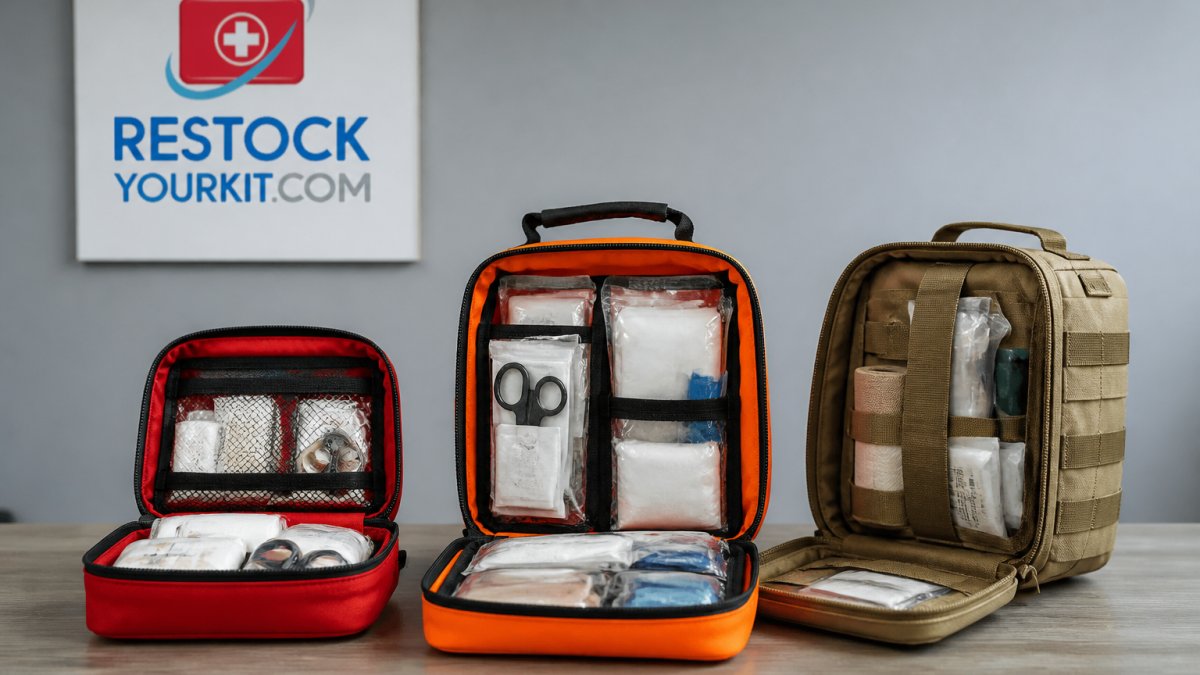
The ideal container depends entirely on its intended environment. Consider where your kit will live—in a stable closet, a bouncing vehicle, or a wet marine environment? The answer will point you toward one of two main options: soft-sided bags or hard cases.
Soft-Sided Bags (Nylon, Canvas)
Soft-sided bags offer unmatched flexibility and are a practical choice for mobility. Their lightweight construction makes them easy to carry or pack into larger bags. While they offer less protection against crushing impacts and may not be fully waterproof, their ability to fit into tight spaces makes them ideal for certain applications.
- Best for: Personal carry, backpacking and hiking packs, and vehicle glove boxes or trunks.
Hard Cases (Plastic, Metal)
When your supplies need uncompromising protection, a hard case is the superior choice. Often made from durable plastic or metal, these containers are typically waterproof, crush-proof, and built to withstand harsh conditions. Their rigidity means they are bulkier and heavier, but for stationary kits or high-risk environments, the durability is non-negotiable.
- Best for: Boats and marine use, construction worksites, home emergency closets, and office compliance kits.
Essential Features in Any Container
Regardless of material, a functional container for your custom first aid kit must have features that prioritize speed and efficiency. In an emergency, you don't have time to search. Look for these key organizational and visibility features:
- Clear Organization: Look for transparent pockets, mesh dividers, or modular inserts that allow you to see and group supplies by function.
- High Visibility: A brightly colored bag (red or orange is standard) is easy to spot in a chaotic situation or low-light conditions.
- Durable Hardware: Zippers, latches, and handles must be robust. A failed zipper can render a kit useless when you need it most.
Ready to get started? We have a wide selection of professional-grade containers ready for your project. Find the perfect empty first aid bag for your build.
Step 3: Select Your Supplies – The Core Components
A container is just a box until you fill it. The supplies you choose are what make your custom first aid kit truly effective. When it comes to life-saving equipment, the principle is simple: buy quality, buy once. Investing in reliable, professional-grade components ensures they will perform when you need them most. We've broken down the essentials into four core categories to simplify the process.
Trauma & Bleeding Control
This category covers immediate, life-threatening injuries. These are the items you hope to never use but absolutely must have. A quality tourniquet, pressure dressings, and chest seals are non-negotiable for serious bleeding control. Add packed or compressed gauze for wound packing and a pair of trauma shears to quickly cut away clothing and access injuries. Don't skimp here.
Wound Care & Bandages
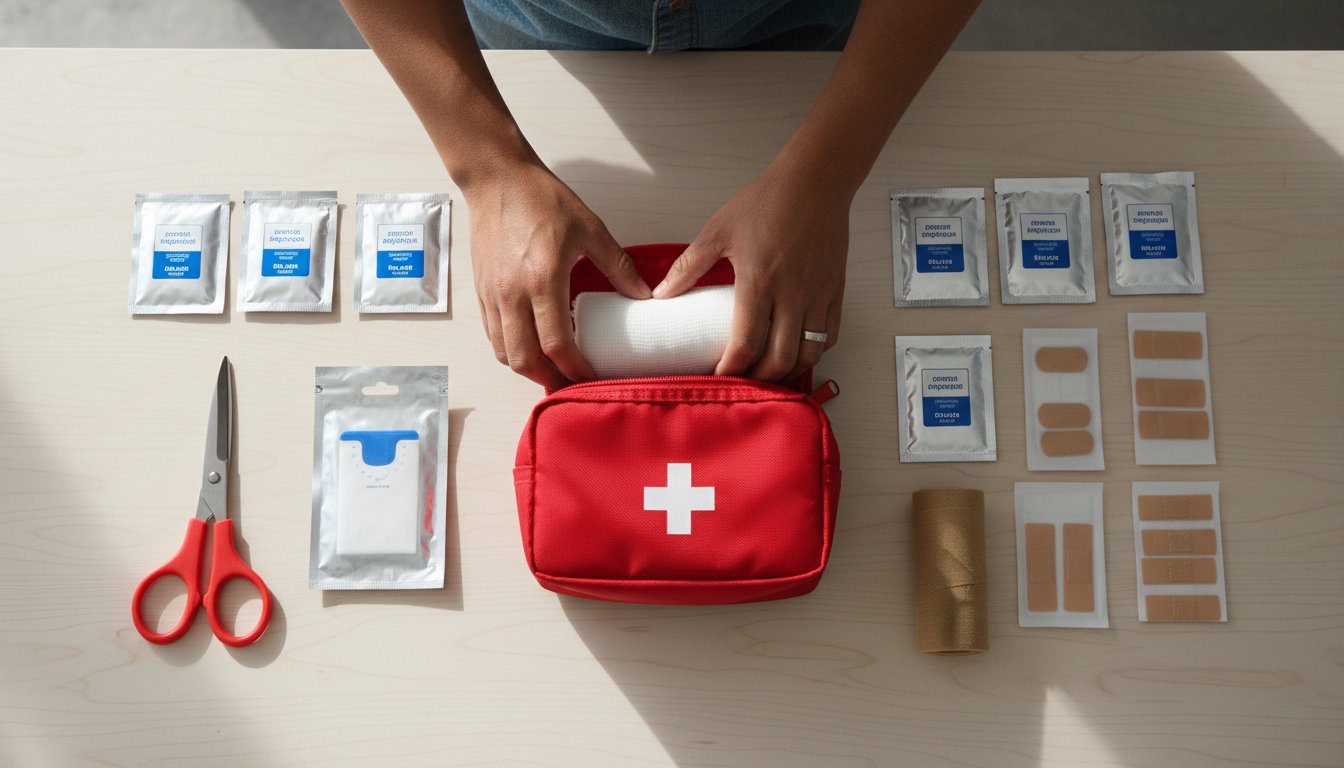
For the more common cuts, scrapes, and blisters, a well-stocked wound care section is essential. This is the part of your kit you'll likely access most often for everyday incidents. Be prepared with:
- A variety of adhesive bandage sizes and shapes.
- Antiseptic wipes and triple antibiotic ointment to clean wounds and prevent infection.
- Steri-strips or liquid bandage for closing small, clean wounds.
- Moleskin for preventing and treating painful blisters on the trail or job site.
Medications (Over-the-Counter)
This section focuses on providing comfort and managing common symptoms that can derail an activity. While you should tailor these to your specific needs, a solid baseline includes pain and fever relief (Ibuprofen, Acetaminophen), allergy medication (Diphenhydramine), and items for stomach issues (antacids, anti-diarrhea). Most importantly, always include a clearly labeled, waterproofed supply of any personal prescription medications.
Tools & Instruments
The right tools make every other supply more effective. Building a quality custom first aid kit means choosing instruments that won't fail. Always include multiple pairs of high-quality, non-latex nitrile gloves. Add precision tweezers for splinters or ticks, an irrigation syringe for flushing wounds, an emergency Mylar blanket for shock, and a CPR face shield for responder safety.
Once you have your checklist, you can begin sourcing your supplies. Find all these components and more, individually packaged for convenience, at RestockYourKit.com. It's What We Do.
Step 4: Assembly, Organization, and Maintenance
Building your custom first aid kit is a critical first step, but the work doesn't end there. A kit that is disorganized, expired, or partially used is a serious liability when an emergency strikes. Proper assembly, organization, and a disciplined maintenance schedule are what transform a simple box of supplies into a reliable, life-saving tool. A well-maintained kit is a dependable kit—period.
Organizing Your Kit for Rapid Deployment
In a crisis, every second is critical. You can't afford to waste time digging for a pressure dressing or a specific medication. A logical system ensures you can find what you need instantly. The goal is efficiency and immediate access.
- Group and Label: Use clear, Ziploc-style bags to group related supplies. Label each bag clearly with a permanent marker (e.g., 'Bleeding Control,' 'Medications,' 'Burn Care'). This compartmentalization prevents chaos.
- Prioritize Access: Place high-priority trauma items—like tourniquets, chest seals, and trauma shears—right on top where they can be grabbed instantly. Items for minor cuts can be stored below.
- Include an Inventory Card: Type up a list of all contents, laminate it, and tape it to the inside of your kit’s lid. This gives you an at-a-glance reference for what you have and what needs to be restocked.
The Restock-and-Review Schedule
The contents of your custom first aid kit are perishable. Adhesives fail, sterile packaging gets compromised, and medications expire. Proactive maintenance is non-negotiable for anyone serious about preparedness. This simple routine ensures your kit is always ready for action.
- Set a Calendar Reminder: At a minimum, schedule a full kit inspection every six months. Put it on your digital calendar with an alert you can't ignore.
- Check All Expiration Dates: Go through every single item with a date, from pain relievers to sterile gauze. Immediately discard and replace anything that has expired or is close to expiring.
- Replace What You Use, Immediately: The most important rule of kit maintenance is to replace any item as soon as you use it. Don't wait for your six-month review. Used a few supplies? Restock your kit with individual items here.
Take Control: Your Readiness is in Your Hands
You've now seen why generic, one-size-fits-all first aid kits often fall short in a real emergency. The key to true preparedness isn't about buying the biggest box, but about following a systematic approach: first defining your unique needs, then carefully selecting the right container and the specific supplies that matter most. This guide has given you the blueprint to move beyond guesswork and build a custom first aid kit that truly serves you, your family, or your crew.
When you're ready to gather your supplies, you don't have to do it alone. At RestockYourKit.com, helping people prepare is what we do. As specialists since 2005, we provide individual, quality supplies at near-wholesale prices, making true readiness accessible for everyone. Trusted by professionals, outdoor crews, and families across the country, we have everything you need to get started.
Start building your custom first aid kit today!
Don't wait for an emergency to wish you had been prepared. Take that first, crucial step toward confidence and peace of mind now.
Frequently Asked Questions
How much does it cost to build a custom first aid kit?
The cost varies based on your specific needs. A basic personal kit can be assembled for $20-$40, while a comprehensive home or vehicle kit might range from $75-$150. The final price of a custom first aid kit depends on the container you choose, the quality of instruments like trauma shears, and the quantity of individual supplies. Building your own allows you to invest in high-quality essentials without paying for items you don't need.
What are the absolute top 5 most essential items for any first aid kit?
While every kit should be tailored to its user, five items are non-negotiable for immediate response. First, personal protective equipment like nitrile gloves. Second, a commercial tourniquet for severe bleeding. Third, a variety of sterile gauze pads and rolls for wound packing and pressure. Fourth, quality trauma shears to access injuries. Finally, an assortment of adhesive bandages for minor cuts and scrapes. These items form a solid foundation for managing most common emergencies.
Should I include a tourniquet in my personal kit even if I'm not trained?
Yes. In a severe bleeding emergency, a commercial tourniquet is the most effective tool to stop life-threatening blood loss, and modern versions are designed for easy application. Having one on hand is far better than being unprepared. We strongly advise watching official instructional videos from the manufacturer to understand the proper application technique before an emergency occurs. A few minutes of preparation can make all the difference when seconds count.
What's the difference between an OSHA Class A and Class B first aid kit?
The main distinction is the intended work environment and the quantity of supplies. Class A kits are for low-risk workplaces, like offices, and contain a basic supply of items for common injuries. Class B kits are designed for higher-risk environments, such as construction sites or warehouses. They require a larger quantity of the basic supplies found in Class A kits, plus additional items like a splint and a tourniquet to address more serious potential injuries.
How often do I need to replace the supplies in my first aid kit?
You should inspect your first aid kit at least every six months and after each use. Check the expiration dates on all sterile items, medications, and ointments, and replace anything that is expired or close to expiring. Also, check that sterile packaging is intact and undamaged. Immediately restock any items you used to ensure your kit is complete and ready for the next emergency. A well-maintained kit is a reliable one.
Can I include prescription medications in my custom kit?
For a personal kit, you should absolutely include your own essential prescription medications, such as an inhaler, EpiPen, or nitroglycerin. However, never place your prescription drugs in a shared or workplace first aid kit, as dispensing them to others is both illegal and dangerous. Always keep your personal medications clearly labeled in their original packaging and be mindful of any temperature storage requirements to ensure they remain effective.