Cart
0
A scraped knee at day camp is one thing. A blistered hiker three miles from the trailhead, a camper with a bee sting history, and a counselor managing meds for 12 kids is something else entirely.
That is why a good first aid kit for summer camp should never be treated like a generic box you grab at the last minute. Camp health problems are predictable in broad strokes - cuts, burns, bug bites, sprains, upset stomachs, dehydration, poison ivy, headaches - but the right kit depends on where the camp is, how far you are from help, who is attending, and who is trained to use what is inside.
If you are packing for Scouts, a church youth trip, a resident camp cabin, or a family sending one child off for a week, the goal is the same: match the kit to the environment, then make sure it is stocked well enough to hold up through the entire session.
What a first aid kit for summer camp needs to do
A camp kit has to handle both frequency and consequence. The frequent issues are the small things that happen every day: hot spots, splinters, minor cuts, insect bites, mild rashes, headaches, and stomach complaints. The consequence side is different. Those are the problems where delay matters, such as significant bleeding, allergic reactions, heat illness, or an injury that changes evacuation plans.
That mix is why small retail kits often disappoint at camp. They may include plenty of bandages but almost no wound cleaning supplies, no real blister care, limited medications, and not enough gloves, gauze, or tape for a group setting. A camp environment can burn through "just enough" supplies in two days.
A better approach is to think in layers. Start with the everyday care items that get used constantly. Add medications and topical treatments in practical quantities. Then include a small but serious set of trauma and PPE supplies appropriate to the training level of the adults or staff on site.
Start with your camp type and group size
Not every first aid kit for summer camp should look the same. A parent packing for one child at an organized resident camp needs a different setup than a leader responsible for 15 youth on a backcountry canoe trip.
For frontcountry camp with established staff, your kit can stay focused on minor care and personal needs, because the camp health lodge or nurse may handle larger issues. In that case, think personal medications, blister care, a few dressings, and comfort items. For troop events, day camps, and off-site excursions, the leader kit needs to be broader and deeper because you may be the first and only response for a while.
Trip length matters too. A weekend campout can get by with less volume. A one- or two-week summer program needs refill depth. Adhesive bandages, moleskin or hydrocolloid blister dressings, OTC meds in unit doses, sting relief, hydrocortisone, and sunscreen support get used steadily. If you are packing for a crew, assume the popular items will run out faster than you think.
The core supplies worth packing every time
The foundation of a camp kit is wound care, blister care, basic medications, and PPE.
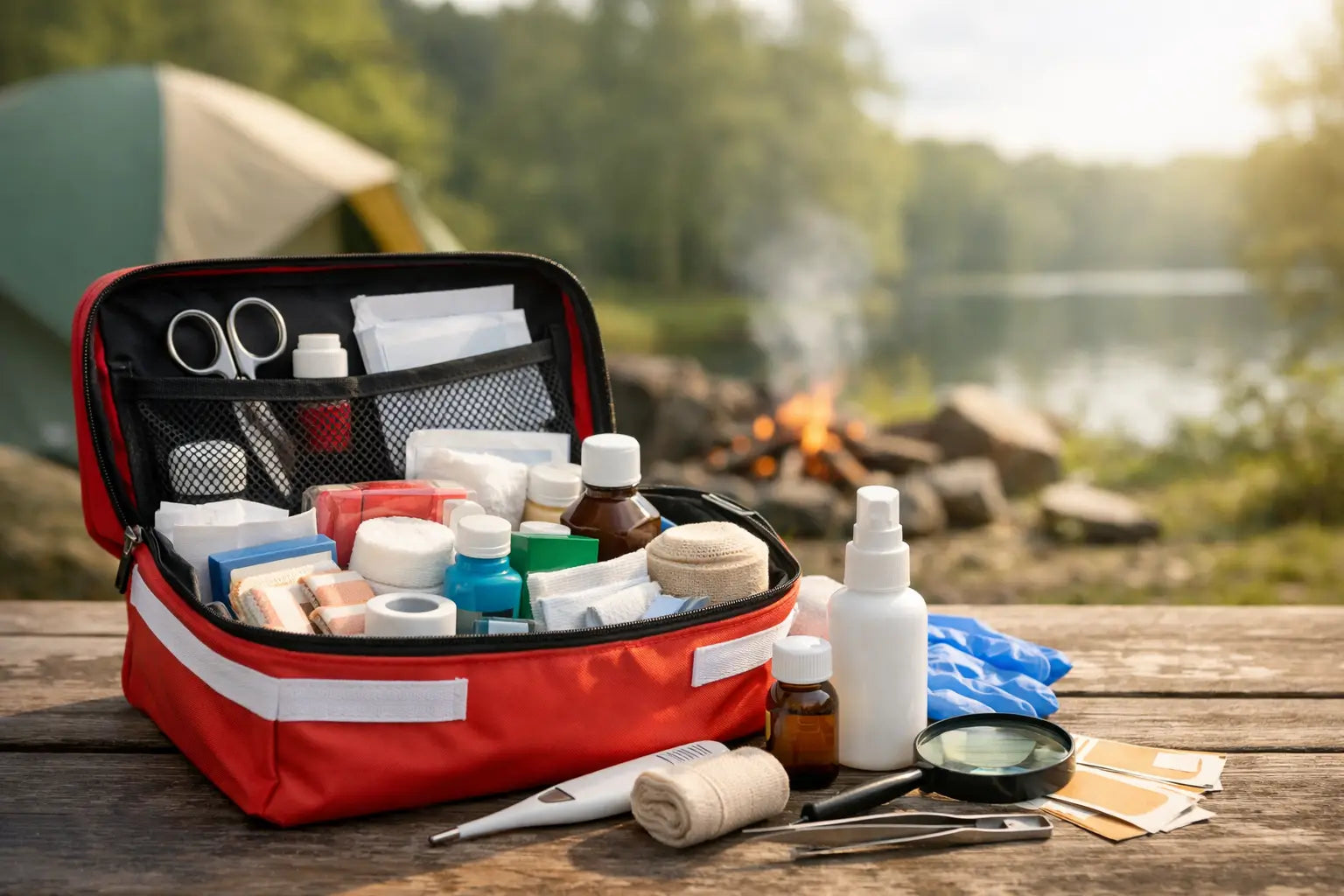
For wound care, carry assorted adhesive bandages, sterile gauze pads, rolled gauze, adhesive tape, wound cleaning supplies, antiseptic wipes, antibiotic ointment if appropriate for your protocol, tweezers, and small bandage scissors. Camp injuries are usually dirty, so cleaning and covering matter more than having fifty novelty bandages.
For blisters, do not settle for thin "just in case" supplies. Camp means hiking, wet shoes, and repeated friction. A few quality blister dressings, moleskin, or a dedicated foot-care module can save a trip. This is one of the most commonly underpacked categories.
For medications, the exact selection depends on age group, camp rules, and medical oversight. Still, many groups benefit from individually packaged pain relievers, antihistamines, anti-itch support, antacids, and anti-diarrheal options where allowed. Single-dose packaging helps with cleanliness, tracking, and avoiding a half-crushed bottle rolling around the bottom of a bag.
PPE is not optional. Gloves should be packed in multiples, not singles. Add a CPR barrier if your program requires it, along with hand sanitizer. If your camp is remote or your staff are trained for more advanced response, the trauma side may also include pressure dressings or other bleeding-control supplies. That choice should match actual training, not wishful thinking.
Where most camp kits fall short
The biggest weakness is quantity. A lot of kits are built to look complete on paper while carrying only one or two units of the supplies that actually get used. That works in a car glovebox. It does not work in a cabin, troop trailer, or camp craft area.
The second weak spot is environment-specific risk. Summer camp often means ticks, mosquitoes, poison ivy, sun exposure, heat stress, and waterfront activity. If your kit does not reflect those realities, it is not really built for camp.
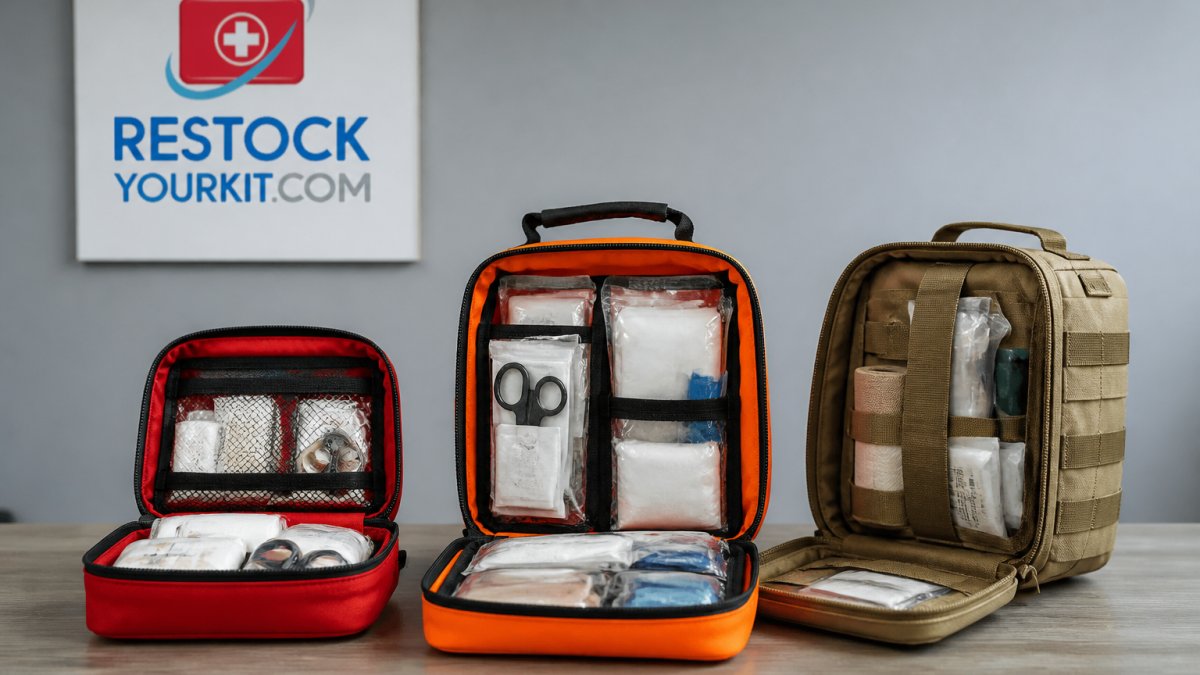
The third issue is organization. When supplies are loose, mixed, and unlabeled, people waste time during stressful moments. Modular packing works well here. Keep wound care, meds, blister care, and trauma/PPE grouped separately so a leader or counselor can get to the right category fast.
Adjust for heat, bugs, and water
Summer changes first aid planning. Heat illness is common, and it builds gradually. Your kit should support early response with oral rehydration support if appropriate, instant cold packs, and the basic tools to monitor and respond while you move someone to shade and cooling.
Bug pressure is another predictable problem. In some regions, insect bites are mostly an annoyance. In others, tick exposure and stinging insects deserve more attention. That may mean carrying tick removal tools, antihistamines, sting relief, and better skin protection planning. For campers with known severe allergies, camp protocols and prescribed emergency medications matter more than anything in a communal first aid pouch.
Water changes the equation too. If your camp includes boating, canoeing, or regular waterfront time, pack with moisture in mind. Waterproof bags, extra dry dressings, and duplicate critical items can make sense. Wet tape and soggy paper boxes are not a plan.
Medication policies can change your packing list
This is where it depends. Some camps control all medications centrally. Others allow parents to send a small personal supply. Some youth programs have strict documentation requirements for both prescription and OTC meds.
So before you build a camp kit, confirm what the camp allows, who can dispense medications, and what must stay with the camper versus with staff. A well-stocked medication module is useful only if it aligns with policy and the qualifications of the people using it.
For group leaders, this is another reason individually packaged refills are practical. They are easier to inventory, cleaner in the field, and simpler to rotate out between trips. If you are rebuilding kits season after season, refillable systems usually make more sense than replacing whole kits because one category ran low.
Build for access, not just inventory
A good first aid kit for summer camp should be easy to use under pressure. Label sections clearly. Put the most-used items on top or in outer pockets. Keep a quick inventory card inside so anyone covering the group knows what is there. If your organization has multiple leaders, standardize layouts across kits so nobody has to hunt for gloves or gauze.
It also helps to separate the personal and the group gear. A camper may carry a small personal pouch with blister care, a few bandages, and any approved individual needs. The main leader or cabin kit should hold the bulk supplies. This cuts down on waste and keeps the serious items where responsible adults can reach them.
If you are building or restocking for multiple camp sessions, a practical supplier matters. Sites like RestockYourKit.com are useful because you can refill specific categories in field-friendly quantities instead of buying another throwaway retail kit just to replace six items.
Restock before camp, not after the first problem
The right time to rebuild your camp kit is before the bags are packed and the permission slips are signed. Check expiration dates on medications, replace opened ointments and damaged packaging, count gloves, and inspect tape, dressings, and elastic wraps. Heat, time, and rough storage wear down supplies faster than most people realize.
If you ran a camp program last year, look at what disappeared first. That tells you more than any generic checklist. Maybe your crew used almost no gauze but went through every blister dressing. Maybe insect bite care got hammered while cold packs sat untouched. Let actual use shape the next version of your kit.
Preparedness at camp is not about carrying the biggest bag. It is about carrying the right supplies, in the right quantities, organized for the people and place you are responsible for. Pack like you expect to use it, because at summer camp, you probably will.