Cart
0
Most expedition injuries are boring right up until they are not.
A blister from day two becomes a limp on day four. A little diarrhea becomes dehydration when the water source is sketchy and the weather turns. A small knife cut becomes a problem when you are two days from the trailhead and everyone is filthy. Expedition first aid is less about carrying a museum of gear and more about carrying the right handful of items - in the right quantities - packaged so they still work after heat, water, grit, and time.
This is a practical, field-minded expedition first aid kit checklist. It is built around what actually happens on remote trips: small problems that need fast fixes, plus the rare-but-high-consequence events you have to be ready to manage until evacuation.
Before the checklist: define your expedition
A kit that is “complete” for a weekend hike can be dangerously thin for a 10-day crew trip. Before you pack anything, lock in four variables: duration, remoteness, group size, and conditions.
Duration drives consumables. The longer you are out, the more you burn through moleskin, blister dressings, tape, gloves, and OTC meds.
Remoteness changes your job. Close to help, your kit supports comfort and short-term care. Far from help, your kit supports prolonged care: cleaning wounds repeatedly, stabilizing sprains, preventing heat loss, and monitoring patients.
Group size is the quiet multiplier. Many “adventure kits” are sized for one person. Expeditions are often 6-12 people, sometimes more. Your quantities should scale accordingly.
Conditions - wet, cold, desert heat, boat travel, altitude - change what fails and what matters. Tape adhesives struggle in wet grit. Hypothermia risk goes up on a 50 degree rainy day. Sun and heat increase dehydration, headache, and blister rates.
Expedition first aid kit checklist (core modules)
Think in modules you can pack, label, and restock. That keeps the kit navigable when someone is hurt and keeps your resupply sane when you get home.
Wound care and bleeding control
Your daily reality is small wounds: cuts, abrasions, split knuckles, torn cuticles, blisters that break. Your high-risk category is uncontrolled bleeding. Pack to clean, cover, and protect - and pack a small bleeding-control capability that you can deploy quickly.
You want a range of adhesive bandages for knuckles and fingertips, plus larger sterile pads for abrasions and weeping wounds. Gauze is not optional on expedition trips - it is the workhorse for cleaning, padding, and dressing changes. Add a couple of non-adherent dressings for wounds that should not stick to the pad.
For bleeding control, carry at least one pressure dressing option and the supplies to apply direct pressure effectively. Tourniquets and hemostatic gauze can be appropriate for high-risk environments, but they are not magic. They are training-dependent items. If you carry them, plan to train and to protect them from damage and contamination.
Skin closure is another “it depends.” Butterfly closures and steri-strip style closures can help keep small lacerations approximated, but only after you can clean the wound well and only when infection risk is manageable. In dirty environments, you may choose to dress and monitor rather than close.
Blister and foot care
If you lead groups, blisters are the fastest way to turn a strong itinerary into a bailout. Foot care needs more volume than most people pack.
Bring a mix of blister-specific dressings for hot spots and open blisters, plus padding and tape for offloading pressure. Leukotape-style rigid tape is popular for a reason, but any tape needs to match your conditions and your skin. In constant wet, you may burn through tape faster and need more dressing changes.
Add small scissors or trauma shears, and a way to clean skin before taping if people are sweaty or sunscreened.
Sprains, strains, and immobilization
The most common “big” injuries on expedition are ankle sprains and knee issues. You cannot splint every possible fracture scenario with retail packaging. You can, however, pack smart support tools that let you stabilize and improvise.
Elastic wraps cover a lot of ground for compression and support. A triangular bandage or two is useful for slings and securing splints. Consider a SAM-style splint for crews traveling far from help, especially on rocky terrain or during shoulder-season conditions when evacuation may be delayed.
Pain control is part of this module too, but it belongs with medications so you can control access and track use.
Medications (small packets, clear rules)
OTC meds help you keep small problems from becoming trip-ending problems. The key is organization, dosing clarity, and quantity.
Most expedition leaders carry single-dose packets or small unit packaging so meds do not turn into a mystery pill bag. You also want a simple protocol: who can dispense, how you document doses, and how you screen allergies and contraindications.
Common categories include pain/fever reducers, anti-inflammatory options, antihistamines for allergies, anti-diarrheals, oral rehydration salts or electrolyte mixes, antacids, and a gentle laxative if your group history suggests constipation is common. If you travel at altitude, consider your team’s acclimatization plan and any prescription needs handled through medical screening rather than improvised packing.
Topical medications matter too: antibiotic ointment, hydrocortisone for itchy rashes, and an antifungal if you expect constant wet feet.
This is one place where modular restocking pays off. When you can replace meds by category in the exact quantities you used, your kit stays ready instead of half-expired.
Infection prevention and PPE
Expeditions are dirty. Your hands are dirty. Water is limited. Infection control has to be realistic.
Pack nitrile gloves in enough quantity that you will actually use them for bloody care and for any wound cleaning that involves someone else’s body fluids. Add hand sanitizer, and consider small soap sheets or a tiny soap bottle if water access allows. Alcohol prep pads are useful for skin cleaning before taping and for quick tool wipe-downs, but they do not replace proper wound irrigation.
Eye protection is easy to skip until you get a vomiting patient in a cramped shelter. A couple pairs of simple protective glasses weigh little and can make care safer.
Wound irrigation and cleaning tools
If you only upgrade one thing for expedition care, upgrade your ability to clean wounds.
Bring a syringe suitable for irrigation or another way to deliver pressurized clean water. Add tweezers for splinters and ticks, plus a small laceration-friendly cleaning setup like gauze, non-adherent pads, and enough clean water capacity in your system to spare some for medical use.
Antiseptics are a trade-off. Some solutions can irritate tissue or are overused as a substitute for irrigation. The priority is mechanical cleaning with safe water, then appropriate dressing and monitoring.
Burns, blisters, and “hot metal” moments
Camp stoves, pots, and fire pans create predictable injuries. Pack a couple of burn dressings or gel packets, plus non-adherent dressings and wrap to secure them. The goal is cooling, covering, and preventing the patient from losing function due to pain and exposed tissue.
Environmental: heat, cold, sun, and bugs
Environmental problems can escalate quickly, and the kit should support early intervention.
For heat illness, prioritize hydration support and active cooling methods your team can actually execute (shade, water, airflow). Electrolytes help, but they are not a substitute for recognizing heat exhaustion early.
For cold, carry an emergency blanket or bivy-style wrap for hypothermia prevention and for shock management. Add hand warmers if you are in shoulder season.
For sun and bugs, include sunscreen and an after-bite or itch relief option if you are in heavy mosquito or tick country. Tick removal tools and a plan for tick checks belong here. If you are traveling where anaphylaxis risk is real, that is a medical screening and prescription conversation, not a last-minute add-on.
Tools that make care possible
A kit without basic tools becomes a bag of frustrating intentions.
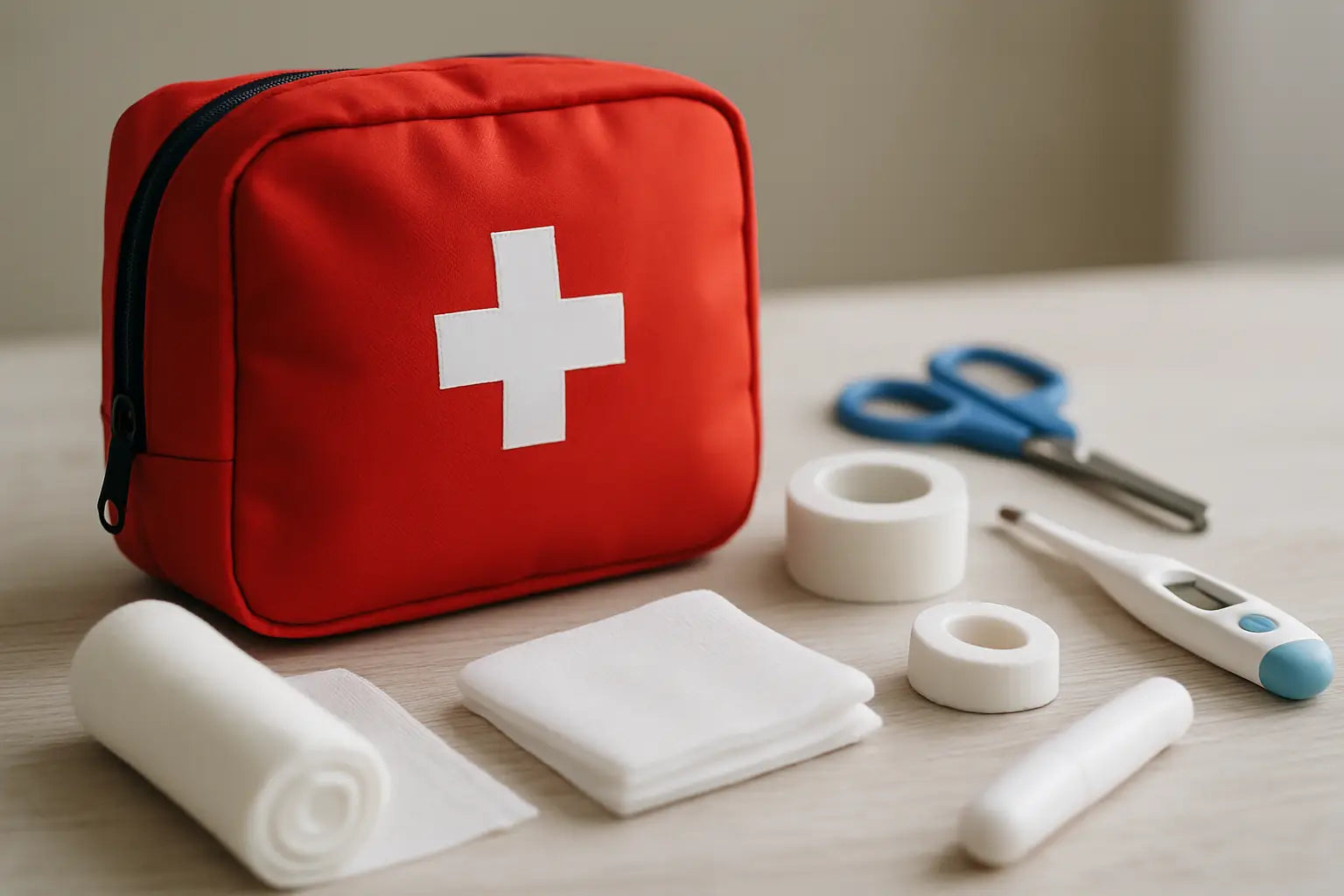
At minimum, carry trauma shears, fine tweezers, a thermometer, and a headlamp dedicated to the kit so you can assess and treat at night without scavenging gear. Add a CPR face shield or mask if your risk profile calls for it. A notepad and pen for documenting times, doses, and patient status is more valuable than people expect.
Communication, documentation, and “what’s our plan?”
An expedition kit is part supplies and part decision-making.
Include a simple patient assessment card or checklist, allergy and medication tracking sheets, and emergency contact info. If you have a satellite messenger or radio, store the instructions and the emergency protocol with the first aid kit, not in someone’s memory.
Quantity planning: how much is “enough?”
It depends, but you can avoid the two classic failures: a kit sized for one person, and a kit packed with single items that cannot be replenished.
As a rule, scale consumables by person-days. If you have 10 people for 7 days, plan for a lot of tape, blister dressings, gloves, gauze, and common OTC meds. For higher-risk trips, plan redundancy for critical items like irrigation capability, pressure dressings, and hypothermia prevention.
A practical approach is to pack one “rapid access” mini kit for day use and one “base kit” with deeper supplies. The mini kit handles hot spots, minor cuts, and headaches without unpacking everything. The base kit stays organized for real treatment sessions.
Packing and organization that survives real trips
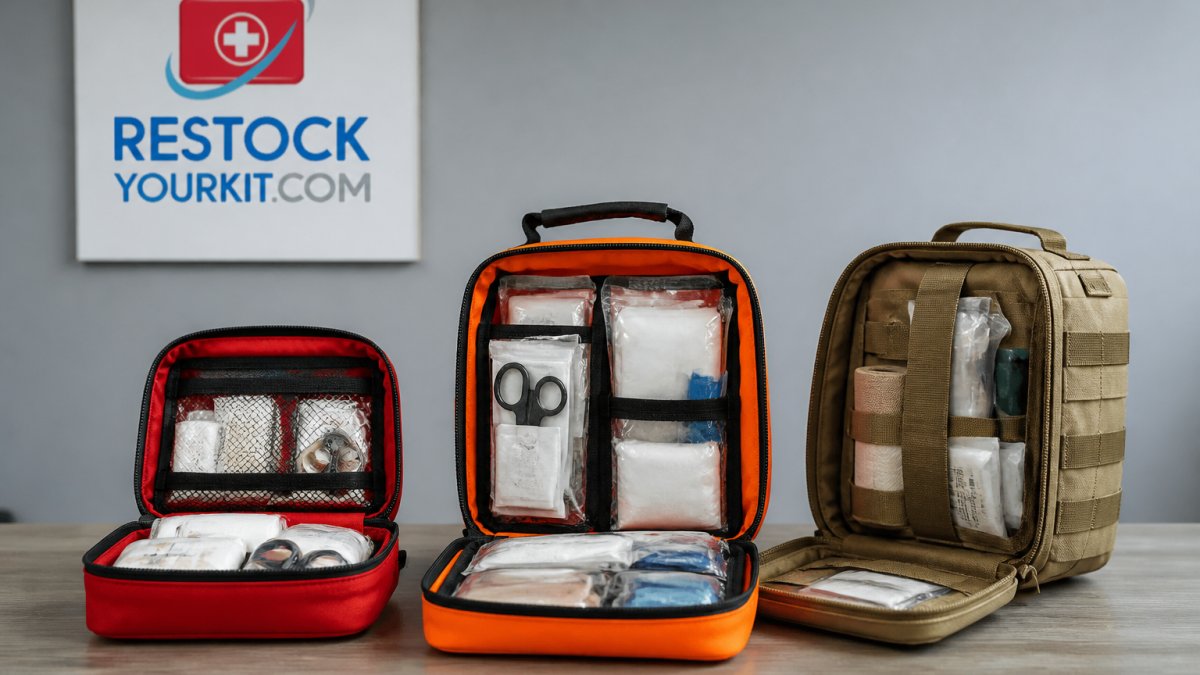
Your kit should open flat, show categories clearly, and keep items dry. Use labeled pouches by module. Put your most-used items (blister care, tape, gloves, bandages) where you can grab them first.
Protect meds from heat and moisture. Rotate anything with short expiration dates. Keep sharp tools in a sleeve so they do not shred packaging.
If you want restocking to be painless, track what you used by module and restock immediately when you get home. That is the difference between “we have a kit” and “we have a ready kit.” If you build around modular refills and individually packaged supplies, replenishing becomes a 10-minute job instead of a full shopping trip. If you need a field-driven way to restock by category, you can do that through RestockYourKit.com without buying oversized retail packs you will not use.
The training trade-off (and the honesty clause)
More gear is not the same as more capability.
Carrying a tourniquet, hemostatic gauze, splints, or advanced airway items without training can create hesitation or misuse when stress is high. If your expedition profile truly warrants higher-acuity tools, pair them with real instruction and practice, and keep your kit aligned with your scope and your evacuation plan.
On the other hand, training without supplies is also a trap. The checklist above aims for the middle ground: supplies that support good fundamentals - cleaning, covering, stabilizing, warming, hydrating, monitoring - and that scale up cleanly when your trip demands more.
A good expedition first aid kit is not the one that looks impressive on the living room floor. It is the one that still works on day eight, in the rain, when you are tired, and somebody needs you to be calm and prepared.