Cart
0
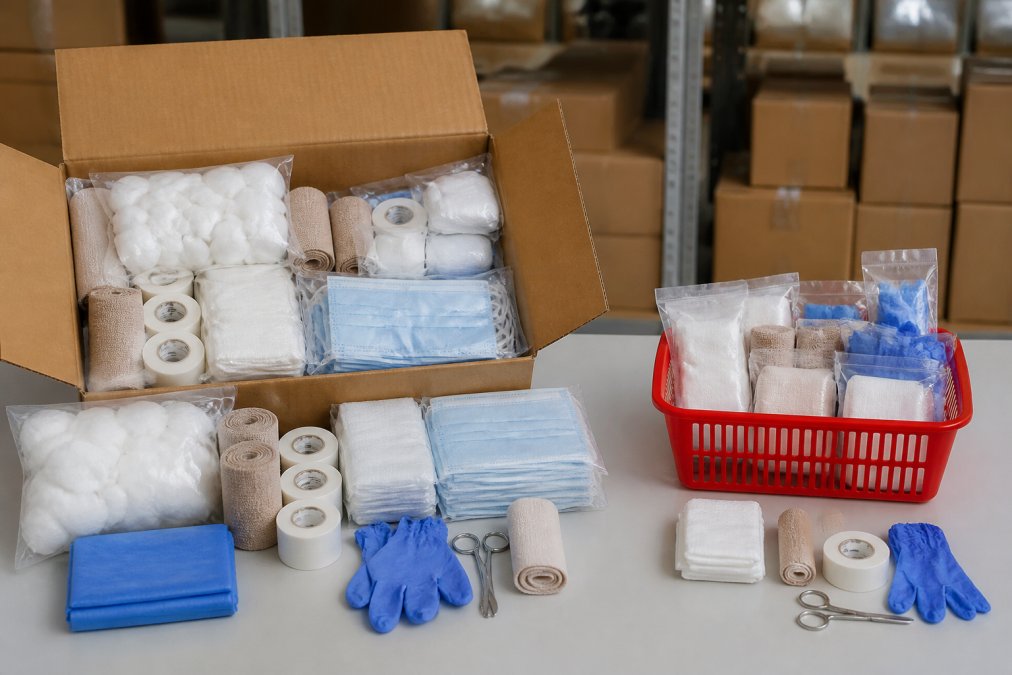
Table of Contents
- Bulk Medical Supplies vs Retail Store Prices: The Cost Comparison Table
- Why Unit Price Is Only Half the Story
- Hidden Costs of Retail: Markup Margins and Retail Infrastructure
- Total Cost of Ownership: A Smarter Way to Compare Bulk vs Retail
- Professional Grade First Aid Supplies: What You Get at Near-Wholesale Prices
- Medical Supply Inventory Management: Software Integration and Stock Reliability
- Custom First Aid Kit Refill Costs: Real Numbers from RestockYourKit.com
- Regulatory Compliance and Vendor Qualification for Bulk Buying
- Frequently Asked Questions
Last Updated: September 23, 2026
Bulk Medical Supplies vs Retail Store Prices: The Cost Comparison Table
Buying bulk medical supplies is a procurement strategy, not just a shopping habit. It means purchasing items like gauze, bandages, and over-the-counter medications in larger quantities or refill kits rather than single retail packs. At RestockYourKit.com, we see the same pattern constantly: a household or Scout troop buys one box of bandages at a time, pays retail markup every trip, and still runs out during cold and flu season.
The numbers look simple until you factor in how often you restock. A retail pack of assorted bandages might cover a week of minor cuts. A refill kit covers months. Below, we break down where bulk pricing actually wins, where it doesn't, and how to calculate your own break-even point.

| Buying Method | Upfront Cost | Cost Per Use | Restock Frequency | Best For |
|---|---|---|---|---|
| Retail single packs | Low | High | Weekly to monthly | One-time, tiny needs |
| Bulk refill kits | Higher | Lower | Every few months | Families, crews, troops |
| Individual bulk units | Varies | Lowest | As needed | Specific item gaps |
Why Unit Price Is Only Half the Story
Unit price tells you what one item costs. It doesn't tell you what that item costs you over a year.
A retail store sells convenience. You walk in, grab a four-pack of gauze, and leave. That convenience carries a markup margin baked into every unit. When you buy in bulk volume, you're trading a slightly higher upfront cost for a much lower cost per use.
Here's what most guides miss: the real comparison isn't "pack price vs pack price." It's "cost per bandage applied" or "cost per wound dressed." That reframing changes which option wins.
Hidden Costs of Retail: Markup Margins and Retail Infrastructure
Retail pricing covers more than the product. Every retail pack you buy has already passed through several hands, and each hand added a margin before the item reached the shelf.
Here is the typical chain for a consumer medical item:
- Manufacturer sells to a distributor at a wholesale price.
- Distributor adds a margin to cover warehousing, freight, and account management.
- Retailer adds its own markup to cover the store, staff, and shrink.
- Payment processor takes a per-transaction cut on every card swipe.
By the time a four-pack of gauze reaches you, the retail price can be several times the manufacturer's unit cost. That gap is not a scam, it is the cost of putting a small quantity of a single item within walking distance of your house.
The cost layers retail buyers pay for
- Shelf space and store overhead. Rent, lighting, HVAC, and staff wages are amortized across every SKU on the floor. A slow-moving item still occupies real estate.
- Shrink and spoilage. Retailers build shrinkage (theft, damage, expired stock pulled from shelves) into their pricing. You pay for the units someone else walked out with.
- Small-pack packaging. Blister cards, hang tags, and printed backing cost more per unit than a bulk poly bag or a refill box.
- Card processing and returns. Every retail transaction carries an interchange fee, and liberal return policies are priced in.
- Distribution frequency. A store that restocks weekly pays more in freight per unit than a bulk buyer who orders quarterly.
What this means for your break-even
A common pattern is that a household or small crew buys retail "just this once" and repeats it every month without adding up the total.
- Your consumption rate, how many units you actually use per month.
- The retail-to-bulk price ratio for each specific item.
- Your storage capacity, bulk savings only pay off if you can store the supply without it expiring first.
Watch Out
Buying retail for recurring needs feels cheap because each purchase is small. Add up twelve months of single-pack purchases and the total often exceeds a year's worth of bulk refills for the same items, but only for items you will actually use before they expire.
Where retail still wins
Total Cost of Ownership: A Smarter Way to Compare Bulk vs Retail
Total Cost of Ownership (TCO) is the full cost of an item across its useful life, including purchase price, restocking labor, shipping, and waste from expired or unused items.
To calculate TCO, add:
- Purchase price per unit
- Shipping or delivery fees
- Time spent reordering
- Cost of items that expire before use
Professional Grade First Aid Supplies: What You Get at Near-Wholesale Prices
Professional grade first aid supplies are items built to the same standards used in clinics and workplaces, sold in quantities that make sense for regular restocking. The label matters because it signals material quality, sterility, and packaging you can trust in an emergency. This same commitment to durability and performance extends to apparel choices, where understanding professional scrubs pricing helps clarify why high-quality textiles remain essential for clinical environments.
Medical Supply Inventory Management: Software Integration and Stock Reliability
Why bulk buying changes your inventory math
The reorder point formula
Most practitioners set reorder points using a simple formula:
Reorder point = (average daily usage × lead time in days) + safety stock
Spreadsheet vs. software: choosing your tier
- Households and small crews. A spreadsheet with columns for item, quantity on hand, expiration date, and reorder threshold handles the job. Set conditional formatting to flag anything within 60 days of expiration.
- Growing teams. A shared inventory tool with barcode scanning reduces manual entry errors and gives you usage history to refine reorder points.
- Larger operations. Inventory management software connected to purchasing can trigger automatic reorders when stock drops below threshold, and can generate usage reports that feed your bulk-order forecasting.
Stock reliability and the traceability gap
- Lot numbers for every bulk order, recorded at receipt.
- Supplier contact information so you can act on a recall notice.
- Receipt dates so you can match a recall window to your on-hand stock.
Pro Tip
Set your reorder threshold at roughly 20% of your normal stock level, and log lot numbers at receipt. That buffer covers lead times without tying up money in items you won't touch for a year, and the lot log covers you if a recall lands.
The bottom line
Custom First Aid Kit Refill Costs: Real Numbers from RestockYourKit.com
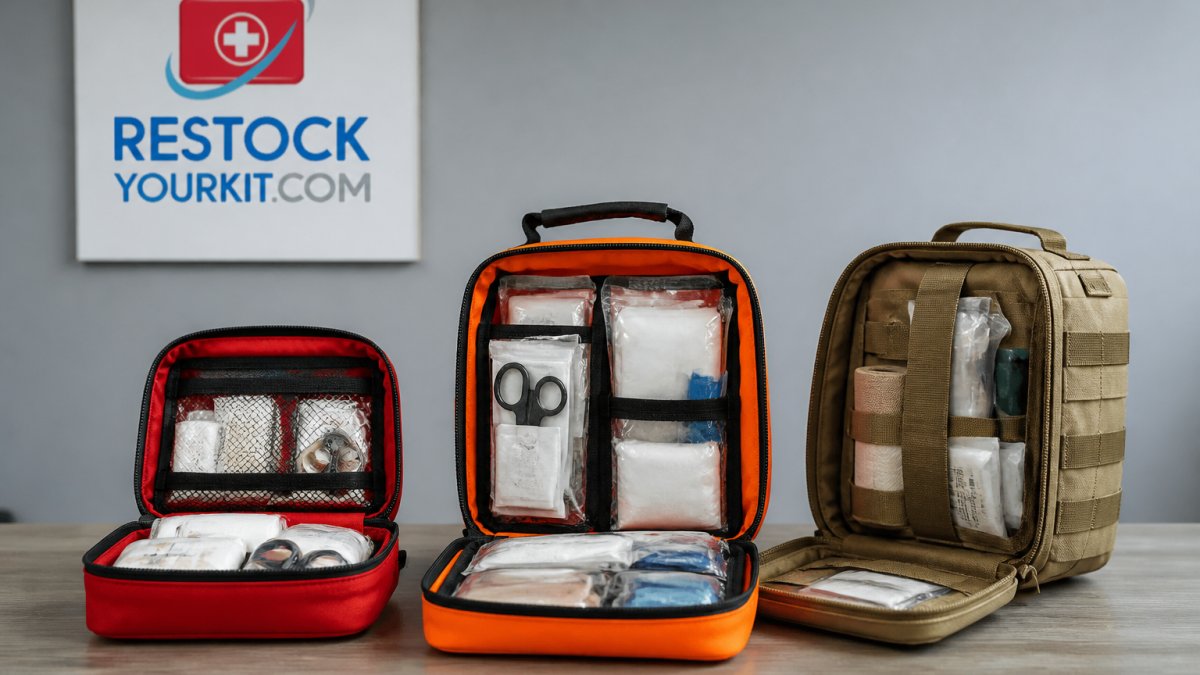
Custom first aid kit refill costs depend on which modules you restock and how often. Refill kits beat buying individual retail items because they bundle the exact items that run out together.
Here's what refills cost at RestockYourKit.com:
- Band-Aid Assortment Refill Kit: $4.49 for 24 assorted adhesive bandages
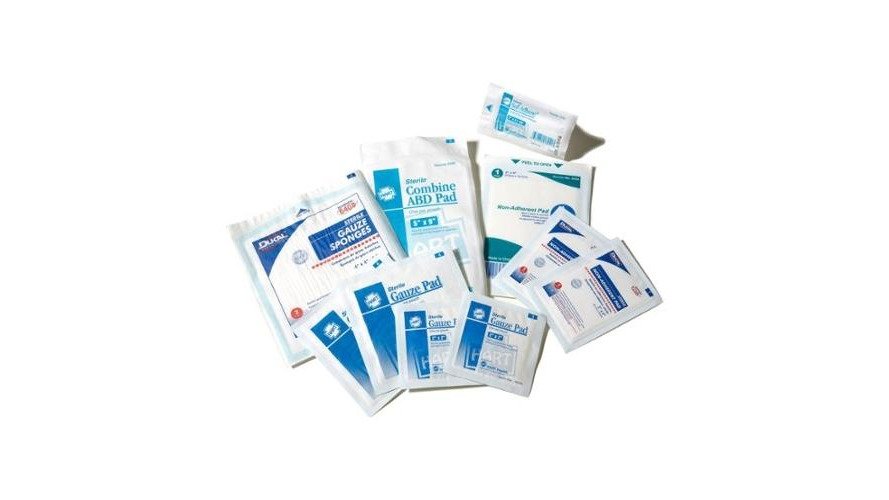
- Gauze Refill Kit: $6.49 for sterile pads, rolls, and trauma gauze
- OTC Pain Refill Kit: $4.99 for ibuprofen, aspirin, and acetaminophen packets
Regulatory Compliance and Vendor Qualification for Bulk Buying
Vendor qualification means confirming a supplier meets the standards that apply to medical supplies before you buy in volume. It's the step bulk buyers skip, and it's the one that carries real risk.


When you buy a single retail pack, the store has already done this screening. When you buy bulk, you own that responsibility. Check for:
- Sterility claims and packaging integrity
- Expiration date transparency
- Material safety documentation
- Consistent supply and lead times
Frequently Asked Questions
Is it cheaper to buy medical supplies in bulk for personal or small-crew use?
It depends on your consumption rate. For a household or small crew, bulk medical supplies often cost less per unit, but you need to factor in expiration dates and storage space. RestockYourKit.com offers near-wholesale prices on individual items and refill kits, so you can buy exactly what you need without committing to case quantities. Compare the unit price of a bulk pack against the cost per item from a retail store, then add any shipping or membership fees. For items you use regularly, like gauze pads or adhesive bandages, bulk usually wins.
What are the hidden costs of buying medical supplies at retail stores?
Retail stores build in costs for storefront rent, staff, and distribution, which can inflate unit prices by 50% or more compared to wholesale. You also pay for convenience: smaller package sizes mean a higher cost per item, and you might buy more than you need because only multipacks are available. Finally, retail stock can be limited, forcing you to visit multiple stores or choose substitute products that may not meet your needs.
How do I determine if a medical supply vendor is offering true wholesale pricing?
Request their pricing sheet and compare unit costs for the same medical-grade items you would find at retail. A vendor like RestockYourKit.com that sells individual quantities at near-wholesale prices lets you test the waters without a large capital expenditure.
Are professional-grade medical supplies available to the general public?
Yes, many suppliers now sell professional-grade first aid supplies directly to consumers. RestockYourKit.com offers items like sterile gauze, trauma pads, and OTC medications in small quantities without requiring a medical license. You can build a custom first aid kit that meets professional standards for your home, car, or outdoor group. Look for products labeled sterile and medical-grade, and check expiration dates. Buying from a reputable source ensures you get quality supplies, not surplus or expired stock.
What is the typical price difference between retail and wholesale medical supplies?
Wholesale prices are generally 30% to 50% lower than retail for the same medical-grade items. The gap widens for higher-volume purchases. However, wholesale often requires buying in bulk, which may not suit small users. RestockYourKit.com bridges this gap by offering near-wholesale prices on individual items, so you can save without overbuying. Always compare unit prices, not just total cost.
Restocking a first aid kit shouldn't mean paying retail markup every month or guessing which items you're low on. RestockYourKit.com solves both problems with custom-built kits, individual supplies at near-wholesale prices, and specialized modules for families, crews, and backyard flocks. Free shipping over $79 and flexible refills keep your kit current without the retail overhead. Get started with RestockYourKit.com and keep every kit ready before you need it.