Cart
0
You can be in great shape, have perfect weather, and still lose a day to one thing: a quarter-sized hot spot that turns into a raw, limping mess by mile six. Blisters are not a character-building rite of passage. They are friction injuries - predictable, preventable, and worth planning for.
A blister kit for hiking should do two jobs: stop hot spots before skin breaks, and treat blisters in a way that lets you keep moving without making the injury worse. The “right” kit depends on your terrain, footwear, and whether you lead trips for other people, but the logic stays the same.
What a blister kit for hiking is really for
Blisters happen when repeated rubbing creates shear forces under the skin. Moisture, heat, and grit accelerate the damage. Once the top layer separates, fluid fills the space and the roof becomes your natural bandage.So your kit isn’t just “bandages.” It’s a small system for controlling friction, moisture, and contamination - and for making decisions when the skin is already damaged.
If you only pack one thing and hope for the best, it usually turns into improvising with a random adhesive bandage that rolls up in your sock. That is how small problems turn into early turnarounds.
The core components (and why each earns its spot)
Friction management: the first line
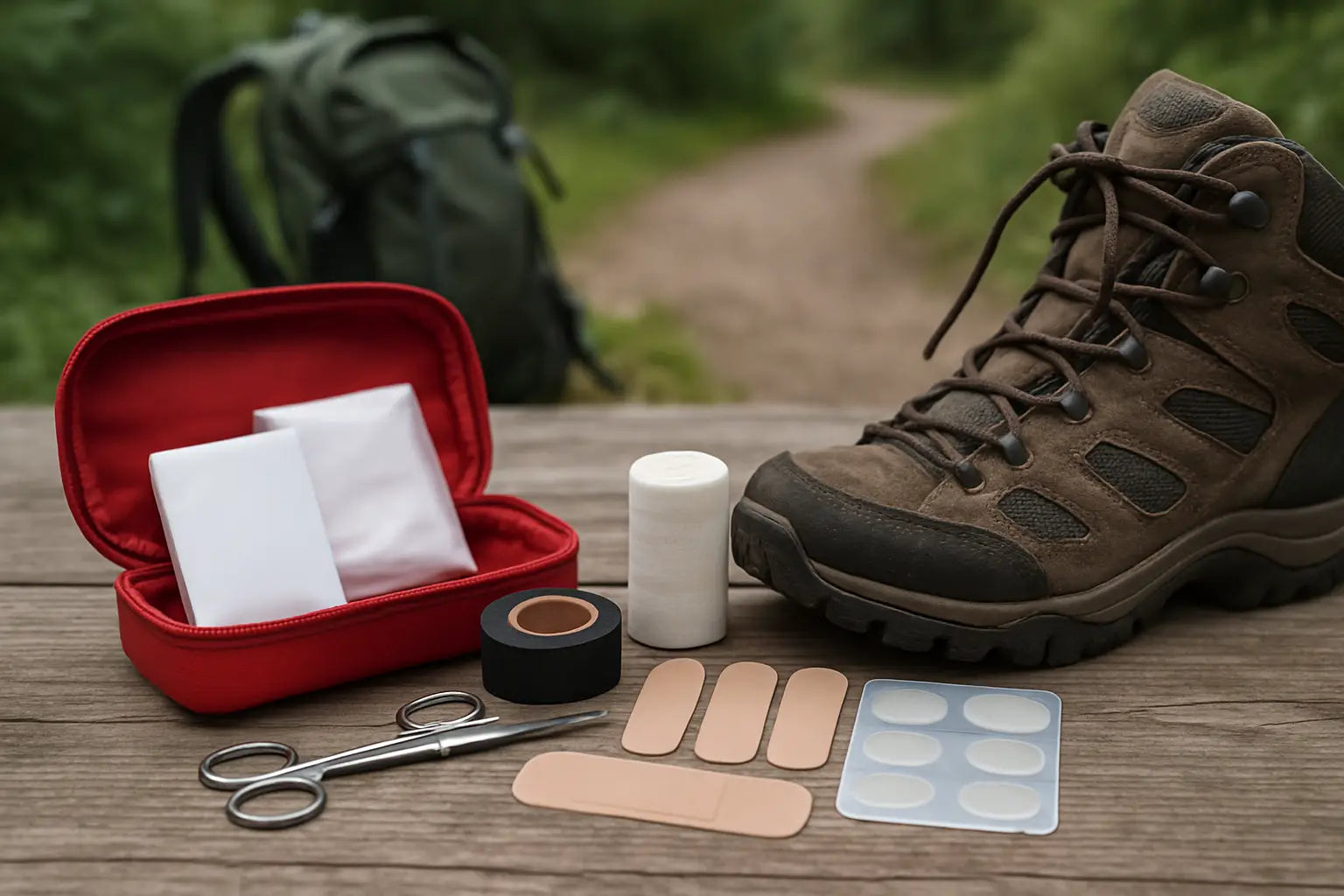
If you’re building a kit for real hiking mileage, include a purpose-built friction barrier. Moleskin is the classic option because it’s thick and cushions well, but it only works if it sticks. On damp feet or in very hot conditions, it can peel.Leukotape-style rigid athletic tape is a different approach: it doesn’t cushion much, but it creates a durable low-friction surface that holds through sweat and stream crossings. The trade-off is comfort and removal - it can be aggressive on skin, especially if you rip it off quickly.
Many experienced hikers carry both: tape to lock down a hot spot early, and moleskin or a padding layer to offload pressure where boots or trail runners rub.
Cushioning and offloading pressure
A blister isn’t just friction. Pressure matters. If your boot has a known rub point, you want donut-style offloading: padding around the injured spot so the pressure lands on the surrounding area.This is where pre-cut moleskin shapes can save time, but you can also cut your own. What matters is thickness and clean edges so your sock doesn’t catch and roll it.
Clean skin: wipes that actually help
Adhesives fail on dirty, sweaty skin. A small alcohol prep pad (or similar skin cleaning wipe) helps remove oils and improves tape adhesion. The trade-off is sting - alcohol on broken skin is not fun.If the blister roof is intact and you’re just taping a hot spot, alcohol wipes are a good tool. If the skin is open, consider gentle cleansing instead and focus on protecting the wound.
Sterile coverage for open blisters
When skin is broken, treat it like a wound. The goals: keep it clean, reduce friction, and avoid maceration from trapped moisture.Hydrocolloid blister dressings are popular because they cushion and stay put, and they can reduce pain dramatically. They work best on clean, relatively dry surrounding skin, and they’re not ideal if you suspect infection or if the area is actively draining a lot. They can also be hard to remove without damaging fragile skin.
A non-adherent pad with a securing wrap or tape is a more flexible option for messy conditions, larger areas, or when you need to inspect frequently.
A needle? Sometimes - but only with the rest of the system
People love to debate draining blisters. In wilderness medicine, it depends.If the blister is intact, small, and not limiting movement, protecting it is often better than popping it. If it’s large, painfully tense, and likely to burst in your sock anyway, controlled drainage can reduce pain and prevent a chaotic tear.
If you carry a sterile needle or lancet, you also need the rest of the plan: skin cleaning, a way to keep the roof in place, a dressing that manages friction, and the discipline to monitor for infection. A needle by itself is not a solution - it’s just a tool.
Scissors and a marker: tiny tools, big payoff
You can tear tape, but precise cuts hold better and feel better. Small trauma shears or compact scissors make it easier to cut clean donut pads, trim corners, and avoid bulky overlaps.A small marker can help on group trips: mark the edge of a hot spot dressing so you can quickly see if it’s shifting, or note the time you placed a hydrocolloid so you don’t leave it on indefinitely.
How to use your blister kit in the field
Step 1: Treat hot spots immediately
The best blister treatment is the one you apply before the blister forms. If someone says, “It’s starting to rub,” stop. Don’t bargain with it for another mile.Dry the area as much as you can. Clean the skin if you have a wipe. Then apply tape directly to the hot spot, or use a thin friction layer plus a padding ring if pressure is part of the problem.
The goal is to change the friction environment right now, not after it “gets bad.”
Step 2: If there’s an intact blister, protect the roof
The roof is valuable. It’s your built-in sterile-ish cover.If it’s small, pad around it and tape over the area so the sock slides on tape, not skin. If it’s larger and tender, a hydrocolloid dressing can be a good choice if the surrounding skin is clean and dry enough for adhesion.
Step 3: If it’s open, switch to wound care mode
Rinse or gently clean if you can. Avoid aggressive scrubbing. Cover with a non-adherent dressing, then secure so it won’t migrate.Change the dressing when it’s saturated, dirty, or slipping. In wet conditions, you may need to change more often than you’d like. That’s normal - moisture management is part of blister care.
Step 4: Know when to stop “toughing it out”
If you see increasing redness spreading beyond the blister, warmth, swelling, pus, red streaking, or escalating pain, treat it seriously. On a multi-day trip, that may mean changing plans early rather than hoping it settles.Also watch for blisters that keep recurring in the same spot. That’s usually footwear fit, lacing technique, sock choice, or gait - not “bad luck.”
What to pack for different hiking realities
A day hiker’s blister kit can be small: tape, a couple blister dressings, a few wipes, and something to cut with. An expedition or crew leader kit should assume multiple feet, multiple sizes, and multiple days.If you support a group, pack for volume and for indecision. Someone will swear they “don’t need anything” until the blister is already torn. Build in extra tape and extra dressings, plus enough cleaning supplies that you’re not choosing between good adhesion and saving wipes.
The foot factors that make your kit succeed or fail
A blister kit for hiking isn’t magic if you ignore the inputs.Footwear fit is the biggest lever. Heel lift causes classic heel blisters; toe bang on descents causes nail trauma and toe blisters. Lacing can fix more than people think, especially heel lock techniques for descents.
Socks matter, but not in a simple “thicker is better” way. Some hikers do best with a single well-fitting merino or synthetic sock. Others benefit from a liner sock to reduce friction. The trade-off is heat and bulk, which can worsen fit.
Moisture control is the silent killer. If your feet are constantly wet, tape adhesion drops and skin macerates faster. On long days, a mid-day sock change can be as valuable as anything in your kit.
And don’t forget grit. Fine sand inside a shoe can create blisters faster than a bad boot. If someone is getting hot spots unexpectedly, stop and check for debris.
A practical packing approach (so it stays restockable)
The best blister kit is the one you can rebuild quickly after a trip. That means modular quantities and items that store well.Individually packaged wipes, single-use dressings, and tape you can cut to length are easier to maintain than a half-used jumble. If you’re the person who runs point for a Scout crew or a group of friends, this matters - you don’t want to “discover” you’re out of blister care when you’re already on the trail.
If you want a clean way to restock specific blister and wound care components without buying a whole new consumer kit, that’s the logic behind modular refill systems like the ones at RestockYourKit.com.
Common mistakes we see on real trips
One is waiting too long. Hot spots are a stop-and-fix problem, not a “later” problem.Another is using the wrong adhesive on wet skin. If your tape keeps rolling, it’s not because you need to press harder. It’s because the surface is damp, dirty, or oily - or the tape choice doesn’t match the conditions.
The third is popping everything. Drainage can be useful, but uncontrolled tearing is worse than an intact blister you protected early.
FAQs that come up every season
Should I use moleskin or tape?
It depends on the environment and your skin. Tape often holds better in wet, high-sweat conditions. Moleskin cushions better when pressure is the main issue. Many hikers carry both and choose based on what’s happening.Are hydrocolloid blister dressings worth it?
For many people, yes, especially for intact or minimally broken blisters where you want cushioning and low friction. They are less ideal when you need frequent inspection, the area is very wet, or you suspect infection.How big should a group blister kit be?
Big enough that you can treat multiple feet for multiple days without rationing. If you’re leading a crew, assume at least a few hikers will need repeat attention and pack extra tape, wipes, and dressings.A blister kit is a small thing that protects a big investment: your trip plan, your safety margin, and your ability to keep moving when the weather changes or the exit gets longer than expected. Pack it like you mean to use it, and you’ll be glad you did the first time someone says, “Hey, my heel feels weird,” and you can fix it before it becomes the story of the day.