Cart
0
Table of Contents
- What to Look for in Waterproof Containers for Medical Supplies
- Waterproof Ratings and Seal Types Explained
- Medical-Specific Selection Criteria
- Comparison Table: Top Waterproof Medical Storage Options
- aLOKSAK Waterproof Bags: Best for Medication and Small Supplies
- Hard Clamshell First Aid Kit Case: Best Waterproof First Aid Kit Case for Durability
- First Responder Go-Bag: Best Dry Bag for First Aid Kit Portability
- How to Keep Medications Dry Outdoors: Practical Tips
- Temperature Control and Medication Stability
- Contamination Control and Cleanability
- Frequently Asked Questions
Last Updated: October 17, 2026
What to Look for in Waterproof Containers for Medical Supplies
The best waterproof containers for medical supplies share four traits: a rated seal, a crush-resistant shell, compartments that separate items, and a size that matches your use case.
"Waterproof" and "water-resistant" are not interchangeable. A waterproof container keeps contents dry under full submersion; a water-resistant one sheds rain and splashes but fails in standing water.
Below, we break down how ratings work, then compare five containers we stock against the jobs they do.
Waterproof Ratings and Seal Types Explained
What you need is a way to translate a rating into the exposure your kit will face, rain on a pack, a dunk in a creek, or a boat that swamps.
The IP rating system, decoded
The Ingress Protection (IP) code is the closest thing to a universal waterproof standard, written as two digits, for example, IPX7 or IP67. The first digit covers dust and solids (0-6); the second covers water (0-9K). For medical storage, the second digit is what matters:
- IPX4, splash resistance from any direction. Survives rain and a spilled water bottle, not a dunk.
- IPX5, water jets at low pressure. Handles a hose or heavy spray, still not submersion.
- IPX6, powerful water jets. Heavy rain and washdown, still not sustained immersion.
A container marked only "water-resistant" without a digit is making an IPX4-at-best promise. One marked IPX7 or IPX8 has been tested to survive going under. That splash-versus-submersion distinction is the whole ballgame.
The two seal types that dominate medical storage
Zip-closure membranes rely on a press-to-seal channel. The aLOKSAK bags we carry use a leak-proof airtight seal certified to 200 ft depths, an IPX8-class claim, with FDA-approved material rated to -40 F.

Gasketed hard cases use a molded shell plus a lid gasket. The Hard Clamshell First Aid Kit Case is molded from Ethylene-Vinyl Acetate, which resists cracking in temperature swings that split ordinary plastic.
Match the rating to the exposure, not the label
| Real exposure | Minimum protection | Why |
|---|---|---|
| Rain on a pack, splashes at a sink | IPX4 / water-resistant fabric | Sheds droplets, fails in standing water |
| Creek crossing, dropped in a puddle | IPX7 zip-closure bag | Survives short immersion |
| Boat swamped, kit goes overboard | IPX8 bag (depth-rated) | Survives sustained submersion |
| Crush risk in a pack or truck bed | Hard-shell case, gasketed | Rigid shell plus seal |
| Long-term storage of loose doses | Sealed bag inside a hard case | Two barriers, two failure modes covered |
Watch Out
A zip-top sandwich bag is not a waterproof container. It keeps crumbs out, not water. If a bag's packaging does not state an IP rating, a depth rating, or a submersion claim, assume it fails after a minute underwater.
What the rating does not tell you
An IP rating says nothing about crush resistance, cold performance, or seal longevity. A bag can be IPX8 and still puncture on a sharp rock; a case can be IPX7 and still crack at -10 F if the plastic is wrong. Read the rating as one axis of protection, then check material, wall thickness, and gasket type separately. That is why we recommend layering a sealed bag inside a hard case for anything that absolutely cannot get wet.
Medical-Specific Selection Criteria
Generic storage advice misses what makes medical supplies different: dose integrity, cross-contamination, and access speed.
Cleanability. Supplies touch wounds, so surfaces must wipe clean. Smooth molded shells and non-porous films clean far easier than woven fabric with stitched seams.
Compartment logic. Loose bandages and tablets become a mess under pressure. The Hard Clamshell case includes two internal pockets plus a flip-out clear pocket sized for shears, forceps, and gloves.

Access under stress. In an emergency you are cold, rushed, and probably wearing gloves. A container you must unpack to reach gauze costs time you may not have.
| Criterion | Why It Matters | What to Look For |
|---|---|---|
| Seal rating | Determines real water protection | Stated depth or submersion claim |
| Shell material | Survives crushing and cold | Molded EVA, coated nylon, thick film |
| Compartments | Keeps doses and dressings separate | Pockets, dividers, removable containers |
| Cleanability | Limits contamination | Smooth, non-porous surfaces |
| Access speed | Saves time in emergencies | Wide opening, clear panels |
Comparison Table: Top Waterproof Medical Storage Options
The table below compares the five containers we stock on protection level, crush resistance, cleanability, and the medical job each does best. Prices are per unit as stocked.
| Container | Price | Material | Crush Resistance | Cleanability | Best Medical Use |
|---|---|---|---|---|---|
| aLOKSAK Waterproof Bags (Multi-Pack) | $37.99 | 6 mil film, FDA-approved | None, film conforms, does not resist | Wipe exterior; replace if contaminated | Medications, blister packs, small dressings |
| Hard Clamshell First Aid Kit Case | $24.99 | Molded EVA | High, rigid shell | Wipe with disinfectant, smooth interior | Fragile tools, shears, forceps, gloves |
| First Responder Go-Bag | $41.99 | Coated nylon | Low, fabric shell | Spot-clean; not for bodily fluids | Carrying volume; reachable outside pockets |
| Soft Clamshell First Aid Kit Case | $14.99 | Nylon | Low | Spot-clean | Personal and car kits, light duty |
| Individual Re-Closable Plastic Bags | $0.15 | Polyethylene | None | Replace after use | Organizing loose items inside a larger case |
How we tested, and what it means for your kit
We do not run lab certification, but we run the same practical checks a user would: a 10-minute bucket dunk for anything claiming submersion protection, a waist-height drop onto concrete for hard cases, and a disinfectant wipe-down for wound-care supplies.

- Leak resistance. The aLOKSAK bags passed the dunk with dry contents; the coated nylon and soft clamshell bags wicked moisture at the seams and are splash-only. The hard clamshell shed a splash but is not rated for immersion.
- Drop durability. The molded EVA clamshell survived the waist-height drop without cracking; EVA's flexibility is why it does not split in cold the way rigid plastic does.
- Access speed. The Go-Bag's two outside pockets let you reach shears, gloves, and a tourniquet without opening the main compartment.
Pick by job, not by price
- Pills and small dressings that must stay dry: aLOKSAK multi-pack, the only option here with a submersion rating.
- Fragile tools and crush risk: Hard Clamshell, rigid shell, gasketed lid, wipe-clean interior.
- Crews and Scout units carrying volume: First Responder Go-Bag, outside pockets for quick access, layered with a sealed bag inside.
Pro Tip
No single container wins on every axis. The strongest kit is a system: a sealed aLOKSAK for medications, a hard clamshell for fragile supplies, and a coated nylon go-bag to carry the load. Buy the layer that matches your worst realistic exposure, then add the next.
aLOKSAK Waterproof Bags: Best for Medication and Small Supplies
For pills, tablets, and small dressings, the aLOKSAK multi-pack is the strongest water protection we stock.
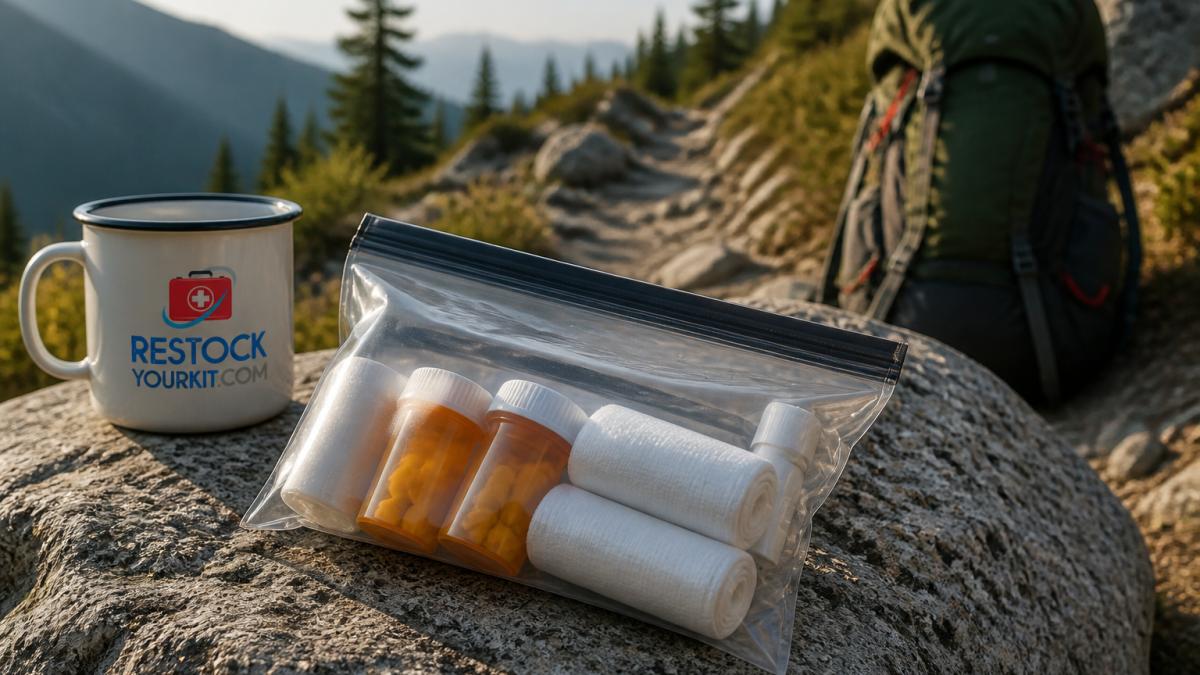
The multi-pack contains four sizes: 4.5" x 7", 6.75" x 6", 9" x 6", and 12" x 12", enough to cover a pill bottle, a blister pack, or a folded dressing without wasting space.
What sets these apart from a hard case is flexibility: the bag conforms around oddly shaped objects, stays quiet in a pack, and will not shatter.
Pro Tip
Slide a folded paper label inside each bag listing contents and the date you packed it. You will read it through the clear film without opening the seal, which keeps the closure clean and the contents dry.
Hard Clamshell First Aid Kit Case: Best Waterproof First Aid Kit Case for Durability
When the kit rides in a truck bed or the bottom of a pack, the Hard Clamshell is our pick. It is a waterproof first aid kit case in the practical sense: sealed against rain and splashes, and tough enough to take a hit.
aLOKSAK Waterproof Bags (Multi-Pack) →
Inside, two pockets and a flip-out clear compartment hold shears, forceps, and gloves where you can see them. The case ships empty, so you fill it to match your crew.
Where it falls short: it is not rated for submersion, and the clamshell opening needs bench space to lay flat. For a canoe trip where the kit may go overboard, use this case inside a sealed dry bag.
First Responder Go-Bag: Best Dry Bag for First Aid Kit Portability
Crews and Scout units need a dry bag for first aid kit transport that carries volume without falling apart.
The outside pockets are the reason we recommend it. Trauma shears, gloves, and a tourniquet stay reachable without unpacking the main compartment.
It ships empty. Fill the main compartment with a sealed aLOKSAK of medications and a hard case of fragile items, and the bag becomes a layered system: fabric shell, sealed inner bag, rigid core.
How to Keep Medications Dry Outdoors: Practical Tips
Keeping medications dry outdoors comes down to layering and discipline, not one miracle container. Water finds every unsealed seam, so build two barriers and check them before every trip.
- Bag the doses first. Put tablets and capsules in a sealed zip-closure bag, pressing the channel closed along its full length.
- Group by use. One bag for daily medications, one for as-needed items, one for topical supplies.
- Seal the outer layer. Place bagged medications inside a hard case or coated nylon bag.
- Store high and centered. Water pools at the bottom of a pack. Keep medications mid-load, away from the lid.
- Repack after every trip. A bag left sealed with damp air inside grows condensation. Open, dry, and reseal at home.
For loose items, Individual Re-Closable Plastic Bags come in eight sizes from 1x1 to 12x18 inches in 2 to 4 mil polyethylene, meeting FDA and USDA requirements. At $0.15 each, they are the cheapest way to add a moisture barrier inside any kit.
Key Takeaway
Two barriers beat one expensive container. A sealed bag inside a hard case costs less than a single premium box and protects against both water and crushing.
Temperature Control and Medication Stability
Heat degrades medication faster than moisture, and a sealed container can trap both.
Film and molded EVA both tolerate cold well. The aLOKSAK film is rated to -40 F, and the EVA clamshell resists cracking in temperature swings. Neither insulates, though.
What most guides miss: a waterproof seal cuts airflow both ways. Moisture that gets in before sealing stays in.
Contamination Control and Cleanability
Cross-contamination is the quiet failure mode in medical storage, and it is entirely preventable. Blood, wound drainage, and spilled liquids turn a shared container into a hazard.
Wipe hard shells with a disinfectant after any use involving bodily fluids, and let them dry fully before resealing.
For poultry keepers, this matters twice over.
Water, heat, and contamination all attack the same kit, and no single container solves all three.
Frequently Asked Questions
What is the best waterproof container for medical supplies?
The best waterproof containers for medical supplies depend on your use case. For medications and small items, aLOKSAK Waterproof Bags offer a certified 200-foot depth rating and FDA-approved material. For a waterproof first aid kit case that holds its shape, the Hard Clamshell First Aid Kit Case provides durable EVA construction. For portability, the First Responder Go-Bag offers moisture-resistant coated nylon with multiple compartments.
Are waterproof cases or dry bags better for a first aid kit?
Waterproof cases offer rigid protection and stack easily, making them ideal for car or home storage. Dry bags like the First Responder Go-Bag are lighter and more flexible for hiking and wilderness trips. For medications specifically, aLOKSAK bags provide a certified waterproof seal in a compact form. Many people use both: a hard case for organization and a dry bag for transport.
How do I keep medications dry in a first aid kit?
Start with a waterproof container like aLOKSAK bags for individual pill bottles, then place them inside a larger waterproof first aid kit case. Use individual re-closable plastic bags to separate items and add a desiccant packet to absorb residual moisture. Check seals regularly and replace any container that shows wear. For outdoor trips, store the kit in a dry bag and keep it off the ground.
What size waterproof container do I need for a wilderness first aid kit?
A wilderness first aid kit typically needs a container around 10 x 8 x 3 inches, similar to the Hard Clamshell First Aid Kit Case. For larger group kits, the First Responder Go-Bag at 11 x 8 x 5.5 inches offers more capacity. If you carry individual medications, aLOKSAK multi-pack bags range from 4.5 x 7 inches to 12 x 12 inches, letting you size each pouch to its contents.
Can I store medications in a hot car or outdoor kit?
Most medications degrade in heat, so avoid storing them in a hot car for long periods. If you must keep a kit in a vehicle, choose a container with insulation or store it in the coolest part of the car. The aLOKSAK bags are cold-rated to -40 F but do not provide thermal protection. Rotate medications frequently and check for signs of degradation like discoloration or crumbling.