

Best Medical Supplies for Small Flocks: 2026 Guide
Table of Contents
- Why Small Flocks Need Dedicated Medical Supplies
- Chicken First Aid Kit Checklist: What to Stock
- Essential Chicken Medications for Your First Aid Kit
- How to Treat Backyard Chicken Wounds Step by Step
- Pre-Built Kits vs. DIY: Which Is Right for Your Flock
- Expiration and Shelf-Life Management for Flock Supplies
- Top Medical Supplies for Small Flocks from RestockYourKit.com
- Conclusion
Last Updated: August 23, 2026
Most backyard chicken keepers don't think about medical supplies until something goes wrong. Prepared owners handled emergencies calmly, while others scrambled to find supplies. This guide covers the best medical supplies for small flocks, from wound care basics to essential medications, so you're never caught without what you need.
Below, you'll find a complete chicken first aid kit checklist, a step-by-step wound treatment guide, a triage decision tree for common injuries, and honest advice on whether to buy a pre-built kit or assemble your own.

Why Small Flocks Need Dedicated Medical Supplies
Backyard poultry health differs from general pet care. Chickens hide illness until seriously compromised, making early detection and fast response critical. A hen that seemed fine at morning feeding can be in respiratory distress by afternoon.
Small flock owners face a specific challenge: most farm supply stores stock products for large-scale operations, and veterinary practices with poultry experience are rare in many areas. According to USDA National Agricultural Statistics Service poultry data, backyard flocks have grown significantly over the past decade, yet access to specialized poultry veterinary care has not kept pace. A dedicated medical supplies kit built for conditions small flocks actually face, pecking wounds, bumblefoot, respiratory issues, egg binding, and coccidiosis, is essential.
Chicken First Aid Kit Checklist: What to Stock
A well-stocked chicken first aid kit covers wound care, sanitation, isolation support, and basic medications in one organized container you can grab quickly.

| Category | Item | Purpose |
|---|---|---|
| Wound Care | Gauze pads (2x2 and 4x4 sterile) | Cleaning and covering wounds |
| Wound Care | Self-adhesive VetWrap bandage | Securing dressings without adhesive |
| Wound Care | Antiseptic spray (hypochlorous acid) | Wound cleaning without egg withdrawal |
| Wound Care | Styptic powder | Stopping bleeding quickly |
| Sanitation | Disposable nitrile gloves | Biosecurity during exams |
| Sanitation | Povidone-iodine wipes | Surface and wound disinfection |
| Medications | Triple antibiotic ointment packets | Topical infection prevention |
| Medications | Electrolyte solution packets | Hydration support for sick birds |
| Tools | Stainless steel trauma shears | Cutting feathers or dressings |
| Tools | Splinter forceps/tweezers | Removing foreign objects |
| Tools | Irrigation syringe | Flushing wounds |
| Reference | Care card set | Quick symptom tracking and dosing |
Wound Care and Bandaging Essentials
Pecking injuries, predator attacks, and bumblefoot are the most common reasons a chicken needs treatment. Core supplies: sterile gauze pads in 2x2 and 4x4 inch sizes, self-adhesive VetWrap in 1-inch width, hypoallergenic silk medical tape, antiseptic spray based on hypochlorous acid (no egg withdrawal period), styptic powder for bleeding control, and a poultry saddle for hens with back feather loss.
Sanitation, Hygiene, and Exam Tools
Good biosecurity during physical examination protects both you and your flock. Disposable nitrile gloves are non-negotiable, use a fresh pair for every bird. Essential exam tools include stainless steel trauma shears, splinter forceps, magnifying glass, and irrigation syringes in 1ml and 10ml sizes. Keep a small notepad or reference cards to log observations, timing, and treatments applied, critical information if you need to consult a poultry veterinarian remotely.
Isolation and Recovery Housing
An isolation crate is not optional, it's a core part of any serious poultry health setup. A sick or injured bird needs separation from the flock because flock members will peck at visibly injured birds, and contagious illness spreads fast in close quarters. The crate should be large enough for the bird to stand and turn around, easy to clean and disinfect, positioned somewhere quiet and warm, and equipped with its own food and water supply.
Essential Chicken Medications for Your First Aid Kit
The biggest gap in most homemade chicken first aid kits is medications. Wound care supplies are easy to find, but specific medications that address poultry illness are harder to source in small quantities.
Hydration and Electrolyte Support
Dehydration is the fastest way to lose a sick or stressed bird. An electrolyte solution added to drinking water is the first intervention for any chicken that seems lethargic, has stopped eating, or has been through a stressful event. Sav-a-Chick electrolyte and probiotic packets are a standard inclusion in well-stocked kits, combining electrolyte support with probiotics to restore gut flora disrupted by illness or antibiotic treatment. Epsom salts dissolved in warm water serve dual purposes: as a soak for bumblefoot treatment and as a mild laxative for egg-bound hens. For birds that won't drink voluntarily, an irrigation syringe lets you administer fluids orally, go slowly, aim for the side of the beak, and stop if the bird struggles.
Vitamins and Nutritional Supplements
A sick chicken's immune response depends heavily on nutritional status. Poultry Cell by Rooster Booster is a liquid bio-available iron, vitamin, and mineral formula covering Vitamins A, D, E, and B-vitamins. VetRx Poultry Remedy is an all-natural topical and oral aid useful for respiratory symptoms, scaly legs, and eye worms.
For coccidiosis, one of the most common and serious diseases in backyard flocks, CORID (amprolium 9.6%) is the standard treatment. According to extension poultry health guidance, coccidiosis is particularly dangerous in young birds, and prompt treatment with amprolium is critical. CORID should only be used following a positive fecal float test or visible blood in droppings, and vitamin supplements must be withheld during treatment as they interfere with amprolium's mechanism.
How to Treat Backyard Chicken Wounds Step by Step
Treating a wound on a backyard chicken correctly requires calm, the right supplies, and a clear sequence. Rushing any step increases the risk of infection or additional stress.
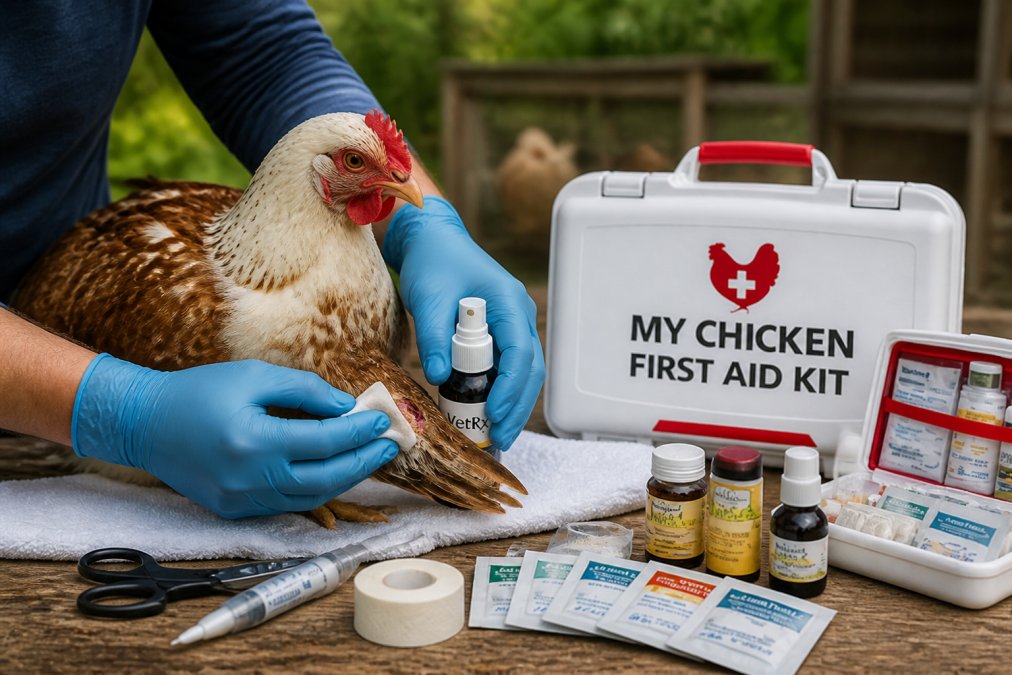
What You'll Need: Nitrile gloves, trauma shears, irrigation syringe, antiseptic spray, sterile gauze pads, triple antibiotic ointment, VetWrap, hypoallergenic tape.
Step 1: Isolate the bird. Move the injured chicken to your isolation crate immediately. Flock members will peck at wounds, making the injury worse within minutes.
Step 2: Put on nitrile gloves. Always handle a sick or injured bird with disposable gloves.
Step 3: Assess the wound. Use your magnifying glass and good lighting to determine depth and extent. Superficial pecking wounds look worse than they are. Deep punctures, exposed bone, or wounds near the vent require veterinary attention.
Step 4: Trim feathers around the wound. Use trauma shears to carefully remove feathers in a 2-3 cm radius around the wound.
Step 5: Flush the wound. Fill your irrigation syringe with clean water or saline and flush thoroughly. This removes debris and bacteria more effectively than wiping.
Step 6: Apply antiseptic spray. Spray a hypochlorous acid-based antiseptic directly onto the wound. This type is safe if the bird pecks at it and has no egg withdrawal period.
Step 7: Apply topical ointment. For wounds with any depth, apply a triple antibiotic ointment packet using a cotton-tipped applicator.
Step 8: Bandage if needed. For wounds on the body or wings, cover with a sterile gauze pad and secure with VetWrap. Never wrap so tightly you restrict breathing. Check the bandage twice daily.
Step 9: Monitor and track. Note the date, time, wound description, and treatment applied. Watch for signs of infection: increased swelling, heat, discharge, or the bird going off feed.
Emergency Triage Decision Tree for Common Injuries
Is the bird breathing with difficulty, gasping, or making rattling sounds?
- YES: Isolate immediately. Apply VetRx to head and under wings. Consult a poultry vet within 24 hours.
- NO: Continue assessment.
Is there active bleeding that won't stop within 2-3 minutes of pressure?
- YES: Apply styptic powder directly to the wound. Maintain firm pressure for 5 minutes. If bleeding continues, seek veterinary care.
- NO: Continue assessment.
Is the wound deep, does it involve the vent area, or is bone visible?
- YES: Clean, cover loosely, isolate, and contact a poultry veterinarian.
- NO: Treat as a standard wound following the steps above. barn supplies.
Is the bird lethargic, not eating, or showing a swollen abdomen?
- YES: Isolate, offer electrolyte water, and assess for egg binding or ascites. A bird that hasn't passed an egg in 48+ hours and is straining needs veterinary attention.
- NO: Monitor closely and continue routine care.
Pre-Built Kits vs. DIY: Which Is Right for Your Flock
Most small flock owners are better served by a pre-built kit. Sourcing individual items in small quantities is surprisingly expensive and time-consuming. Pre-built kits solve the quantity problem by assembling the right amounts for a backyard flock, not a commercial operation. DIY makes sense when you have specific needs not covered by standard kits, such as keeping ducks alongside chickens or having a bird with a chronic condition.
Expiration and Shelf-Life Management for Flock Supplies
A first aid kit full of expired supplies is not a first aid kit, it's a false sense of security. Label everything on arrival with the expiration date in permanent marker, audit twice a year (spring and fall work well), replace sterile items proactively if opened or compromised, and rotate medications using older stock first. Store your kit somewhere cool, dry, and dark, not in a barn where temperature swings are extreme. According to FDA guidance on medication storage and expiration, storage conditions significantly affect how long medications remain effective.
Top Medical Supplies for Small Flocks from RestockYourKit.com
RestockYourKit.com stocks medical supplies for small flocks that are genuinely hard to find in small quantities anywhere else. Every kit is built to order, so expiration dates are as long as possible from the moment your order ships.
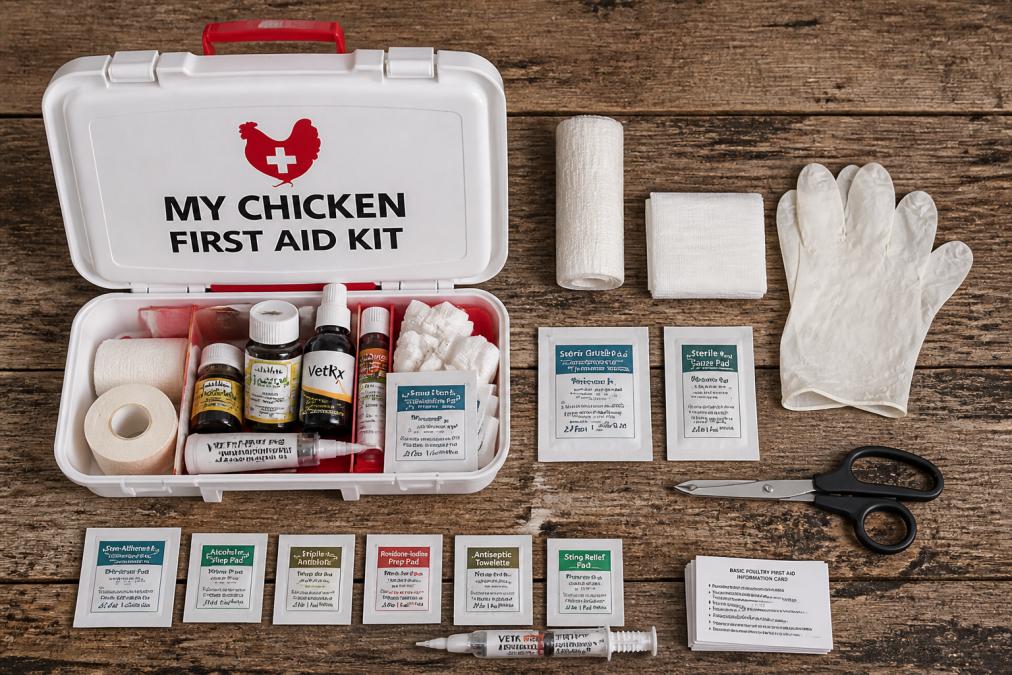
1. Deluxe Backyard Chicken First Aid Kit, $129.98 The most comprehensive option for serious flock owners. Includes sterile gauze pads, VetWrap, antiseptic spray, Rooster Booster Pick-No-More lotion, Sav-a-Chick electrolyte and probiotic packets, VetRx Poultry Aid, triple antibiotic ointment, nitrile gloves, trauma shears, splinter forceps, irrigation syringes, and the 20-card Backyard Chicken Care Card set.
2. Basic Backyard Chicken First Aid Kit, $49.99 The right starting point for a flock of 3-6 birds with no chronic health issues. Covers wound care, antiseptic treatment, and basic hydration support. Includes the Care Card set.
3. Vetericyn Plus Generic Poultry Care Spray, $17.99 A+D Antimicrobial Hydrogel Spray delivers virtually identical performance to the name-brand version at nearly half the price. No egg withdrawal period, safe if pecked, and veterinarian-recommended for pecking sores, bumblefoot, vent prolapse, and general wound care.
4. Non-Surgical Bumblefoot Treatment Kit, $11.99 A complete 20+ piece kit for treating bumblefoot without surgery. Includes silk tape, VetWrap, sterile gauze pads, triple antibiotic ointment, alcohol wipes, povidone-iodine wipes, nitrile gloves, and trauma shears.
5. CORID (Amprolium 9.6%), 16oz, $37.99 The standard treatment for coccidiosis in backyard poultry. Only use following a confirmed diagnosis via fecal float test or visible blood in droppings. Do not administer vitamin supplements during treatment. Dosing for a moderate outbreak: 1 teaspoon per gallon of water as the sole water source for 5 days.
6. Poultry Cell (Rooster Booster) Mineral Supplement, 16oz, $24.98 A liquid vitamin, mineral, and amino acid formula covering Vitamins A, D, E, and B-complex with 400mg of bio-available iron. Mix into feed or administer orally. Particularly useful for birds recovering from illness or showing signs of nutritional deficiency.
7. Backyard Chicken Care Card Set, $19.99 Twenty reference cards covering minor wound care, egg binding, vent prolapse, coccidiosis, respiratory issues, and medication dosing. Printed on durable cardstock with a keyring. You will forget what you read in a calm moment, these cards mean you don't have to remember.
8. The Chicken Health Handbook, 2nd Edition, $26.99 Gail Damerow's reference book is the closest thing to a poultry veterinarian on your shelf. Covers health problems across all breeds and ages with practical symptom charts and treatment guidance. According to Storey Publishing's poultry care resources, this edition remains one of the most comprehensive references available for backyard flock management.

Caring for a backyard flock means being prepared for the unexpected. RestockYourKit.com carries the specialized medical supplies for small flocks that most stores don't stock in usable quantities, built to order so your medications arrive with maximum shelf life. Browse the Deluxe or Basic Backyard Chicken First Aid Kits, pick up individual supplies like CORID or Poultry Cell, and get your kit stocked before you need it. Shop now at RestockYourKit.com.
Frequently Asked Questions
Q: What medical supplies should I have on hand for my chickens?
A: A solid backyard flock medical kit covers wound care, sanitation, and medications. At minimum, stock antiseptic spray, gauze pads, vetwrap, hypoallergenic silk tape, nitrile gloves, styptic powder, triple antibiotic ointment, povidone-iodine wipes, and an electrolyte solution like Sav-a-Chick. Add VetRx for respiratory issues and Poultry Cell for nutritional support. A printed care card set helps you act quickly without searching online when a bird is injured or ill.
Q: What is the best wound spray for chickens?
A: Antimicrobial hypochlorous acid sprays, such as the generic Vetericyn Plus Poultry Care Spray, are widely recommended for backyard poultry wound care. They treat open wounds like pecking sores, bumblefoot, vent prolapse, and wing injuries without causing an egg withdrawal period. The spray is non-irritating and safe if pecked or accidentally ingested. For small flocks, a 4 oz bottle covers most common injuries and stores well between uses.
Q: How do you treat a chicken with a minor wound?
A: Start by putting on disposable nitrile gloves to maintain biosecurity. Rinse the wound gently with a saline solution or clean water using an irrigation syringe. Apply an antiseptic spray directly to the wound site, then cover with a sterile gauze pad secured with hypoallergenic silk tape or vetwrap. Move the bird to an isolation crate to prevent pecking by flockmates. Monitor the wound daily, replacing the dressing until healed. If swelling, discharge, or lethargy develops, consult a poultry veterinarian.
Q: What items are necessary for a DIY chicken first aid kit?
A: A functional DIY chicken first aid kit needs: sterile gauze pads (2x2 and 4x4 inch), gauze rolls, self-adhesive vetwrap, hypoallergenic silk tape, trauma shears, splinter forceps, disposable nitrile gloves, an irrigation syringe, antiseptic spray, triple antibiotic ointment packets, povidone-iodine wipes, styptic bleeding control powder, electrolyte packets, and VetRx for respiratory symptoms. Store everything in a waterproof container and label each item with its expiration date for easy shelf-life management.
Q: Do I need different supplies for bantams versus standard-size chickens?
A: Most wound care supplies work across both sizes, but dosing for oral medications differs. Bantams typically weigh 1-2 lbs compared to 5-8 lbs for standard breeds, so liquid medications like CORID or Poultry Cell should be scaled down proportionally. Bandaging materials like 1-inch vetwrap and smaller gauze pads are easier to work with on bantams. A care card set with dosing guidelines helps you adjust treatments correctly without guesswork, reducing the risk of over- or under-dosing smaller birds.