

Best Individual First Aid Kit Refills: 2026 Guide
Table of Contents
- What Makes a Quality First Aid Kit Refill
- Trauma Kit Refills: Essential Medical Supplies for High-Impact Injuries
- Wound Care and Gauze Dressing Refills
- IFAK Checklist for Civilians: Building Your Personal Trauma Response Kit
- First Aid Kit Expiration Dates: When to Replace Your Supplies
- Specialty and Over-the-Counter Medication Refills
- Which Refill Kit Should You Choose?
- Frequently Asked Questions
Last Updated: August 31, 2026
What Makes a Quality First Aid Kit Refill
A quality first aid kit refill contains sterile, medical-grade supplies that match both your specific use case and current safety standards. The best individual first aid kit refills go beyond basic adhesive bandages, they include trauma-grade materials designed for real emergencies, not just minor cuts.
What separates a reliable refill from a generic one comes down to three factors: compliance with industry standards, appropriate shelf life management, and scenario-specific contents. A kit refilled with expired medications or non-sterile supplies creates a false sense of security. You think you're prepared when you're actually carrying dead weight.
RestockYourKit.com specializes in modular refill packs that let you customize your kit based on your actual needs, whether that's wilderness medicine, vehicle emergency preparedness, or home readiness. Each refill kit includes supplies with expiration dates at least 6 months out, typically extending 12-36 months before replacement becomes necessary.
The key differentiator in quality refills is unitized packaging. Individual packets of medications, sterile wipes, and topical treatments take up less space, stay organized, and prevent cross-contamination. When you need something in a high-stress moment, you don't want to dig through bulk containers.
Trauma Kit Refills: Essential Medical Supplies for High-Impact Injuries
Trauma kit refills are designed for life-threatening bleeding and severe injuries, not the scraped knee scenario. These kits contain hemostatic agents, tourniquets, chest seals, and trauma gauze that stop catastrophic hemorrhaging when seconds matter.
The standard trauma kit refill includes a tourniquet, Israeli trauma bandage, chest seal, and hemostatic gauze. Each component serves a specific function in bleeding control. A tourniquet applies direct pressure to an extremity to stop arterial bleeding (peer-reviewed research). Hemostatic gauze accelerates clotting. A chest seal prevents air from entering a penetrating chest wound. These aren't interchangeable, you need all three categories.
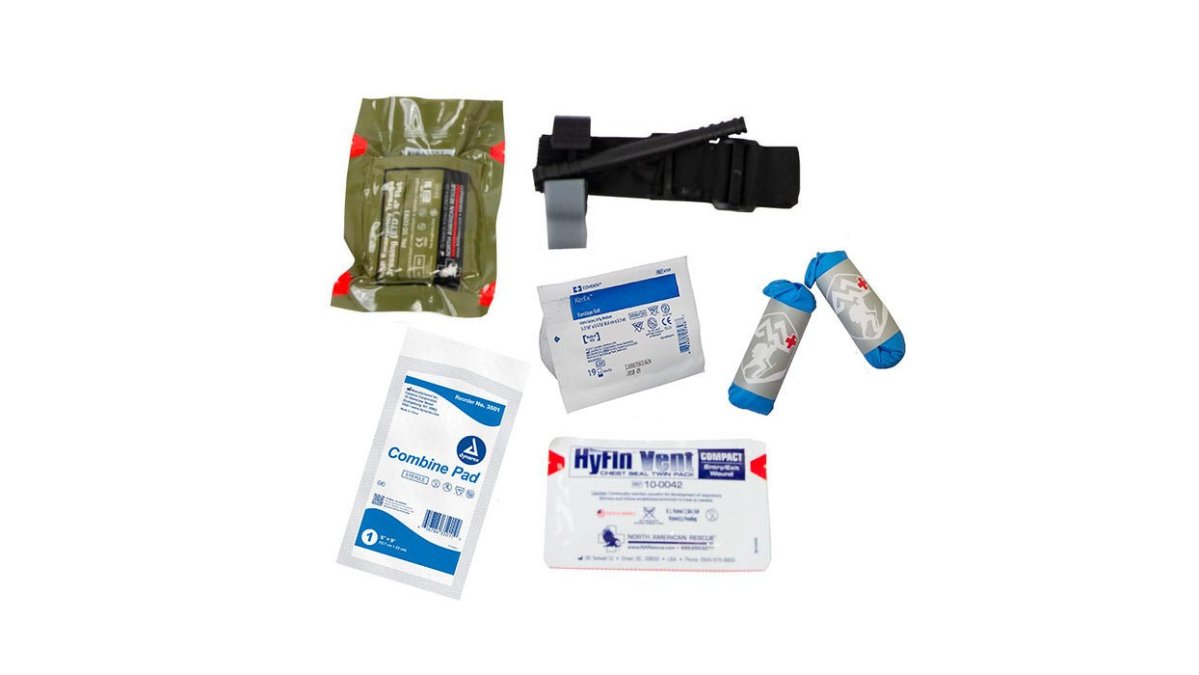
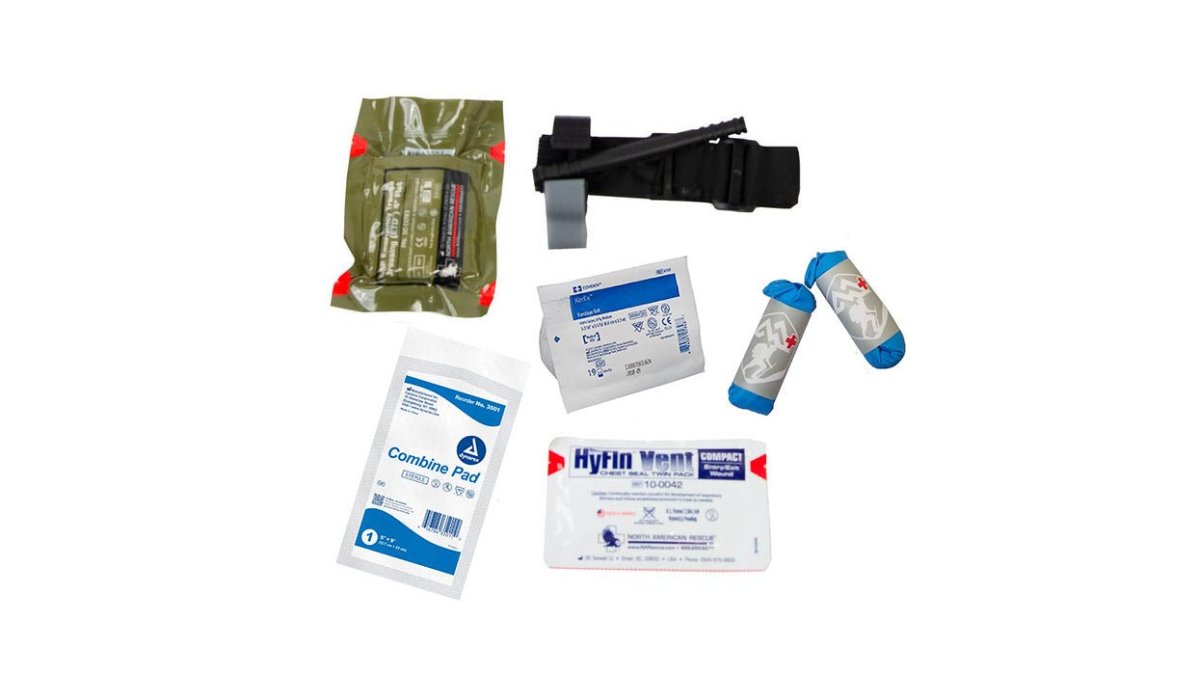
RestockYourKit.com's Trauma Kit Refill ($27.99) includes nitrile gloves, an Israeli trauma bandage, a Hyfin vented chest seal, Kerlix trauma gauze, and a trauma gauze pad. The optional C-A-T Tourniquet (Gen 7) adds another layer of bleeding control for high-risk scenarios.
The biggest mistake people make with trauma kits is treating them as general first aid kits. They're not. A trauma kit assumes you're dealing with life-threatening bleeding or penetrating injury. If your scenario is a hiking accident or workplace cut, a standard first aid kit refill is more appropriate. Trauma kits belong in vehicles, hiking packs for remote areas, and workplaces with genuine hazard exposure.
Wound Care and Gauze Dressing Refills
Wound care refills form the backbone of any first aid kit. These supplies handle everything from minor scrapes to moderate bleeding and are used far more frequently than trauma supplies.
A comprehensive gauze dressing refill should include multiple sizes: 2x2 sterile pads for small wounds, 4x4 pads for moderate bleeding, and 5x9 trauma pads for larger injuries. Gauze rolls in 3-inch and 4-inch widths provide flexibility for awkward wound shapes. Sterile status matters, non-sterile gauze introduces infection risk on open wounds.
The Gauze Refill Kit from RestockYourKit.com ($6.49) contains 10 each of 4x4 and 2x2 sterile gauze pads, two 4-inch sterile gauze rolls, two 3-inch sterile gauze rolls, and two 5x9 trauma gauze pads. This combination covers most wound scenarios without overstocking rarely-used sizes.

What most guides miss about gauze selection is the difference between sterile and non-sterile. Sterile gauze has been treated to eliminate microorganisms and is individually packaged to maintain that state until opened (the FDA). Non-sterile gauze is cheaper but introduces bacteria into open wounds, dramatically increasing infection risk. For a first aid kit, sterile is the only sensible choice.
IFAK Checklist for Civilians: Building Your Personal Trauma Response Kit
An Individual First Aid Kit (IFAK) for civilians differs significantly from military or tactical versions. Civilian IFAKs prioritize accessibility and ease of use over specialized trauma response.
Start with the essentials: adhesive bandages in multiple sizes, gauze pads and rolls, medical tape, antiseptic wipes, and pain medication. Add trauma supplies only if your lifestyle includes wilderness travel, vehicle emergencies, or occupational hazard exposure. A backyard gardener's IFAK looks different from a backcountry hiker's kit.
The Band-Aid Assortment Refill ($4.49) includes 10 regular adhesive bandages, 5 knuckle bandages, 5 fingertip bandages, 2 large bandages, and 2 Tegaderm waterproof dressings. These cover the majority of minor wound scenarios without requiring gauze.

For civilians, the decision point is whether your kit lives in a vehicle, a hiking pack, or your home. Vehicle kits need compact storage and temperature stability. Hiking kits need lightweight, waterproof packaging. Home kits can prioritize completeness over portability. Your IFAK configuration should match your actual risk profile, not some generic "complete" kit that includes supplies you'll never use.
| Supply Type | Quantity | Replacement Frequency | Notes |
|---|---|---|---|
| Adhesive bandages (assorted) | 20-30 | Annually or as used | Most frequently used item |
| Gauze pads (sterile) | 15-20 | Annually | Check for dryness before replacing |
| Pain medication | 10-15 packets | Annually | Check expiration dates |
| Antiseptic wipes | 10-15 | Annually | Prevent infection on open wounds |
| Trauma supplies | 1 set | Every 2 years | Only if high-risk activities |
| Topical relief | 5-10 packets | Annually | Burn cream, sting relief |
First Aid Kit Expiration Dates: When to Replace Your Supplies
Expiration dates on first aid supplies aren't suggestions, they're guarantees of efficacy. Expired medications lose potency. Sterile supplies degrade. Adhesive loses grip. An expired first aid kit creates the illusion of preparedness while offering minimal actual protection. over the counter medicine.
Most quality suppliers, including RestockYourKit.com, ship supplies with expiration dates at least 6 months in the future, typically extending 12-36 months before replacement is necessary. This gives you a reasonable window to use supplies before they expire.
The challenge isn't knowing when supplies expire, it's remembering to check. A practical system involves marking your calendar for an annual audit. Go through your kit once yearly, remove anything expired, and order replacement refills. This takes 30 minutes and prevents the slow accumulation of dead supplies.
Different supply categories expire at different rates. Medications degrade fastest, typically 2-3 years. Sterile gauze and bandages last longer if stored properly, often 3-5 years. Topical creams and ointments fall somewhere in between. Temperature fluctuations and humidity accelerate degradation, so storage location matters. A first aid kit in a hot vehicle ages faster than one in a climate-controlled closet.
Specialty and Over-the-Counter Medication Refills
Over-the-counter medication refills extend your kit's usefulness beyond wound care into symptom management and prevention. Pain relief, gastrointestinal support, cold and flu treatment, and topical relief medications handle the majority of non-emergency medical situations.
The OTC Pain Refill Kit ($4.99) includes ibuprofen, aspirin, and acetaminophen packets. These address inflammation, fever, and general aches. The Cold + Flu Refill Kit ($5.99) combines cold relief, decongestants, acetaminophen, ibuprofen, throat lozenges, and loperamide. For gastrointestinal issues, the OTC Gastro-Issues Refill ($5.99) includes antacid, bismuth subsalicylate, loperamide, electrolyte packets, and diphenhydramine.

What separates a well-stocked kit from a basic one is inclusion of scenario-specific medications. If you hike at altitude, pain medications taken 24 hours before ascending reduce altitude sickness risk (peer-reviewed research). If you travel frequently, electrolyte packets prevent dehydration-related issues. If you spend time outdoors, insect bite relief and burn cream become essential.
The Topical Relief Refill Kit ($5.99) addresses the most common outdoor irritations: sting relief swabs, burn-jel packets, and hydrocortisone cream. These handle bee stings, minor burns, and rash reactions without requiring professional treatment.
Specialty refills like the Dehydration Kit ($5.99) and Personal Blister Treatment Kit ($5.99) target specific scenarios. Dehydration kits include electrolyte packets and oral rehydration solutions for heat exhaustion or gastrointestinal fluid loss. Blister kits include moleskin, sterile needles, benzoin tincture, and alcohol wipes for backcountry foot care.
The common mistake is loading a kit with every possible medication without considering actual use. A home kit and a wilderness kit serve different purposes. Prioritize medications for your specific scenarios, then add general-purpose items. This keeps your kit lean and ensures you actually know what's inside when you need it.
Which Refill Kit Should You Choose?
Your refill kit selection depends on three factors: your primary use case, storage location, and replacement frequency.
For home readiness, start with the Band-Aid Assortment ($4.49) and Gauze Refill Kit ($6.49). Add the OTC Pain Refill ($4.99) and Cold + Flu Refill ($5.99) for common illness scenarios. This combination covers 95% of home first aid situations and costs under $22 before any specialty additions.
For vehicle emergency preparedness, add the Trauma Kit Refill ($27.99) to your home basics. Vehicles face different hazards, highway accidents, extreme weather exposure, and longer response times in remote areas. A trauma kit in your vehicle provides capabilities that standard first aid supplies cannot match. Include the Topical Relief Refill ($5.99) for sunburn and insect bites during outdoor breakdowns.
For wilderness and backcountry activities, build around trauma supplies and scenario-specific kits. Include the Trauma Kit Refill ($27.99), Dehydration Kit ($5.99), and Personal Blister Treatment Kit ($5.99). Add gauze and pain medication. Weight becomes a consideration, opt for compact refill packs over bulk supplies.
For outdoor group leaders and Scouting units, RestockYourKit.com's modular approach lets you build crew-appropriate kits. Order multiple copies of essential supplies like gauze and bandages, then customize with specialty items based on activity type. Free shipping on orders over $79 makes bulk refilling cost-effective.
The refill approach beats buying pre-assembled kits because you control what goes inside. Pre-assembled kits often include items you don't need while leaving gaps in categories that matter for your specific use. Modular refills let you build exactly what you need, replace only what you use, and maintain freshness by rotating stock regularly.
The difference between a kit that actually protects you and one that just sits in a closet comes down to maintenance. Expired supplies, forgotten contents, and mismatched items create false confidence. A well-maintained first aid kit requires annual audits and regular refilling.
RestockYourKit.com simplifies this process through individual refill packs that let you replace exactly what you've used without buying complete replacement kits. Start with the supplies that match your actual risk profile, mark your calendar for an annual check, and order refills before expiration. This systematic approach keeps your kit current and genuinely useful when emergencies happen.
Frequently Asked Questions
What should be in an IFAK checklist for civilians?
A civilian IFAK should include tourniquet, hemostatic gauze, sterile gauze dressings, chest seal, trauma bandage, antiseptic wipes, adhesive bandages, pain medication, and gloves. The Trauma Kit Refill at $27.99 covers most critical items. Add the Band-Aid Assortment ($4.49) and Gauze Refill Pack ($6.49) for comprehensive wound care. Include OTC Pain Medications ($4.99) for additional support. Tailor contents based on your environment, outdoor activities may need blister care, while home kits prioritize common injuries.
How do I know if my first aid kit supplies are expired?
Check expiration dates on all medications, sterile supplies, and adhesive bandages monthly. Most items shipped from RestockYourKit.com arrive with 6 months to 36 months before expiration. Mark your calendar to review kits every 6 months. Sterile items like gauze dressing and chest seals lose effectiveness after expiration. Replace any items past their date immediately. Store kits in cool, dry places away from direct sunlight to extend shelf life.
Is it cheaper to buy individual first aid kit refills or pre-made kits?
Individual refill kits are typically more cost-effective than pre-made kits. Band-Aid Assortment costs $4.49, Gauze Refill Pack is $6.49, and OTC Pain Medications run $4.99, totaling under $16 for basic wound care. Pre-made kits often bundle items you don't need. RestockYourKit.com's modular approach lets you buy only what you use, avoiding waste. Orders over $79 ship free, making bulk refilling even more economical for families or groups.
What are the essential trauma supplies for a civilian IFAK?
Essential trauma supplies include a tourniquet for severe bleeding, hemostatic gauze or combat gauze to control hemorrhage, sterile gauze dressing for wound packing, a vented chest seal for penetrating chest wounds, trauma shears, nitrile gloves, and a trauma bandage. The Trauma Kit Refill ($27.99) includes Israeli trauma bandage, Hyfin vented chest seal, trauma gauze, and gloves, covering most critical needs. Add the Gauze Refill Pack ($6.49) for additional wound care capacity.
How often should you check and refill your first aid kit?
Check your first aid kit every 6 months for expired items and used supplies. After using any item, replace it immediately. Review expiration dates seasonally, before outdoor trips, before winter, and before summer activities. Maintain a checklist of contents to identify gaps quickly. RestockYourKit.com's modular refill kits make restocking simple: order the Band-Aid Assortment, Gauze Refill Pack, or specialty kits as needed. Set a phone reminder for twice-yearly audits.